
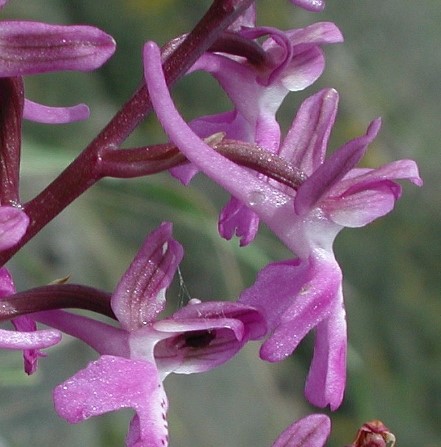
Orchis Orchid
Orchis
Basic Details
Floral Formula & Features
Bilaterally symmetrical, bisexual, 6 tepals in 2 whorls of 3 (3 sepals + 3 petals with one modified into lip), 1 stamen fused with style forming column, 3 fused carpels with inferior ovary typical of Orchidaceae
- Name 'Orchis' derives from ancient Greek 'orchis' meaning testicle, referring to the paired underground tubers. This genus gave its name to the entire Orchidaceae family. Many species have common names like 'Lady Orchid,' 'Military Orchid,' or 'Monkey Orchid' based on flower resemblance
- Flowers arranged in dense terminal spikes with 10-50 blooms. Each flower has a helmet-like hood formed by upper petals and sepals, and a three-lobed lip with a backward-pointing nectar spur. Many species are fragrant with vanilla or honey scents
- Terrestrial perennial that grows from paired underground tubers (one old, one new forming each year). Blooms in spring (March-June depending on species). Dies back completely after flowering, remaining dormant underground until next spring
- Height ranges from 6-24 inches (15-60 cm) depending on species. Flower spikes measure 2-8 inches long. Lifespan of individual tubers is 2-3 years, but plants persist through annual tuber replacement. Propagated by seed or tuber division
- Native to Europe, Mediterranean region, and parts of Asia and North Africa. Found in meadows, woodlands, grasslands, and alpine areas from sea level to 2,500 meters. Many species have declined due to habitat loss and are now protected
- Requires partial shade to full sun depending on species. Prefers well-drained, alkaline to neutral soil rich in organic matter. Cold hardy, requiring winter dormancy. Difficult to cultivate, best appreciated in natural habitats or specialized gardens
- Historically, tubers were harvested to make 'salep,' a nutritious flour used in beverages and ice cream, leading to overharvesting. Now protected in many regions. Important pollinator plants. Some species can hybridize naturally, creating identification challenges
Names in Different Languages
What is Floral Formula?
A floral formula is a symbolic representation of a flower's structure using letters, numbers, and special symbols. It provides a concise way to describe the arrangement and number of floral parts.
This formula describes the flower's symmetry, sepals, petals, stamens, and carpels in a standardized format.
Formula Sequence
- Bract: Br or Ebr
- Bracteole: Brl or Ebrl
- Symmetry: % (Radial) or ⊕ (Bilateral)
- Sex: ♀ (Female), ♂ (Male), or ⚥ (Bisexual)
- Calyx/Sepal: K<number> (Free or Fused)
- Corolla/Petal: C<number> (Free or Fused)
- Androecium: A<number> (Free or Fused)
- Gynaecium: G<number> (Superior or Inferior Ovary)
Symbol Meanings
- Numbers: Indicate quantity of parts
- Parentheses (): Parts are fused together
- Plus (+): Parts in different whorls
- Underline: Superior ovary position
- Overline: Inferior ovary position
- ∞: Numerous parts (too many to count)
Understanding floral formulas helps botanists quickly identify and classify flowers based on their structural characteristics.
Similar Flowers
Discover flowers that share botanical characteristics
Same Family
4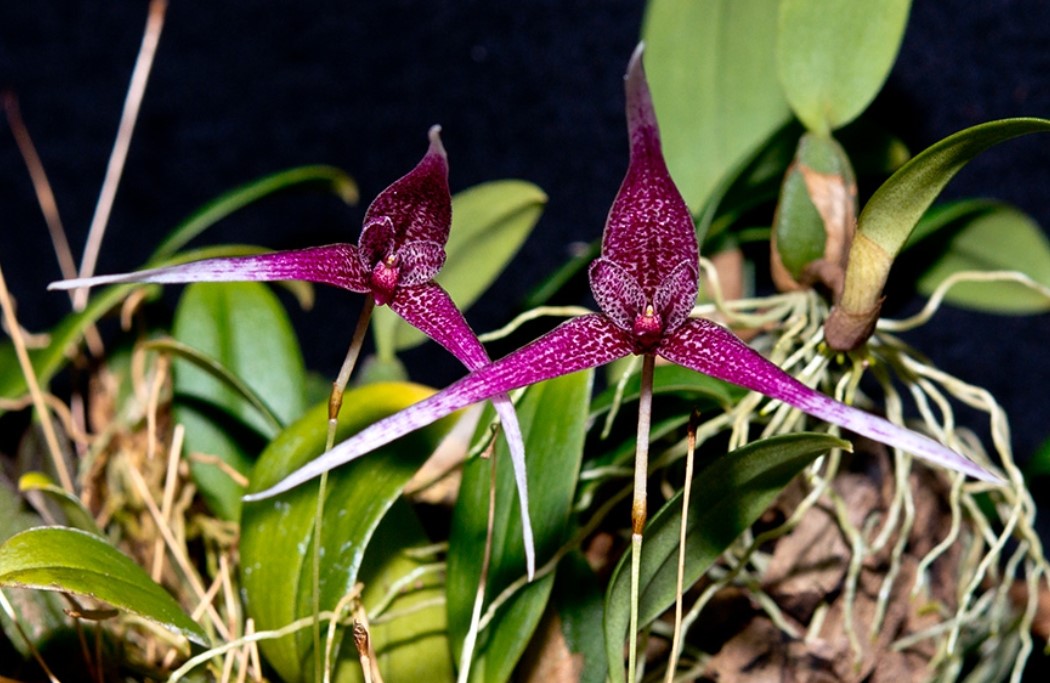
Bulbophyllum Orchid
Bulbophyllum
Fascinating and highly diverse orchid genus featuring some of the most bizarre a...
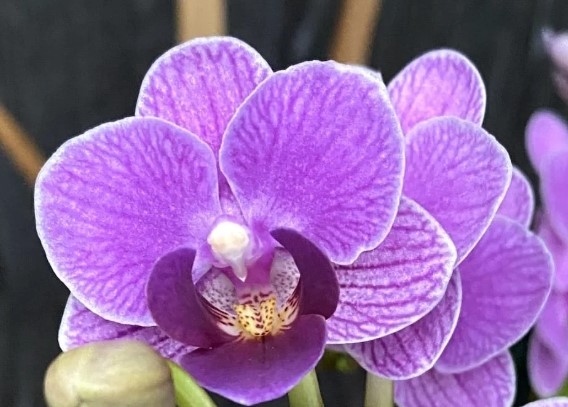
Phalaenopsis Orchid
Phalaenopsis
Popular and easy-to-grow orchid with elegant, moth-like flowers on gracefully ar...
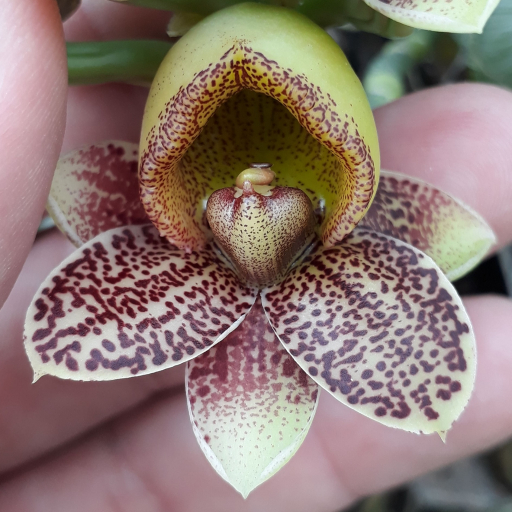
Catasetum Orchid
Catasetum
Remarkable orchid genus famous for extreme sexual dimorphism, producing dramatic...
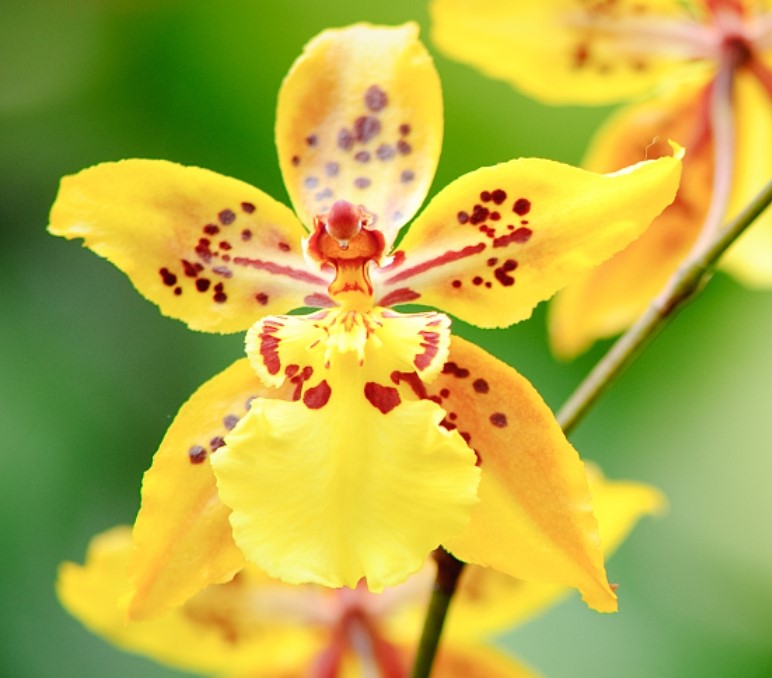
Tolumnia Orchid
Tolumnia
Charming miniature orchid featuring vibrant, intricately patterned flowers that ...
Similar Characteristics
4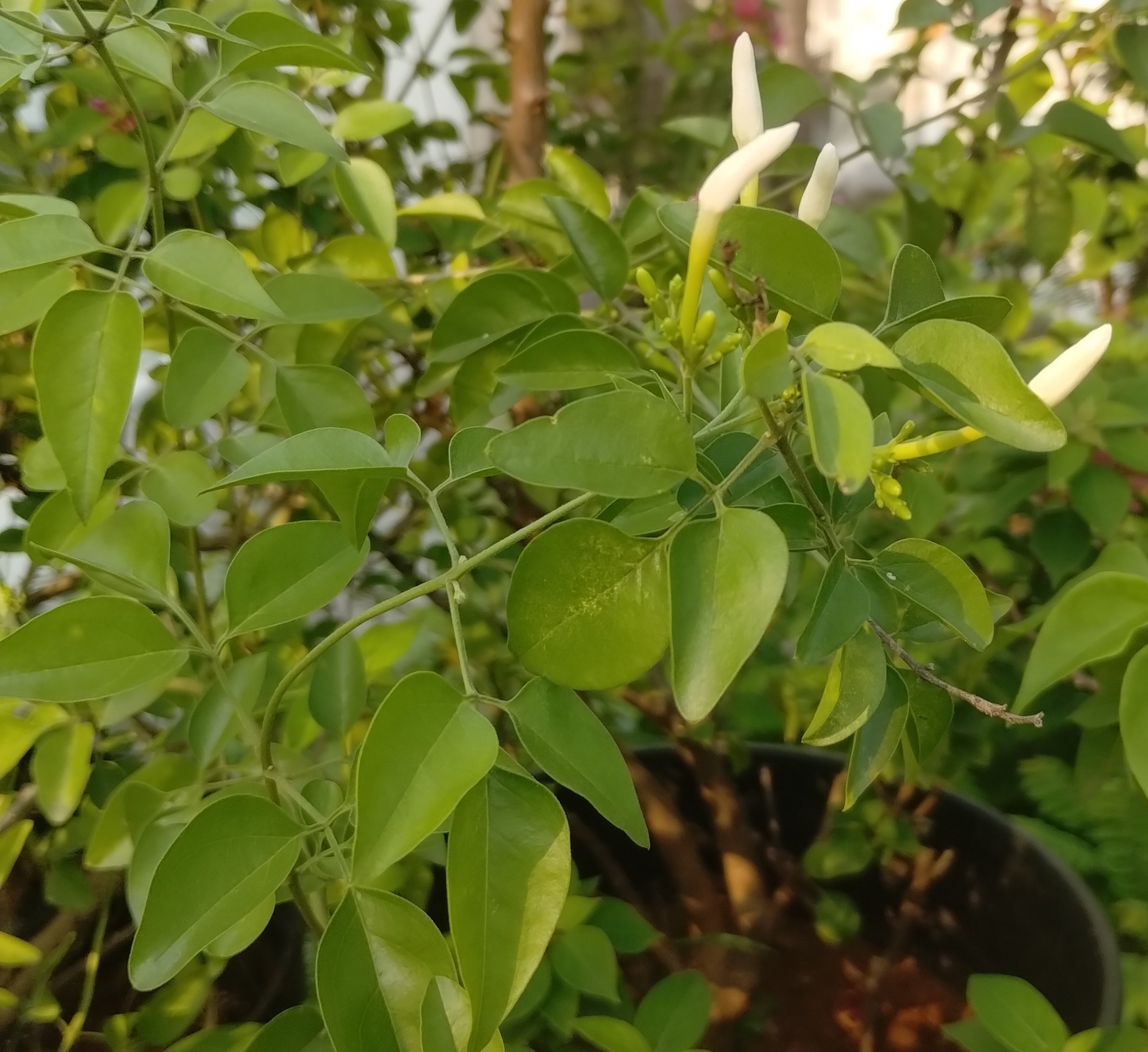
River Jasmine (Fluminense)
Jasminum fluminense
Vigorous evergreen climbing vine producing clusters of small, white, star-shaped...
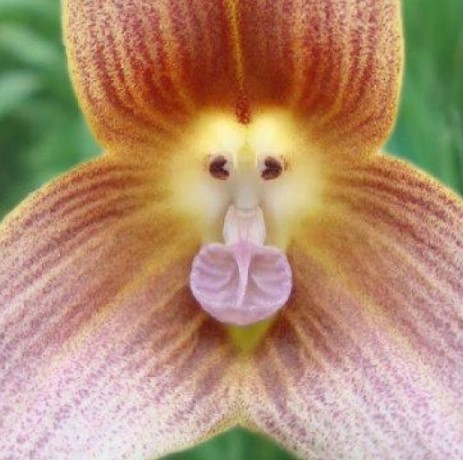
Monkey Orchid
Dracula simia
Extraordinary orchid featuring flowers with an uncanny resemblance to a monkey's...
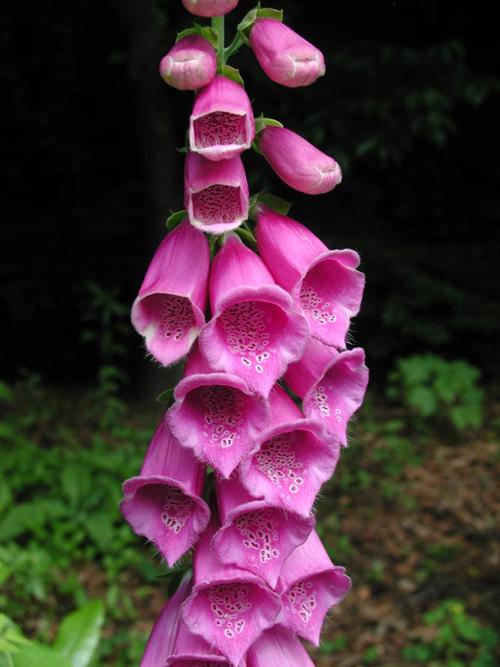
Foxglove
Digitalis purpurea
Majestic biennial featuring tall, elegant spikes of tubular, bell-shaped flowers...
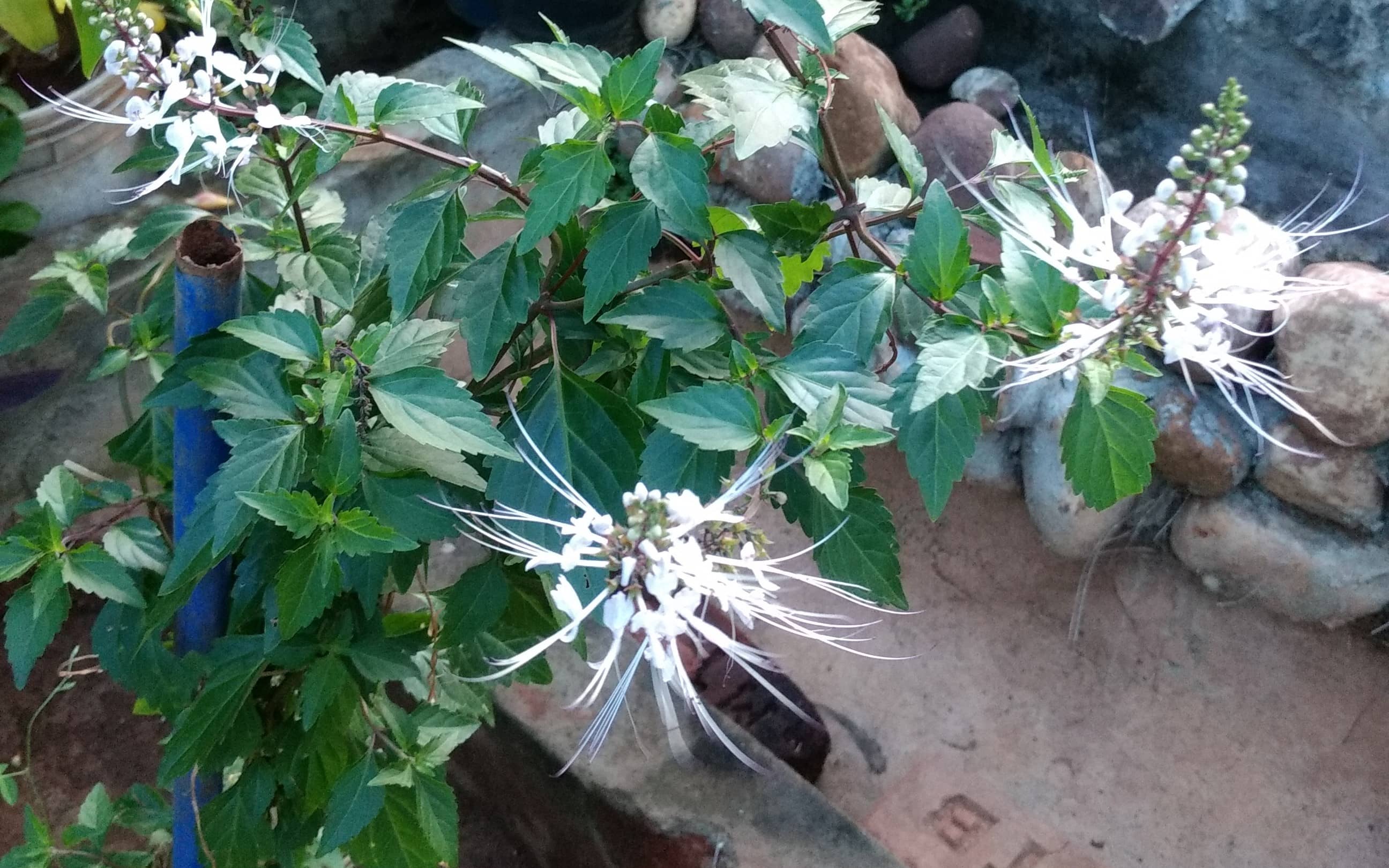
Cat's whiskers
Orthosiphon aristatus
Distinctive medicinal herb featuring delicate white or pale purple flowers with ...