
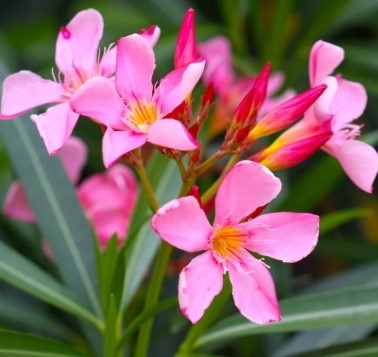
Oleander
Nerium oleander
Basic Details
Floral Formula & Features
Ebracteate, radially symmetrical, bisexual, 5 free sepals, 5 fused petals forming funnel, 5 stamens, 2 fused carpels with superior ovary
- Name 'Nerium' from Greek 'neros' (water) - grows near streams. 'Oleander' from olive-like leaves. EXTREMELY POISONOUS - contains cardiac glycosides. All parts toxic, even smoke from burning. Single leaf can kill child or pet
- Flowers 1-2 inches (2.5-5 cm) across, 5 petals, single or double forms. Colors: pink (most common), white, red, yellow, peach, salmon. Fragrant or unscented varieties. Blooms year-round in warm climates, spring-fall elsewhere
- Evergreen shrub or small tree. Leathery, narrow leaves 4-6 inches long, dark green, arranged in whorls of 3. Milky sap (toxic). Drought and heat tolerant. Salt tolerant. Pest-free due to toxicity
- Grows 6-20 feet (2-6 m) tall, occasionally to 25 feet. Spread 6-10 feet. Lifespan 25+ years. Propagated from cuttings or seeds. Fast-growing. Can be pruned as hedge or tree form
- Native to Mediterranean region, North Africa, Middle East. Now planted worldwide in warm climates. Naturalized in southern US, Australia, South America. Thrives in hot, dry areas
- Requires full sun (6+ hours). Extremely drought tolerant once established. Tolerates poor soil, salt spray, heat, pollution. Hardy zones 8-11. Minimal care needed. Prune after flowering
- DANGER: All parts deadly poisonous. Causes nausea, vomiting, heart arrhythmia, death. Toxic to humans, dogs, cats, horses, livestock. Never burn (toxic smoke). Wear gloves when pruning. Keep away from children and pets
- Popular highway and median plant (low maintenance). Used as hedge, screen, specimen. Deer and rabbit resistant. Attracts butterflies. Symbolizes caution and beauty. Common in Mediterranean and tropical landscapes
Names in Different Languages
What is Floral Formula?
A floral formula is a symbolic representation of a flower's structure using letters, numbers, and special symbols. It provides a concise way to describe the arrangement and number of floral parts.
This formula describes the flower's symmetry, sepals, petals, stamens, and carpels in a standardized format.
Formula Sequence
- Bract: Br or Ebr
- Bracteole: Brl or Ebrl
- Symmetry: % (Radial) or ⊕ (Bilateral)
- Sex: ♀ (Female), ♂ (Male), or ⚥ (Bisexual)
- Calyx/Sepal: K<number> (Free or Fused)
- Corolla/Petal: C<number> (Free or Fused)
- Androecium: A<number> (Free or Fused)
- Gynaecium: G<number> (Superior or Inferior Ovary)
Symbol Meanings
- Numbers: Indicate quantity of parts
- Parentheses (): Parts are fused together
- Plus (+): Parts in different whorls
- Underline: Superior ovary position
- Overline: Inferior ovary position
- ∞: Numerous parts (too many to count)
Understanding floral formulas helps botanists quickly identify and classify flowers based on their structural characteristics.
Similar Flowers
Discover flowers that share botanical characteristics
Same Family
4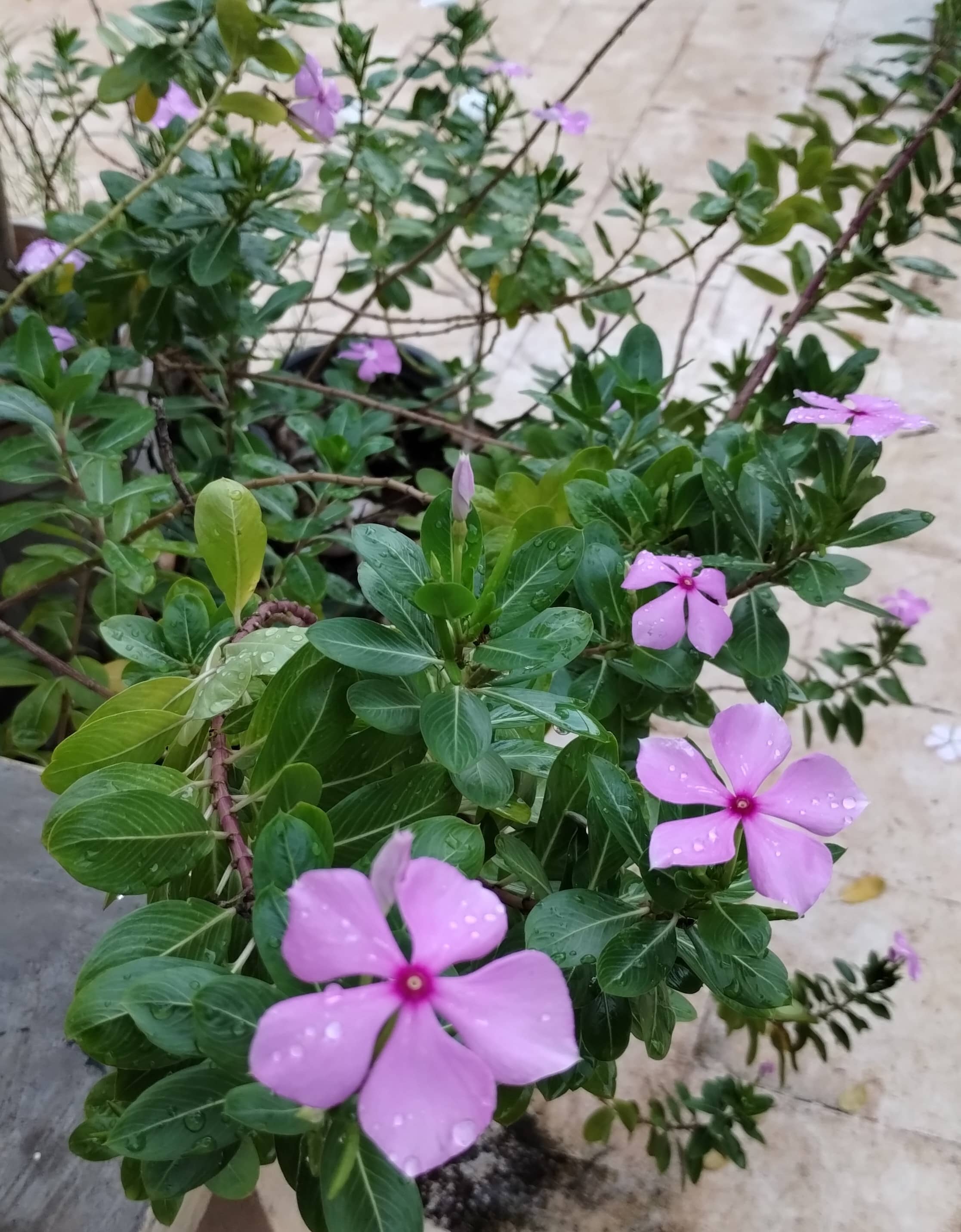
Vinca Rosea
Catharanthus roseus
Highly significant medicinal plant native to Madagascar, renowned as the source ...
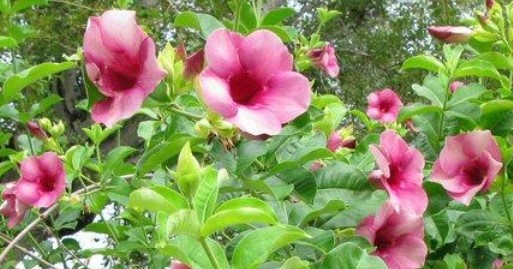
Mandevilla
Mandevilla
Spectacular tropical climbing vine renowned for its large, showy, trumpet-shaped...
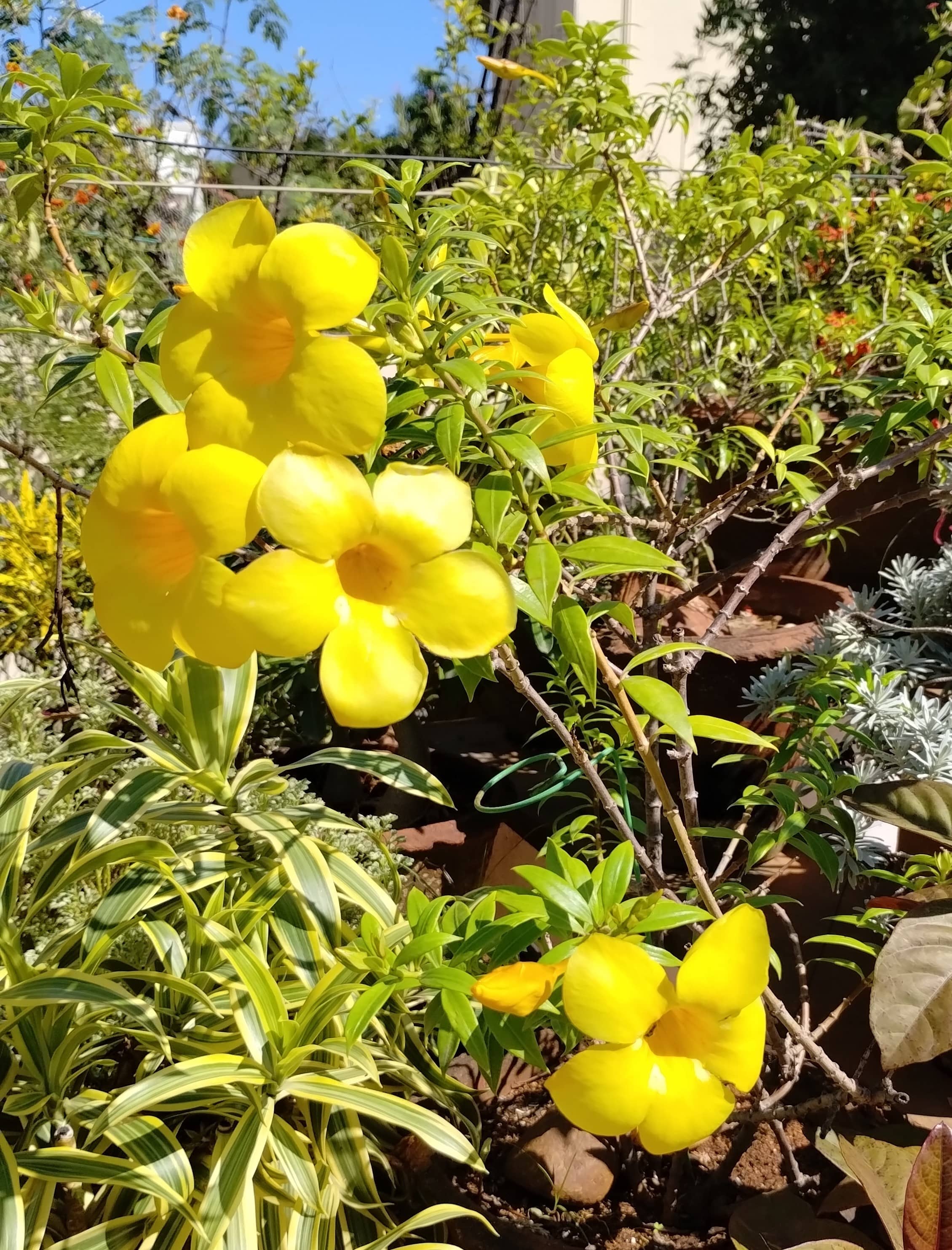
Allamanda
Allamanda cathartica
Spectacular tropical shrub or vine featuring large, trumpet-shaped flowers that ...
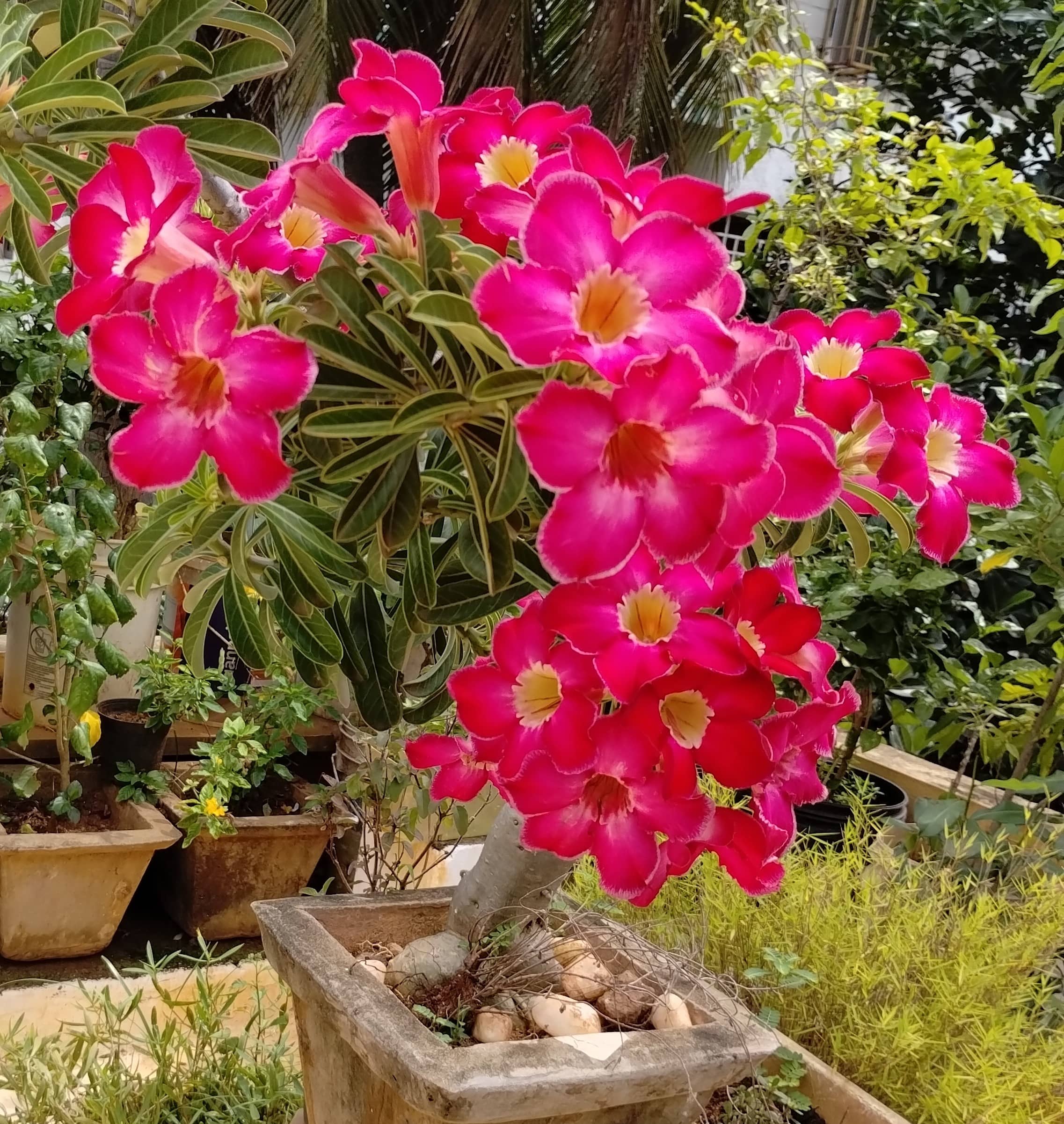
Desert rose
Adenium obesum
Striking succulent shrub featuring a dramatically swollen trunk (caudex) that st...
Similar Characteristics
4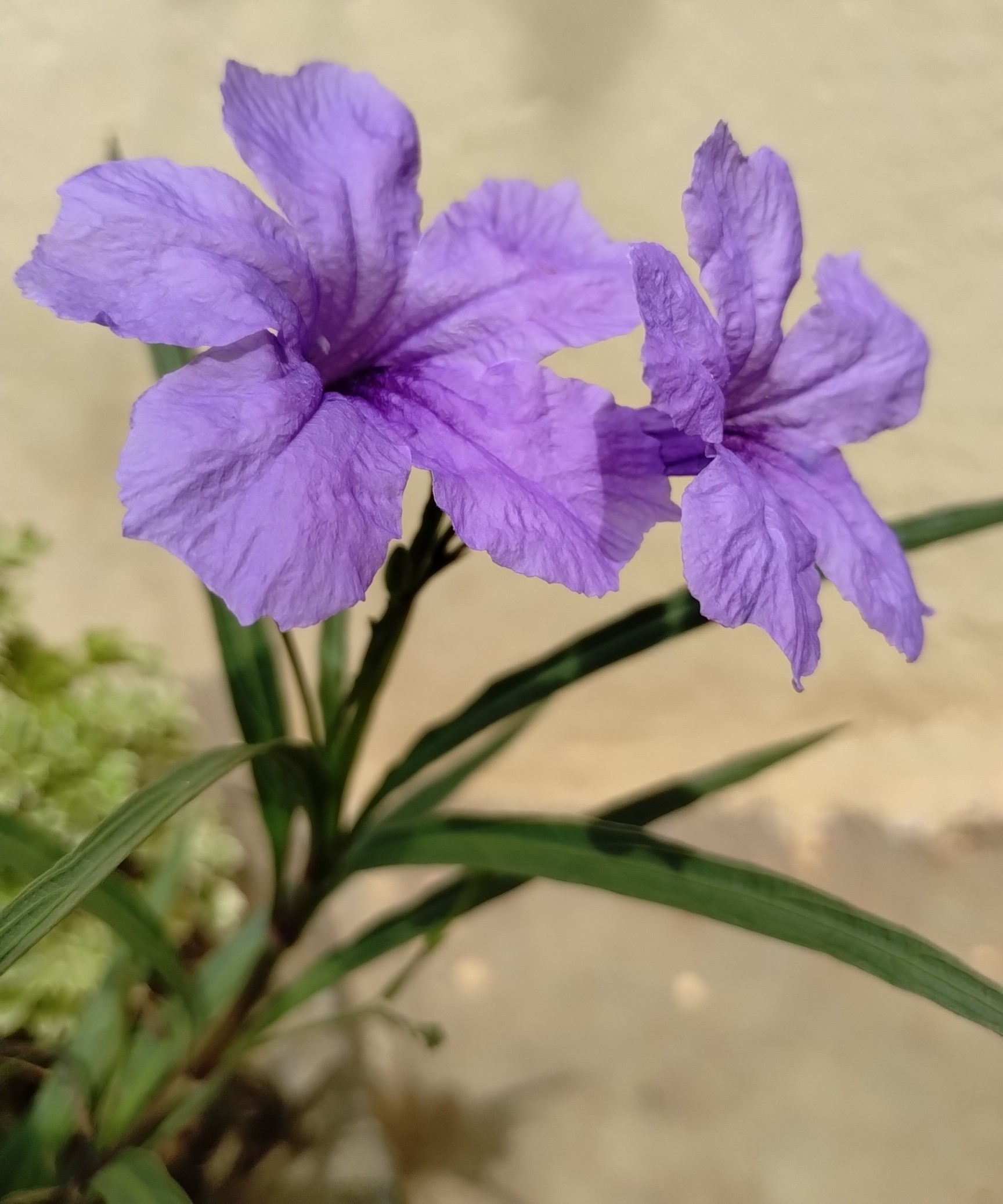
Mexican Petunia
Ruellia simplex
Vigorous perennial producing trumpet-shaped flowers resembling petunias in shade...
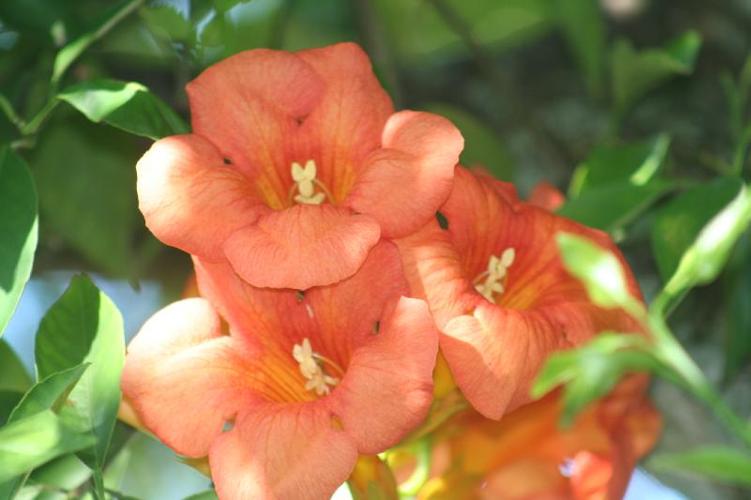
Trumpet Vine
Campsis radicans
Vigorous deciduous woody vine renowned for its spectacular clusters of trumpet-s...
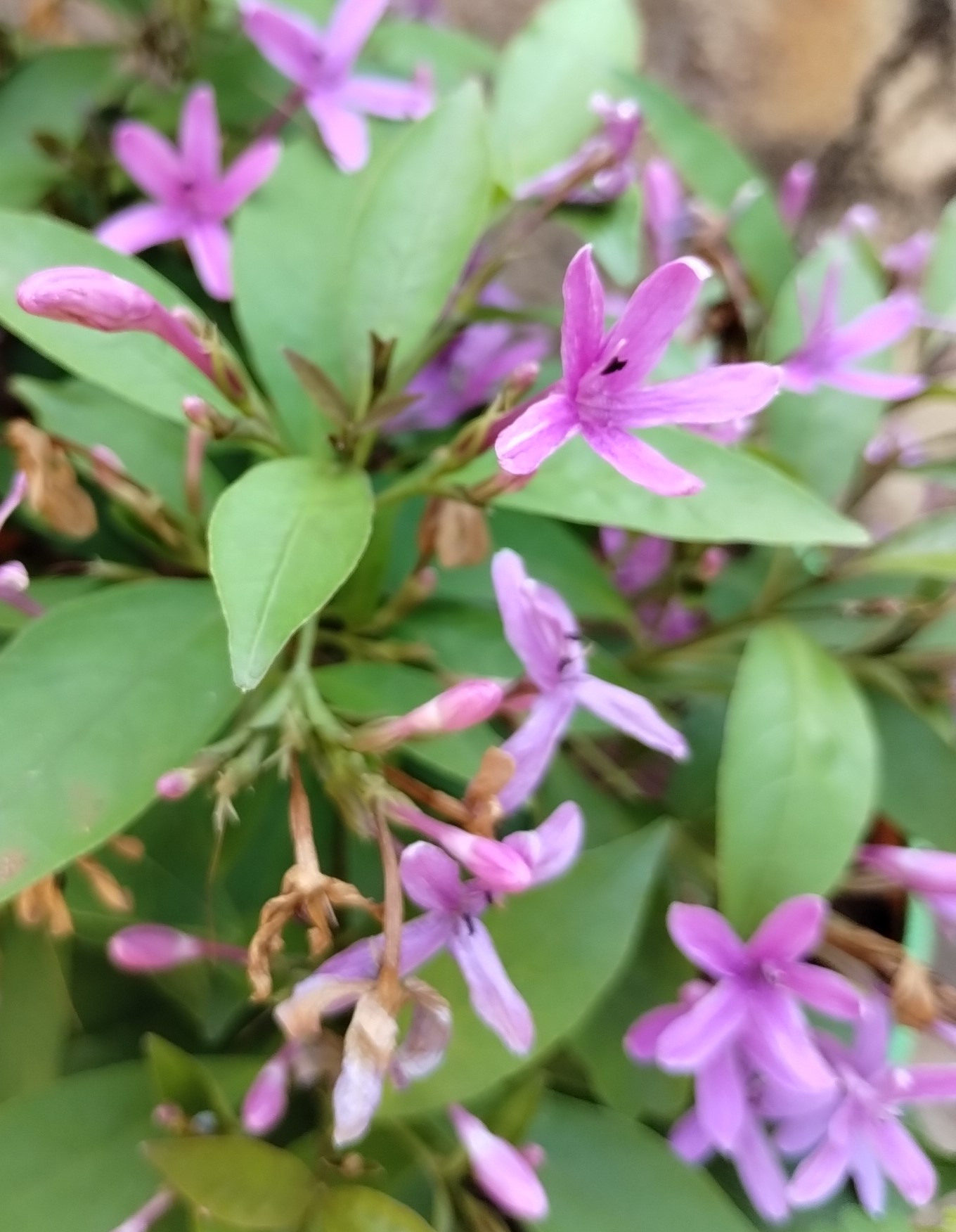
Pseuderanthemum
Pseuderanthemum
Striking tropical perennial shrub prized for its spectacular ornamental foliage ...
Pincushion
Scabiosa
Charming perennial with distinctive dome-shaped flower heads resembling a pincus...