
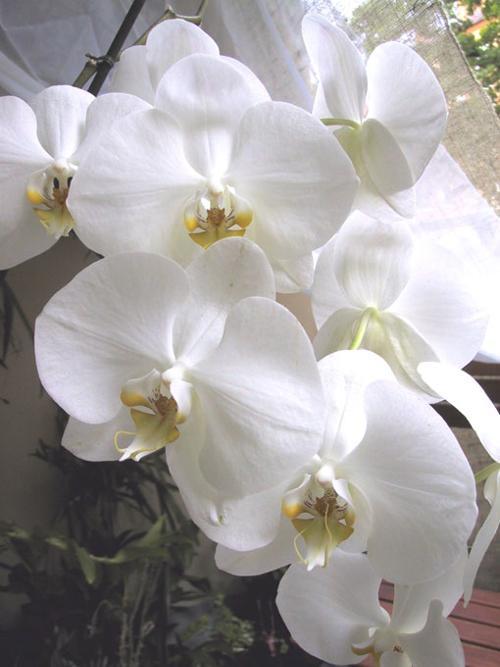
Moon Orchid
Phalaenopsis amabilis
Basic Details
Floral Formula & Features
Ebracteate, zygomorphic (bilateral symmetry), bisexual, perianth of 6 tepals in 2 whorls of 3 (3 sepals + 3 petals, one petal modified into lip/labellum), 1 stamen fused with style forming column (gynostemium), 3 fused carpels with inferior ovary. Highly specialized orchid structure with resupinate flowers (twisted 180°)
- Name 'Phalaenopsis' from Greek 'phalaina' (moth) and 'opsis' (appearance) for moth-like flowers. 'Amabilis' means lovely or lovable in Latin. Called Moon Orchid for white flowers blooming at night. National flower of Indonesia. About 60 Phalaenopsis species. Among most popular orchids worldwide for ease of care
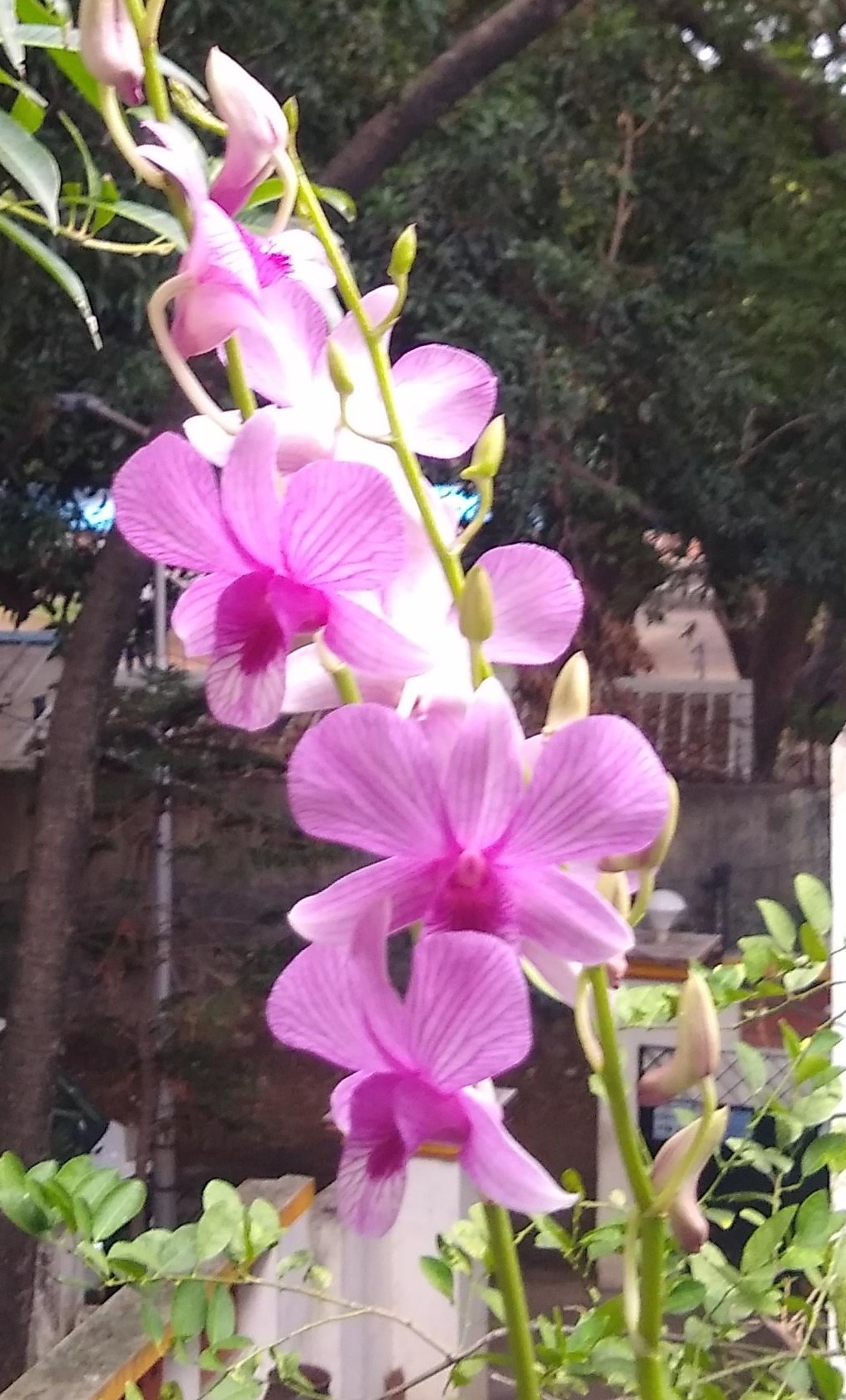
- Flowers 2-4 inches (5-10 cm) across, flat and rounded like moth wings. Pure white with yellow and red-orange markings in lip (center). Waxy, long-lasting texture. Arranged on arching sprays (inflorescences) 1-3 feet long. Each spray has 10-20 flowers opening sequentially. Individual flowers last 2-3 months. Can bloom twice yearly. Sweet, subtle fragrance
- Epiphytic orchid (grows on trees, not in soil). Monopodial growth - single stem producing leaves from top. 3-7 broad, leathery, dark green leaves 8-12 inches long. Thick, fleshy aerial roots covered in silvery velamen (spongy tissue) absorb moisture and nutrients from air. No pseudobulbs. Slow-growing, compact plant
- Plant height 6-12 inches (15-30 cm), flower sprays add 1-3 feet. Spread 8-15 inches. Lifespan of 10-20+ years with proper care, some specimens over 50 years. Propagated from keikis (baby plants on flower spikes) or tissue culture. Blooms year-round in ideal conditions, typically spring and fall
- Native to Indonesia, Philippines, Malaysia, Papua New Guinea, northern Australia, and tropical islands of Southeast Asia. Grows wild on tree branches in humid lowland and montane rainforests. Found from sea level to 2,000 feet elevation. Thrives in warm, humid, shaded forest understory
- Requires bright indirect light (no direct sun - burns leaves). Thrives in warm temperatures 65-80°F (18-27°C), tolerates 60-85°F. Needs high humidity 50-80%. Water when potting mix nearly dry (typically weekly). Grow in orchid bark mix, NOT soil. Good air circulation essential. Fertilize weakly weekly during growth. Hardy zones 10-12 outdoors, grown indoors elsewhere
- One of easiest orchids for beginners - adapts well to home conditions. Excellent houseplant for low to medium light. Long-lasting flowers make popular gift orchid. Used in wedding bouquets and corsages. Widely available from florists and garden centers. Flowers last months on plant or 2-3 weeks when cut
- Important in Southeast Asian culture and ceremonies. National flower of Indonesia, symbolizing beauty and refinement. Attracts moths for pollination in wild. Easy to rebloom - cut spike above node after flowering. Can produce keikis (baby plants) on old flower spikes. Symbolizes love, beauty, and luxury in flower language
Names in Different Languages
What is Floral Formula?
A floral formula is a symbolic representation of a flower's structure using letters, numbers, and special symbols. It provides a concise way to describe the arrangement and number of floral parts.
This formula describes the flower's symmetry, sepals, petals, stamens, and carpels in a standardized format.
Formula Sequence
- Bract: Br or Ebr
- Bracteole: Brl or Ebrl
- Symmetry: % (Radial) or ⊕ (Bilateral)
- Sex: ♀ (Female), ♂ (Male), or ⚥ (Bisexual)
- Calyx/Sepal: K<number> (Free or Fused)
- Corolla/Petal: C<number> (Free or Fused)
- Androecium: A<number> (Free or Fused)
- Gynaecium: G<number> (Superior or Inferior Ovary)
Symbol Meanings
- Numbers: Indicate quantity of parts
- Parentheses (): Parts are fused together
- Plus (+): Parts in different whorls
- Underline: Superior ovary position
- Overline: Inferior ovary position
- ∞: Numerous parts (too many to count)
Understanding floral formulas helps botanists quickly identify and classify flowers based on their structural characteristics.
Similar Flowers
Discover flowers that share botanical characteristics
Same Family
4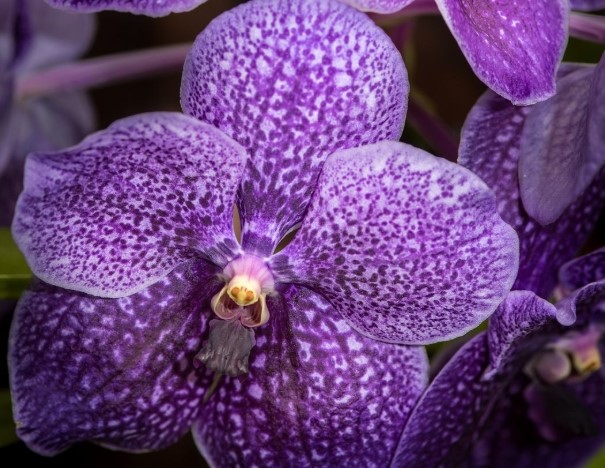
Vanda Orchid
Vanda
Spectacular tropical orchid renowned for large, flat-faced flowers in vibrant sh...
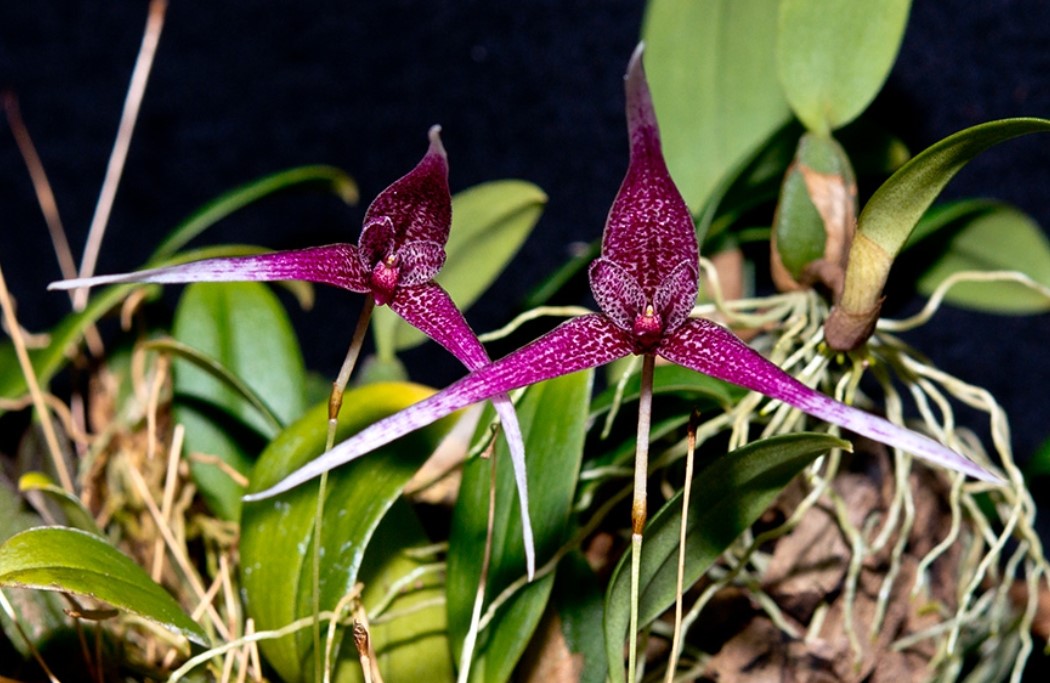
Bulbophyllum Orchid
Bulbophyllum
Fascinating and highly diverse orchid genus featuring some of the most bizarre a...
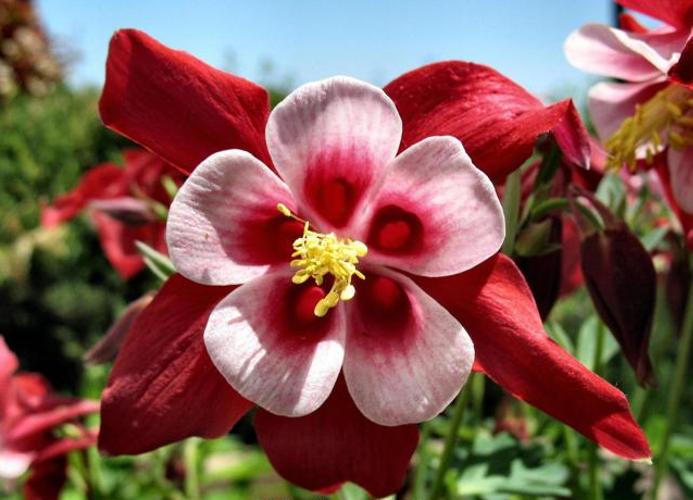
Cattleya orchids
Cattleya
Spectacular epiphytic orchids renowned as 'Queen of Orchids' for their large, sh...
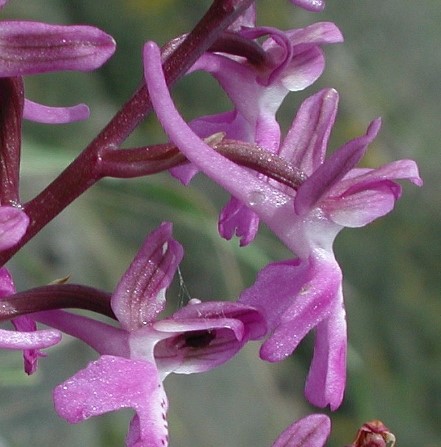
Orchis Orchid
Orchis
Classic terrestrial orchid featuring dense spikes of hooded flowers in shades of...
Similar Characteristics
4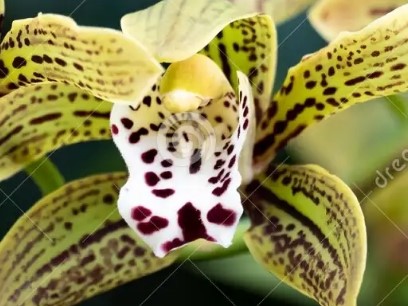
Boat Orchid
Cymbidium
Elegant orchid featuring graceful arching sprays of waxy flowers with distinctiv...
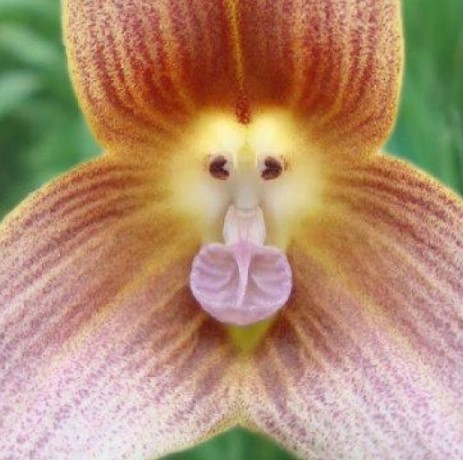
Monkey Orchid
Dracula simia
Extraordinary orchid featuring flowers with an uncanny resemblance to a monkey's...
Bulbophyllum Orchid
Bulbophyllum
Fascinating and highly diverse orchid genus featuring some of the most bizarre a...
Dendrobium Orchid
Dendrobium
Diverse and popular orchid genus featuring elegant sprays of flowers along cane-...