
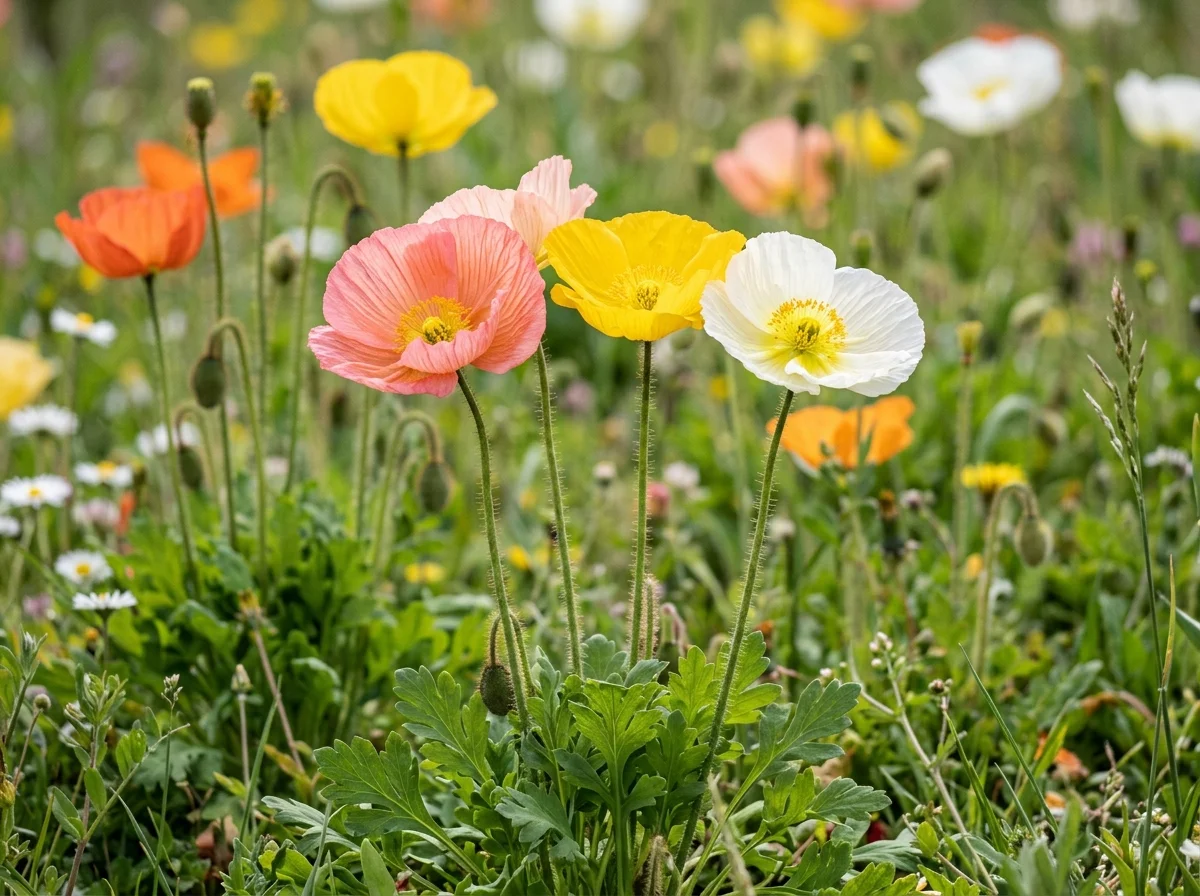
Iceland Poppy
Papaver nudicaule
How to Identify Iceland Poppy
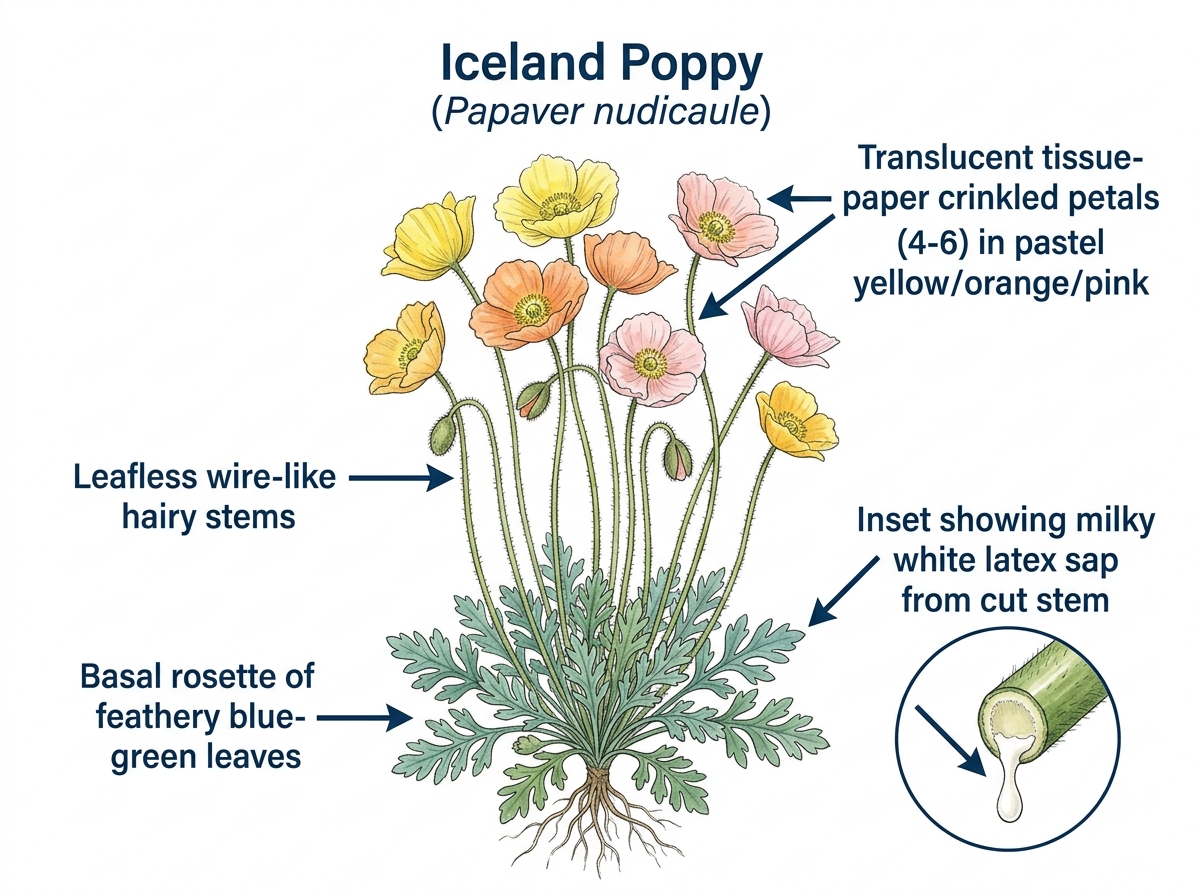
A guide to identifying Iceland Poppy (Papaver nudicaule):
- Papery Bowl-Shaped Blooms: Delicate, tissue-paper-like petals (4 to 6) forming a wide bowl 2 to 4 inches across in pastel yellow, orange, pink, salmon, and white.
- Leafless Hairy Stems: Wire-like, leafless green stems covered in fine stiff hairs, carrying a single flower head.
- Basal Leaf Rosette: Foliage forms a low rosette at ground level with deeply lobed, blue-green feathery leaves.
- Milky Latex Sap: Stems bleed a milky white latex sap when cut.
Care & Growing Guide
Iceland Poppy Care & Growing Guide:
- Light: Full direct sun (at least 6 hours daily).
- Soil: Sharply draining gravelly, sandy, or neutral soil. Highly susceptible to root rot in heavy wet clay.
- Temperature: Thrives in cool weather (40–70°F / 4–21°C). Perishes in hot humid summer climates.
- Watering: Water moderately during spring growth; allow soil surface to dry between waterings.
Seasonal Blooming & Hardiness
Seasonal Blooming Calendar:
- Blooming Season: Spring to early summer (April to June) in cool zones.
- Sowing Time: Sow seeds in autumn in mild winter regions or early spring in cold zones.
- Heat Decline: Plants stop flowering when summer temperatures exceed 80°F (27°C).
Bloom Timeline
About Iceland Poppy
Iceland Poppy (Papaver nudicaule), despite its common name, is native to subpolar regions of Asia and North America rather than Iceland. Beloved for its papery, bowl-shaped blossoms that appear in glowing pastel shades of yellow, orange, salmon, pink, rose, and white, the Iceland Poppy is one of the most elegant spring-flowering perennials cultivated in cool-climate gardens and commercial floral design.
Botanically, Papaver nudicaule is characterized by delicate, translucent, tissue-paper-like petals (usually 4 to 6) surrounding a dense central ring of yellow stamens and a green seed capsule. The flower buds are covered in bristly hairy sepals that drop off as the flower unfurls. Unlike the coarse stem of the Opium Poppy, Iceland Poppy flowers are borne singularly on leafless, slender, hairy, wire-like stems that rise 12 to 24 inches above a low basal rosette of feathery, blue-green lobed leaves. When stems are cut, they bleed a milky white latex sap — a hallmark of the family Papaveraceae.
Iceland Poppies thrive in cool spring weather and struggle in high summer heat and humidity. In cool climates (US Hardiness Zones 2–7), they are short-lived perennials; in warmer climates, they are grown as winter or early spring annuals. They demand full sun and exceptionally well-drained, sandy or gravelly soil, making them perfect for rock gardens, gravel beds, and cool-season border edges.
Like most members of the poppy family, Iceland Poppies contain toxic isoquinoline alkaloids throughout all plant tissues and milky sap. Ingestion can cause gastrointestinal distress, lethargy, pinpoint pupils, and sedation in dogs and cats. While less toxic than Opium Poppy, pets should be kept away from garden patches.
Floral Formula & Features
Bisexual flower with 2 hairy sepals that drop at opening, 4 delicate petals, numerous stamens, and a multi-carpellate superior capsule.
- Scientific Name & Classification: Papaver nudicaule (Papaveraceae). Known as Iceland Poppy, Arctic Poppy, and Subpolar Poppy.
- Identification Markers: Translucent tissue-paper petals in pastel yellow, orange, pink, and white on leafless, hairy, wire-like stems above a basal rosette.
- Floral Formula (K2 C4 A∞ G(2-∞)): 2 hairy deciduous sepals, 4 broad crinkled petals, numerous yellow stamens, and superior capsule ovary.
- Growing Requirements: Full Sun; cool temperatures (under 75°F/24°C) and sharply draining gravelly or sandy soil (Zones 2–7).
- Cultural & Floristry Uses: Highly prized in modern floral design for soft pastel tones and elegant crinkled texture.
- Safety & Toxicity: ⚠️ TOXIC TO PETS. Contains isoquinoline alkaloids causing sedation, drooling, vomiting, and digestive upset in cats and dogs.
- Common Look-alikes: Easily distinguished from California Poppy by its round cup shape, multi-color pastel palette, and hairy leafless stems (vs California Poppy's deep orange/yellow, fine lacy stem leaves, and smooth habit).
- Internal Links: Compare key differences in our California Poppy vs Iceland Poppy comparison, or check our Pet Guard Profile.
Names in Different Languages
Botanical Classification: Iceland Poppy belongs to the Papaveraceae family. Learn how to identify its floral symmetry, stamen arrangement, and structural formulas in our Botanical Family Classification Guide.
Toxicity & Safety
Always keep toxic plants out of reach of children and pets. Consult a veterinarian or medical professional immediately if ingestion is suspected.
Pet Safety Guide: For detailed toxicity symptoms, first-aid measures, and safe garden alternatives, see our full Pet Guard Profile for Iceland Poppy.
Frequently Asked Questions
What is Floral Formula?
A floral formula is a symbolic representation of a flower's structure using letters, numbers, and special symbols. It provides a concise way to describe the arrangement and number of floral parts.
This formula describes the flower's symmetry, sepals, petals, stamens, and carpels in a standardized format.
Formula Sequence
- Bract: Br or Ebr
- Bracteole: Brl or Ebrl
- Symmetry: % (Radial) or ⊕ (Bilateral)
- Sex: ♀ (Female), ♂ (Male), or ⚥ (Bisexual)
- Calyx/Sepal: K<number> (Free or Fused)
- Corolla/Petal: C<number> (Free or Fused)
- Androecium: A<number> (Free or Fused)
- Gynaecium: G<number> (Superior or Inferior Ovary)
Symbol Meanings
- Numbers: Indicate quantity of parts
- Parentheses (): Parts are fused together
- Plus (+): Parts in different whorls
- Underline: Superior ovary position
- Overline: Inferior ovary position
- ∞: Numerous parts (too many to count)
Understanding floral formulas helps botanists quickly identify and classify flowers based on their structural characteristics.
Similar Flowers
Discover flowers that share botanical characteristics
Same Family
4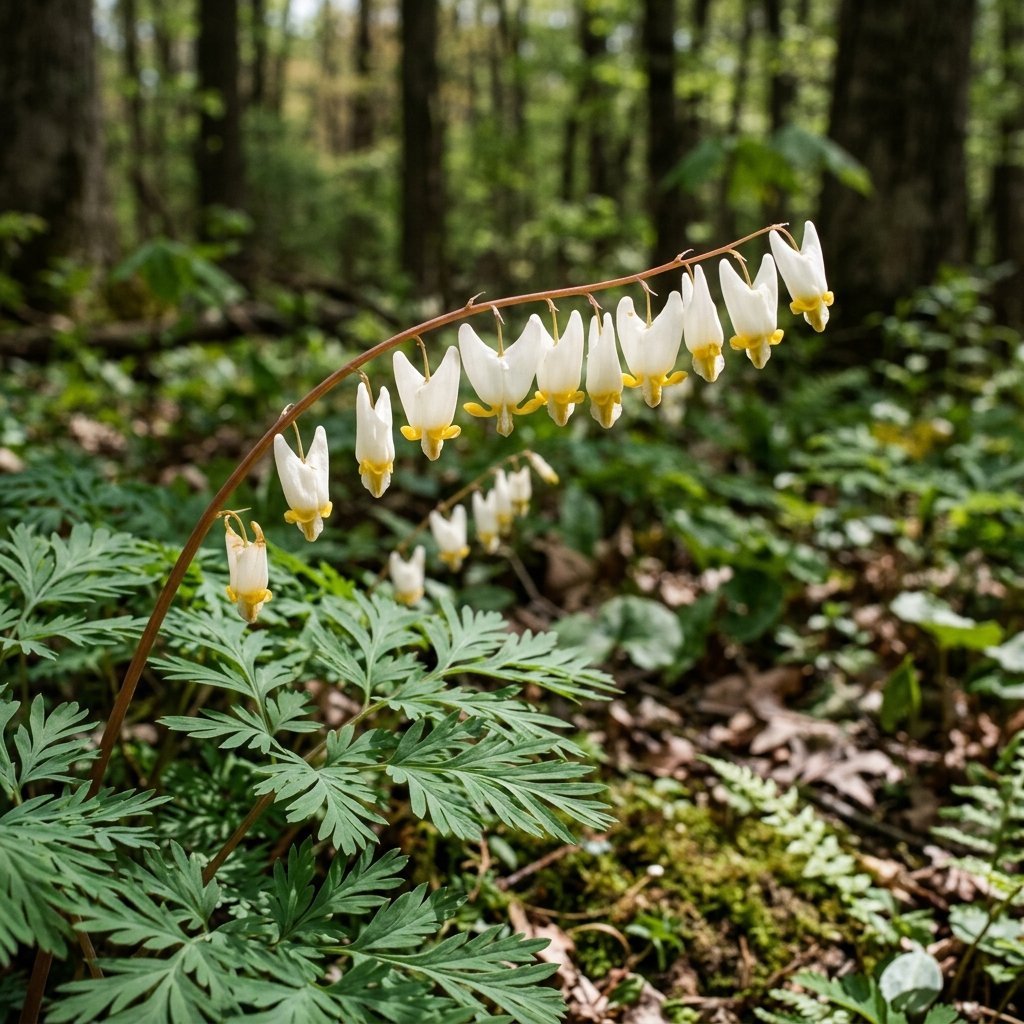
Dutchman's Breeches
Dicentra cucullaria
Dutchman's Breeches (*Dicentra cucullaria*) is one of the most whimsically charming and distinctively shaped wildflowers in the eastern North American spring flora, producing pendulous racemes of pure white flowers shaped precisely like pairs of miniature, upside-down pantaloons or 'breeches' — t...
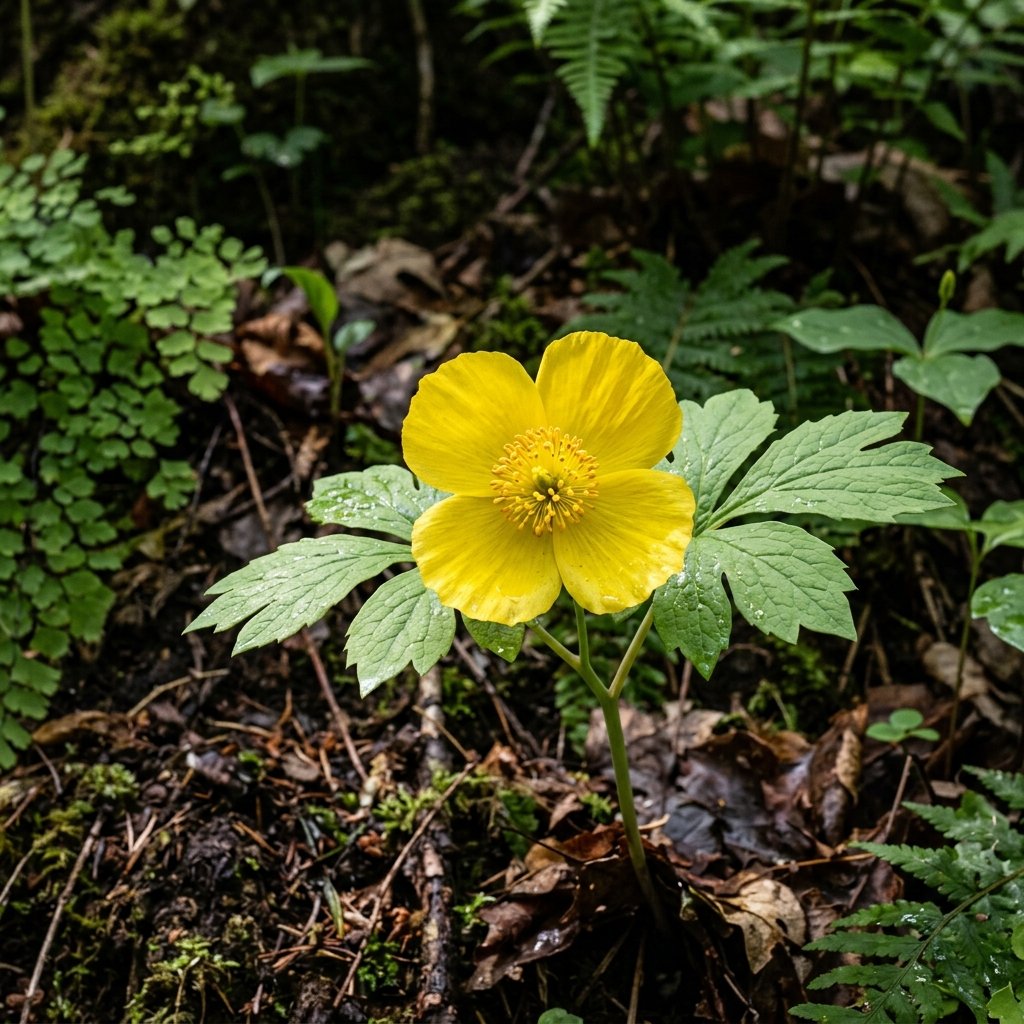
Wood Poppy
Stylophorum diphyllum
Wood Poppy (*Stylophorum diphyllum*), also known as the Celandine Poppy or Yellow Wood Poppy, is one of the showiest and most reliable native wildflowers for the shaded woodland garden, producing large, bright butter-yellow poppy flowers 1.5 to 2 inches across above a rosette of deeply lobed, blu...
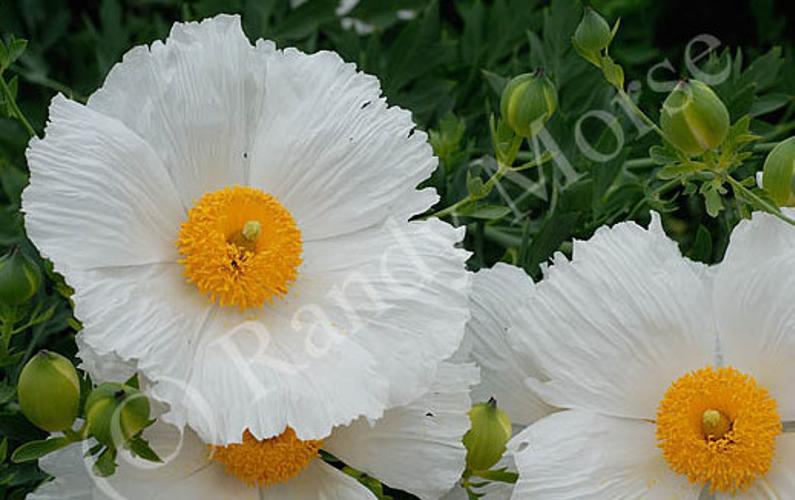
Tree Poppy
Dendromecon rigida
The Tree Poppy, scientifically known as Dendromecon rigida and commonly referred to as the Bush Poppy or California Tree Poppy, is a rare, spectacular evergreen shrub belonging to the Papaveraceae (poppy) family. Endemic to the dry, rocky chaparral slopes and coastal sage scrub of California and...
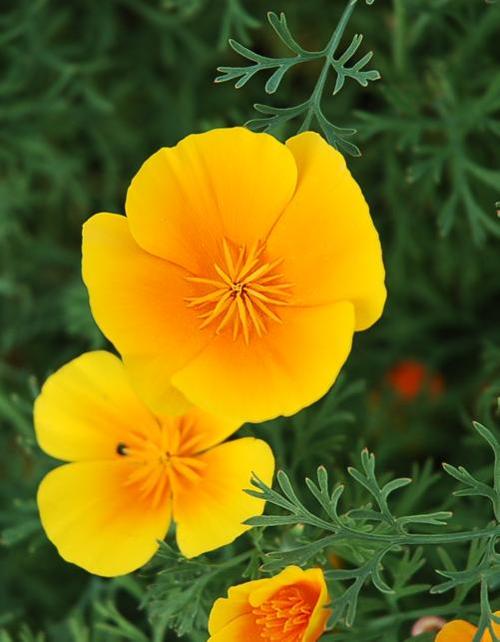
California poppy
Eschscholzia californica
Eschscholzia californica, famously known as the California Poppy or Golden Poppy, is a brilliant wildflower that serves as a luminous symbol of the American West. Belonging to the Papaveraceae (Poppy) family, this resilient species is celebrated for its silky, cup-shaped blossoms that range from...