
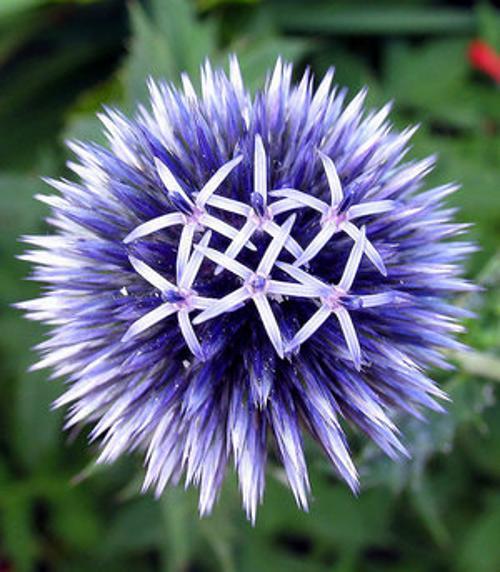
Globe Thistle
Echinops
Basic Details
Floral Formula & Features
Composite flower head (capitulum). Each floret - Bracteate (spiny bracts), radially symmetrical (actinomorphic), bisexual, no sepals (modified to pappus or absent), 5 fused petals forming tube, 5 fused stamens, 2 fused carpels with inferior ovary. Hundreds of florets form spherical head
- Name 'Echinops' from Greek 'echinos' (hedgehog) and 'opsis' (appearance) for spiky, spherical flower heads. 'Globe Thistle' describes round shape. Not true thistle (Cirsium) but related. About 120 Echinops species. Cultivated since 16th century. Popular in Victorian gardens
- Flower heads 1.5-2 inches (4-5 cm) across, perfectly spherical, composed of 200+ tiny tubular florets. Colors include metallic steel-blue, violet-blue, powder blue, or white. Spiky appearance from protruding stamens and bracts. Blooms summer through fall (July-September). Flowers open from top of globe downward
- Herbaceous perennial that blooms mid to late summer. Long-lived (10-15+ years). Clump-forming with deep taproot. Foliage deeply cut, thistle-like, silvery-green underneath. Flowers excellent for drying. Drought tolerant once established. Self-seeds moderately
- Grows 3-5 feet (90-150 cm) tall, dwarf varieties 2-3 feet. Clumps spread 2-3 feet. Lifespan of 10-15+ years. Propagated from seed (sow in spring, blooms second year), root cuttings, or division (difficult due to taproot). Deep taproot makes transplanting challenging
- Native to central and southern Europe, Mediterranean region, western Asia (Turkey, Iran, Russia). Found in dry grasslands, rocky slopes, and disturbed areas. Now cultivated worldwide. Naturalized in some regions. Thrives in hot, dry climates
- Requires full sun (6-8 hours). Thrives in average to poor, well-drained soil. Extremely drought tolerant once established. Dislikes wet soil (causes rot). Minimal watering needed. Cut back after flowering. Very low maintenance. Tolerates heat, poor soil, and neglect. Hardy zones 3-9
- Excellent cut flower (fresh or dried, lasts weeks). Major pollinator magnet—bees and butterflies swarm blooms. Deer and rabbit resistant (spiny). Perfect for xeriscape, prairie, and Mediterranean gardens. Architectural focal point. Tolerates poor soil, heat, drought. Self-seeds moderately. Symbolizes independence. Used in herbal medicine
Names in Different Languages
What is Floral Formula?
A floral formula is a symbolic representation of a flower's structure using letters, numbers, and special symbols. It provides a concise way to describe the arrangement and number of floral parts.
This formula describes the flower's symmetry, sepals, petals, stamens, and carpels in a standardized format.
Formula Sequence
- Bract: Br or Ebr
- Bracteole: Brl or Ebrl
- Symmetry: % (Radial) or ⊕ (Bilateral)
- Sex: ♀ (Female), ♂ (Male), or ⚥ (Bisexual)
- Calyx/Sepal: K<number> (Free or Fused)
- Corolla/Petal: C<number> (Free or Fused)
- Androecium: A<number> (Free or Fused)
- Gynaecium: G<number> (Superior or Inferior Ovary)
Symbol Meanings
- Numbers: Indicate quantity of parts
- Parentheses (): Parts are fused together
- Plus (+): Parts in different whorls
- Underline: Superior ovary position
- Overline: Inferior ovary position
- ∞: Numerous parts (too many to count)
Understanding floral formulas helps botanists quickly identify and classify flowers based on their structural characteristics.
Similar Flowers
Discover flowers that share botanical characteristics
Same Family
4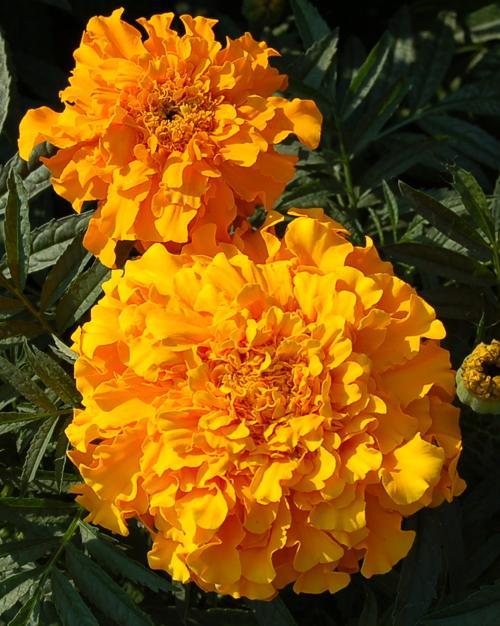
Marigold
Tagetes erecta
Cheerful annual producing masses of vibrant flowers in yellow, orange, gold, mah...
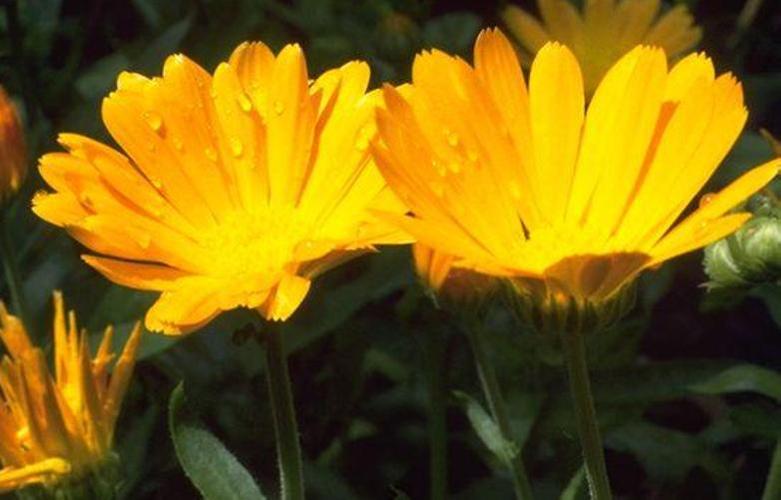
English Marigolds
Calendula officinalis
Cheerful annual featuring bright orange or yellow daisy-like flowers with a dist...
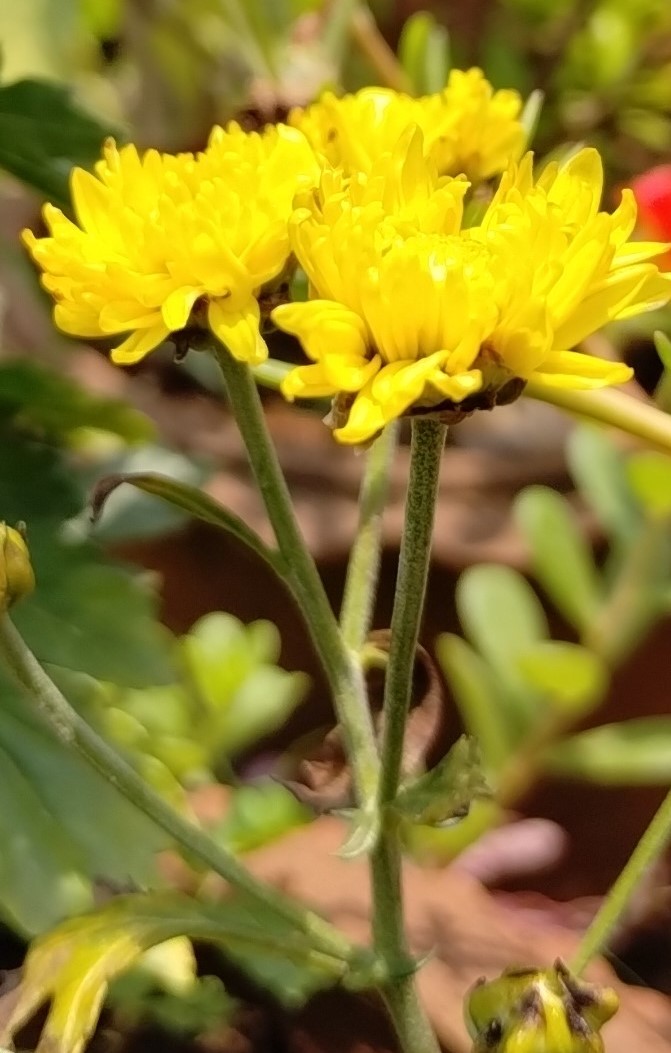
Chrysanthemum
Chrysanthemum
Beloved fall-blooming perennial celebrated for its profuse, colorful flowers tha...
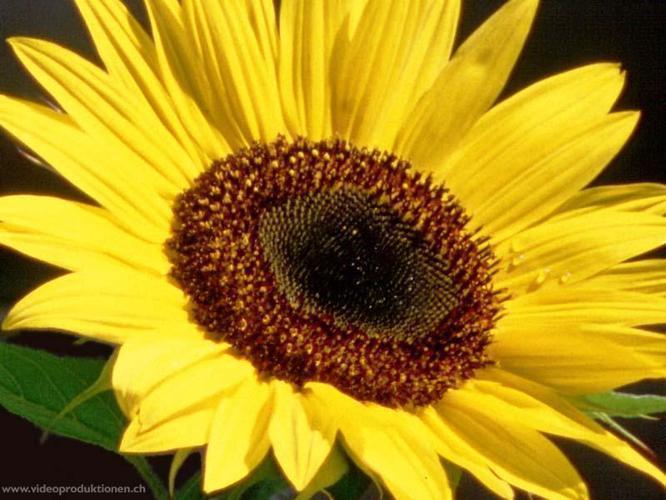
Sunflower
Helianthus annuus
Iconic tall annual with large yellow flower heads that track the sun across sky ...
Similar Characteristics
4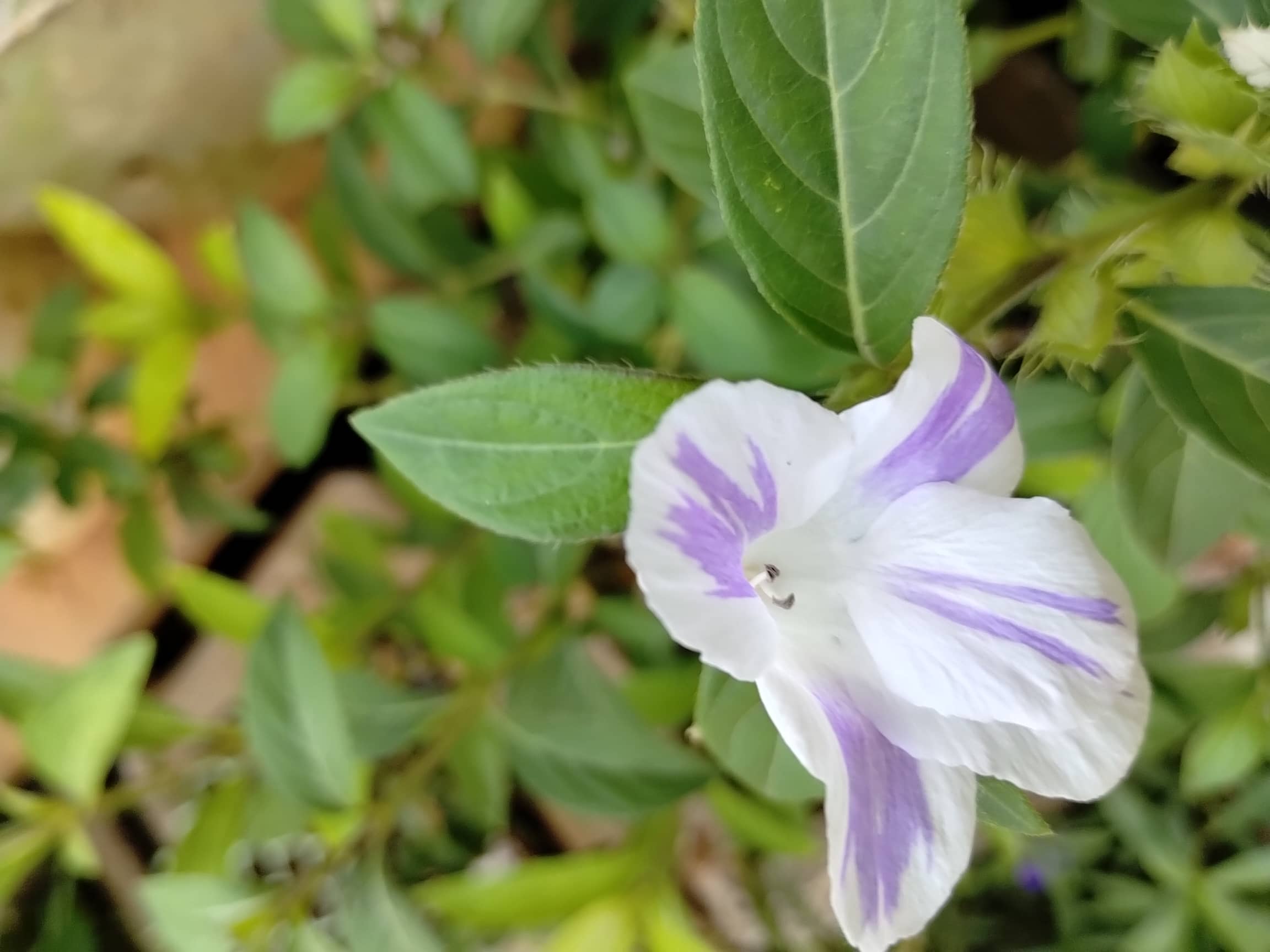
December
Barleria Cristata,Barleria prioniti
Attractive evergreen shrub featuring tubular flowers with distinctive crested or...
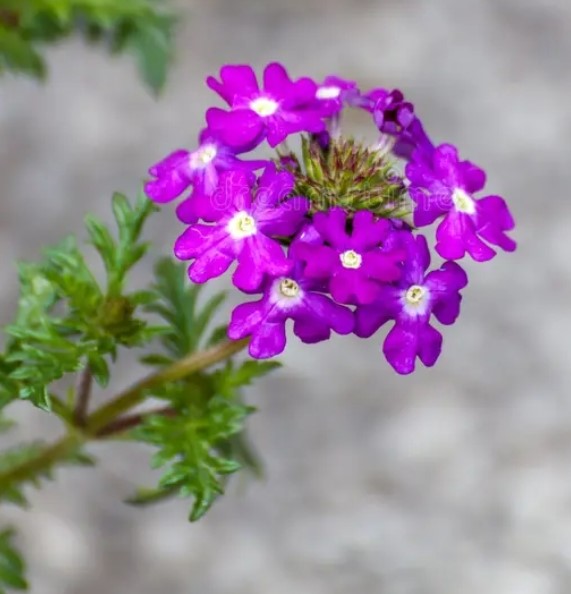
Verbena
Verbena
Versatile and colorful flowering plant producing dense clusters of small, five-p...
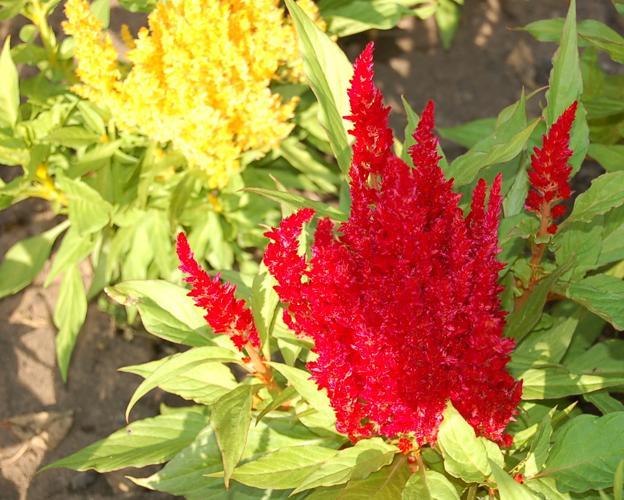
Celosia
Celosia Argentea
Striking ornamental annual with distinctive flower heads that come in two main f...
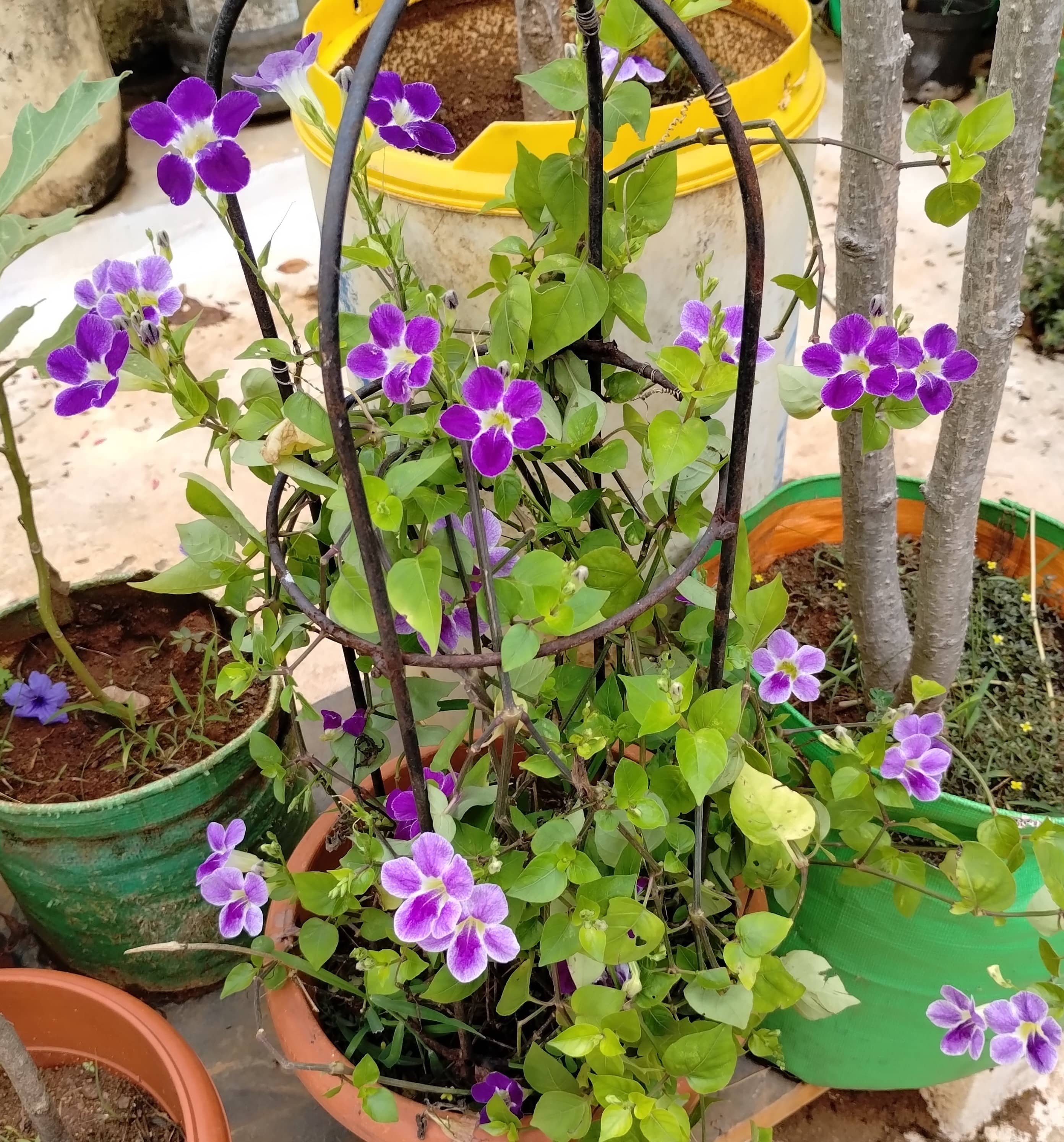
Thunbergia Bush Clock Vine
Thunbergia erecta
Versatile tropical plant producing stunning trumpet-shaped flowers in shades of ...