
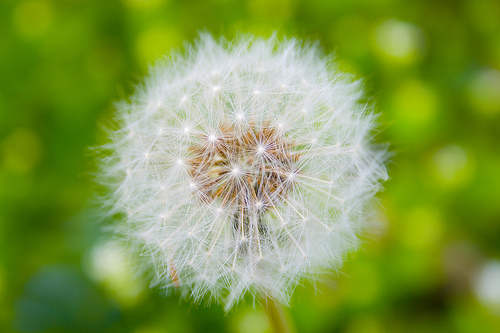
Dandelion
Taraxacum officinale
Basic Details
Floral Formula & Features
Composite flower head (capitulum) with only ray florets (ligulate). Bracteate, bilaterally symmetrical, bisexual, no sepals (modified into pappus of feathery bristles for seed dispersal), 5 fused petals forming strap-shaped ligule with 5 teeth, 5 fused stamens forming tube around style, 2 fused carpels with inferior ovary
- Name 'dandelion' from French 'dent-de-lion' (lion's tooth) for jagged leaf edges. 'Taraxacum' possibly from Arabic 'tarakhshagog' (bitter herb) or Greek 'taraxos' (disorder) and 'akos' (remedy). 'Blowball' and 'puffball' describe seed heads. 'Piss-a-bed' refers to diuretic properties. Over 2,000 microspecies worldwide
- Flowers 1-2 inches (2.5-5 cm) across, bright golden-yellow composite heads with 150-200 ray florets (no disc florets). After flowering, transforms into spherical seed head 1.5-2 inches across with 150-200 seeds, each with feathery pappus (parachute) for wind dispersal. Flowers close at night and in cloudy weather
- Perennial with deep taproot (6-18 inches long). Blooms primarily spring through early summer (March-June), sporadically through fall. Individual flowers last 1-2 days. Reproduces by seed (up to 15,000 per plant annually) and regenerates from root fragments. Nearly impossible to eradicate once established
- Grows 2-18 inches (5-45 cm) tall depending on growing conditions. Forms basal rosette of deeply toothed leaves 2-16 inches long. Taproot grows 6-18 inches deep. Lifespan of 5-10+ years. Propagated by seed (germinates readily) or root division
- Native to Europe and Asia. Now cosmopolitan weed found on every continent except Antarctica. Thrives in temperate regions worldwide. Grows in lawns, gardens, roadsides, waste areas, meadows, and disturbed soils. One of world's most successful plants
- Extremely adaptable, grows in full sun to partial shade. Tolerates poor, compacted soil and drought once established. Thrives in disturbed areas and lawns. Deep taproot makes difficult to remove. Spreads aggressively by wind-dispersed seeds. Very hardy, zones 3-10
- Entirely edible and highly nutritious. Young leaves rich in vitamins A, C, K, calcium, iron (harvest before flowering for best flavor). Roots roasted for coffee substitute. Flowers make wine and jelly. Used medicinally for liver support, digestion, and as diuretic. Crucial early nectar source for bees. Considered invasive weed but increasingly valued for foraging and permaculture
Names in Different Languages
What is Floral Formula?
A floral formula is a symbolic representation of a flower's structure using letters, numbers, and special symbols. It provides a concise way to describe the arrangement and number of floral parts.
This formula describes the flower's symmetry, sepals, petals, stamens, and carpels in a standardized format.
Formula Sequence
- Bract: Br or Ebr
- Bracteole: Brl or Ebrl
- Symmetry: % (Radial) or ⊕ (Bilateral)
- Sex: ♀ (Female), ♂ (Male), or ⚥ (Bisexual)
- Calyx/Sepal: K<number> (Free or Fused)
- Corolla/Petal: C<number> (Free or Fused)
- Androecium: A<number> (Free or Fused)
- Gynaecium: G<number> (Superior or Inferior Ovary)
Symbol Meanings
- Numbers: Indicate quantity of parts
- Parentheses (): Parts are fused together
- Plus (+): Parts in different whorls
- Underline: Superior ovary position
- Overline: Inferior ovary position
- ∞: Numerous parts (too many to count)
Understanding floral formulas helps botanists quickly identify and classify flowers based on their structural characteristics.
Similar Flowers
Discover flowers that share botanical characteristics
Same Family
4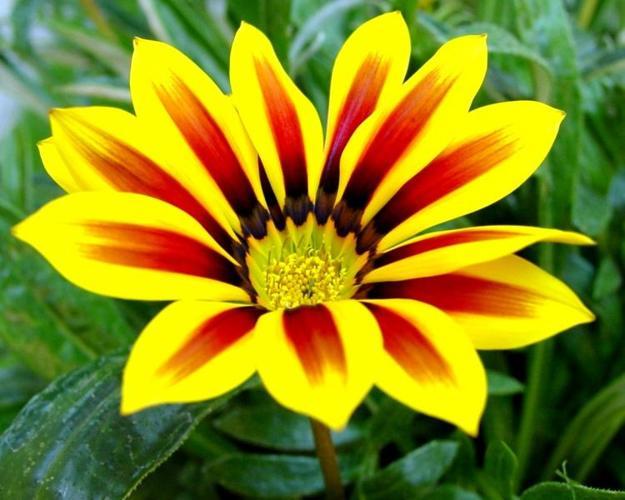
Gazania
Gazania rigens
Vibrant, daisy-like blooms known for their bright colors and ability to thrive i...
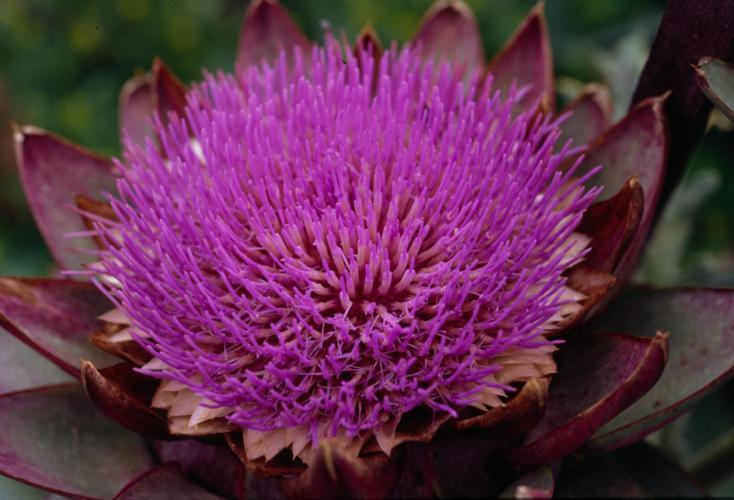
Artichoke
Cynara scolymus
Dramatic architectural plant grown primarily for its edible flower buds, which a...
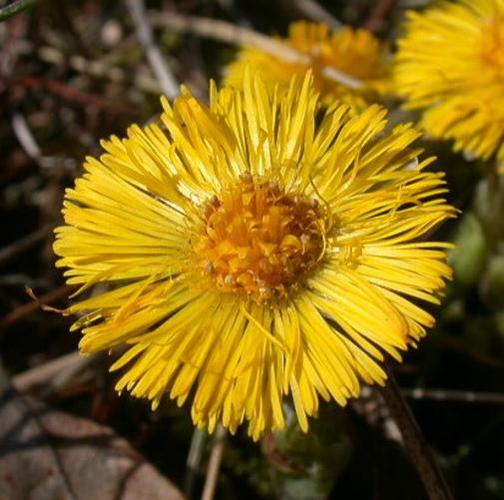
Coltsfoot
Tussilago farfara
Early spring wildflower featuring bright yellow, dandelion-like blooms that appe...
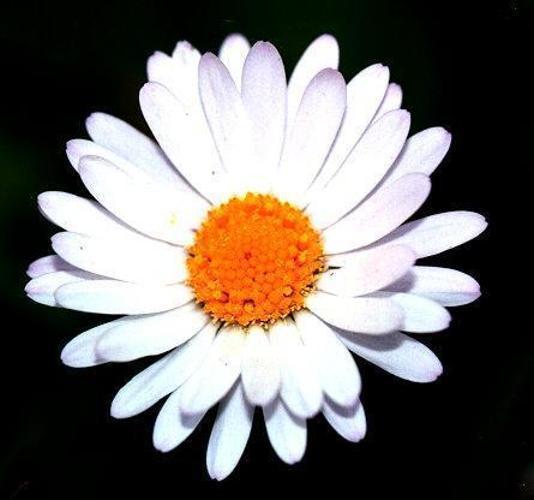
Oxeye Daisy
Leucanthemum vulgare
Classic wildflower with bright white petals radiating around golden-yellow cente...
Similar Characteristics
4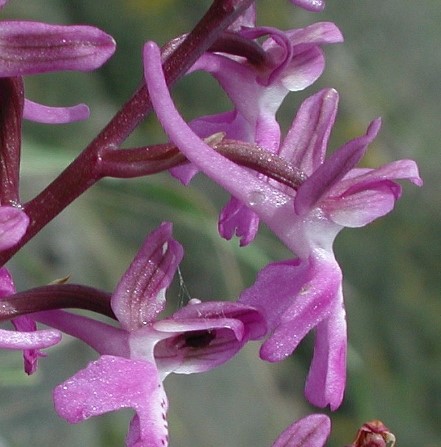
Orchis Orchid
Orchis
Classic terrestrial orchid featuring dense spikes of hooded flowers in shades of...
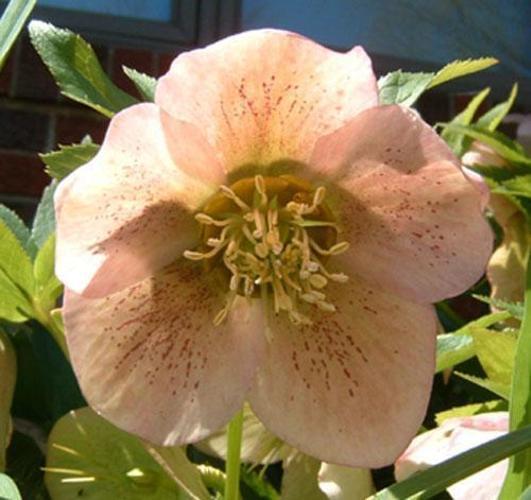
Lenten rose
Helleborus orientalis
Elegant shade-loving perennial featuring nodding, cup or saucer-shaped flowers i...
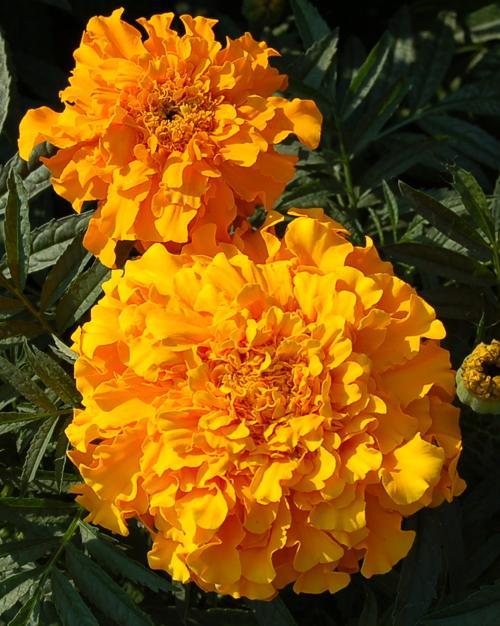
Marigold
Tagetes erecta
Cheerful annual producing masses of vibrant flowers in yellow, orange, gold, mah...
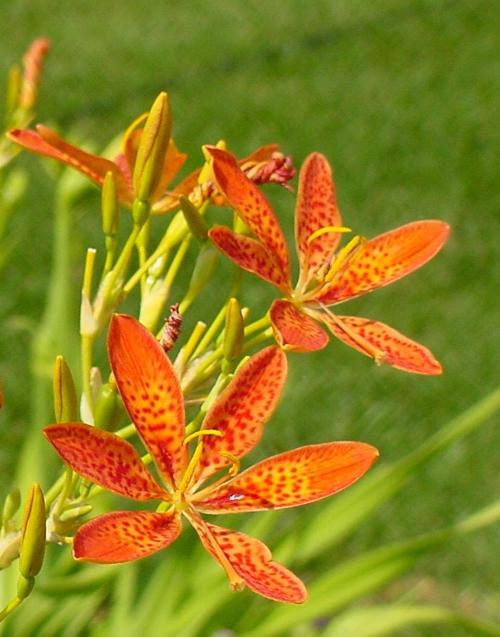
Leopard Lily
Iris domestica (syn. Belamcanda chinensis)
Striking perennial featuring exotic, star-shaped flowers in brilliant orange-red...