
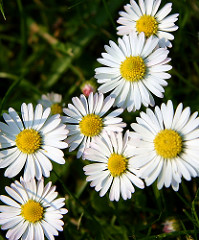
Daisy
Bellis perennis
Basic Details
Floral Formula & Features
Composite flower head (capitulum). Ray florets - Bracteate, bilaterally symmetrical, female, no sepals (modified to pappus or absent), numerous fused petals forming strap-shaped ray, no stamens, 2 fused carpels with inferior ovary. Disk florets - Bracteate, radially symmetrical, bisexual, no sepals, 5 fused petals forming tube, 5 fused stamens, 2 fused carpels with inferior ovary
- Name 'daisy' from Old English 'dæges eage' (day's eye) because flowers close at night and open at dawn. 'Bellis' from Latin 'bellus' (beautiful). 'Perennis' means perennial (long-lasting). Also called 'bruisewort' for traditional use treating bruises. One of most recognized flowers worldwide
- Flowers 0.75-1.25 inches (2-3 cm) across with composite head (capitulum). White ray florets (often tinged pink underneath) surround yellow disc florets in center. Cultivated varieties include double forms with all ray florets, and pink or red forms. Flowers borne singly on leafless stems 2-8 inches tall
- Perennial forming low rosettes of leaves. Blooms early spring through fall (March-November), most prolific in spring. Individual flowers last 7-10 days. Spreads by seed and short stolons. Often considered lawn weed but valued in wildflower meadows and cottage gardens
- Grows 2-8 inches (5-20 cm) tall with low, spreading habit. Forms rosettes 3-6 inches across. Lifespan of several years. Propagated by seed (self-seeds readily), division of rosettes, or separating stolons. Germinates easily, can become invasive in lawns
- Native to Europe, western Asia, and North Africa. Now naturalized worldwide in temperate regions including North America, Australia, and New Zealand. Found in lawns, meadows, pastures, roadsides, and disturbed areas. Thrives in short grass and mowed areas
- Adapts to full sun or partial shade. Prefers moist, well-drained soil but tolerates various conditions. Very hardy and resilient, survives mowing and foot traffic. Thrives in cool weather, may go dormant in extreme heat. Requires minimal care once established
- Young leaves edible in salads (slightly bitter). Flowers used in herbal medicine for coughs, wounds, and skin conditions. Attracts bees and beneficial insects. Deer resistant. Popular for daisy chains and children's games. Considered weed in manicured lawns but valued in naturalized settings. Symbol of innocence, purity, and new beginnings
Names in Different Languages
What is Floral Formula?
A floral formula is a symbolic representation of a flower's structure using letters, numbers, and special symbols. It provides a concise way to describe the arrangement and number of floral parts.
This formula describes the flower's symmetry, sepals, petals, stamens, and carpels in a standardized format.
Formula Sequence
- Bract: Br or Ebr
- Bracteole: Brl or Ebrl
- Symmetry: % (Radial) or ⊕ (Bilateral)
- Sex: ♀ (Female), ♂ (Male), or ⚥ (Bisexual)
- Calyx/Sepal: K<number> (Free or Fused)
- Corolla/Petal: C<number> (Free or Fused)
- Androecium: A<number> (Free or Fused)
- Gynaecium: G<number> (Superior or Inferior Ovary)
Symbol Meanings
- Numbers: Indicate quantity of parts
- Parentheses (): Parts are fused together
- Plus (+): Parts in different whorls
- Underline: Superior ovary position
- Overline: Inferior ovary position
- ∞: Numerous parts (too many to count)
Understanding floral formulas helps botanists quickly identify and classify flowers based on their structural characteristics.
Similar Flowers
Discover flowers that share botanical characteristics
Same Family
4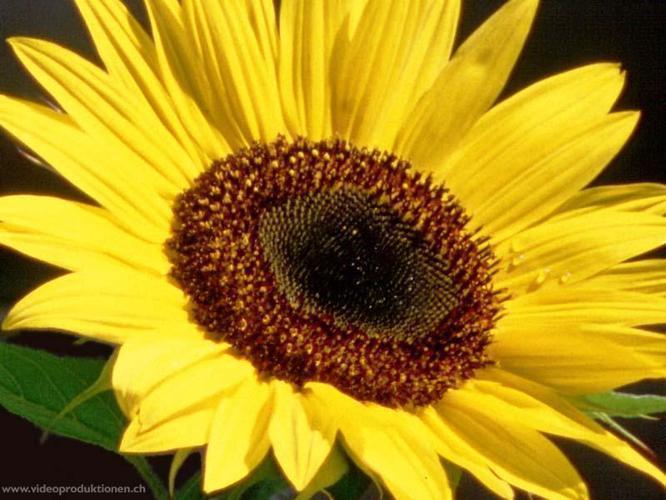
Sunflower
Helianthus annuus
Iconic tall annual with large yellow flower heads that track the sun across sky ...
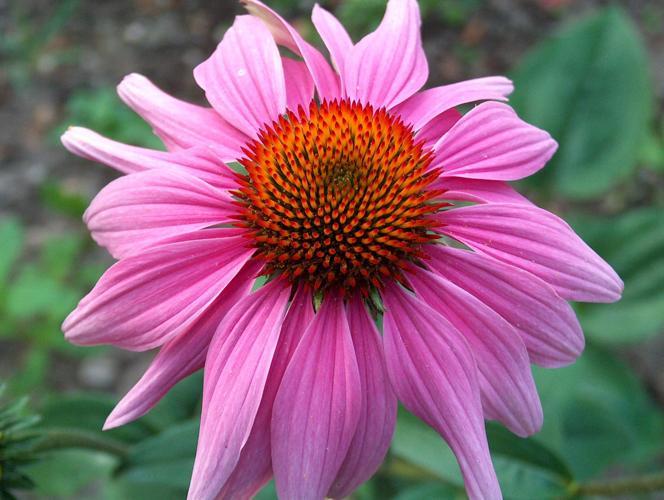
Purple Coneflower
Echinacea purpurea
Popular prairie wildflower with distinctive purple-pink petals drooping around s...
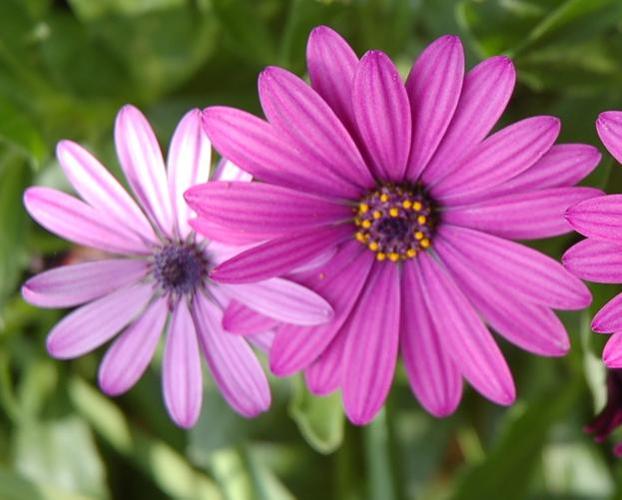
African Daisy
Dimorphotheca ecklonis
Vibrant daisy-like flowers with composite blooms featuring ray petals surroundin...
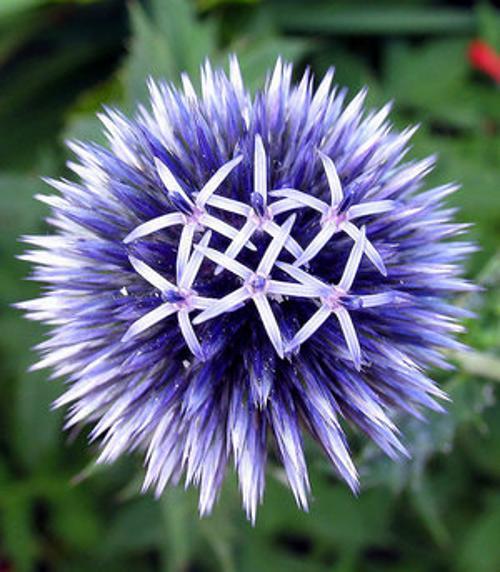
Globe Thistle
Echinops
Striking architectural perennial featuring perfectly spherical, spiky flower hea...
Similar Characteristics
4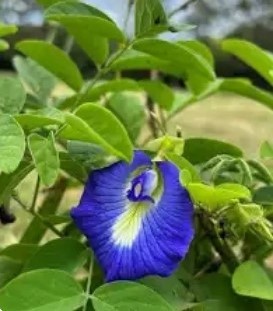
Butterfly pea
Clitoria ternatea
Striking tropical vine featuring vivid sky-blue pea-shaped flowers with distinct...
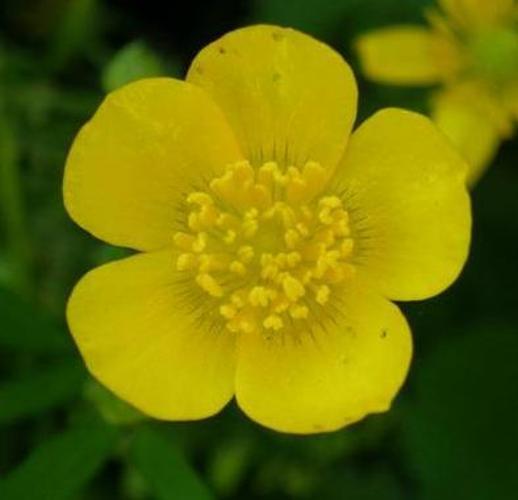
Meadow Buttercup
Ranunculus acris
Common wildflower with bright golden-yellow cup-shaped blooms featuring glossy, ...
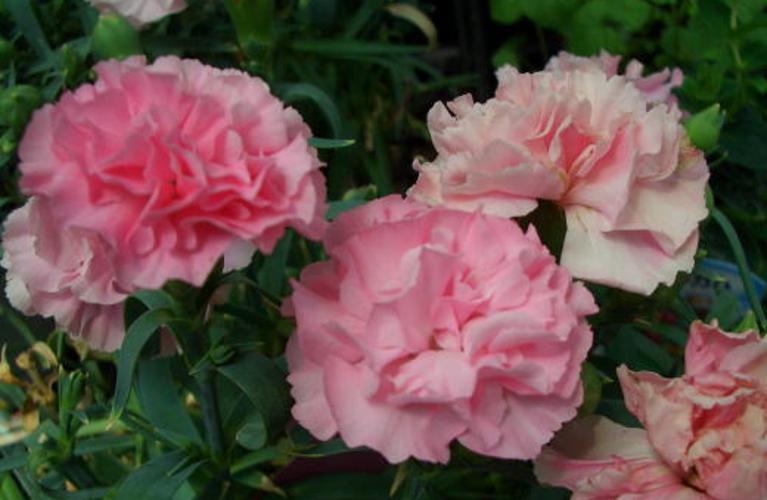
Carnation flower
Dianthus caryophyllus
Classic florist flower featuring densely ruffled, fringed petals with distinctiv...
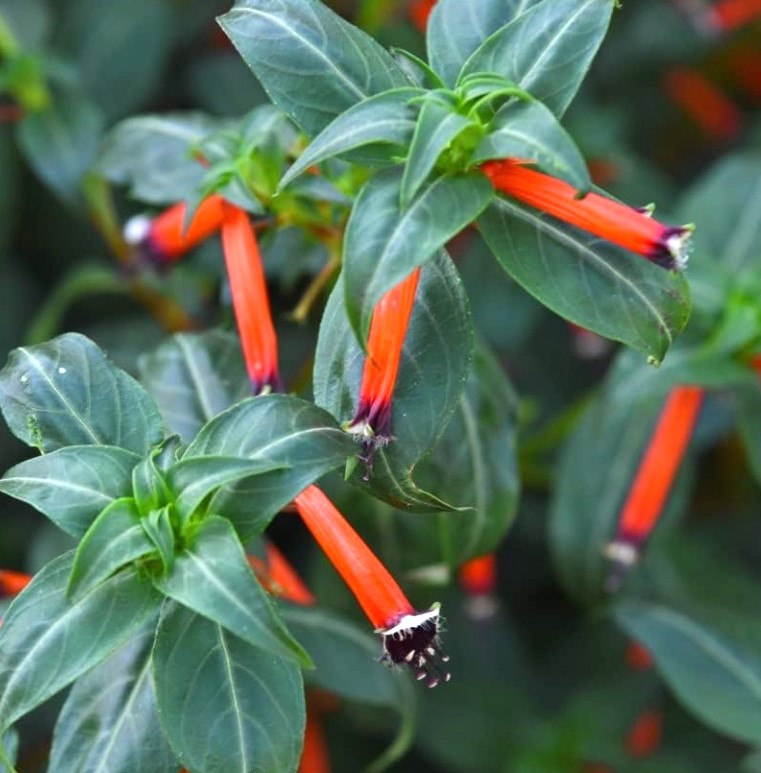
Cuphea Cigar
Cuphea ignea
Charming compact shrub featuring unique tubular flowers that resemble tiny lit c...