
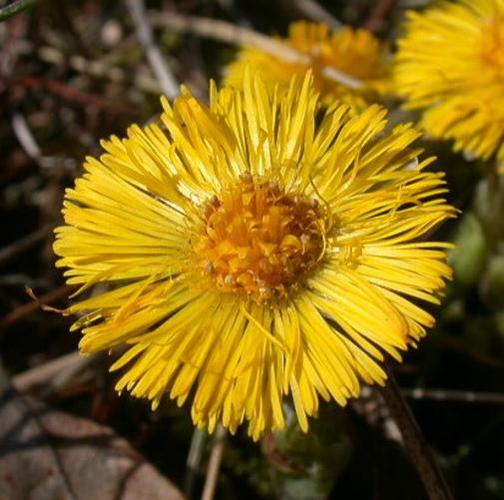
Coltsfoot
Tussilago farfara
Basic Details
Floral Formula & Features
Composite flower head (capitulum). Ray florets - Bracteate, bilaterally symmetrical, female, no sepals (modified to pappus), numerous fused petals, no stamens, 2 fused carpels with inferior ovary. Disk florets - Bracteate, radially symmetrical, bisexual, no sepals, 5 fused petals, 5 fused stamens, 2 fused carpels with inferior ovary
- Name 'Tussilago' from Latin 'tussis' (cough) referring to traditional use as cough remedy. 'Farfara' means 'to carry flour,' describing white-woolly undersides of leaves. 'Coltsfoot' from hoof-shaped leaves resembling young horse's foot. 'Coughwort' reflects medicinal use
- Flowers 0.5-1.5 inches (1.5-4 cm) across, bright golden-yellow composite heads with numerous ray florets surrounding disc florets. Blooms appear singly on scaly, purplish-red stems 4-12 inches tall before leaves. Resembles small dandelion but blooms much earlier (February-April)
- Perennial herb spreading by rhizomes. One of earliest spring bloomers, flowering February-April before leaves appear. After blooming, produces fluffy seed heads like dandelions. Large leaves emerge in late spring, persist through summer, die back in fall
- Flower stems 4-12 inches (10-30 cm) tall. Leaves grow 4-8 inches (10-20 cm) wide. Lifespan of many years from persistent rhizomes. Spreads aggressively by rhizomes and seed. Propagated by rhizome division (though rarely cultivated due to invasiveness)
- Native to Europe, western and central Asia, and North Africa from British Isles to Siberia, Arctic Circle to Himalayas. Introduced to North America by European settlers for medicine. Now naturalized and invasive in parts of Canada and northern United States
- Thrives in full sun to partial shade. Prefers moist, heavy clay or disturbed soils. Commonly found along roadsides, stream banks, waste places, and construction sites. Tolerates poor drainage. Very hardy and difficult to eradicate once established
- Historically used for over 2,000 years to treat coughs, bronchitis, and asthma—leaves smoked or made into tea. Contains mucilage (soothes throat) but also toxic pyrrolizidine alkaloids (liver damage). Modern herbal use discouraged. Considered invasive weed in North America. Flowers provide early nectar for bees
Names in Different Languages
What is Floral Formula?
A floral formula is a symbolic representation of a flower's structure using letters, numbers, and special symbols. It provides a concise way to describe the arrangement and number of floral parts.
This formula describes the flower's symmetry, sepals, petals, stamens, and carpels in a standardized format.
Formula Sequence
- Bract: Br or Ebr
- Bracteole: Brl or Ebrl
- Symmetry: % (Radial) or ⊕ (Bilateral)
- Sex: ♀ (Female), ♂ (Male), or ⚥ (Bisexual)
- Calyx/Sepal: K<number> (Free or Fused)
- Corolla/Petal: C<number> (Free or Fused)
- Androecium: A<number> (Free or Fused)
- Gynaecium: G<number> (Superior or Inferior Ovary)
Symbol Meanings
- Numbers: Indicate quantity of parts
- Parentheses (): Parts are fused together
- Plus (+): Parts in different whorls
- Underline: Superior ovary position
- Overline: Inferior ovary position
- ∞: Numerous parts (too many to count)
Understanding floral formulas helps botanists quickly identify and classify flowers based on their structural characteristics.
Similar Flowers
Discover flowers that share botanical characteristics
Same Family
4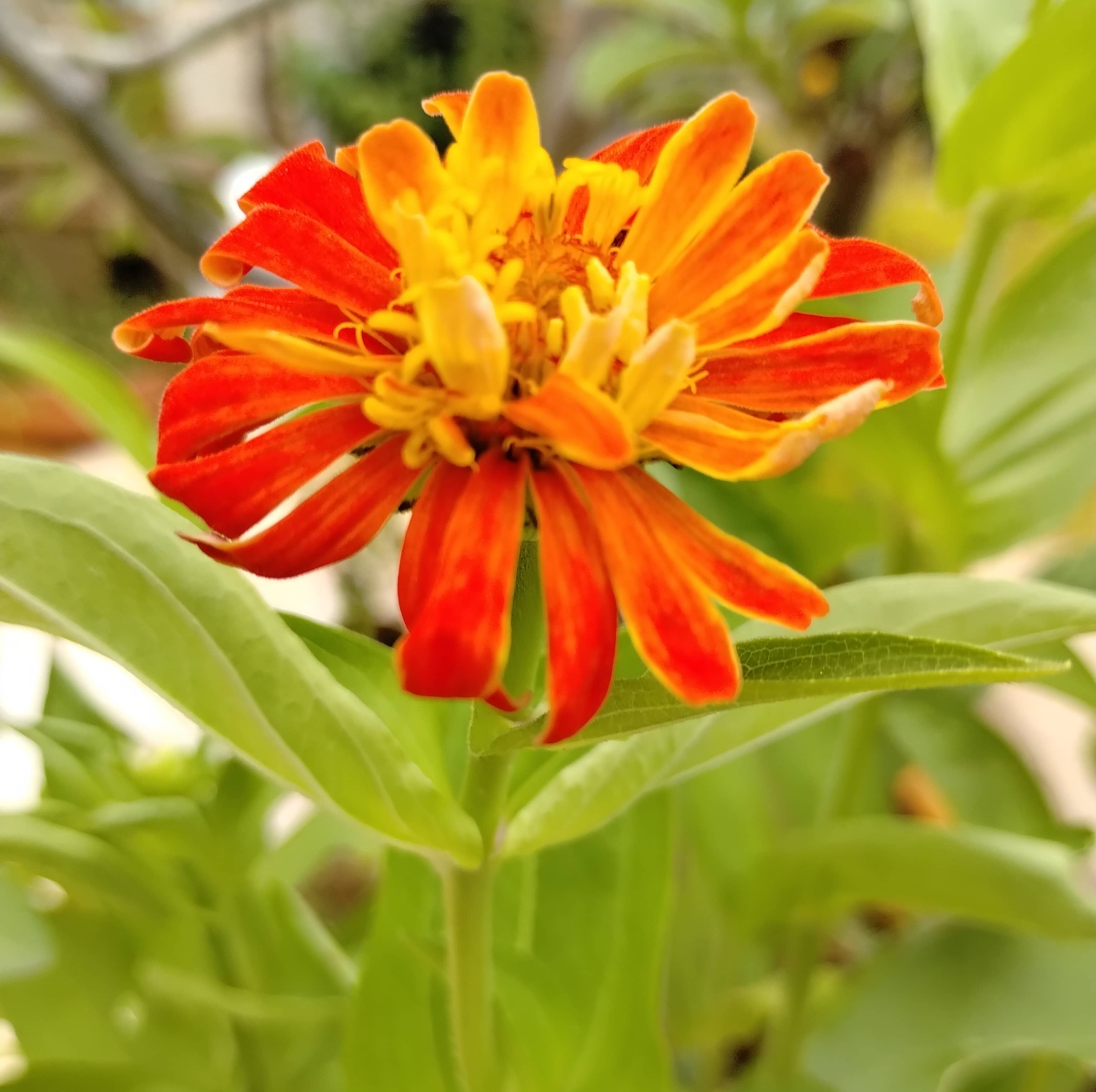
Zinnia
Zinnia
They belong to the same family as Daisy. Zinnia have a stunning range of shapes ...
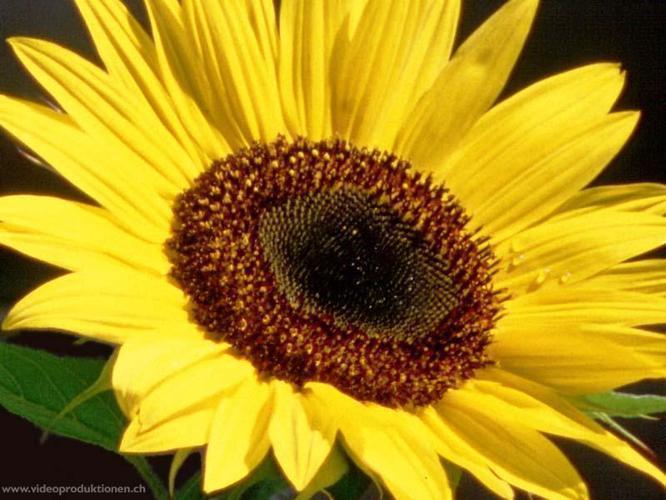
Sunflower
Helianthus annuus
Iconic tall annual with large yellow flower heads that track the sun across sky ...
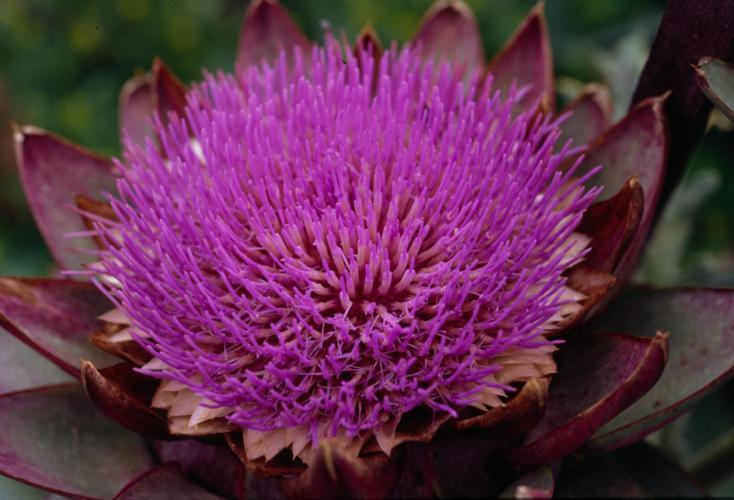
Artichoke
Cynara scolymus
Dramatic architectural plant grown primarily for its edible flower buds, which a...
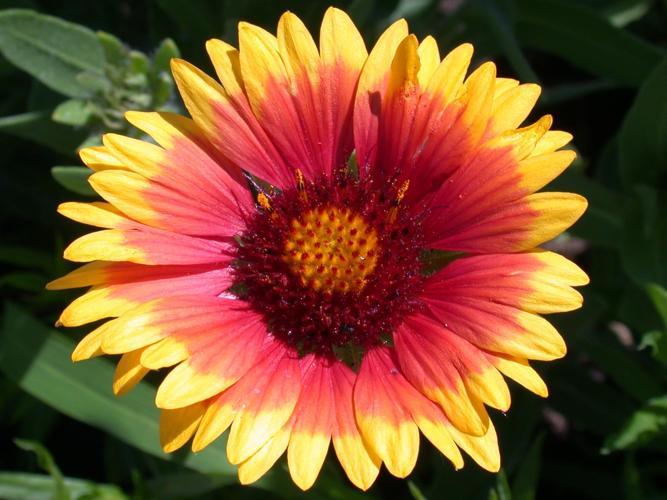
Gaillardia
Gaillardia
Cheerful, sun-loving perennial or annual featuring vibrant daisy-like flowers in...
Similar Characteristics
4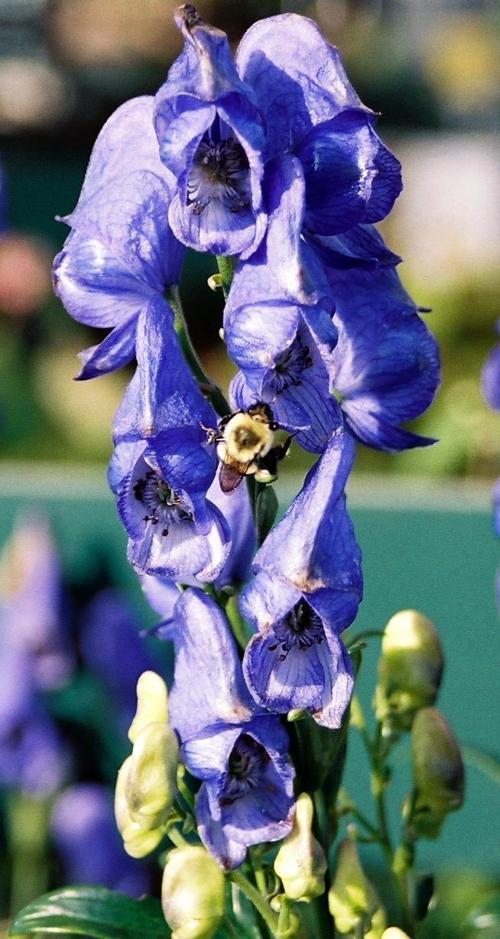
Monkshood
Aconitum napellus
Strikingly beautiful but DEADLY POISONOUS perennial with distinctive helmet or h...
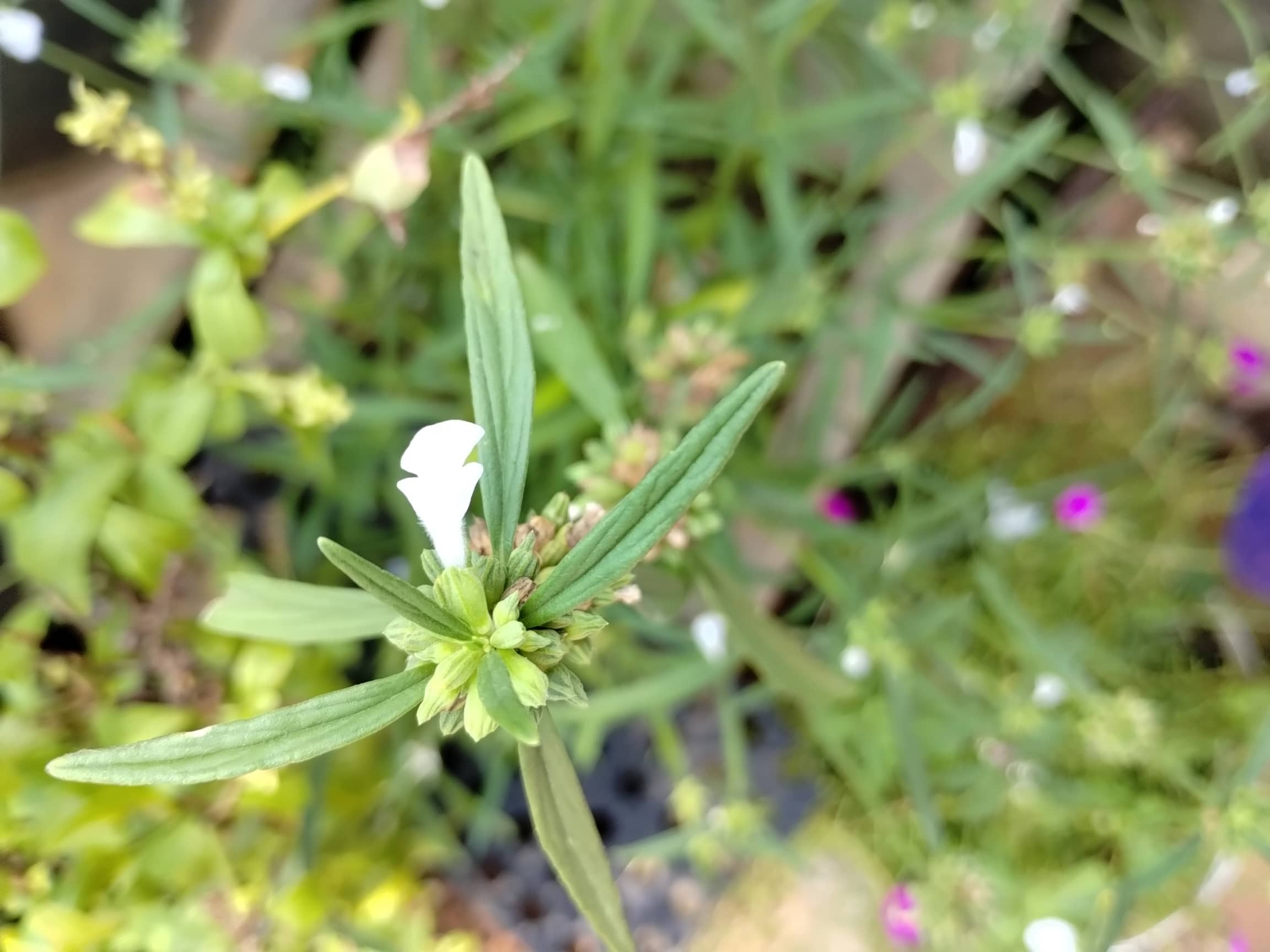
Leucas Aspera
Leucas aspera
Common medicinal herb featuring dense whorls of small, white, two-lipped flowers...
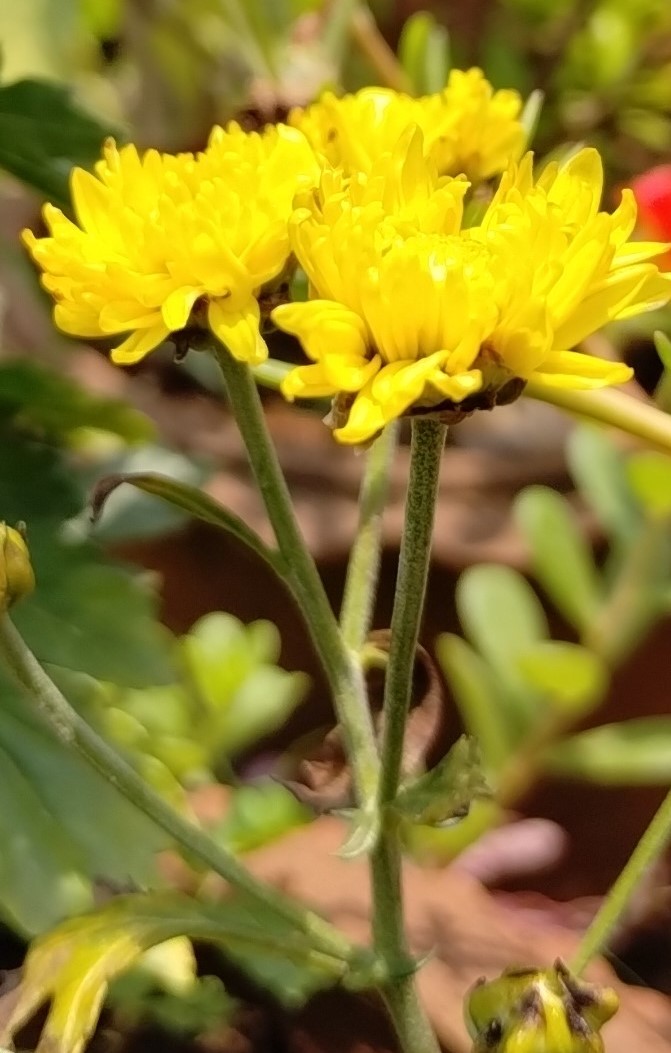
Chrysanthemum
Chrysanthemum
Beloved fall-blooming perennial celebrated for its profuse, colorful flowers tha...
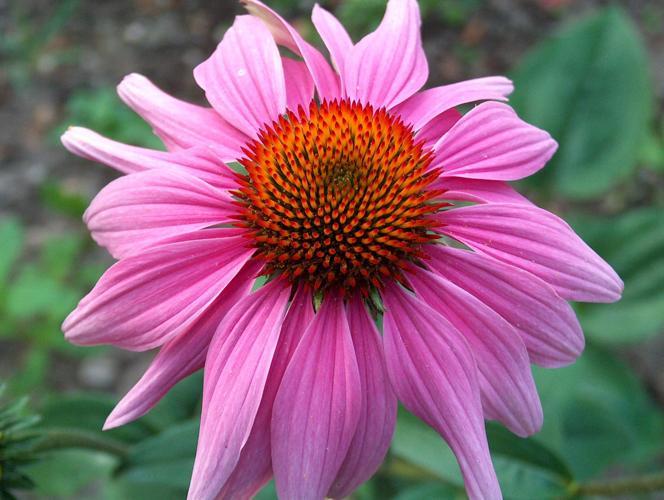
Purple Coneflower
Echinacea purpurea
Popular prairie wildflower with distinctive purple-pink petals drooping around s...