
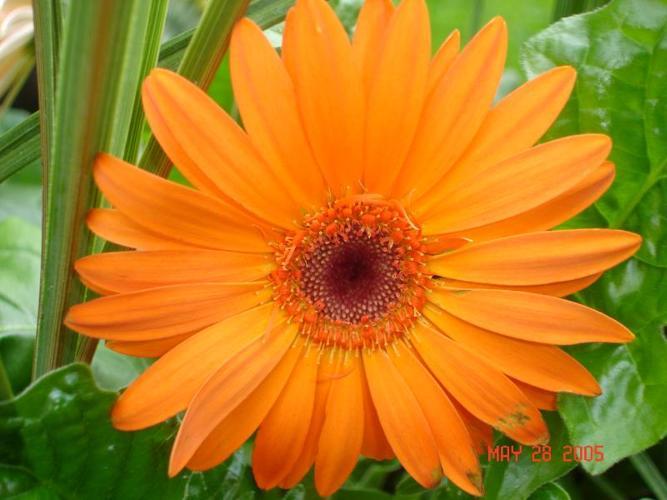
Barberton Daisy
Gerbera jamesonii
Basic Details
Floral Formula & Features
Ray Florets - Bilaterally symmetrical, Female, sepals modified to pappus, 5 fused petals, no stamens, 2 fused carpels with inferior ovary. Disc Florets - Radially symmetrical, bisexual, Sepals modified as pappus/bristles, 5 fused petals, 5 fused stamens, 2 fused carpels with inferior ovary
- Named after Barberton, a town in South Africa's Mpumalanga province where it was first discovered. The species name 'jamesonii' honors Robert Jameson, a Scottish botanist who collected the first specimens in the 1880s
- Composite flower head (capitulum) with two types of florets: showy ray florets forming the 'petals' and tiny disc florets in the center. Blooms measure 3-5 inches (7-12 cm) across with single, semi-double, or fully double forms
- Herbaceous perennial that blooms from spring through fall (March-November) in suitable climates. Can flower year-round in greenhouses or frost-free regions with consistent temperatures
- Grows 6-18 inches (15-45 cm) tall with 12-18 inch (30-45 cm) spread. Lifespan of 2-4 years in gardens, longer in ideal conditions. Propagated by division, tissue culture, or seed (though seed-grown plants vary in color)
- Native to South Africa, particularly the Transvaal region (now Mpumalanga and Limpopo provinces) and eastern Cape. Now cultivated commercially worldwide, especially in Netherlands, Kenya, Ecuador, and Colombia
- Requires bright light with 6-8 hours of sunlight daily, but benefits from afternoon shade in hot climates. Prefers well-drained soil and moderate watering. Sensitive to overwatering and crown rot
- Excellent cut flower with vase life of 7-14 days. Attracts bees and butterflies. Ranks among top 10 most popular cut flowers globally. Used extensively in floral arrangements, weddings, and as potted gift plants
Names in Different Languages
What is Floral Formula?
A floral formula is a symbolic representation of a flower's structure using letters, numbers, and special symbols. It provides a concise way to describe the arrangement and number of floral parts.
This formula describes the flower's symmetry, sepals, petals, stamens, and carpels in a standardized format.
Formula Sequence
- Bract: Br or Ebr
- Bracteole: Brl or Ebrl
- Symmetry: % (Radial) or ⊕ (Bilateral)
- Sex: ♀ (Female), ♂ (Male), or ⚥ (Bisexual)
- Calyx/Sepal: K<number> (Free or Fused)
- Corolla/Petal: C<number> (Free or Fused)
- Androecium: A<number> (Free or Fused)
- Gynaecium: G<number> (Superior or Inferior Ovary)
Symbol Meanings
- Numbers: Indicate quantity of parts
- Parentheses (): Parts are fused together
- Plus (+): Parts in different whorls
- Underline: Superior ovary position
- Overline: Inferior ovary position
- ∞: Numerous parts (too many to count)
Understanding floral formulas helps botanists quickly identify and classify flowers based on their structural characteristics.
Similar Flowers
Discover flowers that share botanical characteristics
Same Family
4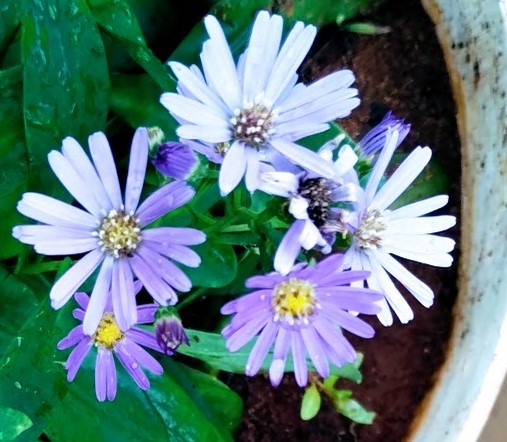
Aster
aster
Asters (Michaelmas Daisies) exhibit star-shaped purple, blue, or pink blooms wit...
Daisy
Bellis perennis
Charming perennial featuring classic white ray florets (petals) surrounding a br...
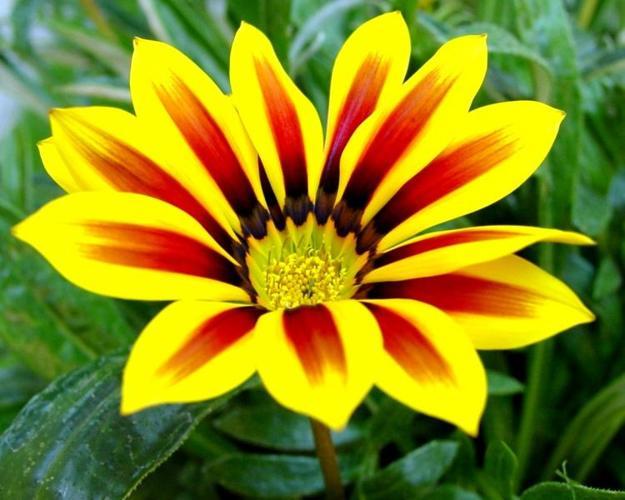
Gazania
Gazania rigens
Vibrant, daisy-like blooms known for their bright colors and ability to thrive i...
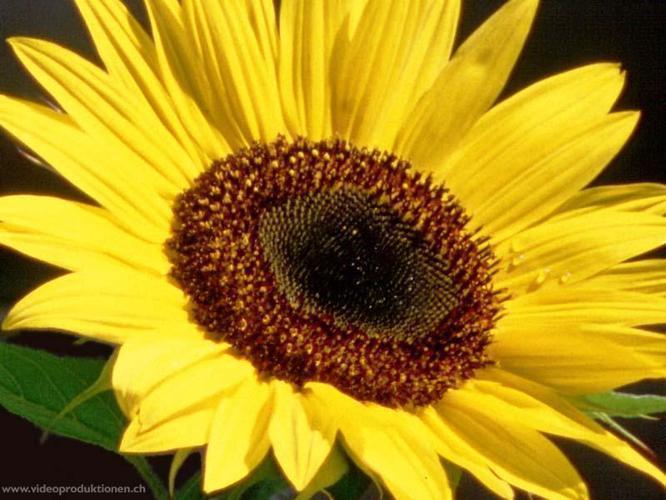
Sunflower
Helianthus annuus
Iconic tall annual with large yellow flower heads that track the sun across sky ...
Similar Characteristics
4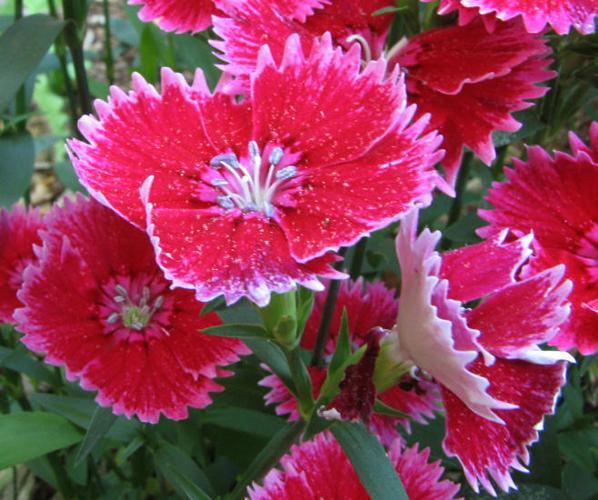
Sweet William (Dianthus barbatus)
Dianthus
Charming cottage garden biennial featuring dense, rounded clusters of small, fri...
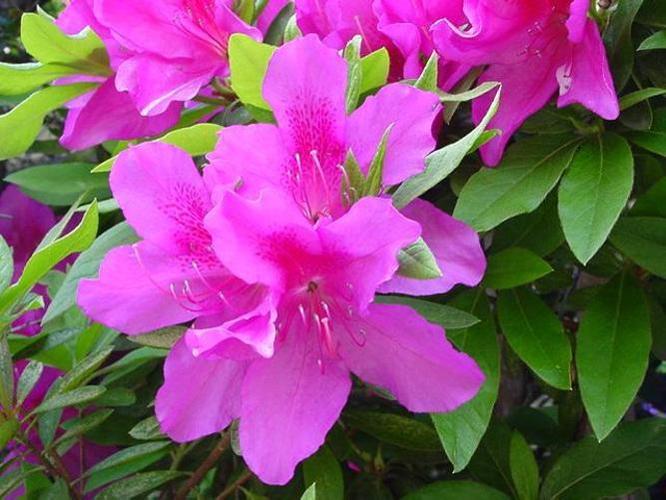
Azalea
Azalea
Beloved flowering shrub that transforms spring gardens with masses of funnel-sha...
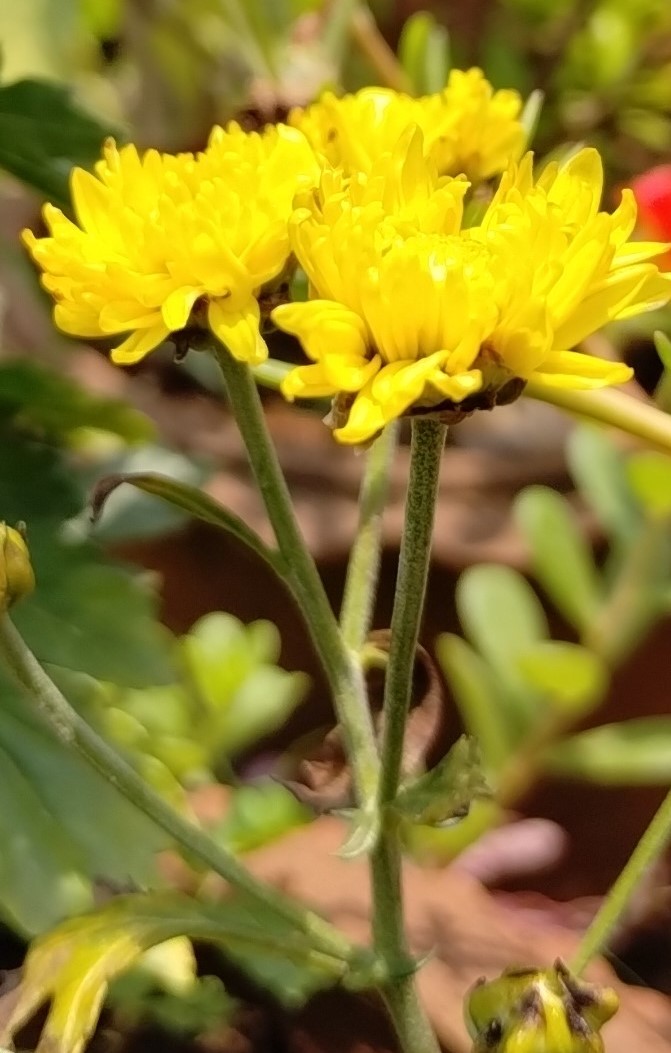
Chrysanthemum
Chrysanthemum
Beloved fall-blooming perennial celebrated for its profuse, colorful flowers tha...
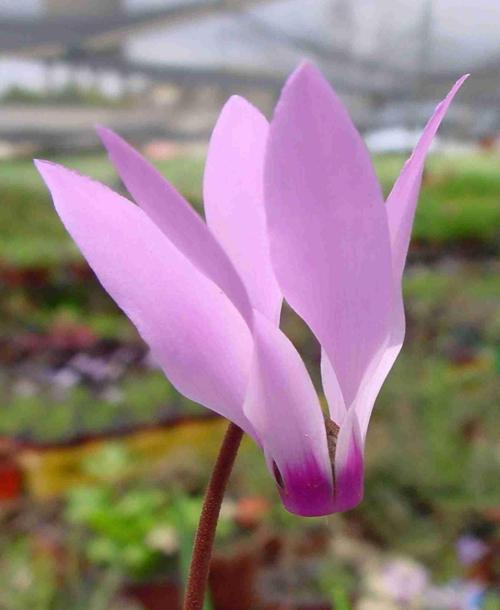
Cyclamen
Cyclamen persicum
Charming tuberous perennial featuring distinctive butterfly-like flowers with sw...