 Actual Plant Specimen
Are Snapdragons Safe for Cats & Dogs? Safe Antirrhinum vs. Lethal Foxglove Guide
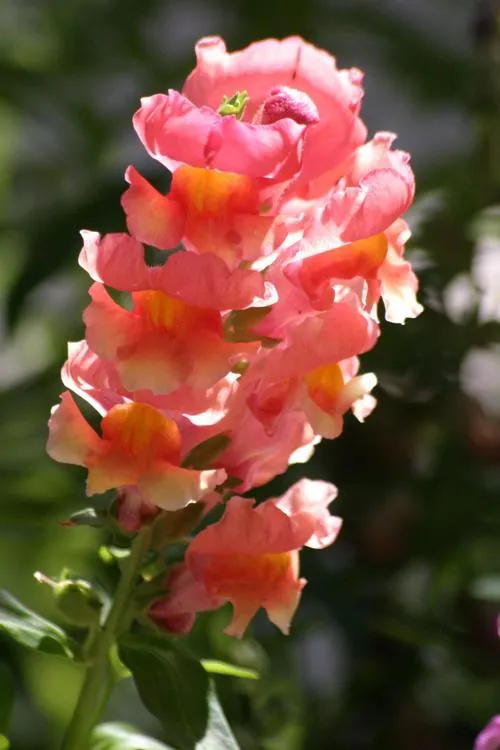
Antirrhinum majus • Also called: Dragon Flower, Dog Flower, Rabbit's Mouth
True Snapdragon (Antirrhinum majus) is non-toxic, but closely related species sharing the "Snapdragon" name ARE toxic to pets. Verify your exact variety below.
- Upright spike of two-lipped, hinged 'dragon snout' pouch flowers that snap open when gently pinched at the sides.
- Narrow, smooth, dark-green lance-shaped leaves arranged spirally up the stem.
- Lacks the open hanging spotted bells and fuzzy rosette leaves of toxic Foxglove.
Snapdragon Plant-Part Identification & Toxicity Map
Every part of Snapdragon (Antirrhinum majus) marked out as Toxic, Mild Irritant, or Non-Toxic for cats and dogs.
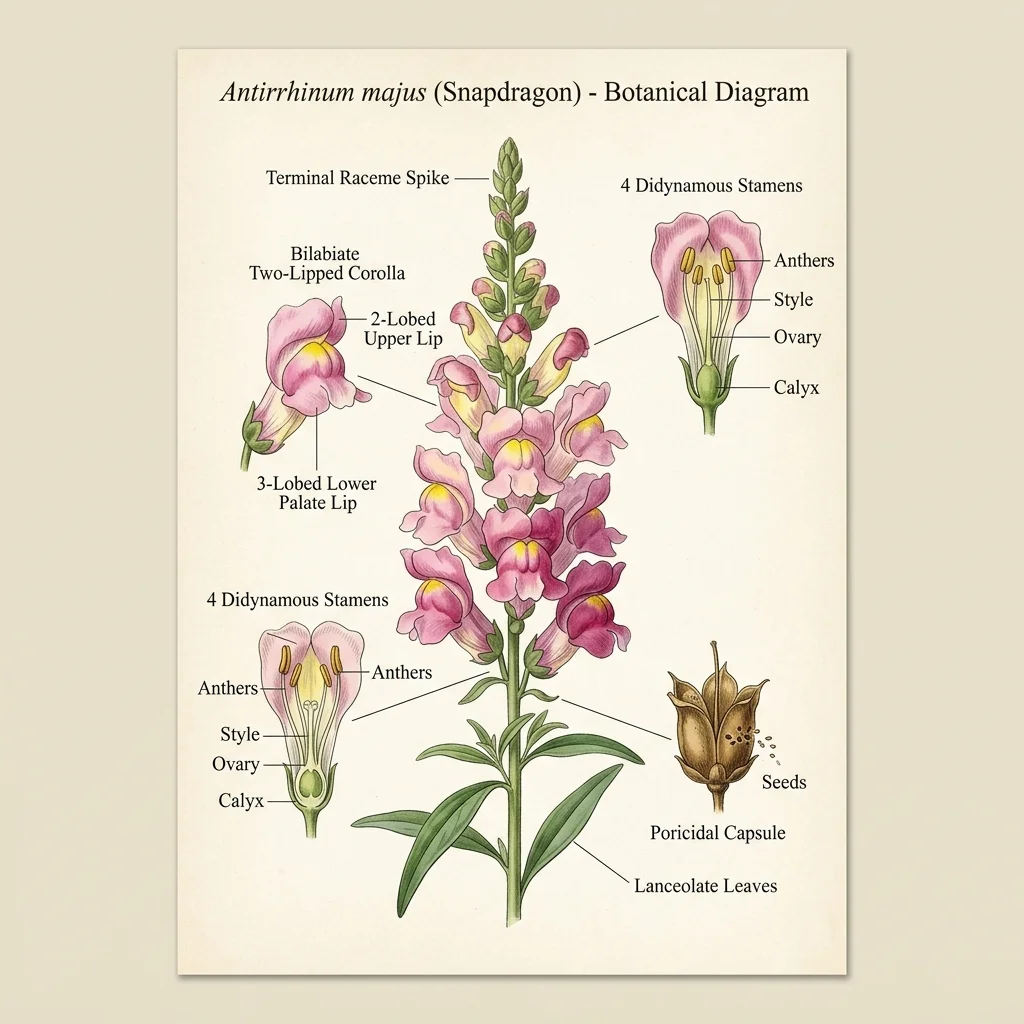
Two-Lipped Hinged 'Dragon' Blossoms
Completely non-toxic to cats and dogs (and edible for humans).
Smooth Lance-Shaped Leaves
Safe if nibbled in garden beds or cut-flower arrangements.
Upright Floral Stems
Contains no irritating sap or toxic glycosides.
Skull-Shaped Seed Pods & Roots
Dry seed capsules and roots are non-toxic to pets.
Which Snapdragon Species Do You Have? (Separate Visual Guide)
Different plants called or confused with Snapdragon have vastly different toxicity levels. Compare the separate species images and anatomical markers below:
EnlargeGarden & Florist Snapdragon
Antirrhinum majus (Family Plantaginaceae)
- Closed, two-lipped 'jaws' that open like a dragon mouth when squeezed
- Smooth, narrow lance-shaped green leaves
- 100% non-toxic to cats, dogs, and birds
 Enlarge
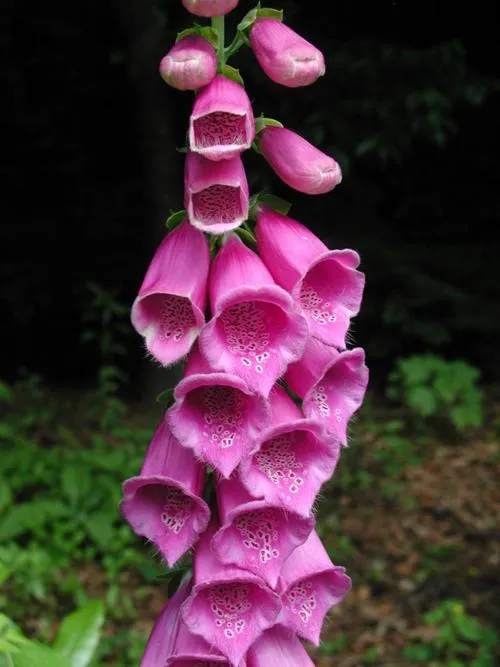
Foxglove (LETHAL Tall Spike Look-Alike!)
Digitalis purpurea (Family Plantaginaceae)
- OPEN, drooping tubular thimble bells with leopard-like purple spots inside the throat
- Broad, fuzzy/velvety basal leaves (NOT narrow smooth leaves)
- Contains lethal digitoxin and digoxin cardiac glycosides!
Clinical Symptoms to Watch For in Cats
True Snapdragon (Antirrhinum majus): Non-toxic (no chemical symptoms).
If your pet ate a toxic variety or look-alike (see Species Cards above): Watch for drooling, lip licking, vomiting, soft stool, or skin redness.
Post-Ingestion Timeline
Veterinary Contraindication Warning — What NOT To Do
🚫 NEVER give hydrogen peroxide, salt, or home emetics to induce vomiting in a cat—3% hydrogen peroxide causes severe, potentially fatal stomach and esophageal ulceration in felines. Only a veterinarian can safely administer feline emetics.
Home Care & First Aid Protocol
Non-toxic to cats (ASPCA verified). No emergency veterinary action needed. If your cat eats significant raw plant fiber, offer fresh water and monitor for minor, self-limiting regurgitation.
When to still call a vet: If your pet swallowed a large woody stem/root ball (choking or foreign body risk), ingested potting soil fertilizer, or if you suspect the plant matches one of the toxic look-alike species shown above.
In-Depth Botanical & Veterinary Safety Analysis
Scientific evaluation and toxicological breakdown of Snapdragon (Antirrhinum majus)
Global Names & Multilingual Search
Specific Pet Safety FAQs for Snapdragon
Are Snapdragons toxic to cats?
No. Snapdragons are 100% non-toxic to cats according to the ASPCA database. Chewing or sniffing the flowers and leaves will not cause chemical poisoning.
Are Snapdragons toxic to dogs?
No. Snapdragons are completely safe and non-toxic to dogs. They can be planted safely in backyards where dogs roam and play.
What happens if my cat or dog eats Snapdragon flowers?
No poisoning or systemic toxicity occurs. If your pet swallows a large bunch of raw petals or stems, they might have minor, temporary stomach upset from raw plant fiber, which resolves on its own.
Can Snapdragons replace toxic Foxglove in my garden?
Yes! Snapdragons provide tall, gorgeous, vertical colorful flower spikes similar to Foxglove (Digitalis), but unlike Foxglove (which contains lethal cardiac glycosides), Snapdragons are completely pet-safe.
Are all varieties of Snapdragons safe for pets?
Yes, all cultivated varieties and dwarf hybrids of Antirrhinum majus are non-toxic to household pets.
20 Dangerous Garden Plants: Cat Toxicity & Safety Guide
Felines are highly sensitive to houseplants and flowers. Learn which 20 common species cause severe or fatal reactions in cats, including lilies, and discover safe, cat-friendly garden alternatives.
🛡️ Discover Related Plant Safety Guides
Explore visually similar or related plants and their pet safety profiles: