 Actual Plant Specimen
Is Swedish Ivy Safe for Cats & Dogs? Safe Plectranthus vs. Toxic English Ivy
Plectranthus verticillatus • Also called: Creeping Charlie
All botanical parts of Swedish Ivy (Plectranthus verticillatus) are verified non-toxic and safe around both cats and dogs.
- Trailing indoor basket plant with round, scalloped (crenate), glossy emerald-green leaves.
- Square-ish, succulent purplish-green stems typical of the mint family (no aerial rootlets clinging to walls).
- Produces small tubular white-to-pale-lilac two-lipped flowers.
Swedish Ivy Plant-Part Identification & Toxicity Map
Every part of Swedish Ivy (Plectranthus verticillatus) marked out as Toxic, Mild Irritant, or Non-Toxic for cats and dogs.
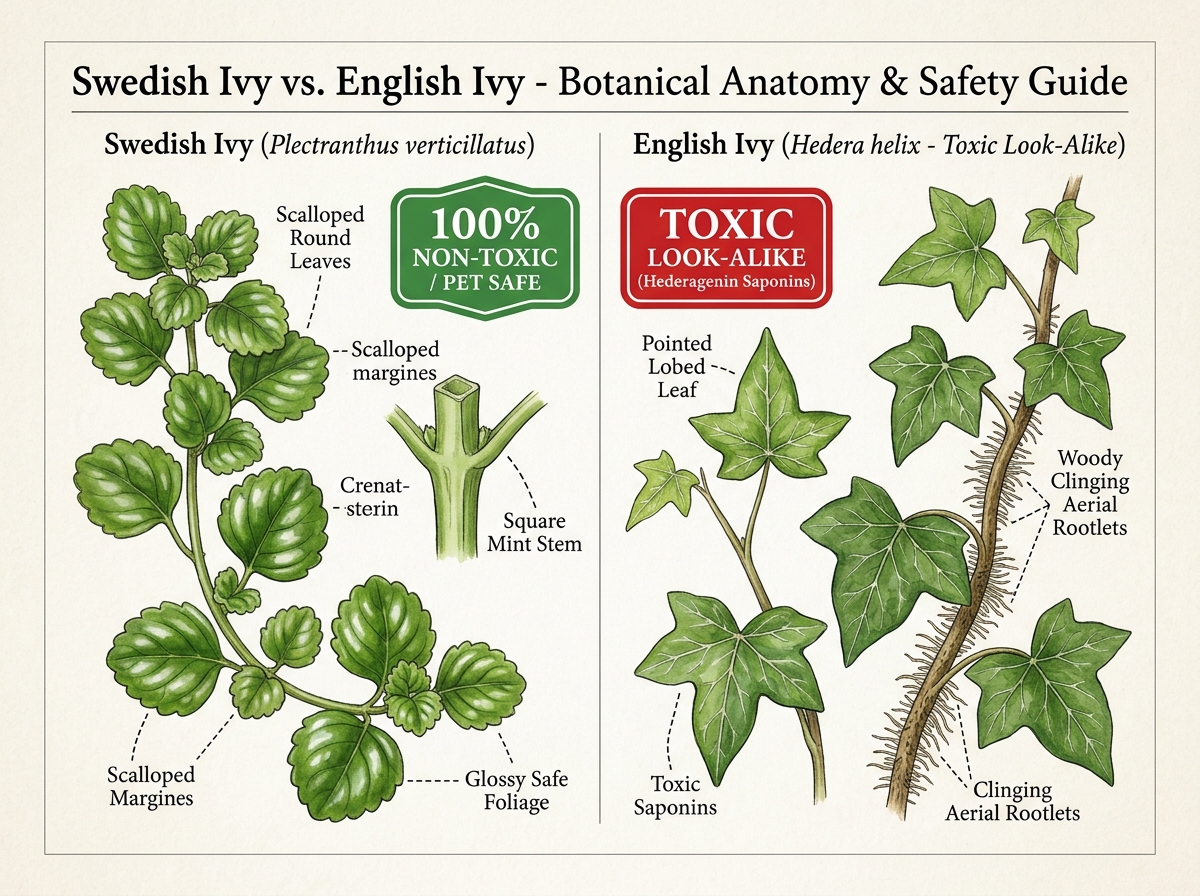
Round Scalloped Glossy Leaves
Completely free of saponins and oxalates; safe if cats bat at or nibble trailing vines.
Succulent Square-ish Stems
No toxic sap; lacks the irritating hairy aerial roots of true English Ivy.
Small White/Lilac Tubular Blooms
Delicate mint-like flower spikes are completely pet-safe.
Fibrous Roots
Roots and propagation cuttings in water are non-toxic to pets.
Which Swedish Ivy Species Do You Have? (Separate Visual Guide)
Different plants called or confused with Swedish Ivy have vastly different toxicity levels. Compare the separate species images and anatomical markers below:
EnlargeSwedish Ivy (Whorled Plectranthus / Creeping Charley)
Plectranthus verticillatus (syn. Plectranthus australis)
- Rounded, coin-like leaves with soft scalloped (rounded-tooth) edges—NOT pointed lobes
- Fleshy, slightly brittle stems that do NOT produce clinging aerial rootlets
- Member of the Mint family (Lamiaceae), 100% safe for pets
 Enlarge
English Ivy (Toxic True Ivy Look-Alike!)
Hedera helix
- Pointed 3-to-5-lobed star-like matte green leaves with pale veins
- Woody climbing stems with tiny brown hair-like aerial rootlets that cling to bark/brick
- Contains triterpenoid saponins (hederagenin) and polyacetylene compounds
 Enlarge
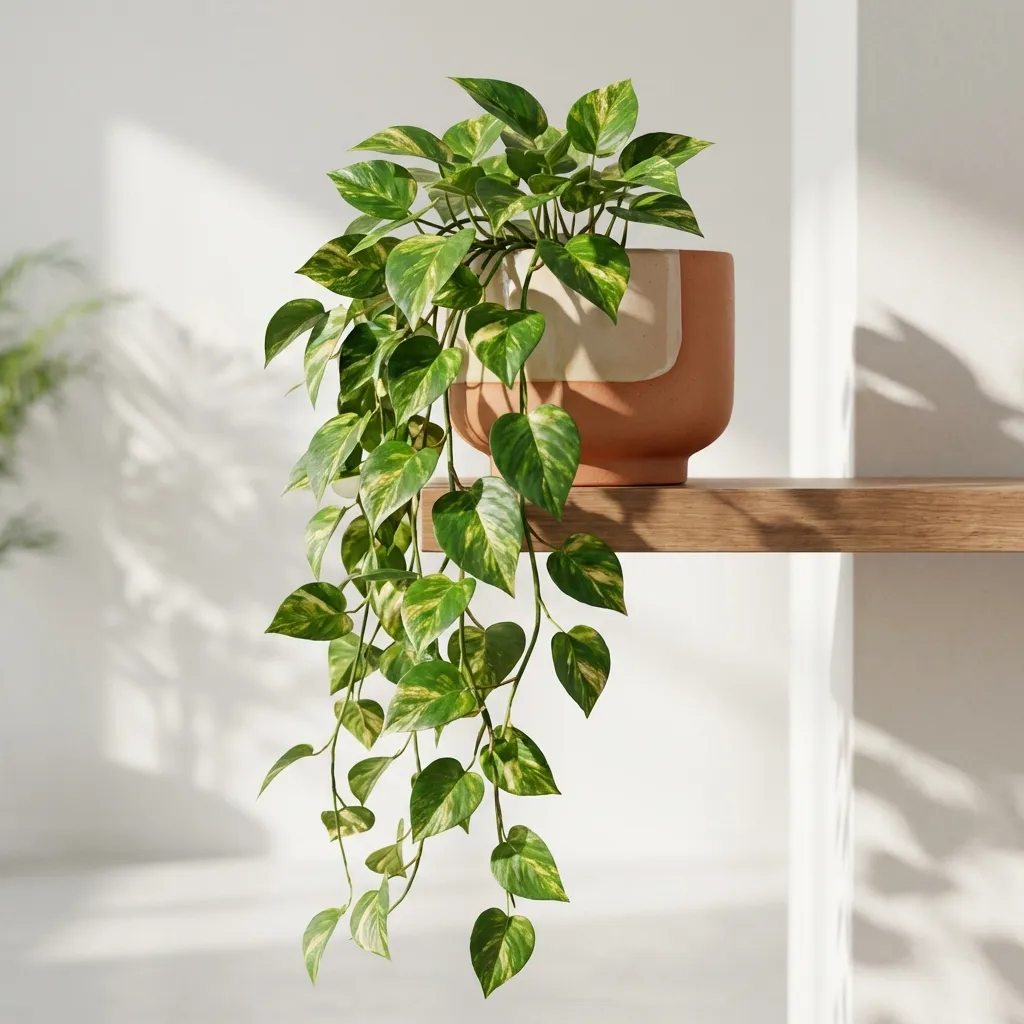
Devil’s Ivy / Golden Pothos (Toxic Trailing Look-Alike)
Epipremnum aureum
- Heart-shaped pointed leaves (often marbled with yellow/cream) with smooth untoothed edges
- Contains insoluble calcium oxalate crystals
Non-Toxic Plant Owner’s Practical Guide (Swedish Ivy)
Why Did My Cat Still Vomit After Eating Swedish Ivy?
Even though Swedish Ivy contains zero chemical toxins, cats and dogs lack the cellulase enzyme needed to digest raw plant fibers. Swallowing whole leaves or fibrous stems often triggers a harmless, one-time mechanical regurgitation (just like eating lawn grass).
Hidden Nursery Hazards: Pesticides, Fertilizers & Potting Soil
Newly purchased store pots often contain slow-release fertilizer beads (Osmocote), perlite, or systemic neonicotinoid insecticides. Never let pets chew potting soil or drink water from drainage saucers.
Post-Ingestion Timeline
Veterinary Contraindication Warning — What NOT To Do
🚫 NEVER give hydrogen peroxide, salt, or home emetics to induce vomiting in a cat—3% hydrogen peroxide causes severe, potentially fatal stomach and esophageal ulceration in felines. Only a veterinarian can safely administer feline emetics.
Home Care & First Aid Protocol
Non-toxic to cats. Verified by ASPCA guidelines. If ingested, monitor for minor mechanical stomach upset, which requires no veterinary care.
When to still call a vet: If your pet swallowed a large woody stem/root ball (choking or foreign body risk), ingested potting soil fertilizer, or if you suspect the plant matches one of the toxic look-alike species shown above.
In-Depth Botanical & Veterinary Safety Analysis
Scientific evaluation and toxicological breakdown of Swedish Ivy (Plectranthus verticillatus)
Global Names & Multilingual Search
Specific Pet Safety FAQs for Swedish Ivy
Is Swedish Ivy toxic to cats?
No, Swedish Ivy (Plectranthus verticillatus) is completely non-toxic and safe for cats, making it an excellent hanging basket choice.
Is Swedish Ivy toxic to dogs?
No, Swedish Ivy is 100% safe and non-toxic to dogs of all sizes and breeds.
Is Swedish Ivy a true ivy species?
No, despite its common name, Swedish Ivy is not a true ivy (Hedera) but a member of the mint family (Lamiaceae), which explains its non-toxic nature.
What is the benefit of Swedish Ivy as a pet alternative?
It is highly popular as a beautiful, fast-growing, cascading indoor plant that perfectly mimics the look of the toxic English Ivy while remaining 100% safe.
20 Dangerous Garden Plants: Cat Toxicity & Safety Guide
Felines are highly sensitive to houseplants and flowers. Learn which 20 common species cause severe or fatal reactions in cats, including lilies, and discover safe, cat-friendly garden alternatives.
🛡️ Discover Related Plant Safety Guides
Explore visually similar or related plants and their pet safety profiles: