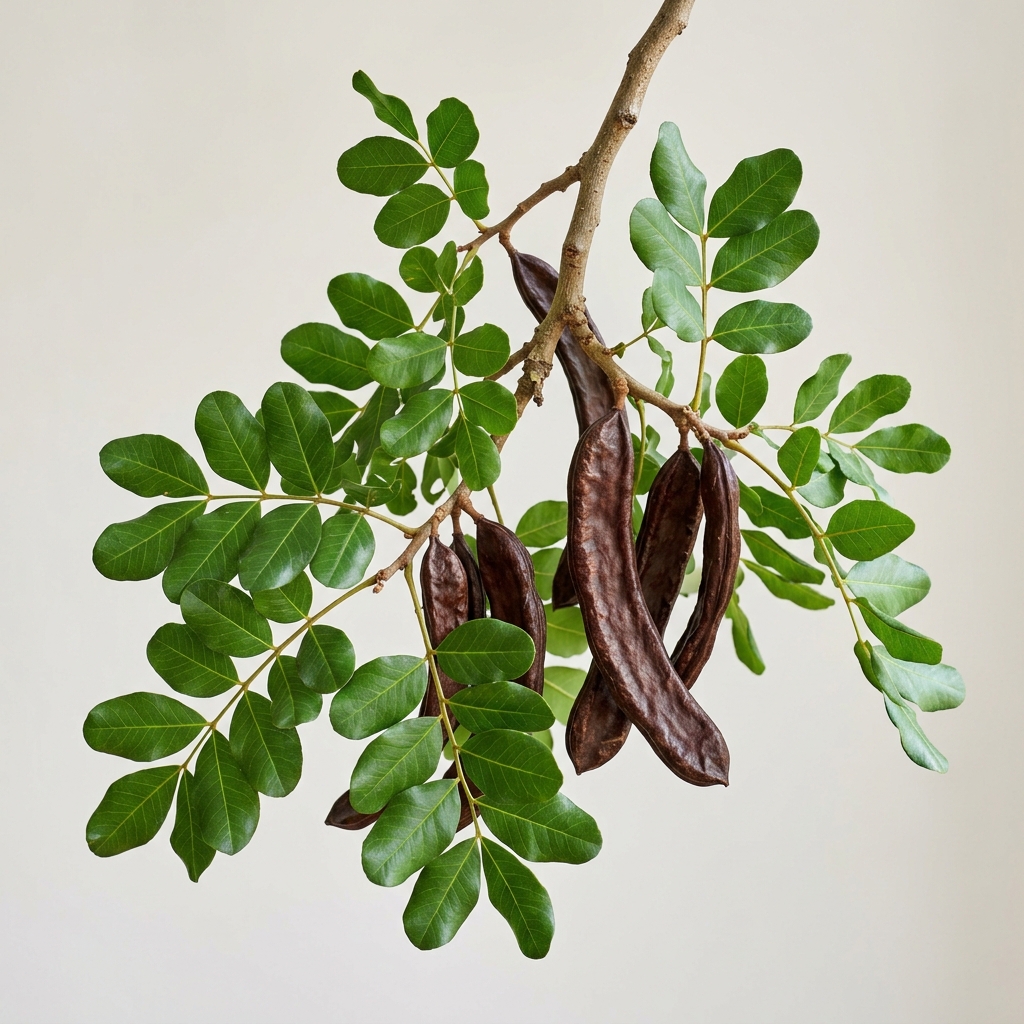
 Actual Plant Specimen
Is Carob Safe for Dogs & Cats? Ceratonia siliqua (100% Safe) vs. Toxic Chocolate Guide
Ceratonia siliqua • Also called: Saint John's Bread
All botanical parts of Carob (Ceratonia siliqua) are verified non-toxic and safe around both cats and dogs.
- Dark brown, leathery, flattened curved bean pods (4–10 inches long) containing sweet, chocolate-scented pulp and hard brown seeds
- Pinnately compound evergreen leaves with glossy oval leaflets on a thornless Mediterranean shade tree
- Sold in pet bakeries and health food stores as unsweetened Carob Powder, Carob Chips, or dog-safe 'pup-cake' icing
- Always verify the ingredient label on human carob candies to ensure they are NOT mixed with real cocoa liquor or sweetened with toxic xylitol (birch sugar)
Carob Plant-Part Identification & Toxicity Map
Every part of Carob (Ceratonia siliqua) marked out as Toxic, Mild Irritant, or Non-Toxic for cats and dogs.
Unsweetened Carob Powder & Dog-Bakery Carob Drops
100% non-toxic to dogs and cats; contains zero theobromine or caffeine and provides soluble pectin fiber.
Whole Dried Carob Pods (Pulp)
Nutritious and safe; rich in natural tannins and mucilage used to firm up loose stool in dogs.
Hard Carob Seeds & Woody Pod Stems
Chemically non-toxic (source of food-grade locust bean gum), though swallowing many whole uncrushed rock-hard seeds can pose a minor dental or choking hazard for toy breeds.
Carob Tree Leaves & Bark
100% non-toxic to dogs, cats, and grazing animals.
Which Carob Species Do You Have? (Separate Visual Guide)
Different plants called or confused with Carob have vastly different toxicity levels. Compare the separate species images and anatomical markers below:
EnlargeCarob / St. John's Bread / Locust Bean
Ceratonia siliqua
- Dark brown legume pods, powder, and baking chips with a naturally sweet, mild chocolate-like flavor.
- Botanical Classification: Ceratonia siliqua
EnlargeCacao / Real Chocolate (Lethal Look-Alike)
Theobroma cacao
- Cocoa powder, chocolate chips, and candy bars derived from roasted Theobroma cacao beans.
- Botanical Classification: Theobroma cacao
EnlargeSugar-Free Human Carob / Candy with Xylitol (Ingredient Trap)
Xylitol-Sweetened Confectionery
- Keto or diabetic 'sugar-free' carob bars sweetened with xylitol (birch sugar / wood sugar).
- Botanical Classification: Xylitol-Sweetened Confectionery
Non-Toxic Plant Owner’s Practical Guide (Carob)
Why Did My Cat Still Vomit After Eating Carob?
Even though Carob contains zero chemical toxins, cats and dogs lack the cellulase enzyme needed to digest raw plant fibers. Swallowing whole leaves or fibrous stems often triggers a harmless, one-time mechanical regurgitation (just like eating lawn grass).
Hidden Nursery Hazards: Pesticides, Fertilizers & Potting Soil
Newly purchased store pots often contain slow-release fertilizer beads (Osmocote), perlite, or systemic neonicotinoid insecticides. Never let pets chew potting soil or drink water from drainage saucers.
Post-Ingestion Timeline
Veterinary Contraindication Warning — What NOT To Do
🚫 NEVER give hydrogen peroxide, salt, or home emetics to induce vomiting in a cat—3% hydrogen peroxide causes severe, potentially fatal stomach and esophageal ulceration in felines. Only a veterinarian can safely administer feline emetics.
Home Care & First Aid Protocol
Non-toxic to cats. Verified by ASPCA guidelines. If a cat eats carob-based treats, it is completely safe; no veterinary action is needed.
When to still call a vet: If your pet swallowed a large woody stem/root ball (choking or foreign body risk), ingested potting soil fertilizer, or if you suspect the plant matches one of the toxic look-alike species shown above.
In-Depth Botanical & Veterinary Safety Analysis
Scientific evaluation and toxicological breakdown of Carob (Ceratonia siliqua)
Global Names & Multilingual Search
Specific Pet Safety FAQs for Carob
Why is carob safe while chocolate is toxic?
Chocolate contains theobromine and caffeine, which pets cannot metabolize, leading to heart and nerve issues. Carob does not contain these substances, making it perfectly safe for ingestion by dogs and cats.
Can I give my dog carob-coated treats?
Yes! Carob-coated treats are a popular and safe alternative. However, always check the other ingredients in the treat (like xylitol or excessive sugar) to ensure the entire product is pet-friendly.
20 Dangerous Garden Plants: Cat Toxicity & Safety Guide
Felines are highly sensitive to houseplants and flowers. Learn which 20 common species cause severe or fatal reactions in cats, including lilies, and discover safe, cat-friendly garden alternatives.
🛡️ Discover Related Plant Safety Guides
Explore visually similar or related plants and their pet safety profiles: