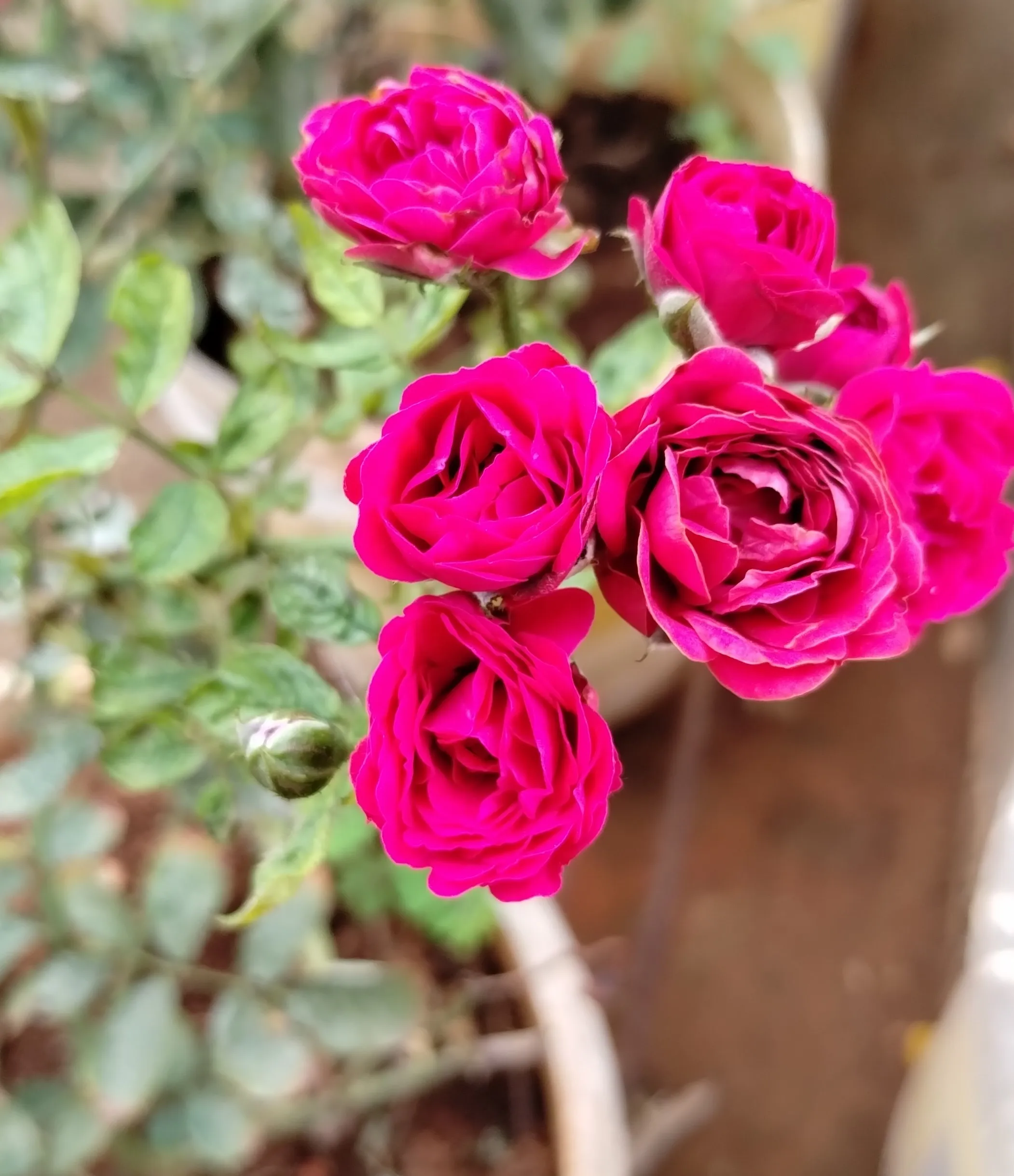
Rose (Rosa spp.) plant and flower identification photo Actual Plant Specimen
Verified Non-Toxic Multiple Species — Check Variety ↓

Are Roses Safe for Cats & Dogs? True Rosa (Safe) vs. Toxic 'Rose' Look-Alikes

Rosa spp. • Also called: Garden Rose, Hybrid Tea Rose, Floribunda Rose

True Rose (Rosa spp.) is non-toxic, but closely related species sharing the "Rose" name ARE toxic to pets. Verify your exact variety below.

Quick Visual ID — Confirm You Have Rose:
  • Layered, fragrant, cup-shaped blooms with smooth, velvety overlapping petals.
  • Pinnately compound leaves (usually 5 to 7 oval, finely serrated leaflets per leaf).
  • Woody canes armed with curved sharp prickles ('thorns') and round red-orange rosehips in autumn.
Pet Toxicity VerdictClick pet to switch view
Cat Safety Active
Verified Safe
Signs: Thorn Punctures, Oral Irritation
Safe (check variety nuance below)
Dog Safety
Verified Safe
Signs: Oral Scratching, GI Scratching (Thorns)
Safe (check variety nuance below)
AI Plant Verifier Not 100% sure your plant is Rose? Snap or upload a photo to verify species & toxicity with AI.
Anatomical Toxicity Breakdown

Rose Plant-Part Identification & Toxicity Map

Every part of Rose (Rosa spp.) marked out as Toxic, Mild Irritant, or Non-Toxic for cats and dogs.
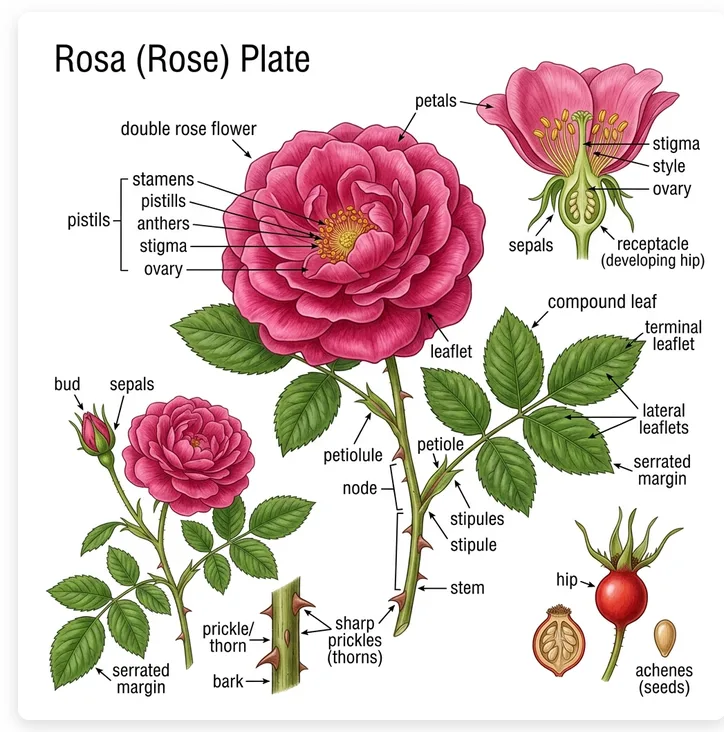
Rose botanical identification diagram marking flower, leaf, stem, sap, and root toxicity
1

Velvety Rose Petals (Fresh or Dried)

100% NON-TOXIC (SAFE)

True Rose petals are completely non-toxic if eaten by cats or dogs (avoid petals sprayed with florist glitter, dye, or systemic pesticides).

2

Woody Stems & Curved Prickles (Thorns)

PHYSICAL THORN HAZARD (NON-TOXIC)

Chemically non-toxic, but sharp thorns can puncture lips, gums, esophagus, or paws—always de-thorn cut roses in pet homes!

3

Serrated Compound Leaflets

100% NON-TOXIC (SAFE)

Safe if nibbled; large amounts of tough fibrous leaves may cause a single harmless hairball-like regurgitation.

4

Rosehips (Red-Orange Seed Pods) & Roots

100% NON-TOXIC (VITAMIN C RICH)

Rosehips are non-toxic (and often used in dog joint supplements), though eating many raw seed hairs inside hips can mildly tickle the stomach.

Visual Species & Look-Alike Identification

Which Rose Species Do You Have? (Separate Visual Guide)

Different plants called or confused with Rose have vastly different toxicity levels. Compare the separate species images and anatomical markers below:

Safe Species
🐱 Cat: Safe 🐶 Dog: Safe
True Garden & Florist Rose (Hybrid Tea, Shrub, Climbing, Miniature) (Rosa spp. (Family Rosaceae)) — Safe Species Enlarge

True Garden & Florist Rose (Hybrid Tea, Shrub, Climbing, Miniature)

Rosa spp. (Family Rosaceae)

Petals/Leaves/Hips: 100% Safe Thorns: Physical Scratch Risk Only
How to Spot This Species:
  • Woody stems with thorns and pinnate leaves with 5–7 serrated leaflets
  • Multi-layered cup-shaped blooms
  • 100% non-toxic to cats, dogs, birds, and horses
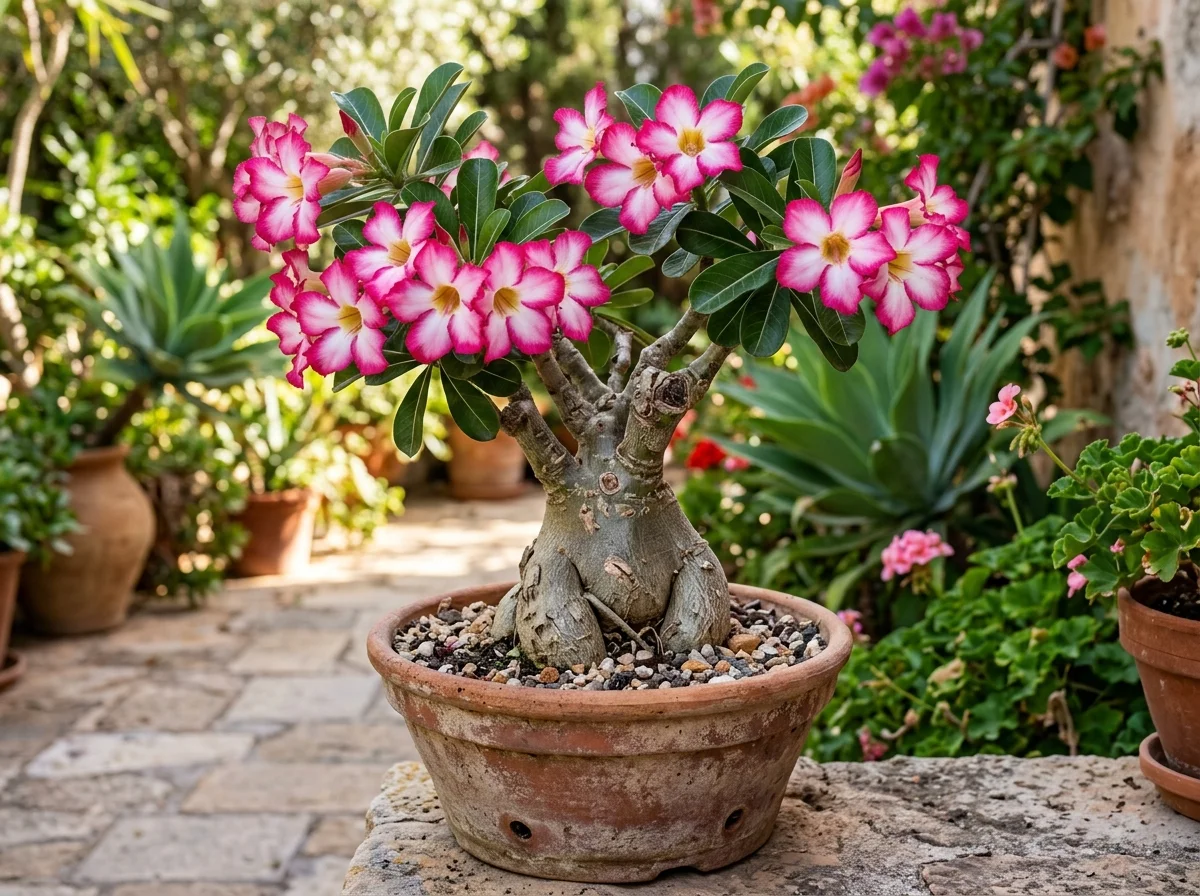
🟢 100% NON-TOXIC: Petals, leaves, and rosehips are completely safe; simply trim thorns off bouquet stems.
Lethal Species
🐱 Cat: Lethal 🐶 Dog: Lethal
Desert Rose (LETHAL 'Rose' Name Look-Alike!) (Adenium obesum (Family Apocynaceae)) — Lethal Species Enlarge

Desert Rose (LETHAL 'Rose' Name Look-Alike!)

Adenium obesum (Family Apocynaceae)

All Parts/Sap: LETHAL Cardiac Toxin
How to Spot This Species:
  • Thick, swollen, bottle-like succulent trunk (caudex) with smooth, thornless leathery leaves
  • 5-petaled pink/red funnel flowers—NOT a true Rosa!
  • Contains lethal digitalis-like cardiac glycosides (ouabain/hongheloside)
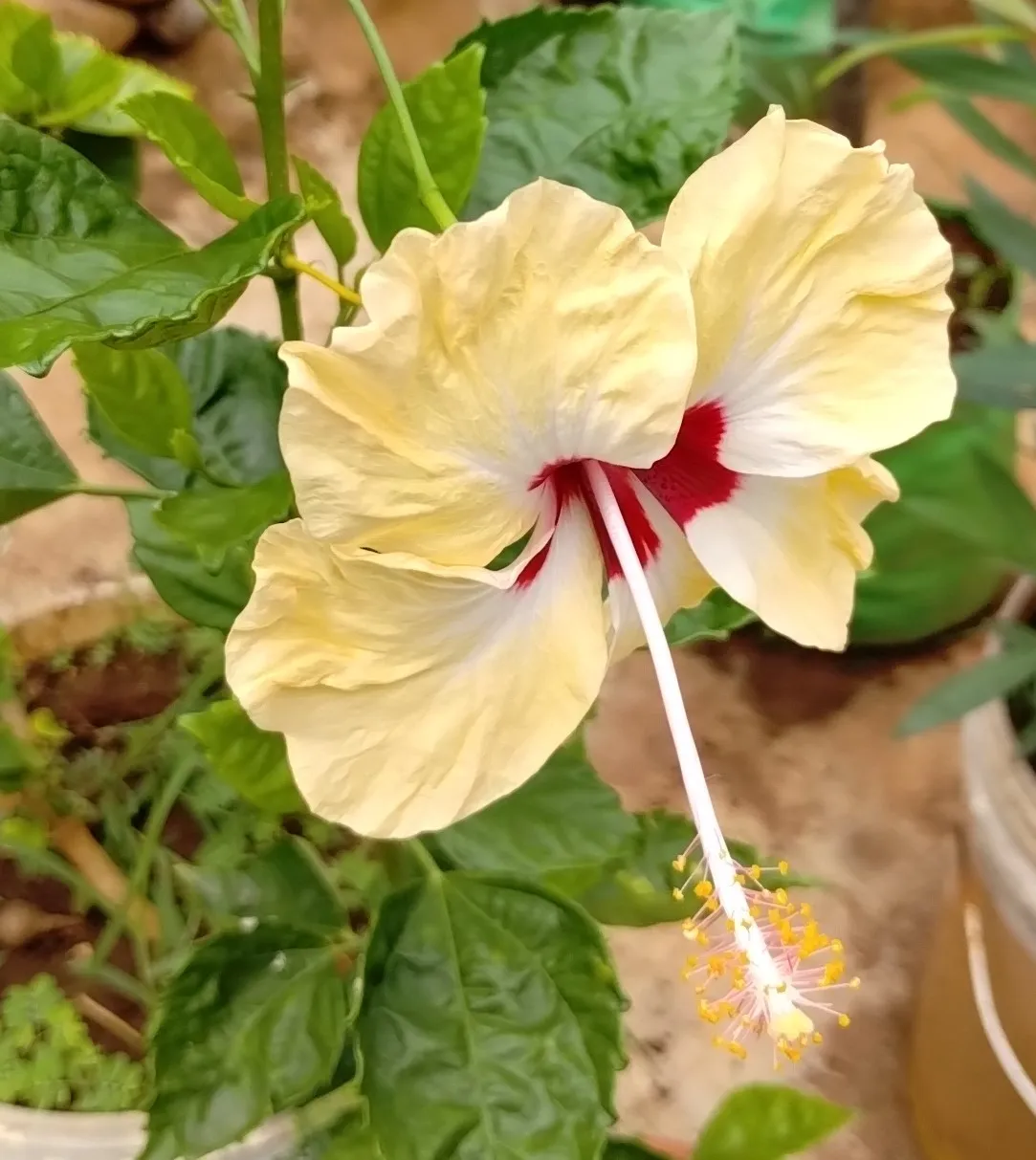
🔴 LETHAL TO CATS & DOGS: Milky sap, leaves, and swollen caudex cause fatal heart arrhythmias.
View Full Desert Rose Safety Profile →
Mildly Toxic Species
🐱 Cat: Low 🐶 Dog: Low
Rose of Sharon (Mildly Toxic 'Rose' Shrub) (Hibiscus syriacus (Family Malvaceae)) — Mildly Toxic Species Enlarge

Rose of Sharon (Mildly Toxic 'Rose' Shrub)

Hibiscus syriacus (Family Malvaceae)

Flowers/Leaves: Mild GI Upset
How to Spot This Species:
  • Thornless woody shrub with 5-petaled hibiscus trumpet flowers and a protruding stamen column
  • 3-lobed wedge-shaped leaves (unlike true Rose's 5–7 pinnate leaflets)
🟡 MILD GI IRRITANT: Eating large quantities of flowers causes mild drooling, nausea, or vomiting.
View Full Rose of Sharon Safety Profile →
Interactive Veterinary Triage

"My Pet Just Chewed or Ate Rose!" — Instant Action Checker

Select your pet size and the specific part of Rose they touched or swallowed for tailored guidance:

Step 1 Select Pet & Size
Step 2 Which Part Did They Touch or Eat?
🟢 SAFE TO MONITOR AT HOME

Non-Toxic / Low-Risk Exposure: Cat + Velvety Rose Petals (Fresh or Dried)

True Rose petals are completely non-toxic if eaten by cats or dogs (avoid petals sprayed with florist glitter, dye, or systemic pesticides).

1No emergency decontamination is required for true Rose (Velvety Rose Petals (Fresh or Dried)).
2Offer fresh water and observe at home; 1 episode of grass-like regurgitation can happen purely from indigestible leaf fiber.
3Check that the plant pot did not contain systemic insecticide granules, cocoa mulch, or slow-release fertilizer beads.
4⚠️ Important: Confirm in the Multi-Species Guide below that you have the non-toxic species and not a toxic look-alike!

Clinical Symptoms to Watch For in Cats

Thorn Punctures
Oral Irritation

Post-Ingestion Timeline

0 – 30 Mins
0–30 mins: No chemical toxicity; inspect gums and tongue for physical thorn scratches if your pet chewed a rose stem.
1 – 6 Hours
1–4 hours: Occasional mild stomach upset only if the pet swallowed sharp thorns, floral food packets, or a large wad of fibrous leaves.
12 – 72 Hours
12–24 hours: Completely safe—however, if therose bouquet also contained Baby's Breath (Gypsophila) or Lilies (Lilium), check those filler flowers immediately!

Veterinary Contraindication Warning — What NOT To Do

⚠️ VALENTINE'S BOUQUET FILLER WARNING: True Roses are 100% safe, but florist rose bouquets are almost always paired with Baby's Breath (Gypsophila — causes mild vomiting/diarrhea) or Lilies (Lilium — LETHAL to cats). Always inspect the filler flowers and discard floral preservative packets!

Home Care & First Aid Protocol

Non-toxic to cats. Petals and leaves are completely safe. If a cat brushes against or chews a thorny branch, check their mouth, nose, and paws for scratches. Gently clean minor cuts with mild antiseptic and warm water. Seek veterinary care if a puncture appears deep or infected.

When to still call a vet: If your pet swallowed a large woody stem/root ball (choking or foreign body risk), ingested potting soil fertilizer, or if you suspect the plant matches one of the toxic look-alike species shown above.

Detailed Monograph

In-Depth Botanical & Veterinary Safety Analysis

Scientific evaluation and toxicological breakdown of Rose (Rosa spp.)

Roses (Rosa spp.), belonging to the family Rosaceae, are globally celebrated as the world's most romantic and popular woody perennials. While roses are chemically completely non-toxic and safe for dogs, cats, and horses, their sharp epidermal prickles (thorns) present a distinct physical/mechanical hazard to curious animals. Every part of the rose plant—including the soft velvety petals, green leaves, and round rosehips—is entirely safe to touch and digest, free from toxic compounds or poisonous sap. However, if a pet steps on a branch or chews on a thorny stem, the sharp thorns can cause oral punctures, painful skin scratches, or even internal scratches if swallowed. Therefore, when landscaping, it is crucial to trim lower thorny branches and place climbing rose varieties out of high-traffic pet pathways. To create a completely hazard-free floral garden, pair roses with soft, unarmed bedding annuals like the beautiful Sweet Alyssum. To explore detailed care tips, structural floral formulas, and different hybrid cultivars, visit our detailed Botanical Profile for Rose.
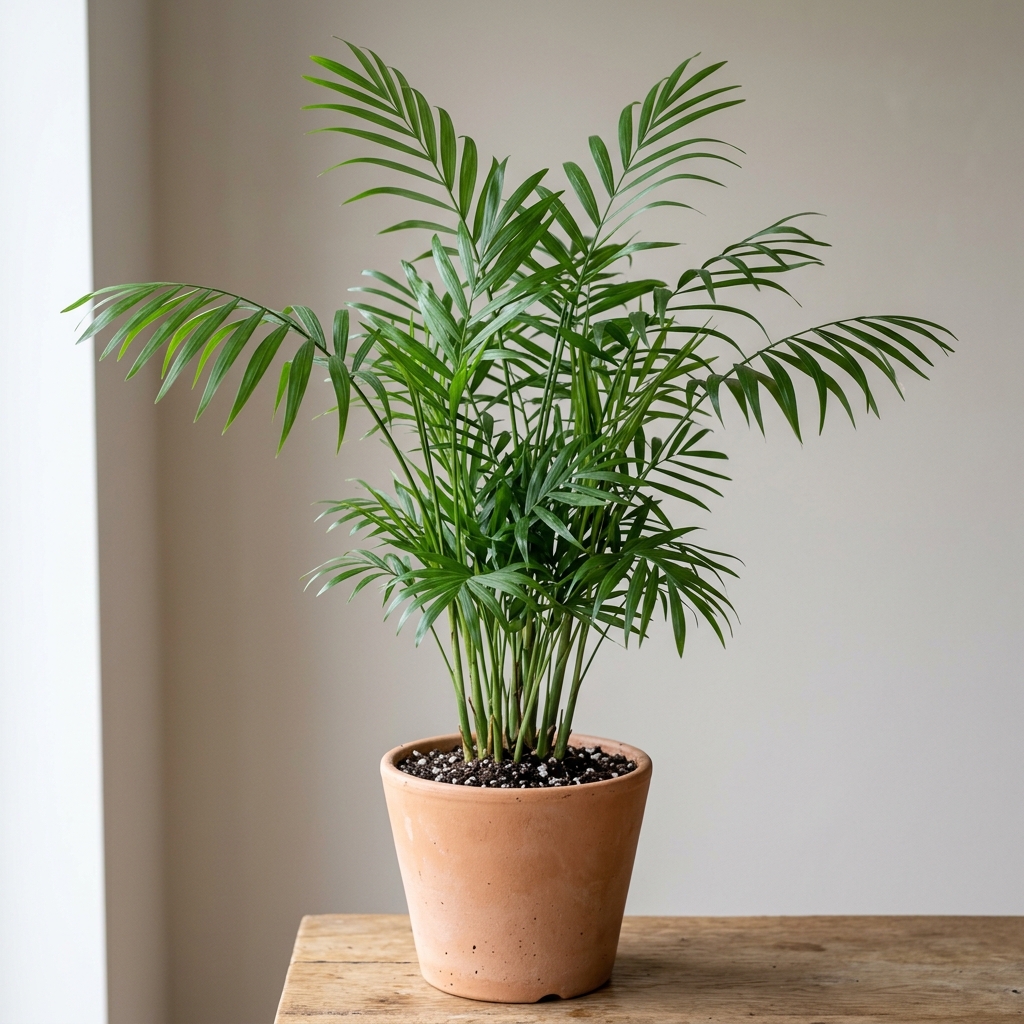
To explore more information on pet safety and garden safety, browse our profiles on Parlor Palm and Saffron Crocus.

Global Names & Multilingual Search

Hindi: गुलाब (Gulab) Tamil: ரோஜா (Roja), முட்செவ்வந்தி (mutchevvandhi) Telugu: గులాబి (Gulabi) Sanskrit: पाटलपुष्पम् (Pāṭalapuṣpam)
View Botanical Care Profile
Hindiगुलाब (Gulab)
Tamilரோஜா (Roja), முட்செவ்வந்தி (mutchevvandhi)
Teluguగులాబి (Gulabi)
Sanskritपाटलपुष्पम् (Pāṭalapuṣpam)
Spanishrosa
Frenchla rose, rosier
RussianРоза (Roza)
Bengaliগোলাপ (Golap)
Germandie Rose, Rosenstrauch
Kannadaಗುಲಾಬಿ (Gulaabi)
Malayalamപനിനീർപ്പൂവ് (Panineerpoovu)
ItalianRosa, Roseto
Chinese玫瑰 (Méiguī)
Japaneseバラ・薔薇 (Bara)

Specific Pet Safety FAQs for Rose

Q

Are Roses toxic to cats?

A

No, roses are chemically non-toxic to cats. The petals, leaves, and hips can be safely chewed on without any threat of chemical poisoning.

Q

What are the physical dangers of roses to dogs?

A

While chemically non-toxic, the sharp thorns (prickles) on rose stems present a physical hazard. Chewing or swallowing thorny stems can cause cuts in the mouth, throat, or gastrointestinal tract.

Q

Are rose petals safe for pets to eat?

A

Yes, rose petals are completely safe and non-toxic for cats and dogs. However, ensure that any florist-bought roses are free of chemical pesticides before letting pets near them.

Q

What should I do if my dog swallows a rose stem with thorns?

A

If your dog swallows a thorny rose stem, contact your veterinarian immediately. Do not induce vomiting, as the sharp thorns can cause cuts on the way back up. Feed a slice of bread to help wrap the thorns and protect the stomach lining.

From the Blog

20 Dangerous Garden Plants: Cat Toxicity & Safety Guide

Felines are highly sensitive to houseplants and flowers. Learn which 20 common species cause severe or fatal reactions in cats, including lilies, and discover safe, cat-friendly garden alternatives.