 Actual Plant Specimen
Is Parlor Palm Safe for Dogs and Cats?
Chamaedorea elegans • Also called: Neanthe Bella Palm
True Parlor Palm (Chamaedorea elegans) is non-toxic, but closely related species sharing the "Parlor Palm" name ARE toxic to pets. Verify your exact variety below.
- Botanical Identity: Parlor Palm (Chamaedorea elegans) — also known as Neanthe Bella Palm.
- All Plant Organs (Flowers, Leaves, Stems & Roots) are verified non-toxic.
- Pet Safety Verdict: Cats — Safe | Dogs — Safe.
Parlor Palm Plant-Part Identification & Toxicity Map
Every part of Parlor Palm (Chamaedorea elegans) marked out as Toxic, Mild Irritant, or Non-Toxic for cats and dogs.
Flowers, Petals & Buds
All blossoms, petals, and pollen of Parlor Palm are non-toxic to cats and dogs.
Leaves & Foliage Blades
Foliage contains no chemical toxins; chewing large amounts of raw fibrous leaves may only trigger a harmless hairball-style regurgitation.
Stems, Stalks & Sap
Stems lack irritating latex sap or calcium oxalate crystals (remove thorns if present on woody varieties).
Roots, Seeds & Potting Soil
Roots and seeds are non-toxic; supervise pets around potting soil containing perlite, cocoa mulch, or slow-release fertilizer beads.
Which Parlor Palm Species Do You Have? (Separate Visual Guide)
Different plants called or confused with Parlor Palm have vastly different toxicity levels. Compare the separate species images and anatomical markers below:
EnlargeParlor Palm (Neanthe Bella Palm)
Chamaedorea elegans
- Soft, flexible, arching feathery green fronds with unarmed (non-spiny) stems
- Thin, smooth green cane-like stems emerging in clusters directly from soil
 Enlarge
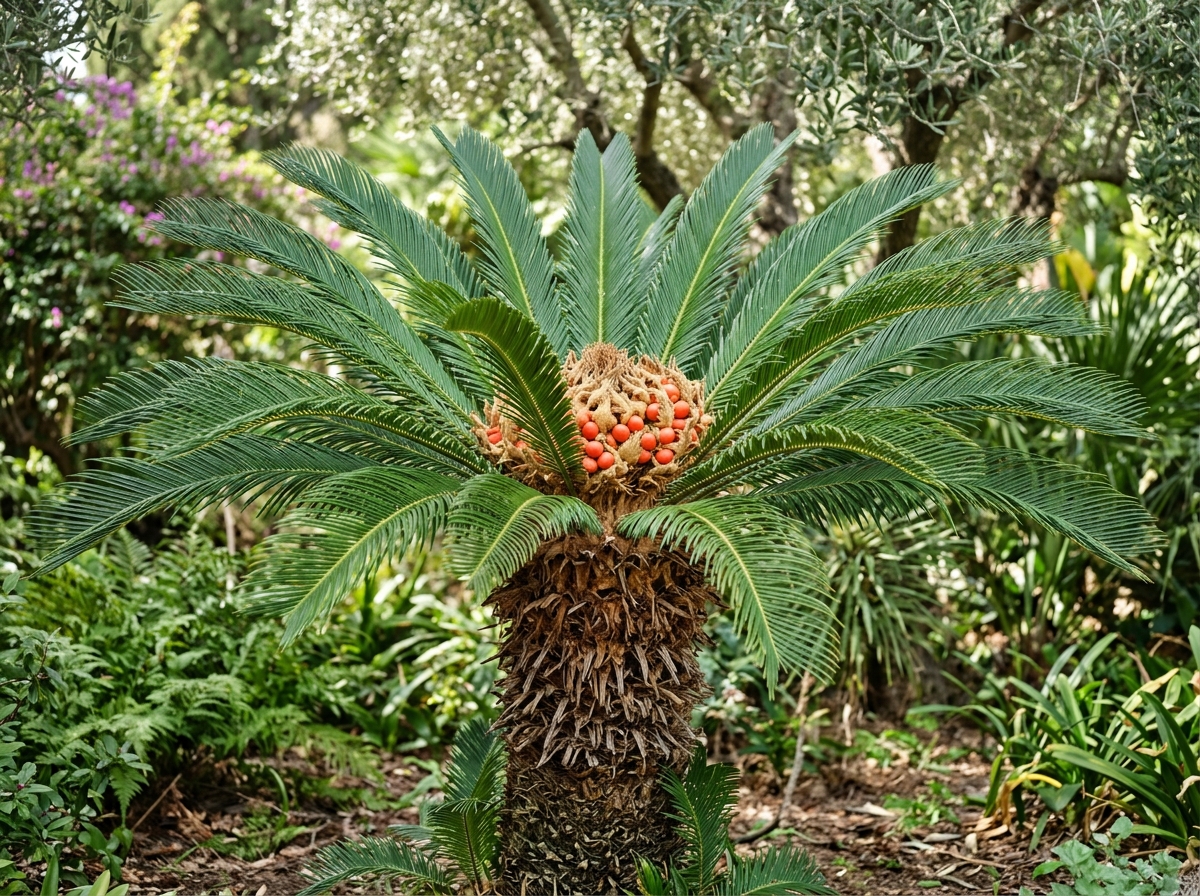
Sago Palm (LETHAL Cycad Look-Alike!)
Cycas revoluta
- Stiff, sharp, needle-tipped rosette fronds growing from a shaggy brown pineapple-like trunk
- Sold alongside indoor palms at garden centers—contains lethal cycasin liver toxin!
Clinical Symptoms to Watch For in Cats
True Parlor Palm (Chamaedorea elegans): Non-toxic (no chemical symptoms).
If your pet ate a toxic variety or look-alike (see Species Cards above): Watch for drooling, lip licking, vomiting, soft stool, or skin redness.
Post-Ingestion Timeline
Veterinary Contraindication Warning — What NOT To Do
🚫 NEVER give hydrogen peroxide, salt, or home emetics to induce vomiting in a cat—3% hydrogen peroxide causes severe, potentially fatal stomach and esophageal ulceration in felines. Only a veterinarian can safely administer feline emetics.
Home Care & First Aid Protocol
Non-toxic to cats.
When to still call a vet: If your pet swallowed a large woody stem/root ball (choking or foreign body risk), ingested potting soil fertilizer, or if you suspect the plant matches one of the toxic look-alike species shown above.
In-Depth Botanical & Veterinary Safety Analysis
Scientific evaluation and toxicological breakdown of Parlor Palm (Chamaedorea elegans)
Specific Pet Safety FAQs for Parlor Palm
Is Parlor Palm safe for cats?
Yes, Parlor Palms are completely non-toxic to cats. The soft fronds are safe, though cats may enjoy playing with them.
Is Parlor Palm safe for dogs?
Yes, Parlor Palms are 100% safe for dogs. There is no risk of chemical poisoning if they chew the leaves.
Is Parlor Palm toxic like Sago Palm?
No. Sago Palm is not a true palm and is highly toxic, whereas Parlor Palm is a true palm and is completely safe.
Why does my cat throw up after chewing the palm?
Swallowing tough palm fibers can mechanically irritate a cat's stomach, leading to mild vomiting of undigested leaf matter.
What are other pet-safe palms?
Areca Palms and Bamboo Palms are also non-toxic and safe to grow around cats and dogs.
20 Dangerous Garden Plants: Cat Toxicity & Safety Guide
Felines are highly sensitive to houseplants and flowers. Learn which 20 common species cause severe or fatal reactions in cats, including lilies, and discover safe, cat-friendly garden alternatives.
🛡️ Discover Related Plant Safety Guides
Explore visually similar or related plants and their pet safety profiles: