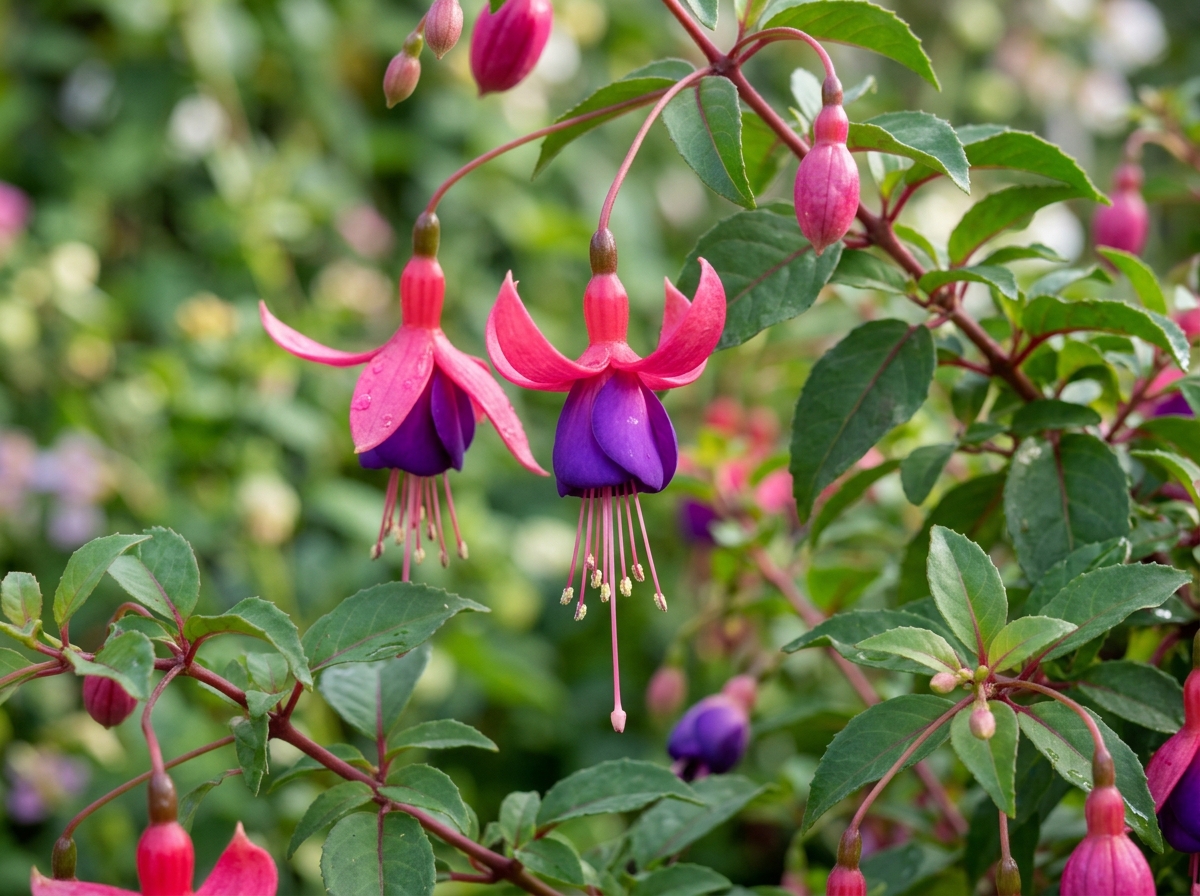
 Actual Plant Specimen
Is Fuchsia Safe for Dogs & Cats? Hanging Basket Flowers & Berries Guide
Fuchsia spp. • Also called: Lady's Eardrops
All botanical parts of Fuchsia (Fuchsia spp.) are verified non-toxic and safe around both cats and dogs.
- Pendulous, teardrop-shaped two-tone flowers (pink/purple/red/white) hanging like earrings from arching stems.
- 4 flared outer sepals above a bell-shaped inner corolla tube with long protruding stamens.
- Followed by small, dark reddish-purple oblong berries that drop onto patios.
Fuchsia Plant-Part Identification & Toxicity Map
Every part of Fuchsia (Fuchsia spp.) marked out as Toxic, Mild Irritant, or Non-Toxic for cats and dogs.
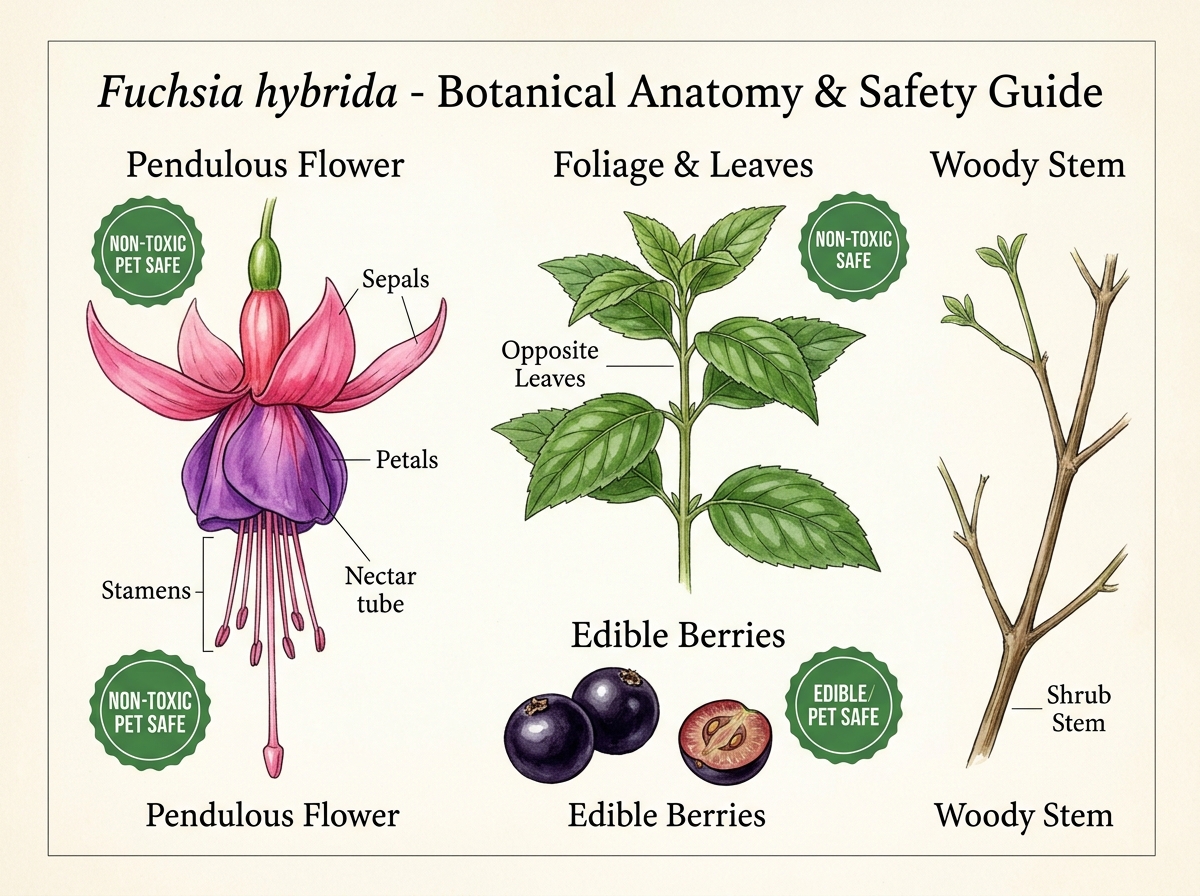
Pendulous Two-Tone Flowers (Sepals, Petals & Stamens)
Fallen Fuchsia blossoms are a favorite toy for cats and puppies—they are completely non-toxic if chewed or swallowed.
Dark Purple Fuchsia Berries
Unlike many garden berries, true Fuchsia berries are non-toxic! Eating dozens off a patio floor may only cause mild, temporary soft stool from fruit sugars.
Opposite Serrated Leaves
Leaves are completely safe; raw leaf fiber may trigger a harmless single vomit if eaten like grass.
Arching Stems & Potting Soil
Stems are non-toxic, but hanging baskets often contain slow-release Osmocote fertilizer beads or systemic neonicotinoid insecticides—keep pets from drinking saucer runoff water!
Which Fuchsia Species Do You Have? (Separate Visual Guide)
Different plants called or confused with Fuchsia have vastly different toxicity levels. Compare the separate species images and anatomical markers below:
EnlargeGarden & Hanging Basket Fuchsia (Lady’s Eardrops)
Fuchsia hybrida / Fuchsia magellanica
- Hanging lantern/earring flowers with 4 reflexed outer sepals and a contrasting inner skirt of petals
- Long, graceful filaments and pistil extending well below the petals
- Soft dark-purple oblong berries containing tiny seeds
 Enlarge
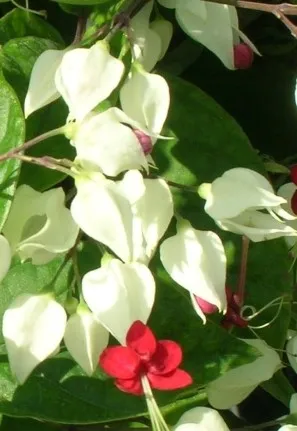
Bleeding Heart Vine (Look-Alike Hanging Flower)
Clerodendrum thomsoniae / Dicentra spectabilis
- Heart-shaped puffy outer calyx (white or pink) with a protruding red tip
- True Bleeding Heart (Dicentra) has fern-like divided foliage and isoquinoline alkaloids
Non-Toxic Plant Owner’s Practical Guide (Fuchsia)
Why Did My Cat Still Vomit After Eating Fuchsia?
Even though Fuchsia contains zero chemical toxins, cats and dogs lack the cellulase enzyme needed to digest raw plant fibers. Swallowing whole leaves or fibrous stems often triggers a harmless, one-time mechanical regurgitation (just like eating lawn grass).
Hidden Nursery Hazards: Pesticides, Fertilizers & Potting Soil
Newly purchased store pots often contain slow-release fertilizer beads (Osmocote), perlite, or systemic neonicotinoid insecticides. Never let pets chew potting soil or drink water from drainage saucers.
Post-Ingestion Timeline
Veterinary Contraindication Warning — What NOT To Do
🚫 NEVER give hydrogen peroxide, salt, or home emetics to induce vomiting in a cat—3% hydrogen peroxide causes severe, potentially fatal stomach and esophageal ulceration in felines. Only a veterinarian can safely administer feline emetics.
Home Care & First Aid Protocol
No action needed. Entirely non-toxic to cats. Swallowing raw plant fiber might cause minor, self-limiting stomach upset.
When to still call a vet: If your pet swallowed a large woody stem/root ball (choking or foreign body risk), ingested potting soil fertilizer, or if you suspect the plant matches one of the toxic look-alike species shown above.
In-Depth Botanical & Veterinary Safety Analysis
Scientific evaluation and toxicological breakdown of Fuchsia (Fuchsia spp.)
Specific Pet Safety FAQs for Fuchsia
Is Fuchsia safe for cats?
Yes, Fuchsia is completely non-toxic to cats. The bell-shaped hanging flowers are safe.
Is Fuchsia safe for dogs?
Yes, Fuchsia is 100% safe for dogs. It contains no toxic saps or cardiotoxins.
Why are Fuchsias recommended for hanging baskets?
They provide spectacular drooping blossoms that are completely non-toxic, making them ideal to hang in reach of curious pets.
What happens if a pet eats Fuchsia flowers?
The pet is safe from poisoning. They might experience mild digestive upset if they swallow a large quantity of plant fiber.
20 Dangerous Garden Plants: Cat Toxicity & Safety Guide
Felines are highly sensitive to houseplants and flowers. Learn which 20 common species cause severe or fatal reactions in cats, including lilies, and discover safe, cat-friendly garden alternatives.
🛡️ Discover Related Plant Safety Guides
Explore visually similar or related plants and their pet safety profiles: