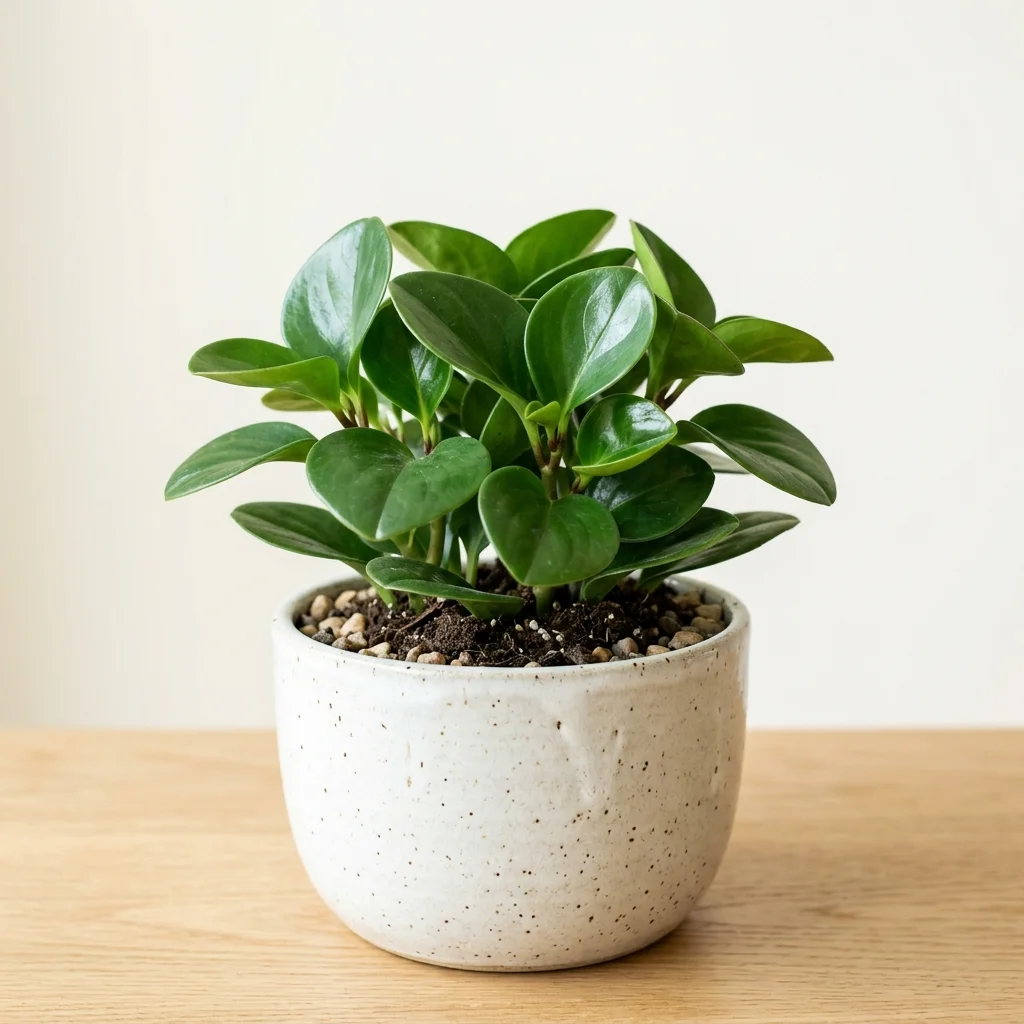
 Actual Plant Specimen
Is Prayer Plant Safe for Cats & Dogs? Maranta leuconeura (Safe) vs. Caladium & Tradescantia Guide
Maranta leuconeura • Also called: Maranta, Red Prayer Plant
All botanical parts of Prayer Plant (Maranta leuconeura) are verified non-toxic and safe around both cats and dogs.
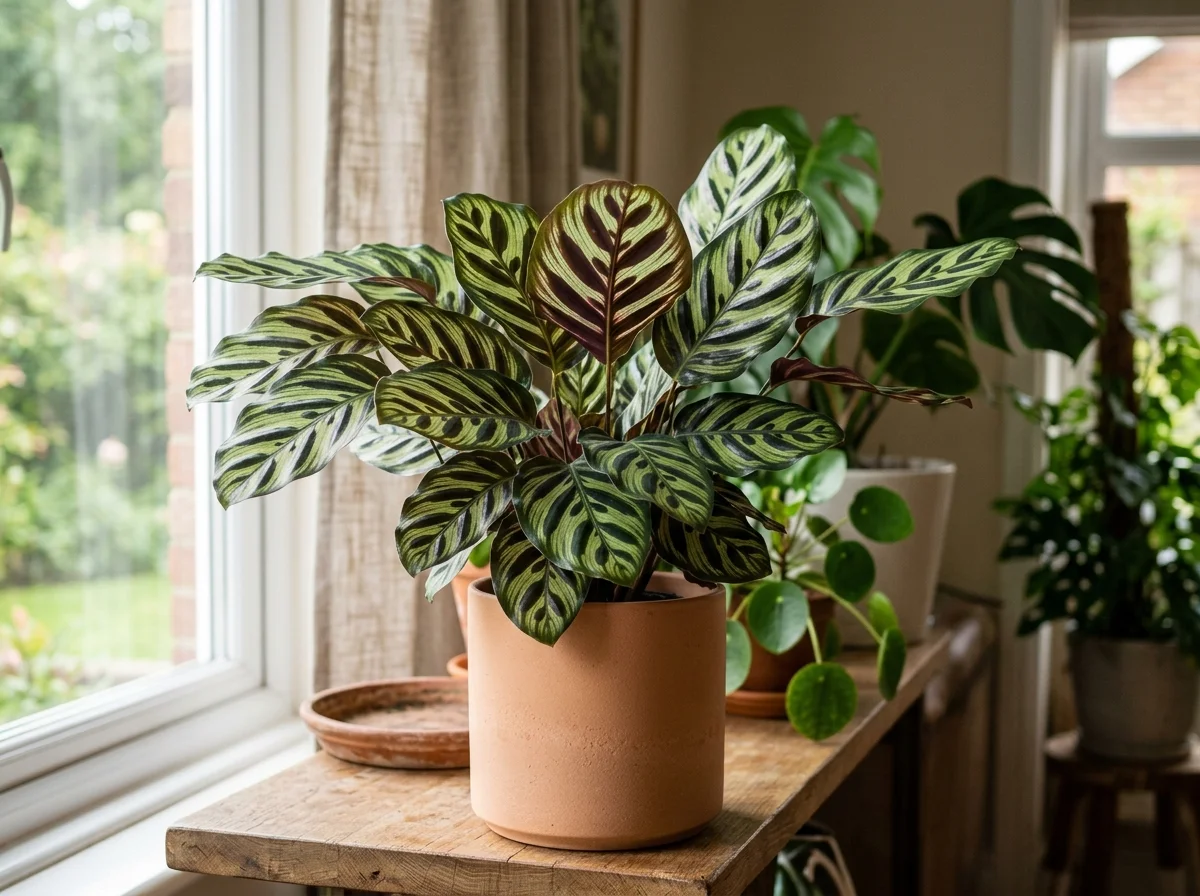
- Broad, oval, velvety dark green leaves decorated with symmetric crimson-red or neon-yellow herringbone veins and a feather-like central blotch
- Low, trailing growth habit (unlike upright clumping Calathea) with leaves that fold flat together like praying hands every night
- Small, delicate two-lipped white-and-violet flowers on slender wiry stalks
- Stems and leaves contain benign watery juice — never irritating contact-dermatitis sap like Wandering Jew (Tradescantia) or raphide crystals like Caladium
Prayer Plant Plant-Part Identification & Toxicity Map
Every part of Prayer Plant (Maranta leuconeura) marked out as Toxic, Mild Irritant, or Non-Toxic for cats and dogs.
Herringbone-Veined Oval Leaves
100% non-toxic to cats and dogs; safe even if a cat nibbles the trailing foliage in a hanging basket.
Trailing Stems & Pulvinus Hinge Joints
Chemically non-toxic; swallowing tough stem pieces causes at most mild mechanical regurgitation.
Small White & Lavender Flowers
100% non-toxic and free of irritating pollen.
Starchy Arrowroot-Family Rhizomes & Roots
Completely non-toxic; ensure hanging pots do not contain slow-release fertilizer prills that could spill if knocked down.
Which Prayer Plant Species Do You Have? (Separate Visual Guide)
Different plants called or confused with Prayer Plant have vastly different toxicity levels. Compare the separate species images and anatomical markers below:
EnlargeRed & Lemon-Lime Prayer Plant
Maranta leuconeura ('Erythroneura', 'Kerchoveana', 'Lemon Lime')
- Trailing oval dark green leaves with vivid red or neon-green herringbone veins that fold upward at dusk.
- Botanical Classification: Maranta leuconeura ('Erythroneura', 'Kerchoveana', 'Lemon Lime')
 Enlarge
Calathea / Peacock & Rattlesnake Plant (Safe Cousin)
Calathea / Goeppertia spp.
- More upright, clumping Marantaceae cousin with brushstroke or rattlesnake-patterned leaves.
- Botanical Classification: Calathea / Goeppertia spp.
 Enlarge
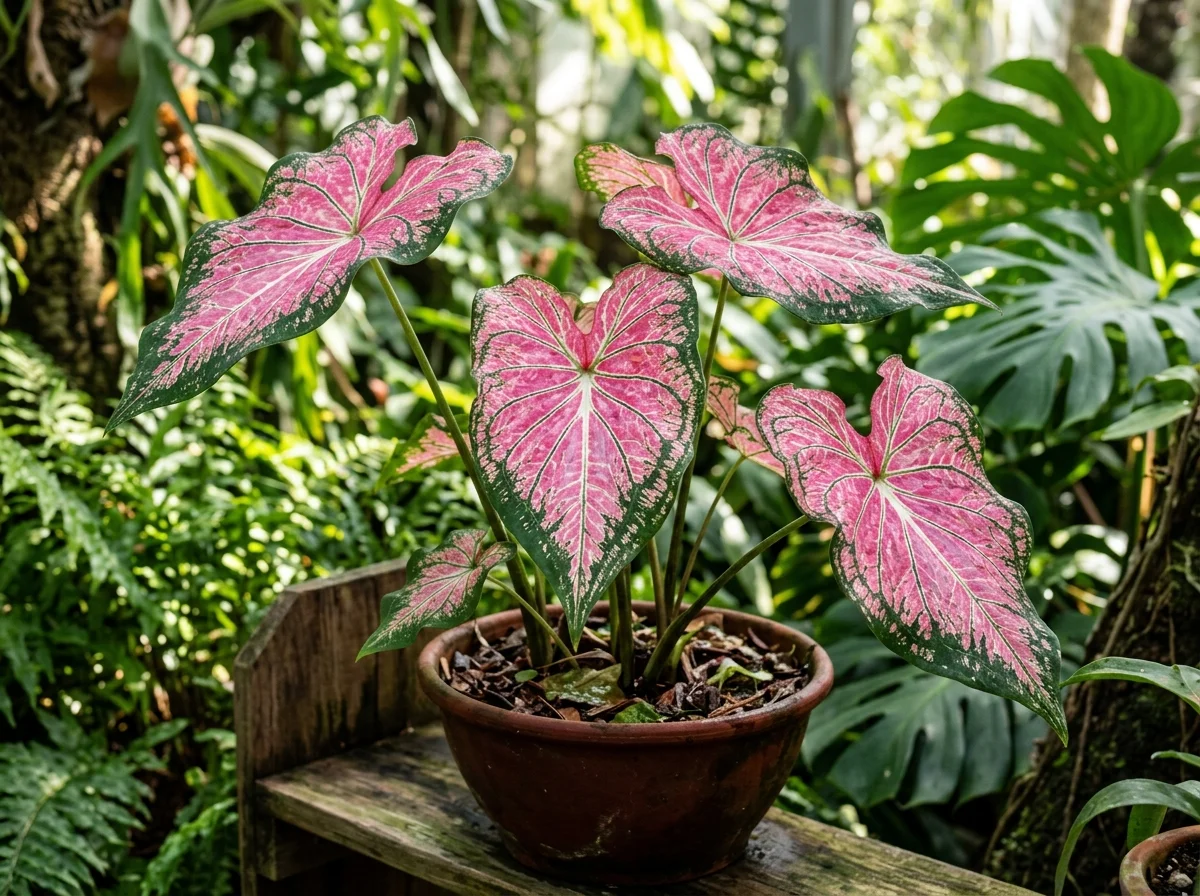
Caladium & Wandering Jew / Inch Plant (Toxic Look-Alikes)
Caladium bicolor / Tradescantia zebrina
- Arrowhead-shaped pink-and-green leaves (Caladium) or purple-silver striped trailing vines (Tradescantia) that do not fold at night.
- Botanical Classification: Caladium bicolor / Tradescantia zebrina
Non-Toxic Plant Owner’s Practical Guide (Prayer Plant)
Why Did My Cat Still Vomit After Eating Prayer Plant?
Even though Prayer Plant contains zero chemical toxins, cats and dogs lack the cellulase enzyme needed to digest raw plant fibers. Swallowing whole leaves or fibrous stems often triggers a harmless, one-time mechanical regurgitation (just like eating lawn grass).
Hidden Nursery Hazards: Pesticides, Fertilizers & Potting Soil
Newly purchased store pots often contain slow-release fertilizer beads (Osmocote), perlite, or systemic neonicotinoid insecticides. Never let pets chew potting soil or drink water from drainage saucers.
Post-Ingestion Timeline
Veterinary Contraindication Warning — What NOT To Do
🚫 NEVER give hydrogen peroxide, salt, or home emetics to induce vomiting in a cat—3% hydrogen peroxide causes severe, potentially fatal stomach and esophageal ulceration in felines. Only a veterinarian can safely administer feline emetics.
Home Care & First Aid Protocol
Non-toxic to cats. Verified by ASPCA guidelines. Chewing on the decorative leaves is completely harmless.
When to still call a vet: If your pet swallowed a large woody stem/root ball (choking or foreign body risk), ingested potting soil fertilizer, or if you suspect the plant matches one of the toxic look-alike species shown above.
In-Depth Botanical & Veterinary Safety Analysis
Scientific evaluation and toxicological breakdown of Prayer Plant (Maranta leuconeura)
Specific Pet Safety FAQs for Prayer Plant
Is Prayer Plant safe for cats?
Yes, Prayer Plants (Maranta) are completely non-toxic to cats. The decorated leaves and stems are safe.
Is Prayer Plant safe for dogs?
Yes, Prayer Plant is 100% safe for dogs. It contains no toxic chemicals or cardiotoxins.
Why is it called the Prayer Plant?
It refers to the plant's leaves which fold up at night like hands folded in prayer, a safe and fascinating natural behavior.
What happens if my pet chews the leaves?
No poisoning will occur. The pet might experience minor, self-limiting digestive upset from swallowing raw plant fiber.
20 Dangerous Garden Plants: Cat Toxicity & Safety Guide
Felines are highly sensitive to houseplants and flowers. Learn which 20 common species cause severe or fatal reactions in cats, including lilies, and discover safe, cat-friendly garden alternatives.
🛡️ Discover Related Plant Safety Guides
Explore visually similar or related plants and their pet safety profiles: