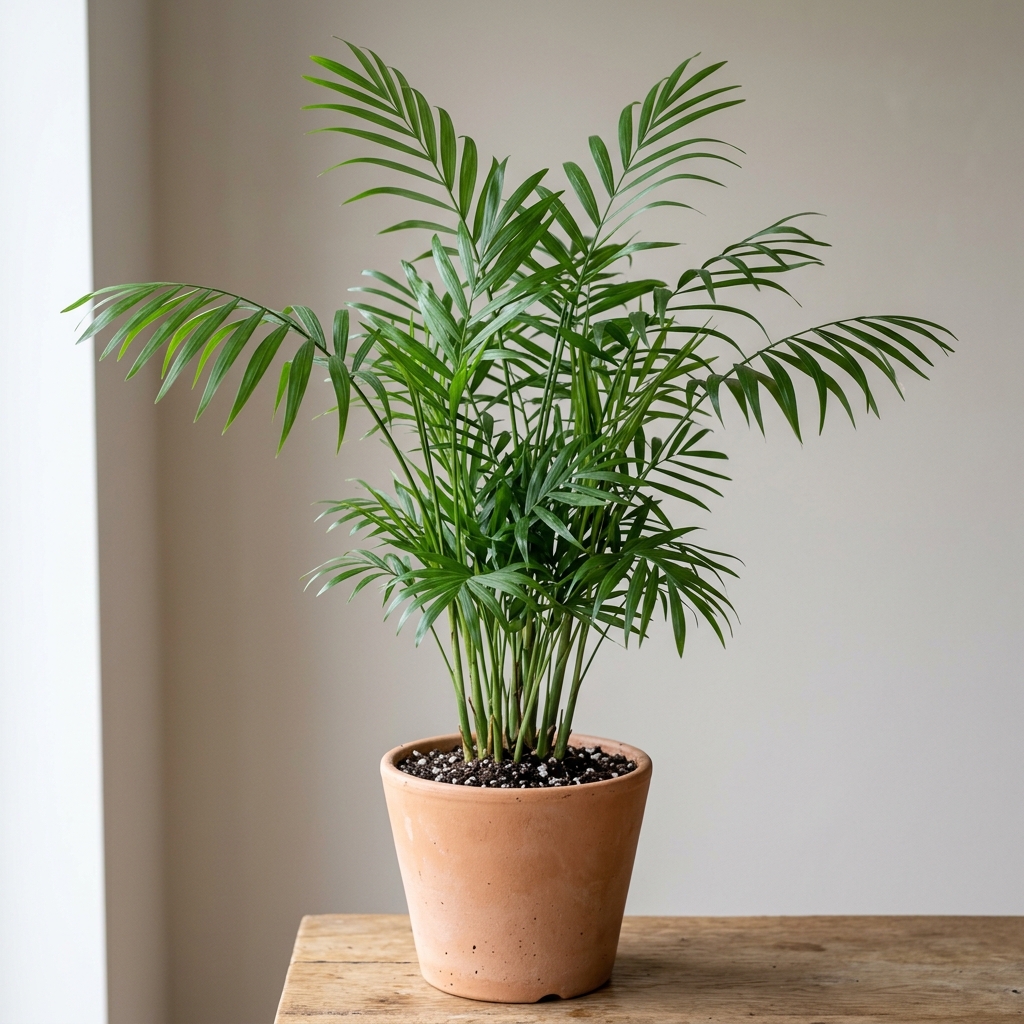
 Actual Plant Specimen
Is Bamboo Palm Safe for Cats & Dogs? Chamaedorea seifrizii (Safe) vs. Heavenly Bamboo Guide
Chamaedorea seifrizii • Also called: Reed Palm
All botanical parts of Bamboo Palm (Chamaedorea seifrizii) are verified non-toxic and safe around both cats and dogs.
- Slender, upright reed-like green canes marked with dark papery nodes that closely resemble miniature bamboo stalks
- Deep green pinnate palm fronds with 12–18 lance-shaped leaflets per side — never compound bipinnate shrub leaves with bright red winter berries like Heavenly Bamboo (Nandina)
- Grows in dense, multi-stemmed clumps 4–7 feet tall and thrives in low-to-medium indoor light
- Small black pea-sized berries on mature plants are non-toxic (unlike the bright red cyanide-rich berries of Nandina domestica)
Bamboo Palm Plant-Part Identification & Toxicity Map
Every part of Bamboo Palm (Chamaedorea seifrizii) marked out as Toxic, Mild Irritant, or Non-Toxic for cats and dogs.
Pinnate Palm Fronds & Leaflets
100% non-toxic to cats and dogs. Swallowing whole fibrous frond tips may trigger a single harmless hairball-like regurgitation in cats.
Segmented Reed-Like Canes (Stems)
Completely non-toxic and free of irritating sap or thorns.
Small Black Palm Berries & Flower Spikes
Non-toxic; unlike red Heavenly Bamboo berries (which contain lethal cyanogenic glycosides), true Chamaedorea palm fruits are chemically harmless.
Roots & Potting Mix
Roots are non-toxic; ensure the potting medium does not contain cocoa-hull mulch or systemic insecticide pellets.
Which Bamboo Palm Species Do You Have? (Separate Visual Guide)
Different plants called or confused with Bamboo Palm have vastly different toxicity levels. Compare the separate species images and anatomical markers below:
EnlargeBamboo Palm / Reed Palm
Chamaedorea seifrizii
- Clustered bamboo-like ringed canes with soft dark green feathery palm fronds — 100% pet-safe.
- Botanical Classification: Chamaedorea seifrizii
 Enlarge
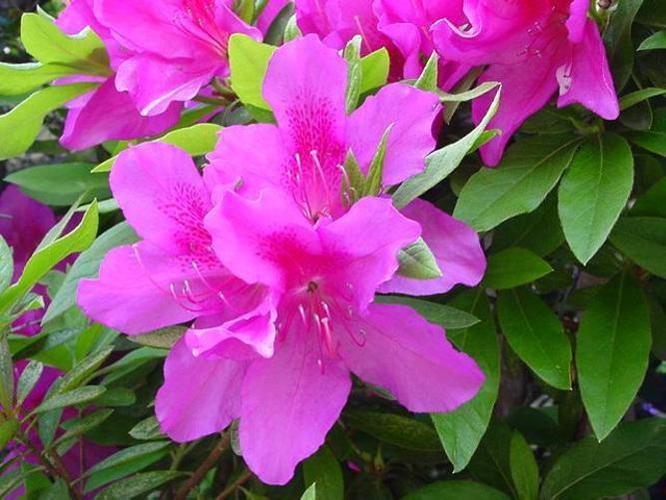
Heavenly Bamboo / Sacred Bamboo (Cyanide Look-Alike)
Nandina domestica
- Woody landscaping shrub (Berberidaceae) with lacy reddish-green foliage and large clusters of bright red berries.
- Botanical Classification: Nandina domestica
 Enlarge
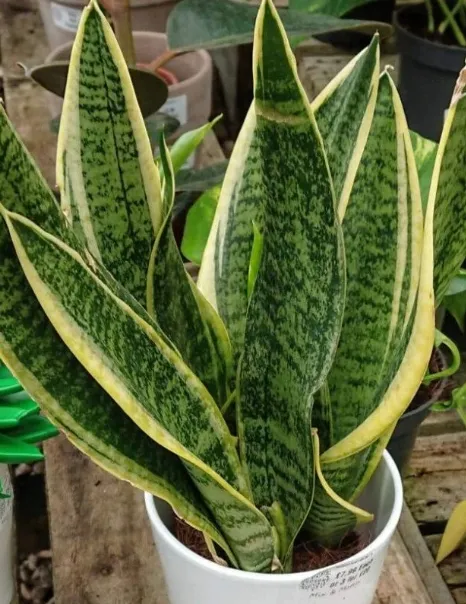
Lucky Bamboo (Dracaena Look-Alike)
Dracaena sanderiana
- Fleshy spiral-trained green stalks often grown in water with pebbles and short corn-like leaves.
- Botanical Classification: Dracaena sanderiana
Non-Toxic Plant Owner’s Practical Guide (Bamboo Palm)
Why Did My Cat Still Vomit After Eating Bamboo Palm?
Even though Bamboo Palm contains zero chemical toxins, cats and dogs lack the cellulase enzyme needed to digest raw plant fibers. Swallowing whole leaves or fibrous stems often triggers a harmless, one-time mechanical regurgitation (just like eating lawn grass).
Hidden Nursery Hazards: Pesticides, Fertilizers & Potting Soil
Newly purchased store pots often contain slow-release fertilizer beads (Osmocote), perlite, or systemic neonicotinoid insecticides. Never let pets chew potting soil or drink water from drainage saucers.
Post-Ingestion Timeline
Veterinary Contraindication Warning — What NOT To Do
🚫 NEVER give hydrogen peroxide, salt, or home emetics to induce vomiting in a cat—3% hydrogen peroxide causes severe, potentially fatal stomach and esophageal ulceration in felines. Only a veterinarian can safely administer feline emetics.
Home Care & First Aid Protocol
Non-toxic to cats.
When to still call a vet: If your pet swallowed a large woody stem/root ball (choking or foreign body risk), ingested potting soil fertilizer, or if you suspect the plant matches one of the toxic look-alike species shown above.
In-Depth Botanical & Veterinary Safety Analysis
Scientific evaluation and toxicological breakdown of Bamboo Palm (Chamaedorea seifrizii)
Specific Pet Safety FAQs for Bamboo Palm
Is Bamboo Palm safe for cats?
Yes, Bamboo Palms are completely non-toxic to cats. The soft green fronds are safe to touch and chew.
Is Bamboo Palm safe for dogs?
Yes, Bamboo Palms are 100% safe for dogs. There is no risk of chemical poisoning if they chew the leaves.
Is Bamboo Palm the same as Sago Palm?
No. Sago Palm is a highly toxic Cycad that causes liver failure, whereas Bamboo Palm is a true palm and is entirely safe.
What happens if my pet eats a large Bamboo Palm leaf?
They might experience mild, temporary stomach irritation from digesting the tough plant fiber, but no toxicity will occur.
How does the Bamboo Palm benefit my home?
It is a highly effective, natural air-purifying plant that is completely safe for household pets.
20 Dangerous Garden Plants: Cat Toxicity & Safety Guide
Felines are highly sensitive to houseplants and flowers. Learn which 20 common species cause severe or fatal reactions in cats, including lilies, and discover safe, cat-friendly garden alternatives.
🛡️ Discover Related Plant Safety Guides
Explore visually similar or related plants and their pet safety profiles: