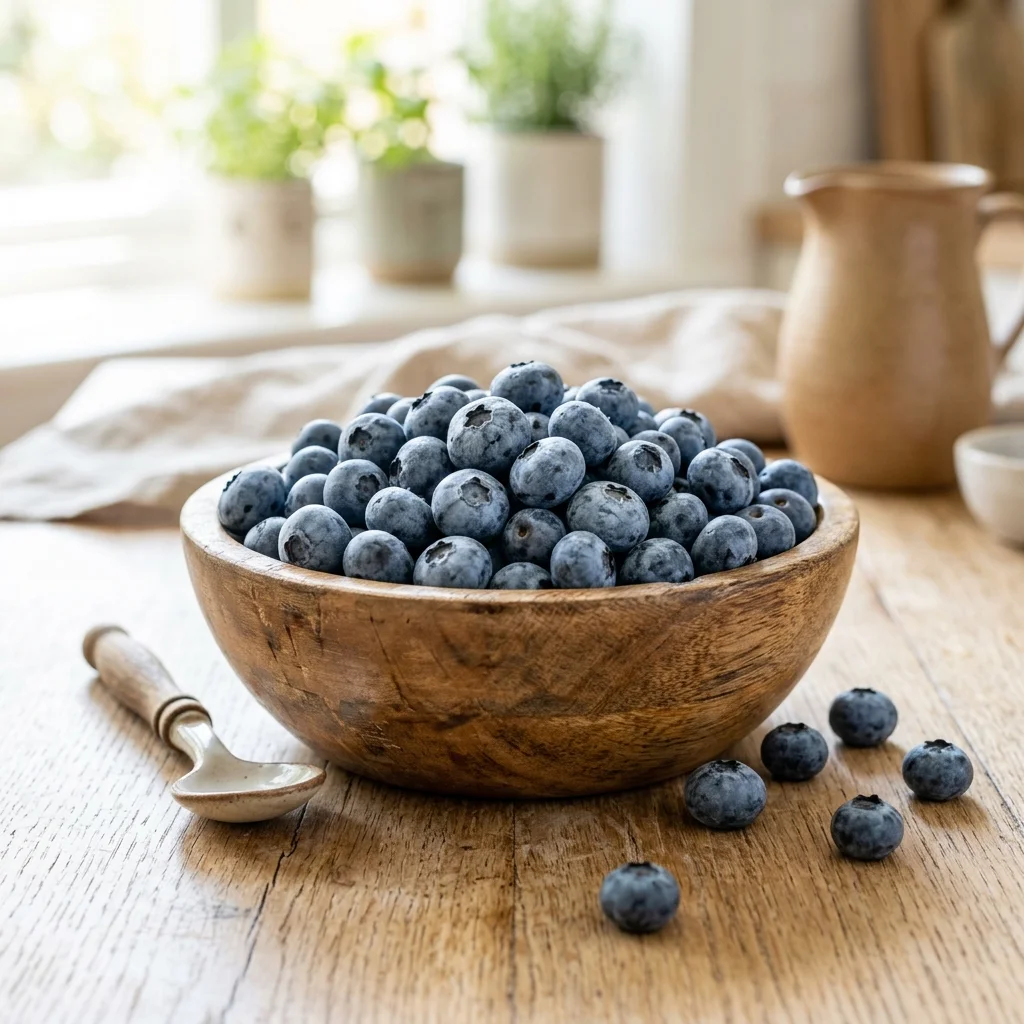
 Actual Plant Specimen
Are Blueberries Safe for Dogs & Cats? Superfood Treat (Safe) vs. Lethal Grapes Look-Alike Guide
Vaccinium corymbosum • Also called: Highbush Blueberry, Lowbush Blueberry, Star Berry
All botanical parts of Blueberries (Vaccinium corymbosum) are verified non-toxic and safe around both cats and dogs.
- Small, round indigo-to-blue-black berries coated in a powdery silver-white wax bloom with a distinctive 5-pointed star-shaped calyx crown at the blossom end
- Soft, translucent greenish-white interior flesh with microscopic, harmless edible seeds (unlike purple grapes, which have a smooth stem scar and no 5-pointed blossom crown)
- Deciduous shrub with smooth oval green leaves that turn brilliant scarlet-red in autumn and bear white urn-shaped spring flowers
- When feeding blueberry muffins or pancakes, verify they do NOT contain xylitol (birch sugar), raisins, or currants
Blueberries Plant-Part Identification & Toxicity Map
Every part of Blueberries (Vaccinium corymbosum) marked out as Toxic, Mild Irritant, or Non-Toxic for cats and dogs.
Fresh or Unsweetened Frozen Blueberries
100% non-toxic superfood treat for dogs and cats; mash or halve frozen berries for toy puppies or kittens to prevent accidental airway aspiration.
Dried Unsweetened Blueberries
Chemically safe (unlike lethal raisins/currants), though higher in concentrated natural fruit sugars — verify the package contains 100% blueberries and is not mixed with Zante currants or raisins.
Blueberry Bush Leaves, Stems & White Bell Flowers
Unlike toxic Ericaceae relatives (Azalea, Rhododendron, Mountain Laurel, Pieris), Vaccinium blueberry foliage contains zero grayanotoxins and is non-toxic.
Artificial 'Blueberry' Baked Goods with Xylitol or Currants
Check ingredient labels on sugar-free blueberry muffins or trail mixes for xylitol or dried currants/raisins.
Which Blueberries Species Do You Have? (Separate Visual Guide)
Different plants called or confused with Blueberries have vastly different toxicity levels. Compare the separate species images and anatomical markers below:
EnlargeHighbush & Lowbush Blueberries / Bilberries
Vaccinium corymbosum / Vaccinium angustifolium
- Round indigo-blue berries with a 5-pointed star crown on the bottom and pale greenish interior flesh.
- Botanical Classification: Vaccinium corymbosum / Vaccinium angustifolium
 Enlarge
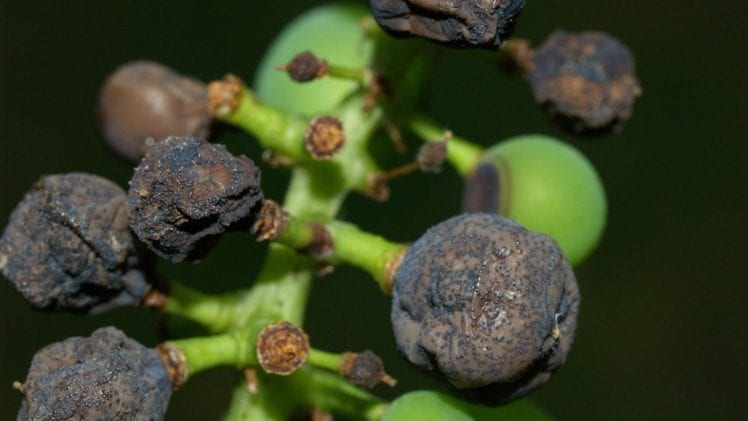
Dark Purple Grapes, Concord Grapes & Zante Currants (Lethal Look-Alikes)
Vitis vinifera
- Smooth oval berries growing in vine clusters WITHOUT a 5-pointed star calyx crown at the bottom.
- Botanical Classification: Vitis vinifera
 Enlarge
Virginia Creeper, Pokeweed & Deadly Nightshade Berries (Wild Yard Berries)
Parthenocissus quinquefolia / Phytolacca americana / Atropa belladonna
- Dark blue-black wild berries on 5-leaflet vines (Virginia Creeper) or magenta-stemmed weeds (Pokeweed).
- Botanical Classification: Parthenocissus quinquefolia / Phytolacca americana / Atropa belladonna
Non-Toxic Plant Owner’s Practical Guide (Blueberries)
Why Did My Cat Still Vomit After Eating Blueberries?
Even though Blueberries contains zero chemical toxins, cats and dogs lack the cellulase enzyme needed to digest raw plant fibers. Swallowing whole leaves or fibrous stems often triggers a harmless, one-time mechanical regurgitation (just like eating lawn grass).
Hidden Nursery Hazards: Pesticides, Fertilizers & Potting Soil
Newly purchased store pots often contain slow-release fertilizer beads (Osmocote), perlite, or systemic neonicotinoid insecticides. Never let pets chew potting soil or drink water from drainage saucers.
Post-Ingestion Timeline
Veterinary Contraindication Warning — What NOT To Do
🚫 NEVER give hydrogen peroxide, salt, or home emetics to induce vomiting in a cat—3% hydrogen peroxide causes severe, potentially fatal stomach and esophageal ulceration in felines. Only a veterinarian can safely administer feline emetics.
Home Care & First Aid Protocol
Safe for cats.
When to still call a vet: If your pet swallowed a large woody stem/root ball (choking or foreign body risk), ingested potting soil fertilizer, or if you suspect the plant matches one of the toxic look-alike species shown above.
In-Depth Botanical & Veterinary Safety Analysis
Scientific evaluation and toxicological breakdown of Blueberries (Vaccinium corymbosum)
Global Names & Multilingual Search
Specific Pet Safety FAQs for Blueberries
Are Blueberries safe for cats?
Yes, blueberries are safe and non-toxic for cats. Some cats enjoy the texture, and they can be fed as an occasional healthy treat.
Are Blueberries safe for dogs?
Yes, blueberries are completely safe and make a highly nutritious, low-calorie treat for dogs, packed with vitamin C and fiber.
What health benefits do Blueberries offer pets?
Blueberries are an excellent source of natural antioxidants, vitamins, and minerals that support immune health, cognitive function, and cellular recovery.
How should I feed Blueberries to my pet?
You can feed fresh or frozen blueberries directly as training treats. Offer them in moderation (no more than a small handful) to prevent mild stomach upset from natural sugars.
20 Dangerous Garden Plants: Cat Toxicity & Safety Guide
Felines are highly sensitive to houseplants and flowers. Learn which 20 common species cause severe or fatal reactions in cats, including lilies, and discover safe, cat-friendly garden alternatives.
🛡️ Discover Related Plant Safety Guides
Explore visually similar or related plants and their pet safety profiles: