
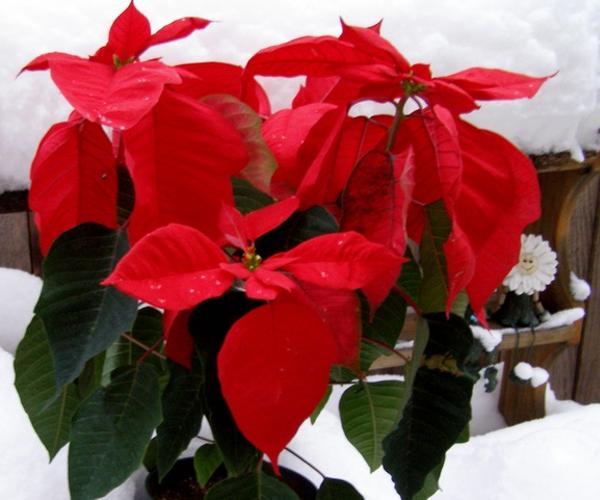
Poinsettia
Euphorbia pulcherrima
Basic Details
Floral Formula & Features
Bracteate (showy colored bracts), radially symmetrical, unisexual (male and female flowers separate in same cyathium), no sepals, no petals, male flowers with 1 stamen each, female flower with 3 fused carpels and superior ovary. Cyathium (cup-like structure) typical of Euphorbia
- Named after Joel Roberts Poinsett, first US ambassador to Mexico who introduced plant to US in 1825. Called 'Flor de Nochebuena' (Christmas Eve Flower) in Mexico. About 100 Euphorbia species. Poinsettia is E. pulcherrima meaning 'most beautiful.' Wild plants grow 10-15 feet tall in Mexico
- Showy parts are bracts (modified leaves), not petals. Bracts 2-6 inches long in red (most common), pink, white, cream, orange, marbled, or speckled. True flowers tiny yellow cyathia (cup-shaped) in center, 0.2 inches across. Blooms December-February. Needs 12-14 hours darkness nightly for 6-8 weeks to color up
- Semi-evergreen shrub or small tree in nature. Houseplant form compact and bushy. Dark green leaves 3-7 inches long, lobed or smooth-edged. Milky white sap (latex) in stems and leaves - mildly toxic, causes skin irritation. Not deadly poisonous as myth suggests, but keep away from pets and children
- Grows 2-4 feet (60-120 cm) as houseplant, 10-15 feet (3-4.5 m) in ground in warm climates. Spread 2-3 feet. Lifespan 20+ years with care. Propagated from stem cuttings in spring. Can rebloom yearly if given proper light cycle (long nights in fall)
- Native to Mexico and Guatemala, particularly Pacific coastal regions. Found in tropical dry forests at 1,000-6,000 feet elevation. Now cultivated worldwide as ornamental. Thrives outdoors in zones 10-12, grown as houseplant elsewhere
- Requires bright indirect light (6-8 hours) as houseplant. Tolerates low light but won't rebloom. Needs well-drained soil. Water when top inch dry - don't overwater. Prefers 60-70°F. Keep away from cold drafts and heat vents. Sensitive to temperature changes. Hardy zones 10-12 outdoors
- World's best-selling potted plant - 70+ million sold yearly in US alone. Popular Christmas gift and decoration. Used in holiday displays, centerpieces. Excellent houseplant year-round. Attracts hummingbirds in warm climates. Deer resistant. Symbolizes good cheer, success, celebration
- To rebloom: Give 12-14 hours complete darkness nightly starting October 1 for 8-10 weeks. Even streetlights prevent blooming. Fertilize monthly spring-fall. Prune to 6 inches in spring for bushier growth. Pinch tips until September. Common myth: NOT deadly poisonous - mildly irritating sap only
Names in Different Languages
What is Floral Formula?
A floral formula is a symbolic representation of a flower's structure using letters, numbers, and special symbols. It provides a concise way to describe the arrangement and number of floral parts.
This formula describes the flower's symmetry, sepals, petals, stamens, and carpels in a standardized format.
Formula Sequence
- Bract: Br or Ebr
- Bracteole: Brl or Ebrl
- Symmetry: % (Radial) or ⊕ (Bilateral)
- Sex: ♀ (Female), ♂ (Male), or ⚥ (Bisexual)
- Calyx/Sepal: K<number> (Free or Fused)
- Corolla/Petal: C<number> (Free or Fused)
- Androecium: A<number> (Free or Fused)
- Gynaecium: G<number> (Superior or Inferior Ovary)
Symbol Meanings
- Numbers: Indicate quantity of parts
- Parentheses (): Parts are fused together
- Plus (+): Parts in different whorls
- Underline: Superior ovary position
- Overline: Inferior ovary position
- ∞: Numerous parts (too many to count)
Understanding floral formulas helps botanists quickly identify and classify flowers based on their structural characteristics.
Similar Flowers
Discover flowers that share botanical characteristics
Same Family
2
Similar Characteristics
4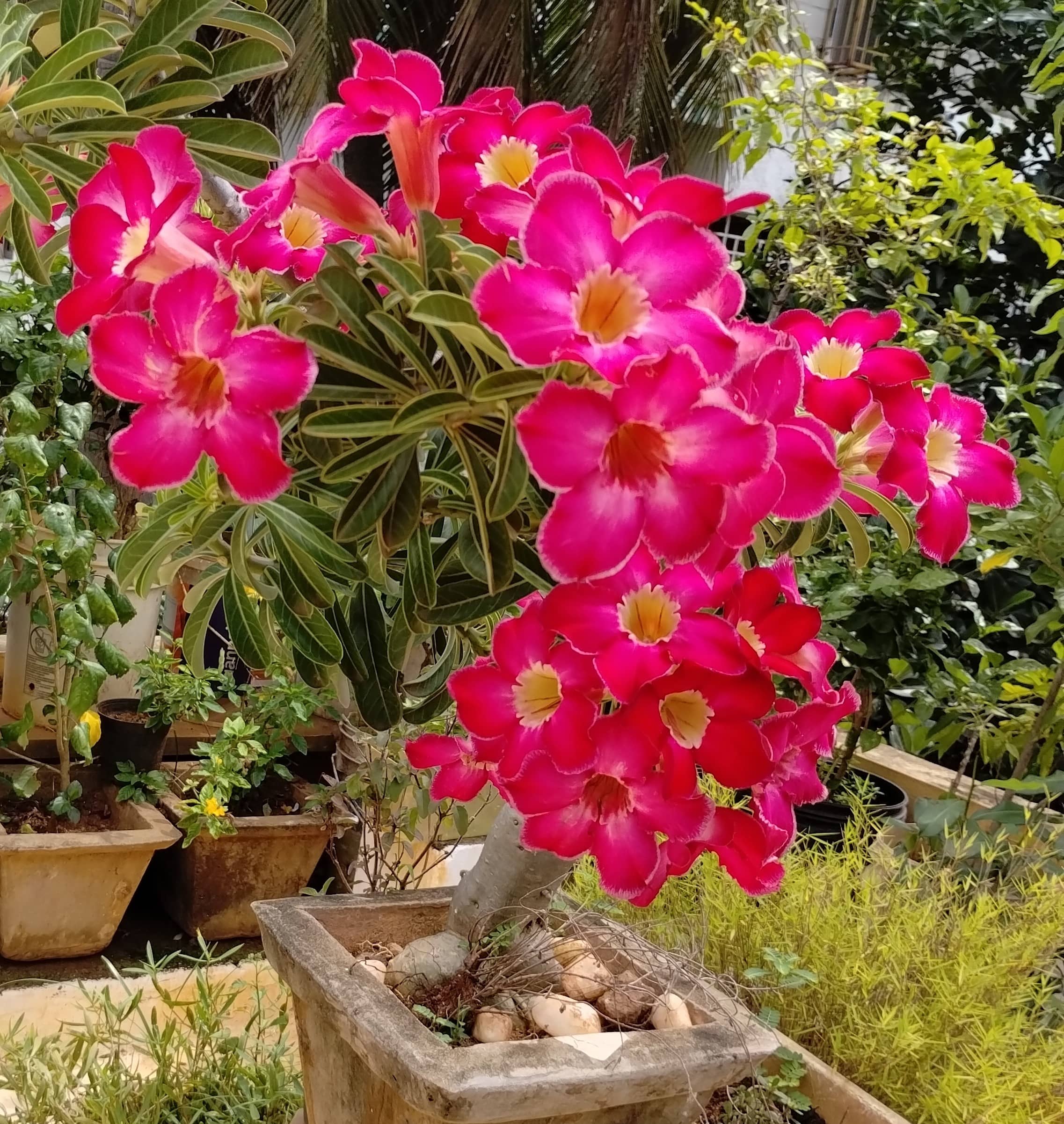
Desert rose
Adenium obesum
Striking succulent shrub featuring a dramatically swollen trunk (caudex) that st...
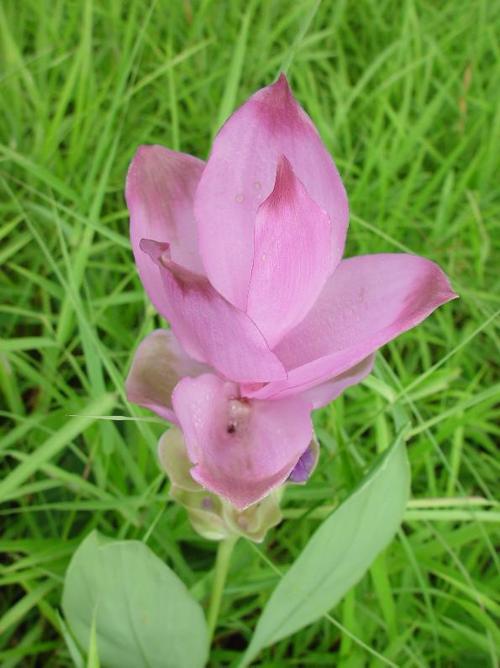
Siam Tulip (NOT a True Tulip)
Curcuma alismatifolia
Beautiful tropical plant that looks like tulip but is actually related to turmer...
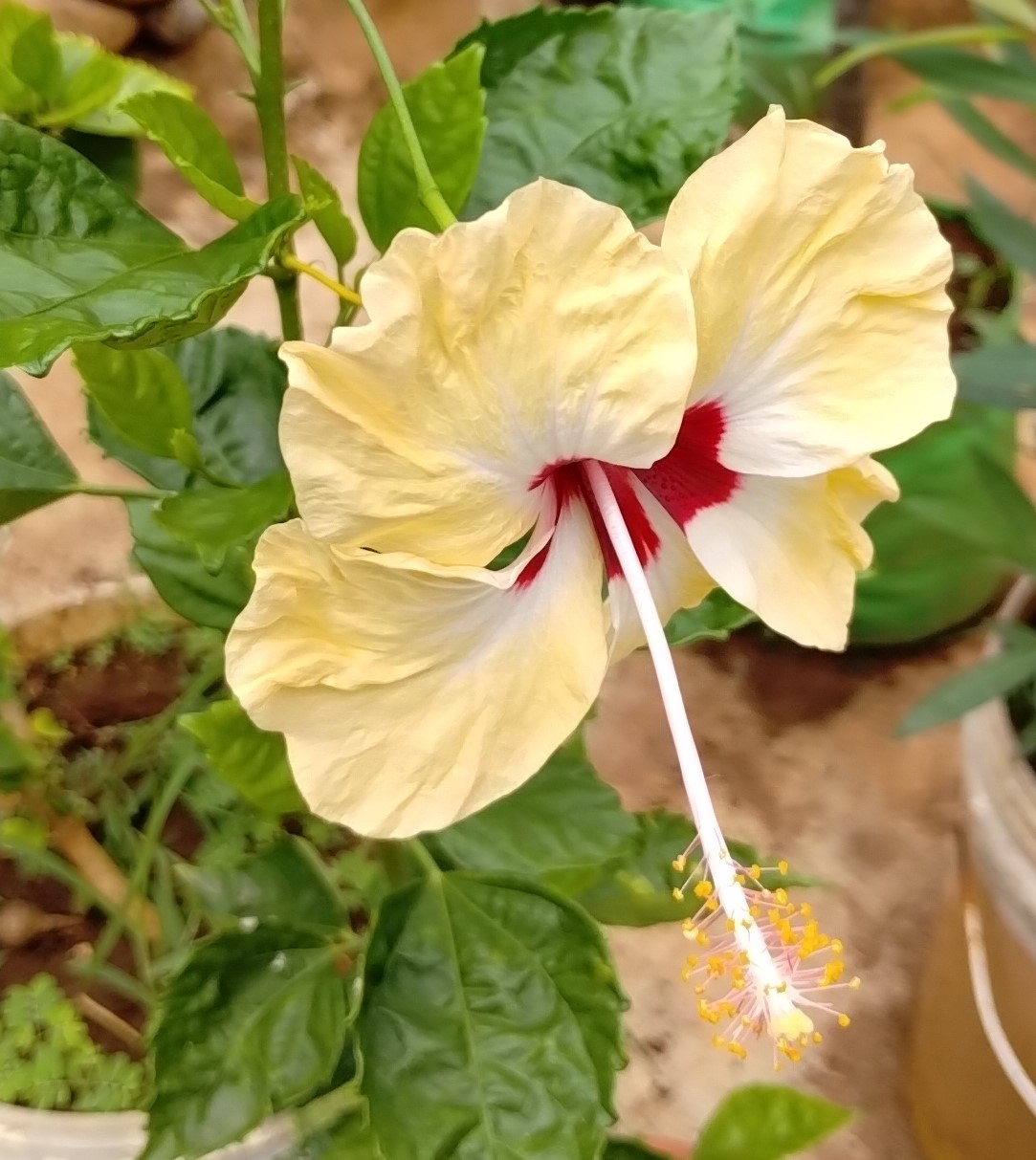
Hibiscus
Hibiscus rosa-sinensis
Spectacular tropical shrub featuring enormous, trumpet-shaped flowers with five ...
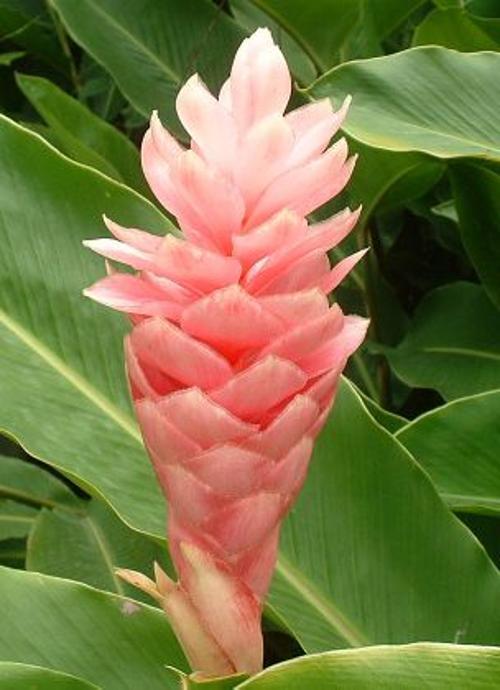
Red Ginger (Ostrich Plume)
Alpinia purpurata
Stunning tropical plant with brilliant red or pink cone-shaped flower spikes res...