
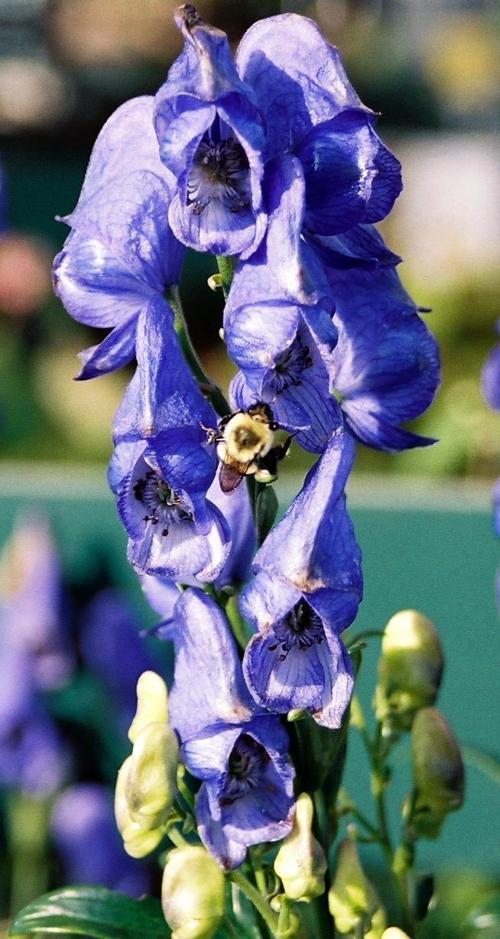
Monkshood
Aconitum napellus
Basic Details
Floral Formula & Features
Ebracteate, zygomorphic (bilateral symmetry), bisexual, 5 free sepals (upper one large and helmet-shaped, 2 lateral, 2 lower), 2-5 small petals modified as nectaries hidden under helmet, numerous free stamens, 3-5 free carpels (apocarpous) with superior ovaries forming follicles. Complex irregular flower structure
- Name 'Monkshood' from helmet-shaped upper sepal resembling medieval monk's cowl. 'Aconite' from Greek 'akoniton.' 'Wolfsbane' because used to poison wolves and werewolves in folklore. Contains aconitine - one of most toxic plant alkaloids. Used historically as arrow poison, in murders, and executions. About 250 Aconitum species
- Flowers 1-1.5 inches (2.5-4 cm) long, distinctive helmet or hood shape formed by large upper sepal. Deep purple-blue (most common), also violet, white, yellow, or bicolor. Arranged in tall spikes 6-18 inches long. Blooms late summer to fall (July-October). Each spike has 20-50 flowers opening from bottom up. Attractive but DEADLY
- Herbaceous perennial with erect, unbranched stems. Leaves deeply divided into 5-7 lobes, dark green, glossy. Grows from tuberous roots (most toxic part). Dies back to ground in winter, regrows in spring. All parts contain deadly aconitine alkaloid. Even handling plant can cause skin numbness. Wear gloves when touching
- Grows 2-5 feet (60-150 cm) tall, occasionally to 6 feet. Spread 1-2 feet. Lifespan of 10-20+ years as perennial. Propagated from seed (slow, 2-3 years to bloom) or division of tuberous roots (wear gloves!). Seeds need cold stratification. Slow-growing but long-lived once established
- Native to western and central Europe, particularly mountain regions and alpine meadows. Found in moist woodlands, stream banks, and mountain slopes. Now cultivated in gardens worldwide in cool climates. Grows wild in Northern Hemisphere temperate zones. Prefers cool summers, struggles in heat
- Requires partial shade to full shade (2-4 hours sun maximum). Prefers cool, moist, well-drained soil rich in organic matter. Needs consistent moisture. Dislikes heat and drought. Hardy zones 3-7. Performs best in cool climates. Mulch to keep roots cool. Avoid hot, sunny locations
- EXTREME DANGER: ALL PARTS DEADLY POISONOUS. Aconitine causes heart failure, paralysis, death within hours. As few as 2-6 grams of root can kill adult. Poison absorbed through skin - causes numbness, tingling. Symptoms: nausea, vomiting, diarrhea, heart arrhythmia, respiratory failure. NO ANTIDOTE. Never ingest. Handle only with gloves. Keep away from children and pets
- Despite toxicity, valued for late-season blue flowers and shade tolerance. Attracts bumblebees (immune to poison). Used historically in traditional medicine (extremely dangerous). Still used in homeopathy in minute doses. Plant only if you understand risks. Mark clearly as poisonous. Consider safer alternatives if children or pets present
Names in Different Languages
What is Floral Formula?
A floral formula is a symbolic representation of a flower's structure using letters, numbers, and special symbols. It provides a concise way to describe the arrangement and number of floral parts.
This formula describes the flower's symmetry, sepals, petals, stamens, and carpels in a standardized format.
Formula Sequence
- Bract: Br or Ebr
- Bracteole: Brl or Ebrl
- Symmetry: % (Radial) or ⊕ (Bilateral)
- Sex: ♀ (Female), ♂ (Male), or ⚥ (Bisexual)
- Calyx/Sepal: K<number> (Free or Fused)
- Corolla/Petal: C<number> (Free or Fused)
- Androecium: A<number> (Free or Fused)
- Gynaecium: G<number> (Superior or Inferior Ovary)
Symbol Meanings
- Numbers: Indicate quantity of parts
- Parentheses (): Parts are fused together
- Plus (+): Parts in different whorls
- Underline: Superior ovary position
- Overline: Inferior ovary position
- ∞: Numerous parts (too many to count)
Understanding floral formulas helps botanists quickly identify and classify flowers based on their structural characteristics.
Similar Flowers
Discover flowers that share botanical characteristics
Same Family
4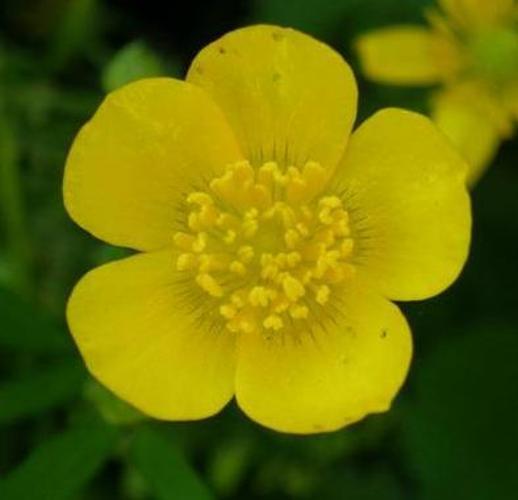
Meadow Buttercup
Ranunculus acris
Common wildflower with bright golden-yellow cup-shaped blooms featuring glossy, ...
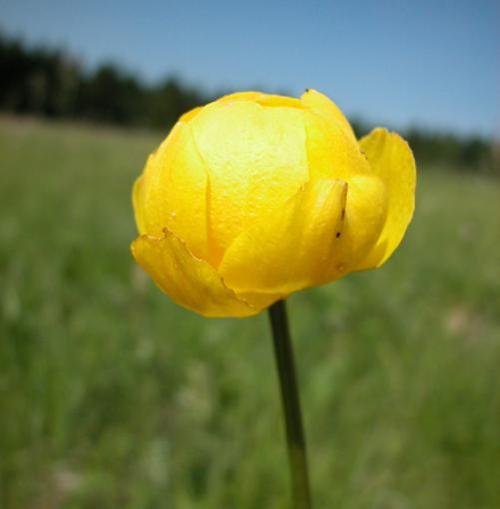
Globe flower
Trollius
Charming perennial featuring perfectly spherical, globe-shaped flowers resemblin...
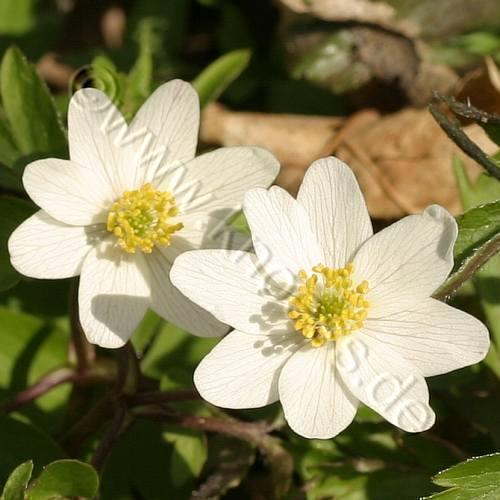
Windflower
Anemone
Graceful perennial named for delicate blooms that dance and sway in slightest br...
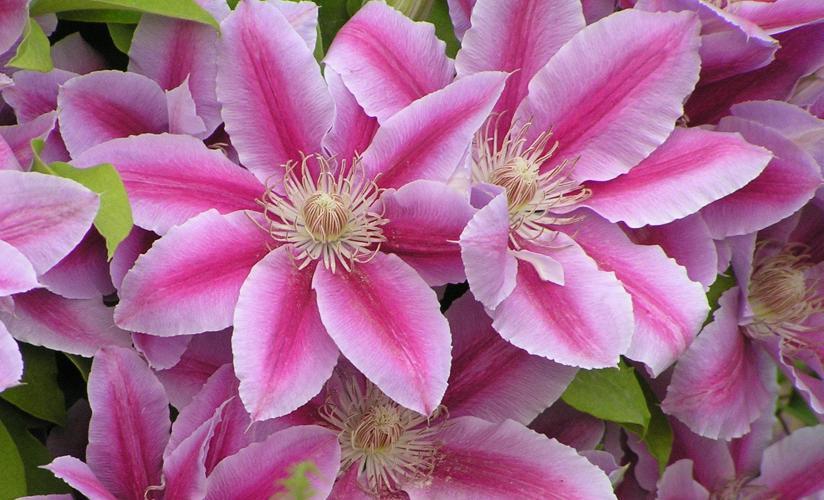
Clematis
Clematis
Spectacular flowering vine featuring large, showy blooms in star or bell shapes ...
Similar Characteristics
4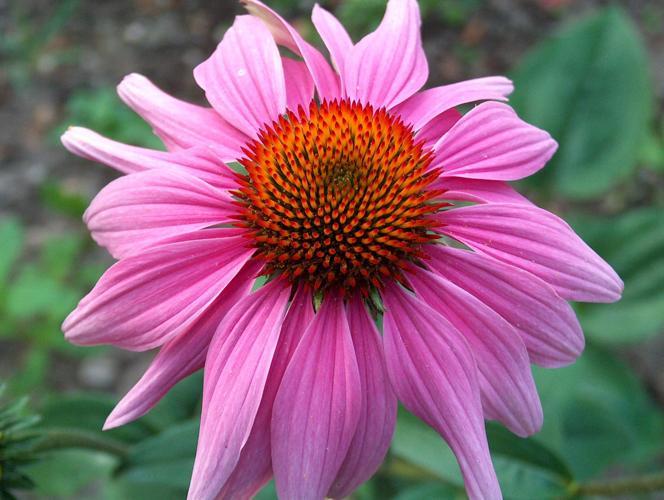
Purple Coneflower
Echinacea purpurea
Popular prairie wildflower with distinctive purple-pink petals drooping around s...
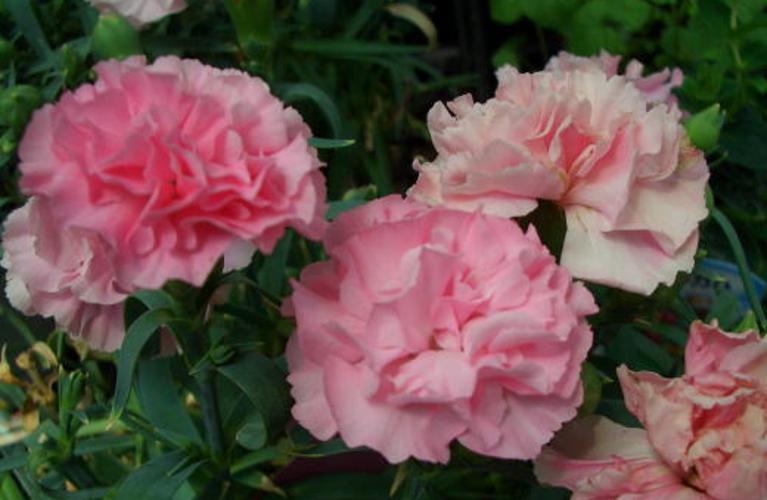
Carnation flower
Dianthus caryophyllus
Classic florist flower featuring densely ruffled, fringed petals with distinctiv...
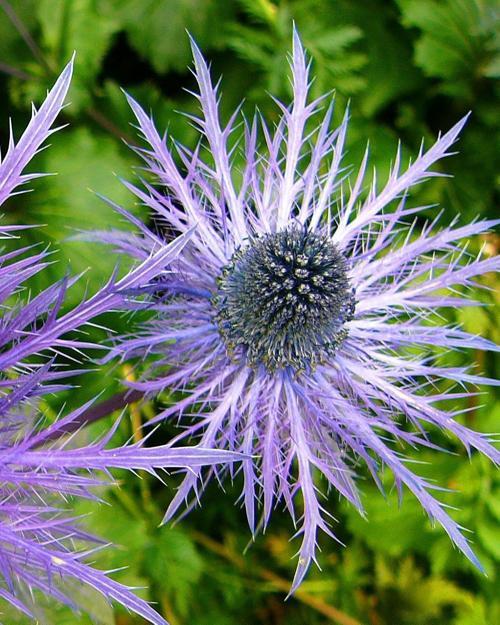
Alpine Sea Holly
Eryngium alpinum
Striking thistle-like perennial with steel-blue to purple flower heads surrounde...
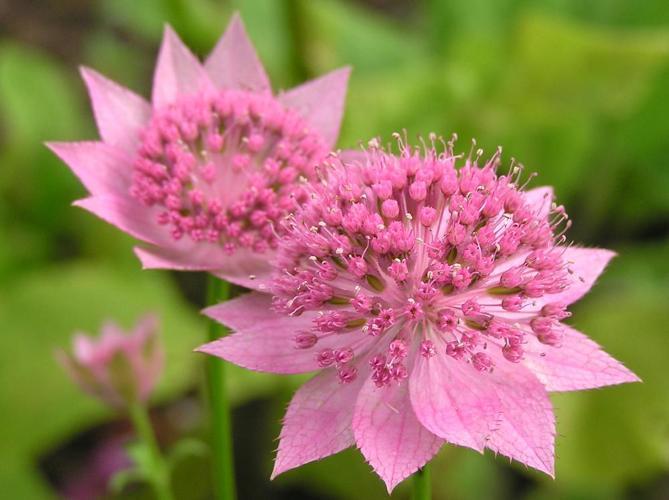
Masterwort
Astrantia
Distinctive perennial with star-shaped flower heads composed of tiny florets sur...