
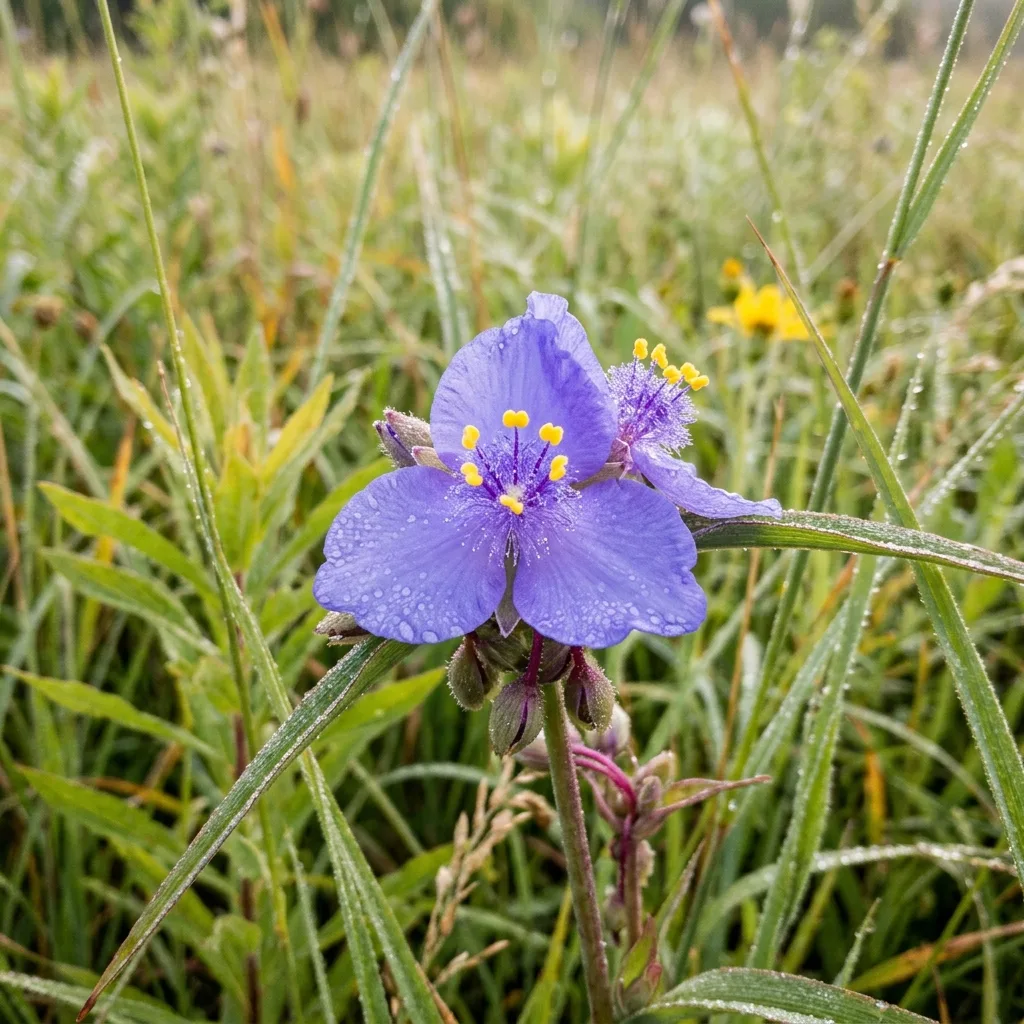
Spiderwort
Tradescantia ohiensis
How to Identify Spiderwort
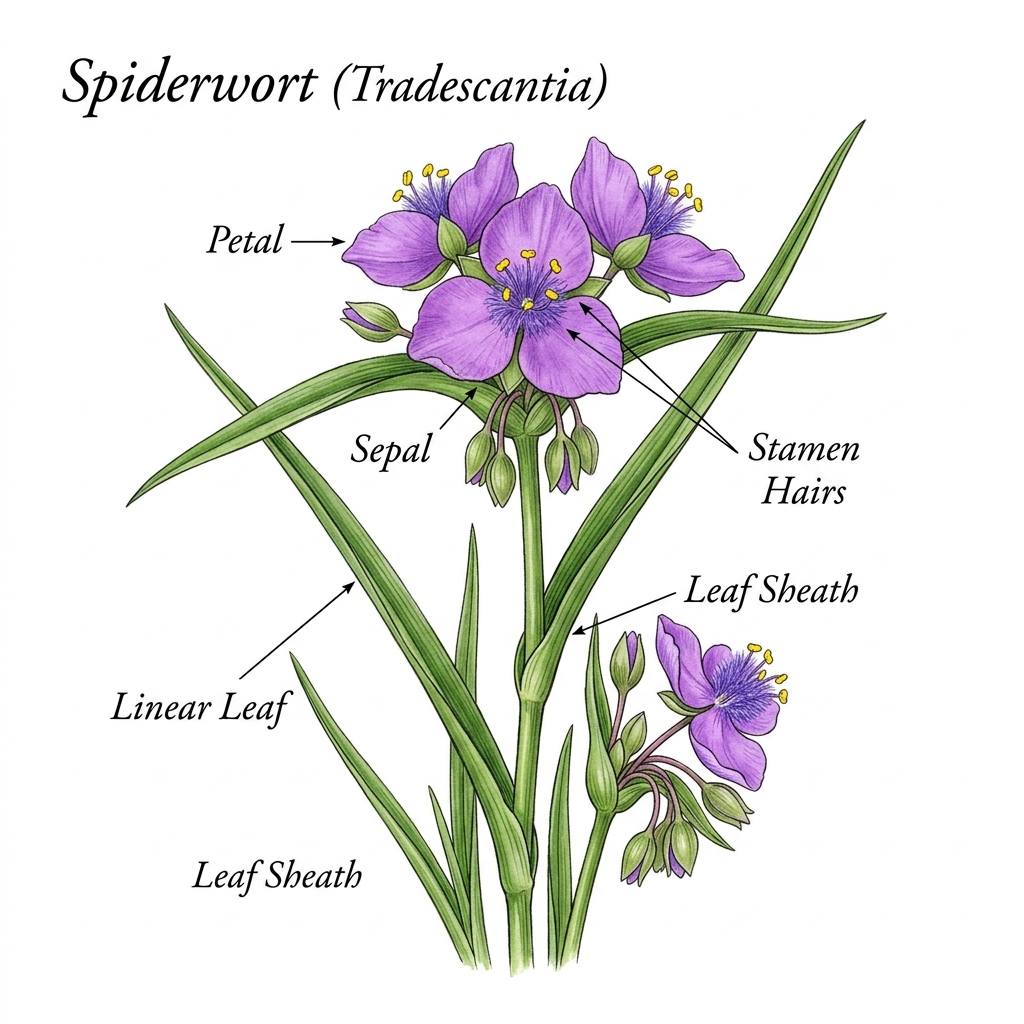
A detailed guide to identifying Spiderworts (Tradescantia ohiensis) by its key features:
- Triangular Three-Petalled Blooms: Bright blue-violet flowers with three petals and fuzzy violet hairs on yellow stamens.
- Long Clasping Leaves: Fleshy, grass-like leaves that wrap around the stem at the base.
- Sticky Mucilaginous Sap: Clear, mucilaginous jelly-like sap that threads when the stem is broken.
- Glaucous Bluish Stems: Smooth, erect stems coated in a blue-green waxy film.
Care & Growing Guide
Spiderwort Care Guide:
- Light: Full sun to partial shade
- Soil: Average to moist; tolerates clay and poor soils
- Water: Moderate; somewhat drought-tolerant
- Rebloom tip: Cut back hard to 6 inches after first bloom flush for fresh flowers in fall
Seasonal Blooming & Hardiness
Seasonal Blooming Calendar:
- Peak Bloom: May–July; reblooms August–frost after cutting back
- US Range: USDA Zones 4–9; native throughout eastern and central North America
Bloom Timeline
About Spiderwort
Spiderwort (Tradescantia ohiensis and related species) is a quietly enchanting native wildflower of eastern North America, producing clusters of vivid three-petaled flowers in shades of deep blue-violet, blue, and occasionally white from late spring through summer. Belonging to the Commelinaceae family, the genus Tradescantia contains approximately 75 species native to the Americas, with Ohio Spiderwort (T. ohiensis) being one of the most widespread and garden-worthy in the eastern US, thriving from New England to Florida and throughout the Midwest.
Each individual Spiderwort flower is relatively small (about an inch wide) but perfectly formed — three round, open petals surrounding a boss of six golden-yellow stamens, each bearing vivid yellow pollen and tipped with distinctive hairy filaments. The hairy yellow stamens are one of the most recognizable characteristics of the plant and earned it a place in scientific history: because the individual hairs are made of a single chain of cells, they were used by early botanists and scientists, including the Danish physicist Niels Bohr, for cellular observation studies. The flowers open each morning and close by afternoon — a behavior called 'morning flower' that concentrates pollinator visits in the coolest, most productive hours.
The name 'Spiderwort' has several possible origins — one theory is that the plant was historically used to treat spider bites; another is that the sap, when the stem is broken, forms long, glistening threads that look like spider silk. The genus name Tradescantia honors John Tradescant the Elder, a 17th-century English naturalist and gardener who collected American plants for King Charles I of England. Spiderwort was among the first North American wildflowers to reach European gardens, arriving in England in the 1620s.
In the garden, Spiderwort is a cheerful and reliable perennial that blooms over a very long season (often from May through frost with proper deadheading or cutting back). It thrives in a wide range of conditions — from moist, woodland-edge soils to average garden beds — making it one of the most adaptable of all native wildflowers. After blooming, it can be cut back to 6 inches to encourage a second flush of growth and flowers. It is completely non-toxic to pets and children. For more three-petaled wildflowers, explore our Flower Identifier.
Floral Formula & Features
Actinomorphic, bisexual; 3 free sepals; 3 free petals; 6 free stamens with distinctively hairy filaments; 3 fused carpels with superior ovary
- Scientific Name & Classification: Tradescantia ohiensis (Commelinaceae, tribe Tradescantieae). Ohio Spiderwort — one of the most widespread and garden-worthy native Tradescantia species.
- Identification Markers: Three-petaled blue-violet flowers with 6 fuzzy, golden-yellow-stamened centers. Grass-like, folded, glaucous blue-green leaves clasping the stem. Height 2–3 ft. Each flower blooms one morning only.
- Floral Formula (⊕ ☿ K3 C3 A6 G(3)): Actinomorphic, bisexual; 3 free sepals; 3 free petals; 6 free stamens with distinctive hairy filaments; 3 fused carpels with superior ovary.
- Growing Requirements: Full sun to partial shade; average to moist, well-draining soil. Tolerates clay. USDA Zones 4–9. Cut back after first bloom flush for rebloom. Long blooming season.
- Cultural Significance: One of the first American native plants brought to European gardens (1620s). Hairy stamen cells used in early cellular microscopy studies. Named for John Tradescant, gardener to King Charles I of England.
- Safety & Toxicity: NON-TOXIC. Completely safe for cats, dogs, and humans. Note: juice from broken stems can cause mild skin irritation in sensitive individuals.
- Common Look-alikes: Sometimes confused with related garden Tradescantia cultivars ('Zwanenburg Blue,' 'Concord Grape') or Purple Spiderwort (T. virginiana). All are similar in appearance and equally non-toxic.
- Internal Links: Beautiful alongside Wild Blue Phlox and Wild Bergamot in a native prairie or meadow garden. Explore our Flower Identifier.
Names in Different Languages
Toxicity & Safety
Pet Safety Guide: For detailed toxicity symptoms, first-aid measures, and safe garden alternatives, see our full Pet Guard Profile for Spiderwort.
Frequently Asked Questions
What is Floral Formula?
A floral formula is a symbolic representation of a flower's structure using letters, numbers, and special symbols. It provides a concise way to describe the arrangement and number of floral parts.
This formula describes the flower's symmetry, sepals, petals, stamens, and carpels in a standardized format.
Formula Sequence
- Bract: Br or Ebr
- Bracteole: Brl or Ebrl
- Symmetry: % (Radial) or ⊕ (Bilateral)
- Sex: ♀ (Female), ♂ (Male), or ⚥ (Bisexual)
- Calyx/Sepal: K<number> (Free or Fused)
- Corolla/Petal: C<number> (Free or Fused)
- Androecium: A<number> (Free or Fused)
- Gynaecium: G<number> (Superior or Inferior Ovary)
Symbol Meanings
- Numbers: Indicate quantity of parts
- Parentheses (): Parts are fused together
- Plus (+): Parts in different whorls
- Underline: Superior ovary position
- Overline: Inferior ovary position
- ∞: Numerous parts (too many to count)
Understanding floral formulas helps botanists quickly identify and classify flowers based on their structural characteristics.
Similar Flowers
Discover flowers that share botanical characteristics
Similar Characteristics
4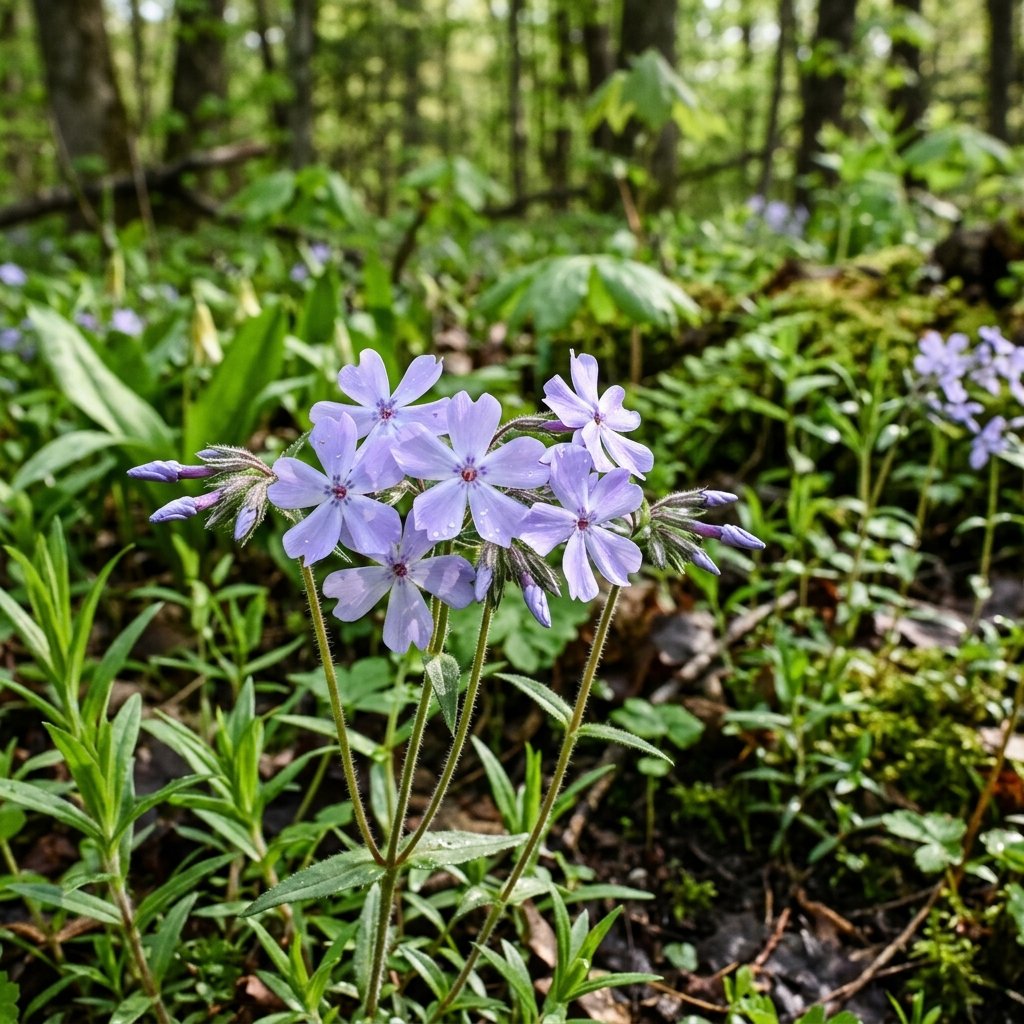
Wild Blue Phlox
Phlox divaricata
Wild Blue Phlox (*Phlox divaricata*), also widely known as Blue Phlox or Woodland Phlox, is one of the most fragrant and visually graceful native wildflowers of eastern North American woodlands, producing loose, open clusters of pale blue to lavender-blue flowers with a sweet, light perfume in Ap...
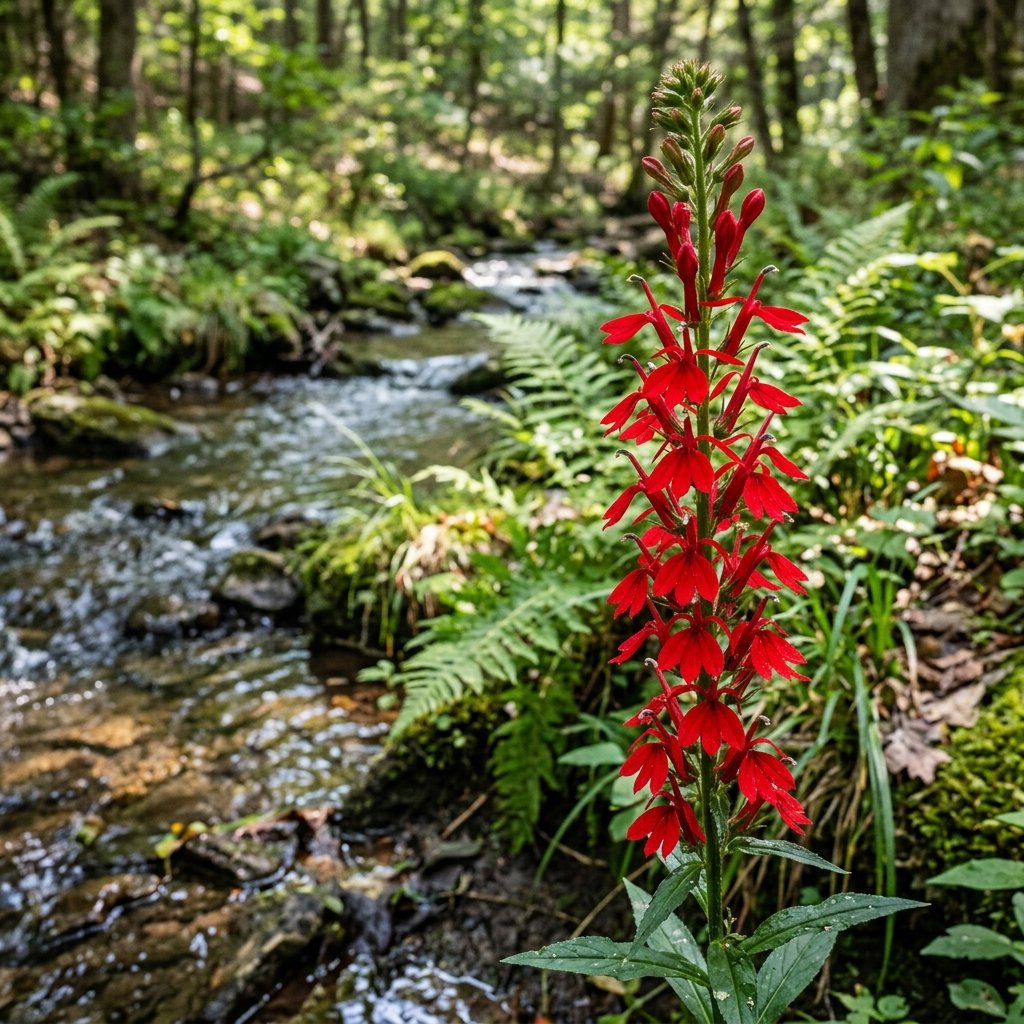
Cardinal Flower
Lobelia cardinalis
Cardinal Flower (*Lobelia cardinalis*) produces one of the most intensely saturated, brilliant scarlet-red flower spikes in all of North American horticulture, a vivid column of color that dominates moist meadows, stream banks, and woodland edges from July through September. Native throughout muc...
Great Blue Lobelia
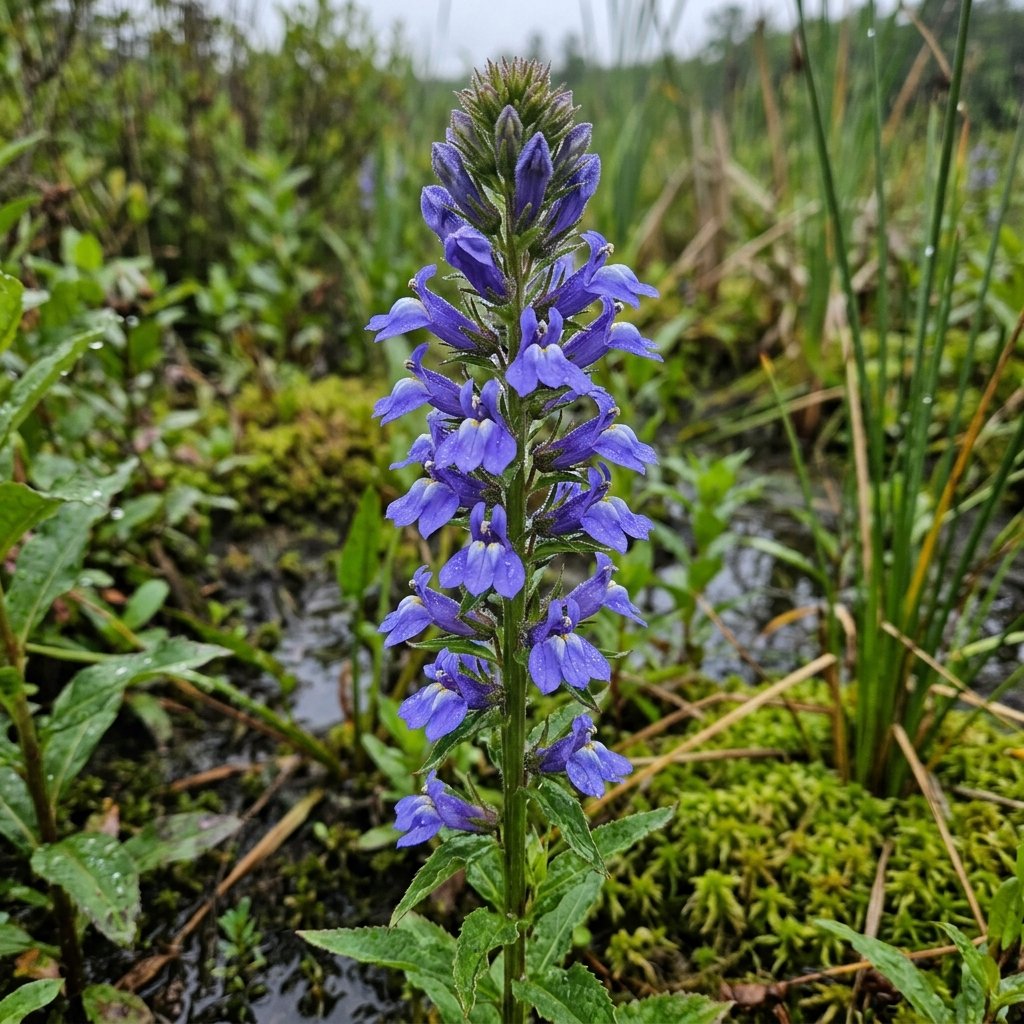
Lobelia siphilitica
Great Blue Lobelia (*Lobelia siphilitica*) is a stunning native wildflower of eastern North America, producing tall spikes of vivid blue-violet to true blue flowers from late summer through fall in moist meadows, stream banks, and woodland edges. The blue-flowered counterpart to the scarlet Cardi...
Virginia Bluebells
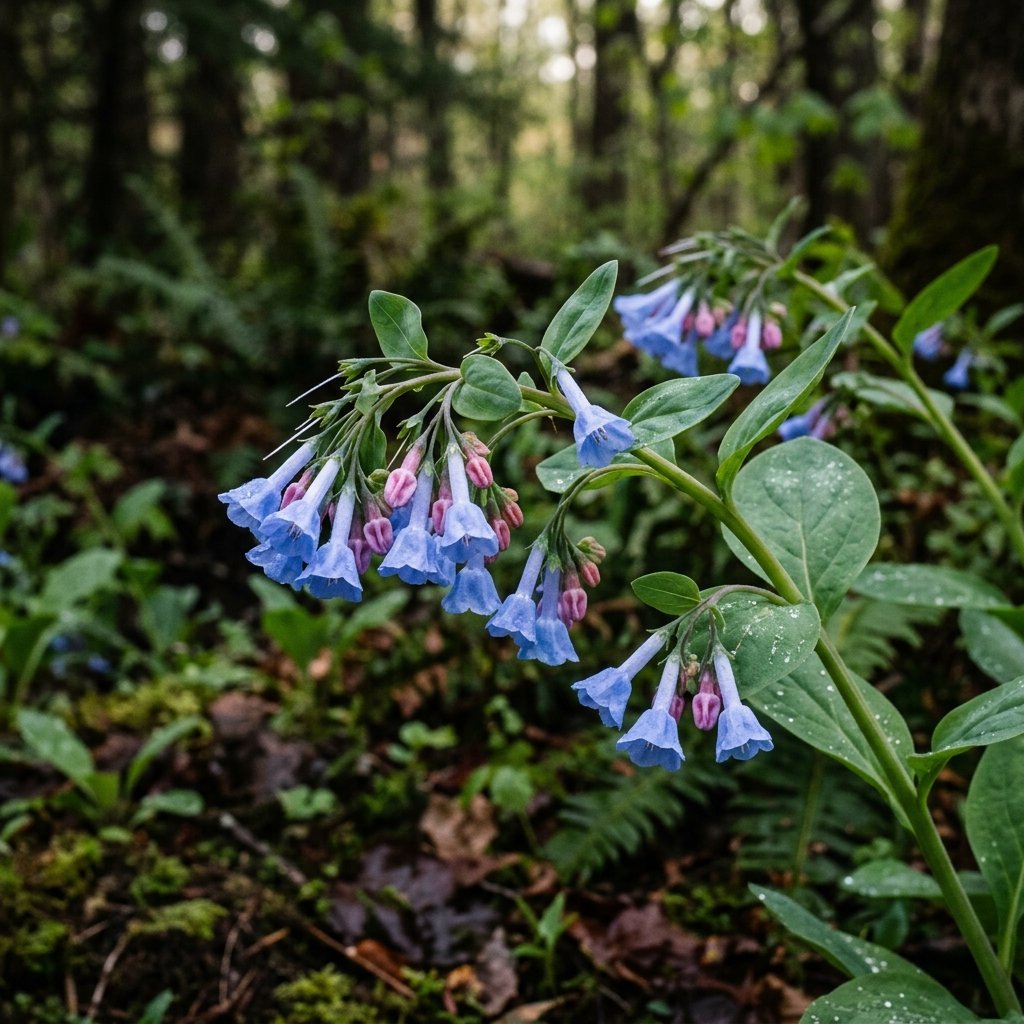
Mertensia virginica
Virginia Bluebells (*Mertensia virginica*) is among the most enchanting spring wildflowers of eastern North America, producing nodding clusters of sky-blue, trumpet-shaped flowers on arching stems in early spring. A member of the Boraginaceae (borage family), it is native to moist, rich floodplai...