
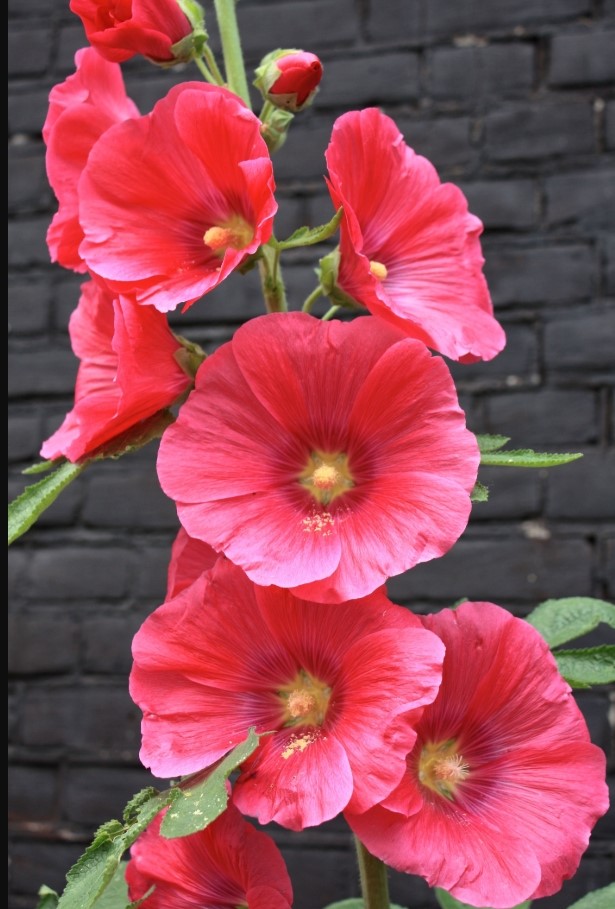
Hollyhock
Alcea rosea
Basic Details
Floral Formula & Features
Epicalyx of 3-8 bracteoles present, Actinomorphic (radially symmetrical), bisexual, 5 fused sepals, 5 free petals, numerous stamens with filaments fused into tube around style (monadelphous), numerous carpels arranged in ring with superior ovary typical of Malvaceae
- Name 'Hollyhock' possibly from 'holy hock' (holy mallow) brought from Holy Land during Crusades, or from 'hock' (Old English for mallow). 'Alcea' from Greek 'alkaia' (mallow). 'Rosea' means rose-like. Member of Malvaceae (mallow/hibiscus family)
- Large cup or saucer-shaped flowers 3-5 inches (8-12 cm) across, single or double forms. Colors include pink, white, red, purple, yellow, apricot, near-black. Arranged densely on tall spikes. Blooms open sequentially from bottom to top over 2-3 weeks. Blooms June-September
- Biennial or short-lived perennial. First year produces large basal rosette of rounded, lobed leaves. Second year sends up tall flowering spike, then dies after setting seed. Self-seeds prolifically for continuous presence. Some varieties bloom first year if started early
- Grows 5-8 feet (1.5-2.5 m) tall, dwarf varieties 2-3 feet (60-90 cm). Spread 18-24 inches (45-60 cm). Lifespan 2 years as biennial, 3-4 years as short-lived perennial. Propagated by seeds sown in summer for next year bloom. Self-sows readily
- Native to Turkey, western Asia, possibly China. Cultivated for centuries, spread along Silk Road. Naturalized in Europe, North America. Found in cottage gardens, farmyards, roadsides. Thrives in temperate climates. Historical medicinal uses for respiratory issues
- Requires full sun (6+ hours). Prefers rich, well-drained, moderately fertile soil. Drought-tolerant once established. Shelter from strong winds (tall spikes can topple). Hardy zones 3-9. May need staking. Susceptible to hollyhock rust (orange spots on leaves)
- Excellent for cottage gardens, borders, against walls/fences. Provides dramatic vertical accent and backdrop for shorter plants. Attracts bees, butterflies, hummingbirds. Deer resistant. Edible flowers used in salads. Historically used medicinally for sore throats, coughs
- Remove rust-infected leaves promptly. Water at base to avoid wetting foliage. Deadhead to prolong bloom or allow to self-seed. Stake tall varieties in windy sites. Cut back after flowering. Rust-resistant varieties available. May need fungicide in humid climates. Easy from seed
Names in Different Languages
What is Floral Formula?
A floral formula is a symbolic representation of a flower's structure using letters, numbers, and special symbols. It provides a concise way to describe the arrangement and number of floral parts.
This formula describes the flower's symmetry, sepals, petals, stamens, and carpels in a standardized format.
Formula Sequence
- Bract: Br or Ebr
- Bracteole: Brl or Ebrl
- Symmetry: % (Radial) or ⊕ (Bilateral)
- Sex: ♀ (Female), ♂ (Male), or ⚥ (Bisexual)
- Calyx/Sepal: K<number> (Free or Fused)
- Corolla/Petal: C<number> (Free or Fused)
- Androecium: A<number> (Free or Fused)
- Gynaecium: G<number> (Superior or Inferior Ovary)
Symbol Meanings
- Numbers: Indicate quantity of parts
- Parentheses (): Parts are fused together
- Plus (+): Parts in different whorls
- Underline: Superior ovary position
- Overline: Inferior ovary position
- ∞: Numerous parts (too many to count)
Understanding floral formulas helps botanists quickly identify and classify flowers based on their structural characteristics.
Similar Flowers
Discover flowers that share botanical characteristics
Same Family
3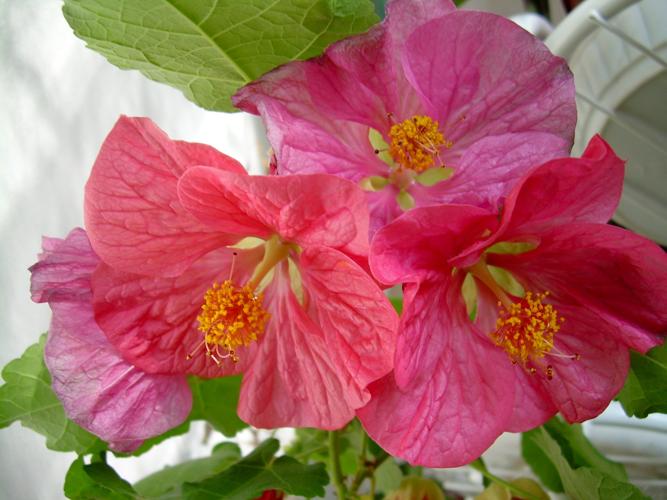
Mallow
Malva
Versatile medicinal herb with delicate cup-shaped flowers in pink, purple, or wh...
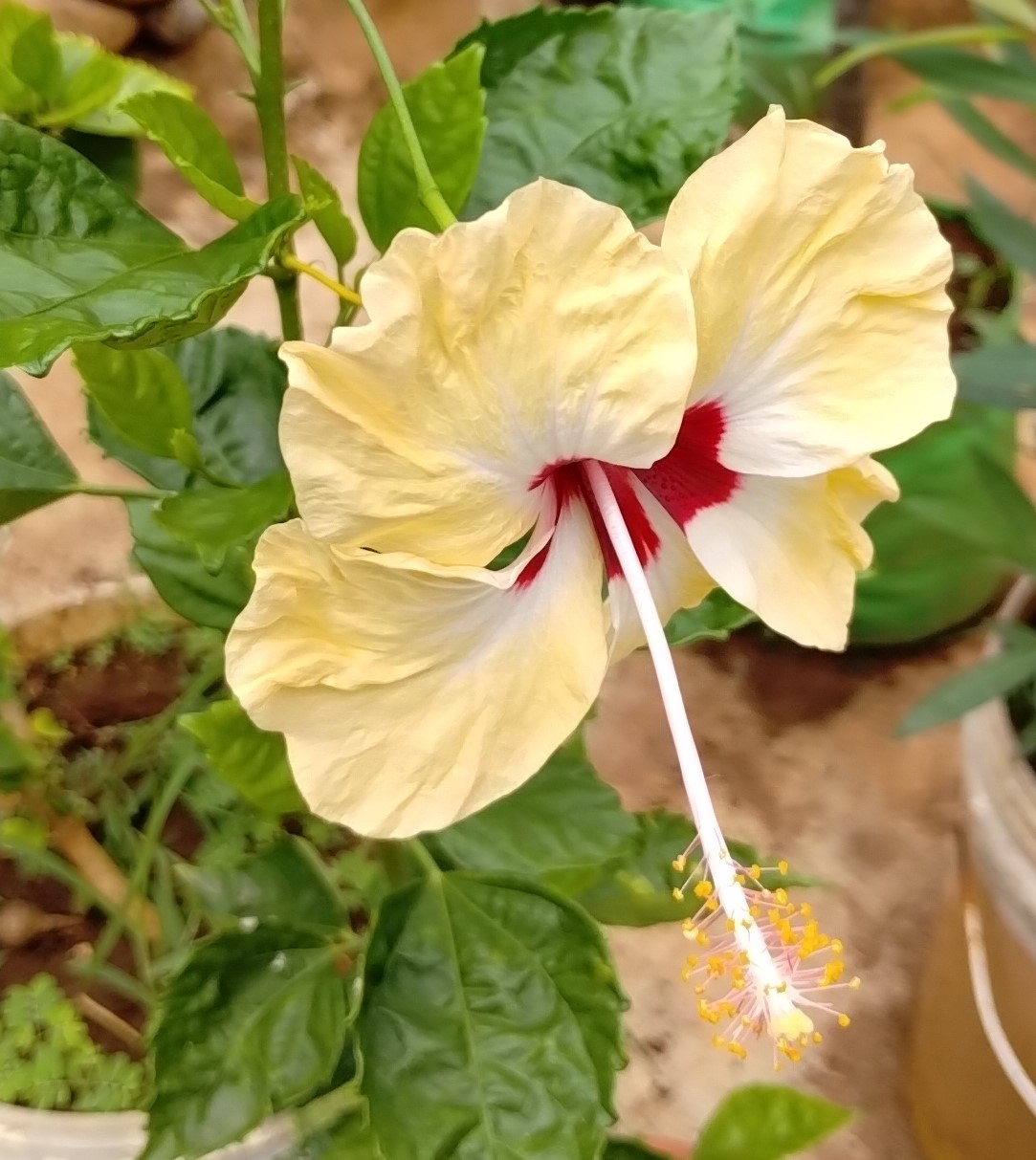
Hibiscus
Hibiscus rosa-sinensis
Spectacular tropical shrub featuring enormous, trumpet-shaped flowers with five ...
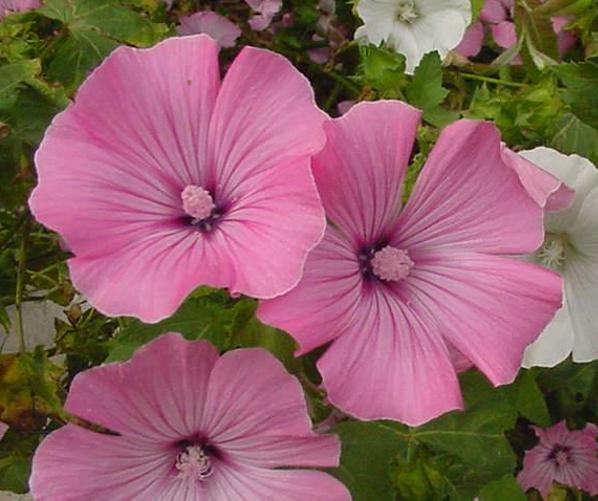
Tree Mallow
Malva arborea
Robust biennial or short-lived perennial forming a woody-based shrub covered in ...
Similar Characteristics
4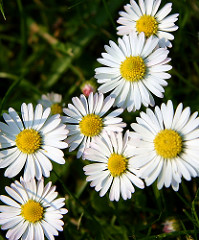
Daisy
Bellis perennis
Charming perennial featuring classic white ray florets (petals) surrounding a br...
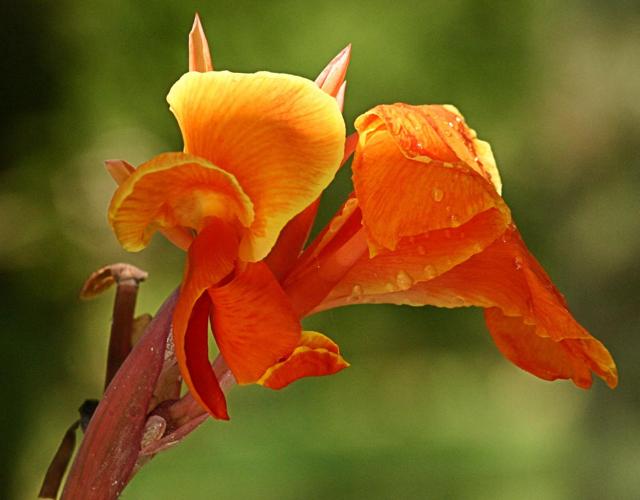
Canna lily
Canna indica
Bold tropical perennial featuring large, paddle-shaped leaves reminiscent of ban...
Wild Pansy
Viola Tricolor
Charming European wildflower treasured for its distinctive tricolor blooms combi...
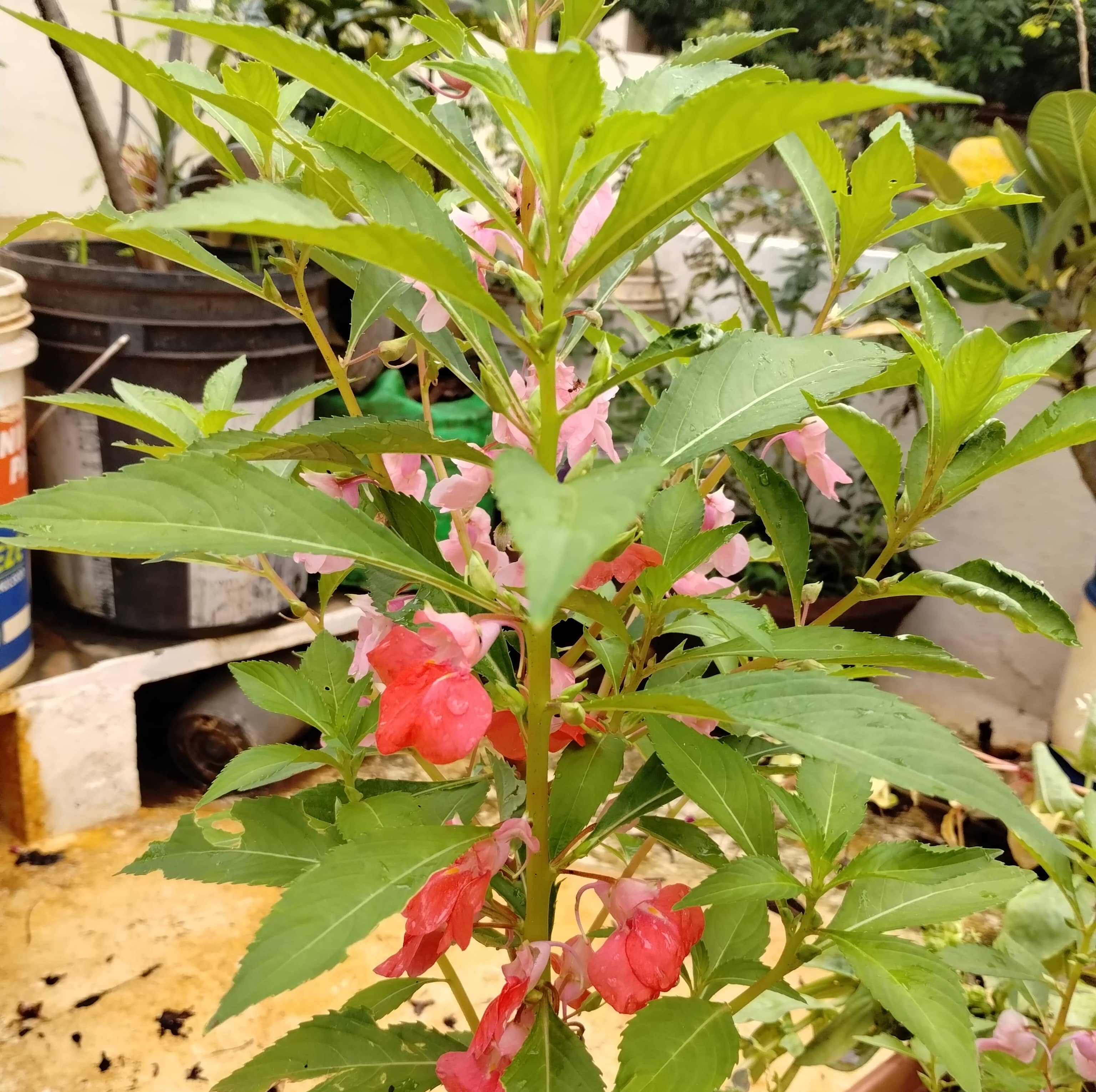
Balsam
Impatiens balsamina
Old-fashioned annual featuring camellia-like double flowers nestled close to the...