
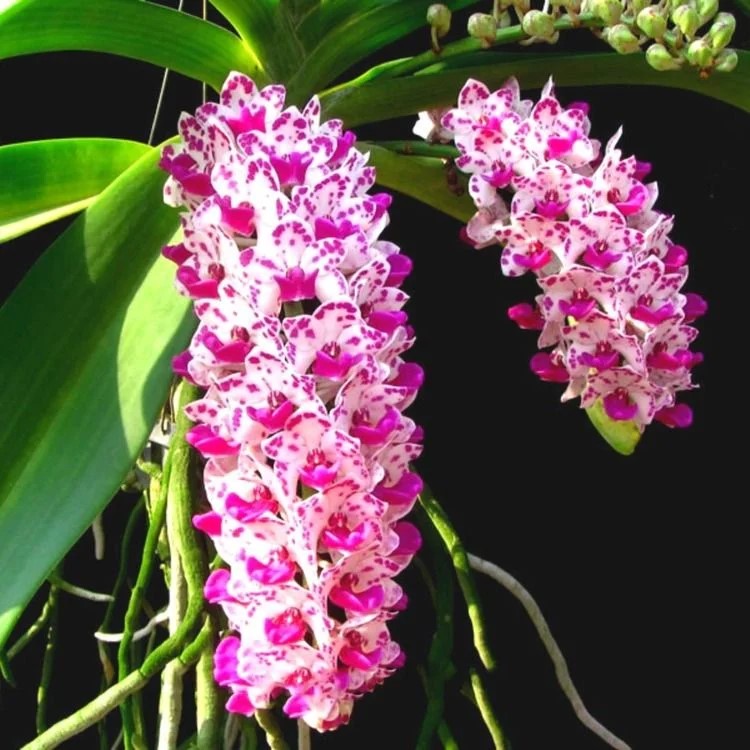
Fox Tail Orchid
Rhynchostylis
Basic Details
Floral Formula & Features
Zygomorphic (bilateral symmetry), Bisexual, 6 tepals in 2 whorls of 3 (3 sepals + 3 petals, one petal modified into labellum/lip), 1 stamen fused with style into column, 3 fused carpels with inferior ovary
- Etymology: Genus name 'Rhynchostylis' from Greek 'rhynchos' (beak) and 'stylos' (column), referring to beak-like column structure. Common name 'Fox Tail' describes dense, cylindrical flower spikes resembling a fox's bushy tail. About 4-6 Rhynchostylis species. Closely related to Vanda orchids. Popular in orchid breeding
- Unique Characteristics: Dense cylindrical flower spikes 6-12 inches (15-30 cm) long with 50-100+ small flowers tightly packed in bottle-brush formation. Flowers 0.5-1 inch (1.3-2.5 cm) across, waxy texture, long-lasting (3-4 weeks). Sweet, spicy fragrance strongest in morning. Monopodial growth (single upward stem). Thick, fleshy aerial roots. Compact plant size ideal for small spaces
- Plant Type & Blooming: Epiphytic perennial orchid (grows on trees in nature). Blooms winter to spring (December-April) depending on species. R. gigantea blooms winter, R. retusa spring. Flowers last 3-4 weeks. Can bloom multiple times per year with proper care. Fragrance strongest in morning hours
- Size, Lifespan & Propagation: Height: 8-16 inches (20-40 cm). Spread: 6-10 inches (15-25 cm). Compact growth habit. Lifespan: 10-20+ years with proper care. Propagation: keikis (plantlets from nodes), division of mature plants (difficult). Slow to moderate growth rate. Takes 3-5 years from seedling to first bloom
- Native Region & Distribution: Native to Southeast Asia including India, Myanmar, Thailand, Vietnam, Philippines, Indonesia, and southern China. R. retusa widespread across region. R. gigantea from Myanmar/Thailand. R. coelestis from Vietnam. Grows in tropical forests at elevations 300-3,000 feet (100-900 m), attached to tree branches
- Climate & Growing Conditions: Thrives in bright indirect light (2,000-3,000 foot-candles), some direct morning sun. Prefers warm to intermediate temperatures: days 75-85°F (24-29°C), nights 60-65°F (15-18°C). Humidity: 60-80%. Excellent air circulation essential. Grow mounted on bark, in wooden baskets, or coarse bark mix. Water daily in summer, every 2-3 days in winter. Fertilize weekly with diluted orchid fertilizer. Needs winter rest with cooler nights to trigger blooming
Names in Different Languages
What is Floral Formula?
A floral formula is a symbolic representation of a flower's structure using letters, numbers, and special symbols. It provides a concise way to describe the arrangement and number of floral parts.
This formula describes the flower's symmetry, sepals, petals, stamens, and carpels in a standardized format.
Formula Sequence
- Bract: Br or Ebr
- Bracteole: Brl or Ebrl
- Symmetry: % (Radial) or ⊕ (Bilateral)
- Sex: ♀ (Female), ♂ (Male), or ⚥ (Bisexual)
- Calyx/Sepal: K<number> (Free or Fused)
- Corolla/Petal: C<number> (Free or Fused)
- Androecium: A<number> (Free or Fused)
- Gynaecium: G<number> (Superior or Inferior Ovary)
Symbol Meanings
- Numbers: Indicate quantity of parts
- Parentheses (): Parts are fused together
- Plus (+): Parts in different whorls
- Underline: Superior ovary position
- Overline: Inferior ovary position
- ∞: Numerous parts (too many to count)
Understanding floral formulas helps botanists quickly identify and classify flowers based on their structural characteristics.
Similar Flowers
Discover flowers that share botanical characteristics
Same Family
4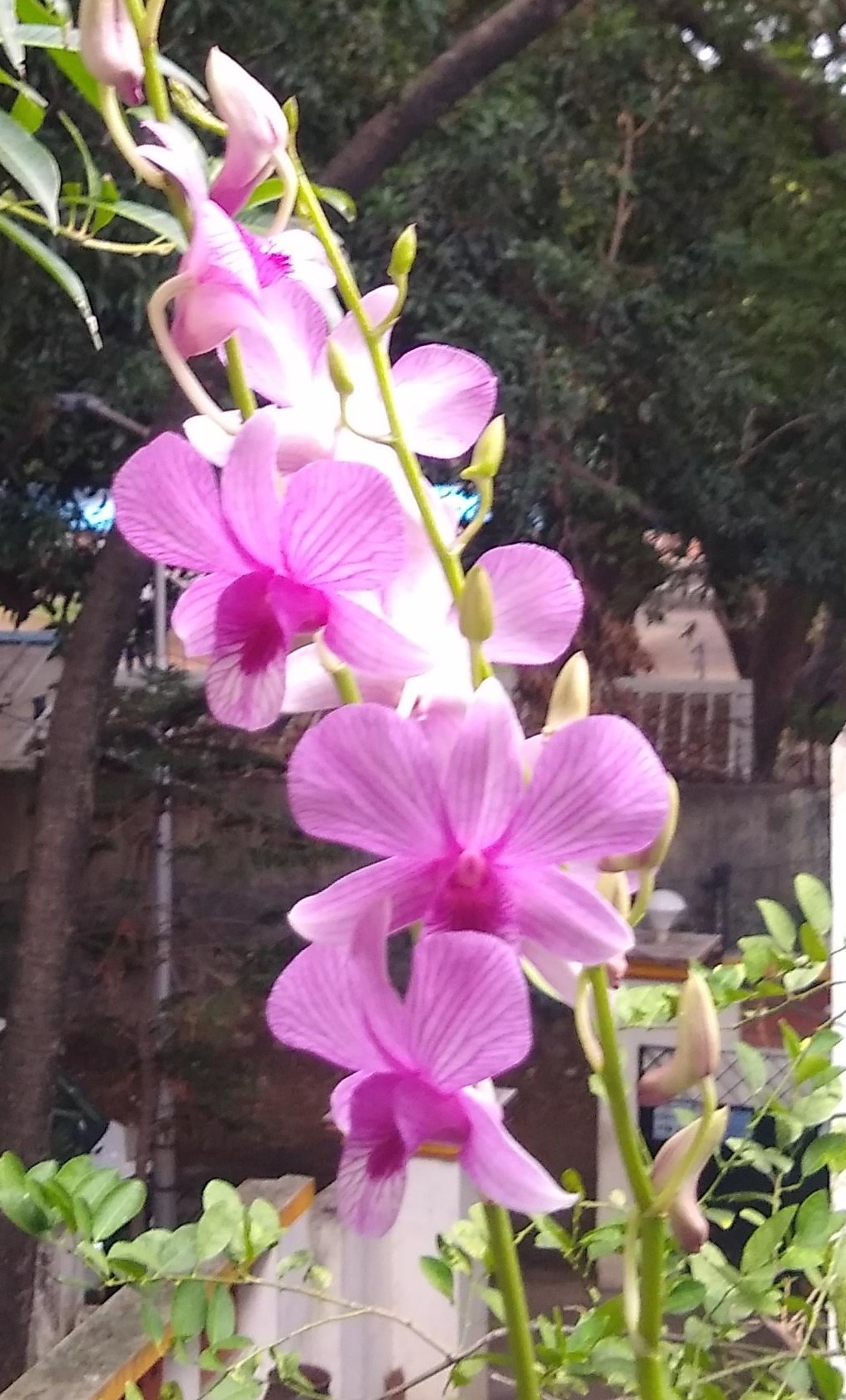
Dendrobium Orchid
Dendrobium
Diverse and popular orchid genus featuring elegant sprays of flowers along cane-...
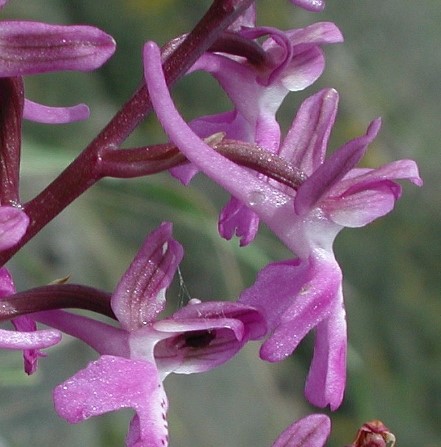
Orchis Orchid
Orchis
Classic terrestrial orchid featuring dense spikes of hooded flowers in shades of...
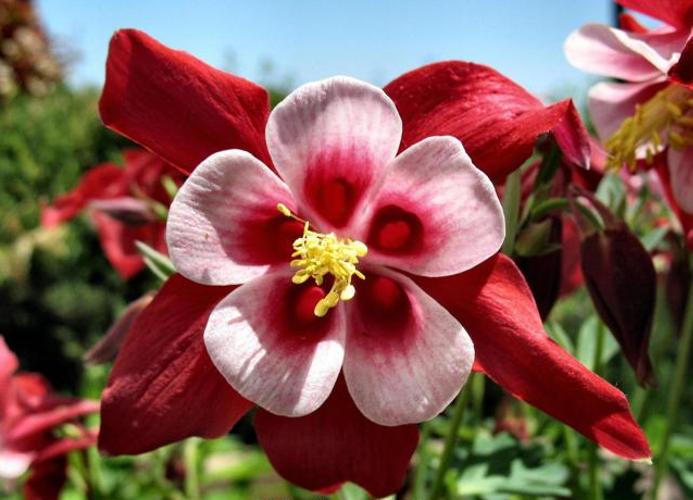
Cattleya orchids
Cattleya
Spectacular epiphytic orchids renowned as 'Queen of Orchids' for their large, sh...
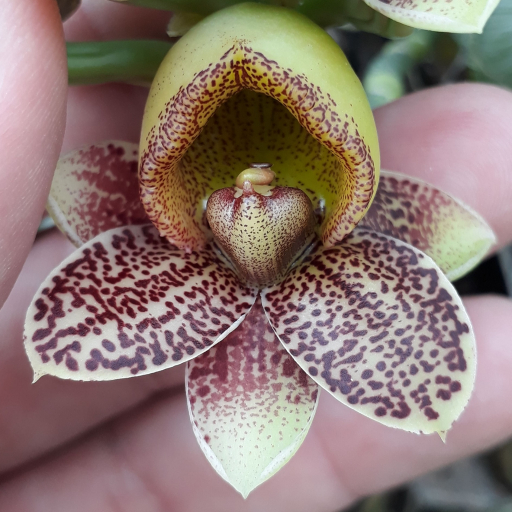
Catasetum Orchid
Catasetum
Remarkable orchid genus famous for extreme sexual dimorphism, producing dramatic...
Similar Characteristics
4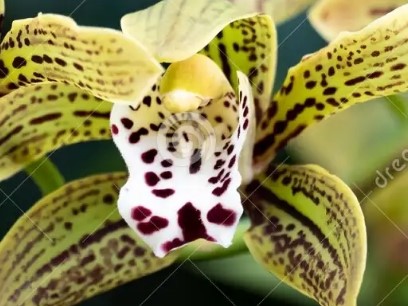
Boat Orchid
Cymbidium
Elegant orchid featuring graceful arching sprays of waxy flowers with distinctiv...
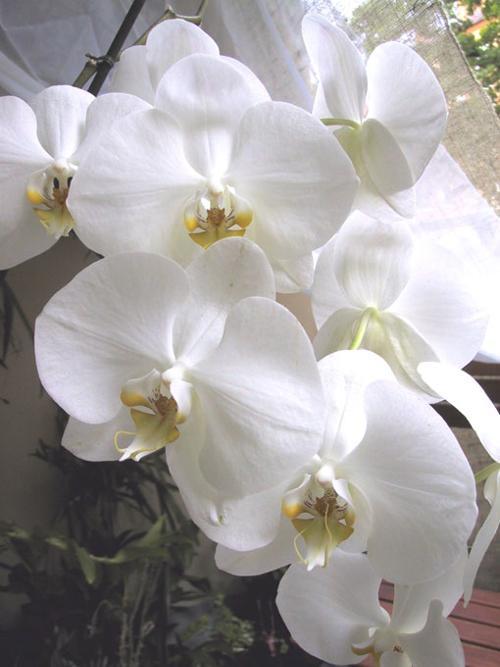
Moon Orchid
Phalaenopsis amabilis
Elegant epiphytic orchid with graceful arching sprays of pristine white moth-lik...
Catasetum Orchid
Catasetum
Remarkable orchid genus famous for extreme sexual dimorphism, producing dramatic...
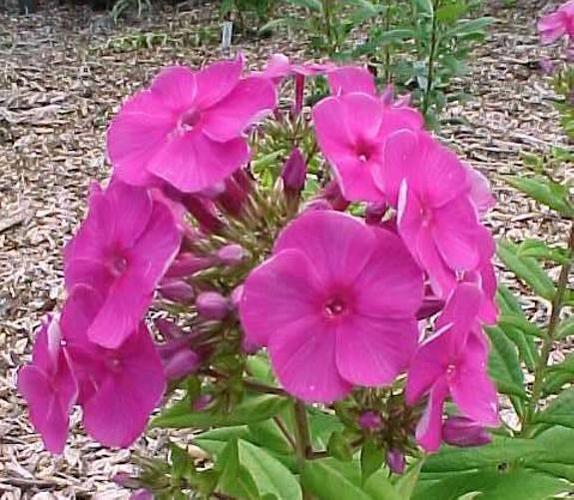
Phlox
Phlox paniculata
Fragrant flowers in dense clusters ranging from creeping ground covers to tall b...