
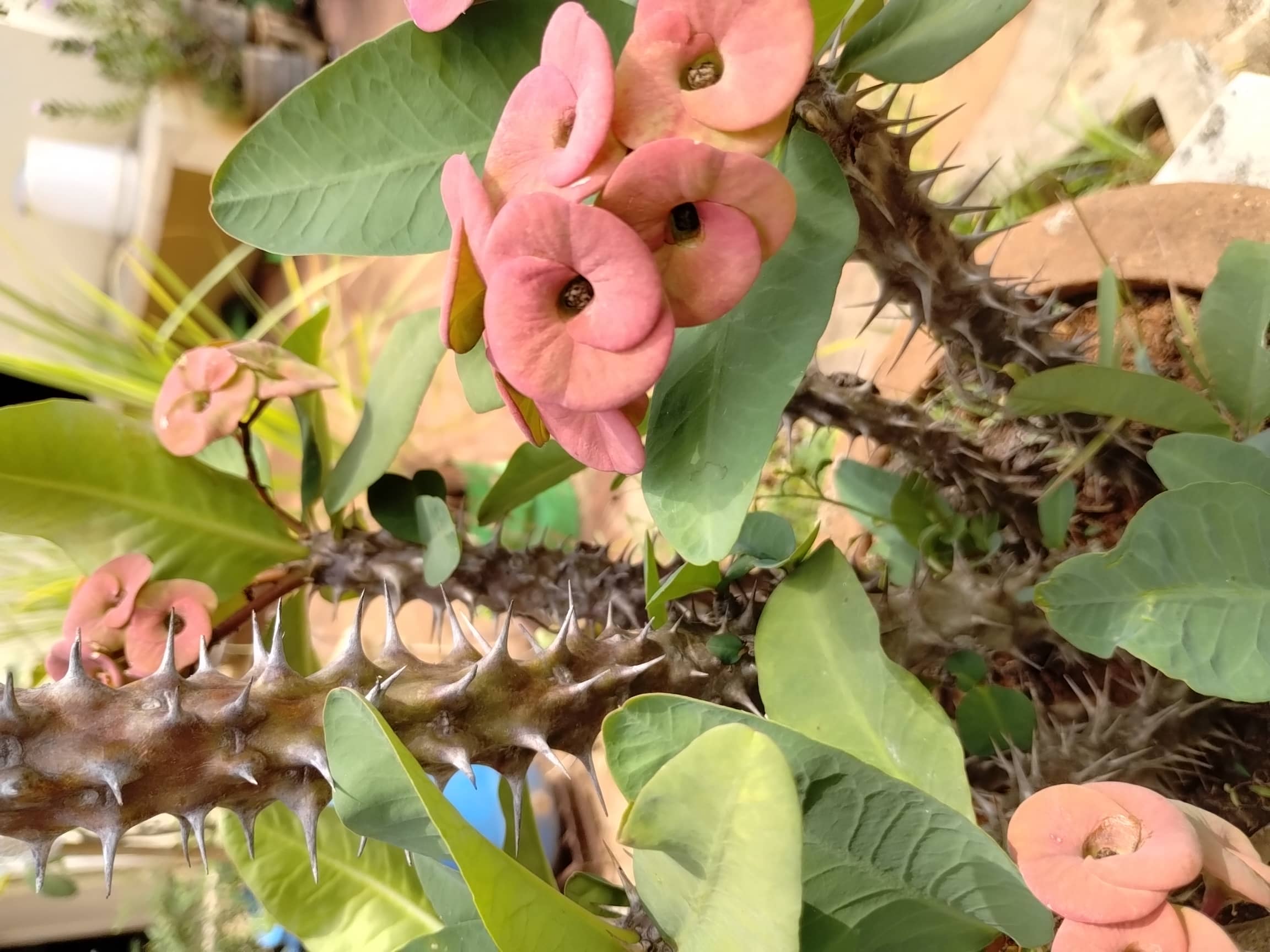
Euphorbia
Euphorbia Mili
Basic Details
Floral Formula & Features
Cyathium (unique Euphorbia structure): Ebracteate, radially symmetrical, unisexual flowers. Male flowers - no sepals, no petals, 1 stamen. Female flower (central) - no sepals, no petals, 3 fused carpels with superior ovary. Multiple male flowers and 1 female flower grouped in cup-like involucre surrounded by colorful bracts
- Named after Euphorbus, physician to King Juba II of Mauretania (1st century BC). 'Milii' honors Baron Milius, French governor who introduced plant to France in 1821. 'Crown of Thorns' from Christian legend that this plant formed Christ's crown (though unlikely as plant is Madagascar native). One of 2,000+ Euphorbia species
- True flowers tiny and inconspicuous (cyathia). Showy parts are colorful bracts (modified leaves) 0.5-1 inch across in pairs. Bract colors include red, pink, salmon, yellow, white, orange, and bicolors. Blooms appear at stem tips nearly year-round. Stems covered with sharp spines 0.5-1 inch long
- Succulent shrub with thick, gray-brown stems storing water. Semi-deciduous, may drop leaves in stress or dormancy. Blooms continuously in warm conditions, reduced in cool weather. Slow-growing. Unique flower structure (cyathium) typical of Euphorbia family—tiny flowers surrounded by colorful bracts
- Grows 2-6 feet (60-180 cm) tall, typically 2-3 feet in containers. Spread of 1.5-3 feet. Lifespan of many years (20-30+). Propagated from stem cuttings (allow to callus before planting, roots in 3-4 weeks). Let milky sap dry before handling
- Native to Madagascar, particularly arid regions. Found on rocky slopes and dry forests. Now widely cultivated in tropical and subtropical regions worldwide. Popular in Mediterranean climates, southern United States, and as houseplant globally
- Requires full sun (6-8 hours) for best blooming. Needs excellent drainage—use cactus/succulent mix. Drought tolerant; water when soil dries out. Reduce water in winter. Tolerates heat, salt spray. Frost tender (bring indoors below 50°F/10°C). Thrives on neglect
- Popular houseplant and xeriscape plant. All parts toxic—milky sap contains irritating latex causing skin/eye irritation, vomiting if ingested. Wear gloves when handling. Sap can cause temporary blindness if contacts eyes. Keep away from children and pets. Deer resistant. Attracts hummingbirds. Low maintenance, blooms with minimal care
Names in Different Languages
What is Floral Formula?
A floral formula is a symbolic representation of a flower's structure using letters, numbers, and special symbols. It provides a concise way to describe the arrangement and number of floral parts.
This formula describes the flower's symmetry, sepals, petals, stamens, and carpels in a standardized format.
Formula Sequence
- Bract: Br or Ebr
- Bracteole: Brl or Ebrl
- Symmetry: % (Radial) or ⊕ (Bilateral)
- Sex: ♀ (Female), ♂ (Male), or ⚥ (Bisexual)
- Calyx/Sepal: K<number> (Free or Fused)
- Corolla/Petal: C<number> (Free or Fused)
- Androecium: A<number> (Free or Fused)
- Gynaecium: G<number> (Superior or Inferior Ovary)
Symbol Meanings
- Numbers: Indicate quantity of parts
- Parentheses (): Parts are fused together
- Plus (+): Parts in different whorls
- Underline: Superior ovary position
- Overline: Inferior ovary position
- ∞: Numerous parts (too many to count)
Understanding floral formulas helps botanists quickly identify and classify flowers based on their structural characteristics.
Similar Flowers
Discover flowers that share botanical characteristics
Same Family
2
Similar Characteristics
4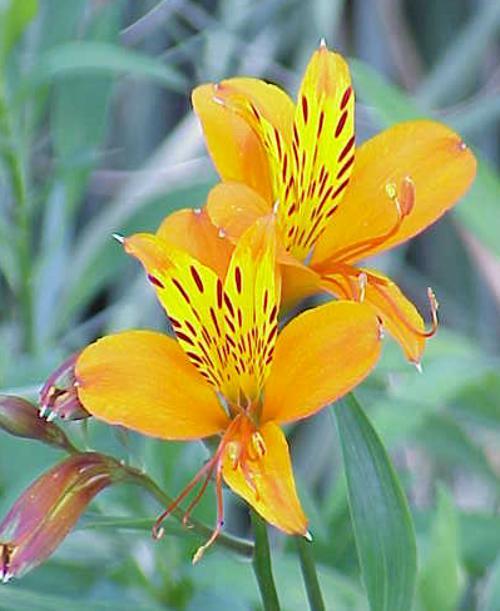
Peruvian Lily
Alstroemeria
Showy lily-like flowers with six petals covered in distinctive speckles, stripes...
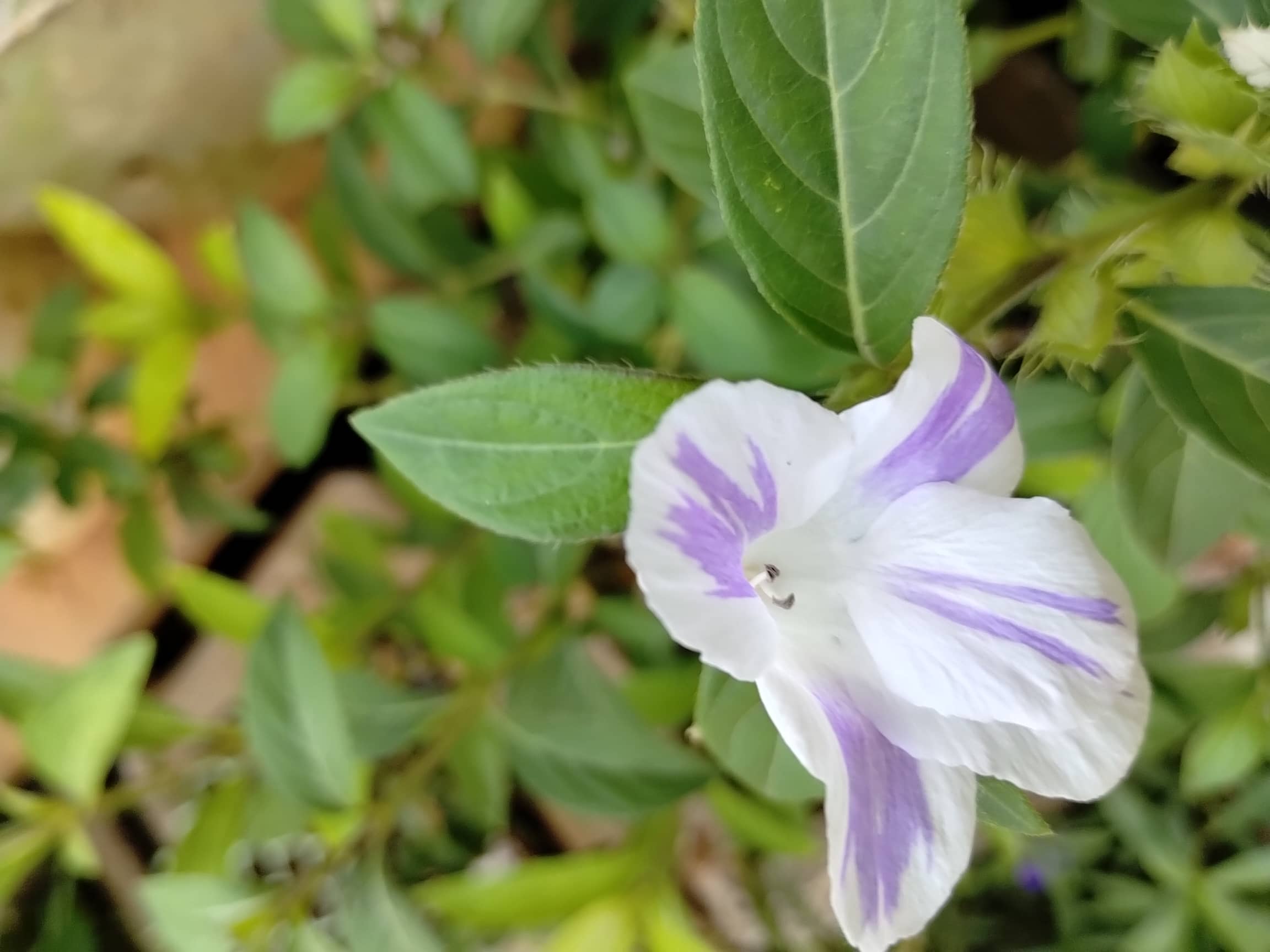
December
Barleria Cristata,Barleria prioniti
Attractive evergreen shrub featuring tubular flowers with distinctive crested or...
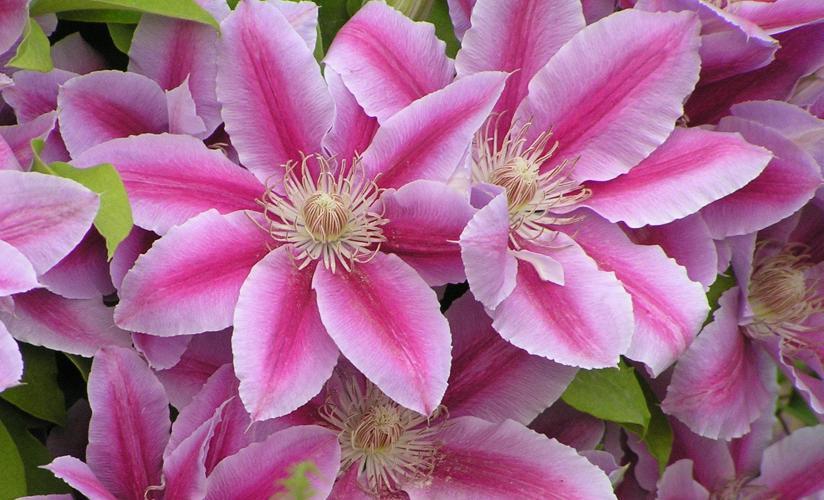
Clematis
Clematis
Spectacular flowering vine featuring large, showy blooms in star or bell shapes ...
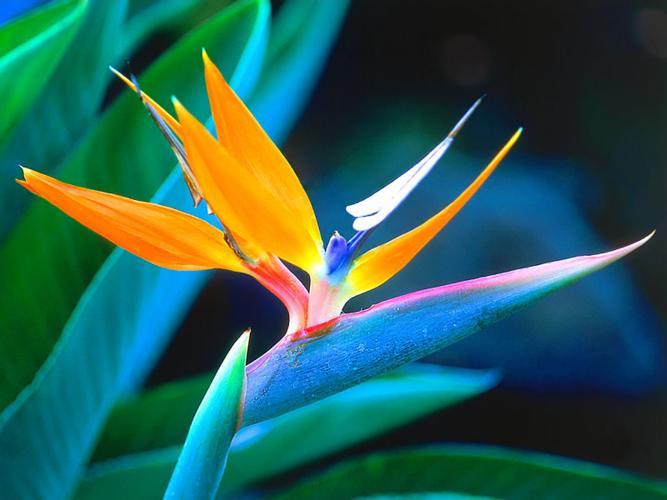
Bird of Paradise
Strelitzia reginae
Spectacular tropical perennial featuring exotic flowers that resemble a brightly...