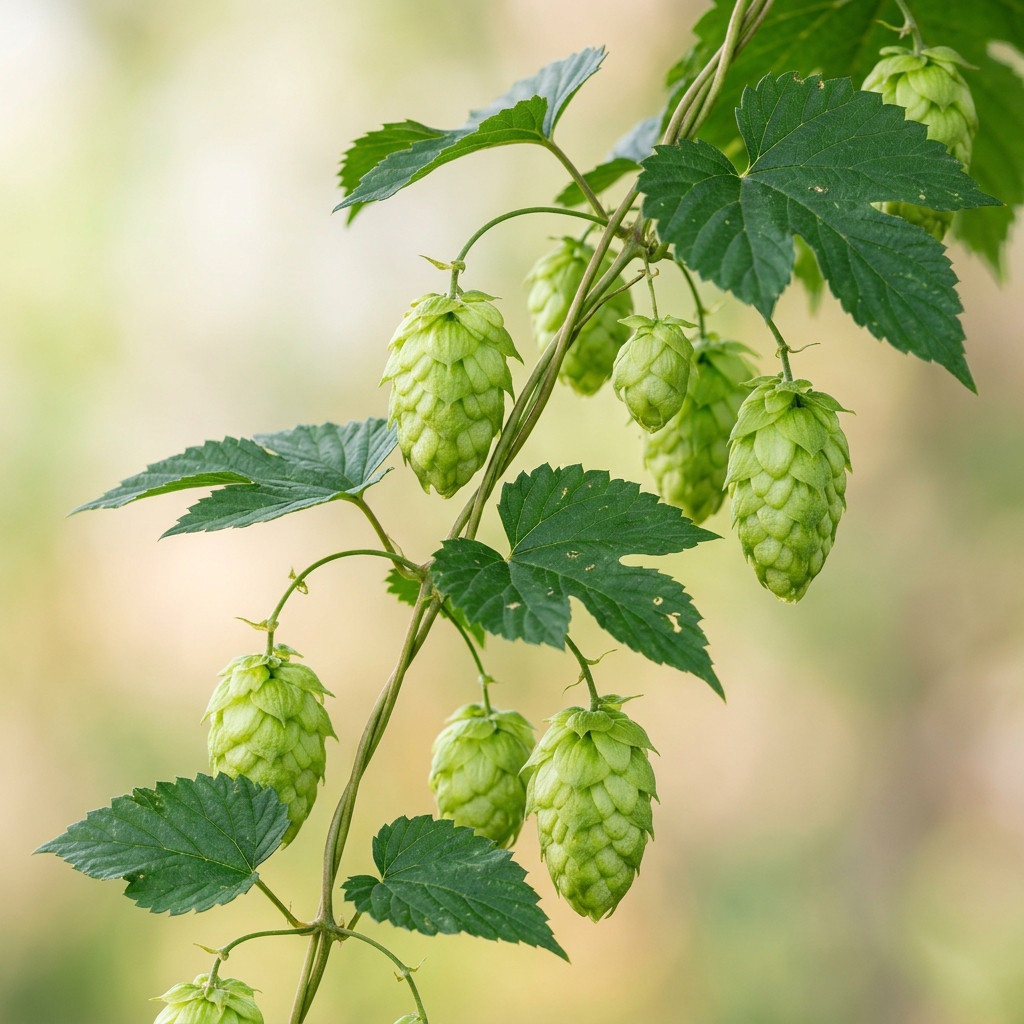
 Actual Plant Specimen
Are Hops Toxic to Dogs & Cats? Humulus lupulus Malignant Hyperthermia Emergency Guide
Humulus lupulus • Also called: Common Hops, Beer Hops
Toxic to dogs (Lethal Risk) but non-toxic to cats. Exercise caution in multi-pet homes.
- Papery, chartreuse-green, cone-like female flower strobiles ('hop cones') containing sticky yellow lupulin resin glands
- Vigorous twining perennial vine ('bine') with rough, hooked climbing hairs and deeply 3-to-5-lobed, coarsely toothed leaves
- Homebrewing Hop Pellets (compressed green cylindrical pellets) and Spent Hops (sweet-smelling boiled hop mash soaked in wort sugar that dogs eagerly devour from trash or compost)
- While Greyhounds, Labradors, Golden Retrievers, Saint Bernards, Pointers, and Dobermans have a genetic predisposition, ANY dog breed can develop fatal malignant hyperthermia from hops
Hops Plant-Part Identification & Toxicity Map
Every part of Hops (Humulus lupulus) marked out as Toxic, Mild Irritant, or Non-Toxic for cats and dogs.
Spent Homebrewing Hops & Compressed Hop Pellets
DEADLIEST SOURCE FOR DOGS: Spent hops discarded after brewing smell sweet from malted barley wort; Hop pellets swell in the stomach and release massive doses of uncoupling toxins that cause fatal hyperthermia (>106°F).
Fresh or Dried Hop Cones (Female Strobiles & Lupulin Glands)
Dogs that eat fallen cones from backyard hop trellises or ornamental hop wreaths rapidly develop panting, racing heart rate, and sky-high fever.
Brewed Beer & Hopped Alcoholic Beverages
Combines ethanol alcohol poisoning (ataxia, hypoglycemia, respiratory depression) with hop compounds; never allow dogs or cats to lap up spilled beer.
Rough Twining Hop Bines (Stems) & Lobed Leaves
Hooked trichome hairs on the bines cause mechanical oral and dermal abrasion ('hop rash'), while foliage contains lower levels of hop resins.
Which Hops Species Do You Have? (Separate Visual Guide)
Different plants called or confused with Hops have vastly different toxicity levels. Compare the separate species images and anatomical markers below:
EnlargeCommon Hops (Fresh Cones, Brewing Pellets & Spent Hops)
Humulus lupulus
- Papery green cone-shaped strobiles on a rough 3–5-lobed vine, or compressed green homebrewing pellets/mash.
- Botanical Classification: Humulus lupulus
EnlargeJapanese Hop (Ornamental & Invasive Vine)
Humulus japonicus (Humulus scandens)
- Annual climbing vine with 5–7-lobed leaves and smaller hop cones.
- Botanical Classification: Humulus japonicus (Humulus scandens)
 Enlarge
Star Jasmine & Climbing Rose (Dog-Safe Vine Swaps)
Trachelospermum jasminoides / Rosa spp.
- Fragrant white pinwheel blooms on glossy evergreen vines (Star Jasmine) or classic climbing roses.
- Botanical Classification: Trachelospermum jasminoides / Rosa spp.
Clinical Symptoms to Watch For in Cats
True Hops (Humulus lupulus): Non-toxic (no chemical symptoms).
If your pet ate a toxic variety or look-alike (see Species Cards above): Watch for drooling, lip licking, vomiting, soft stool, or skin redness.
Post-Ingestion Timeline
Veterinary Contraindication Warning — What NOT To Do
🚫 NEVER give hydrogen peroxide, salt, or home emetics to induce vomiting in a cat—3% hydrogen peroxide causes severe, potentially fatal stomach and esophageal ulceration in felines. Only a veterinarian can safely administer feline emetics.
Home Care & First Aid Protocol
Hops are considered safe and non-toxic to cats. No special action is required.
When to still call a vet: If your pet swallowed a large woody stem/root ball (choking or foreign body risk), ingested potting soil fertilizer, or if you suspect the plant matches one of the toxic look-alike species shown above.
In-Depth Botanical & Veterinary Safety Analysis
Scientific evaluation and toxicological breakdown of Hops (Humulus lupulus)
Recommended 100% Pet-Safe Plant Alternatives
 Pet Safe
Global Names & Multilingual Search
Specific Pet Safety FAQs for Hops
Is Hops toxic to dogs?
Yes, hops are extremely toxic and potentially lethal to dogs. Ingestion triggers malignant hyperthermia, causing a rapid and dangerous rise in body temperature.
Is Hops toxic to cats?
No, hops are safe and non-toxic to cats. Felines do not experience the malignant hyperthermia syndrome that affects dogs.
What are the symptoms of hops poisoning in dogs?
Symptoms include extreme panting, rapid heart rate, high body temperature (above 105°F), vomiting, restlessness, tremors, and seizures.
What should I do if my dog eats hops?
This is a critical veterinary emergency. Take your dog to an emergency veterinary clinic immediately. Do not attempt to cool the dog down at home without guidance.
20 Dangerous Garden Plants: Cat Toxicity & Safety Guide
Felines are highly sensitive to houseplants and flowers. Learn which 20 common species cause severe or fatal reactions in cats, including lilies, and discover safe, cat-friendly garden alternatives.
🛡️ Discover Related Plant Safety Guides
Explore visually similar or related plants and their pet safety profiles: