 Actual Plant Specimen
Are Spider Plants Safe for Cats & Dogs? Safe Chlorophytum vs. Toxic Dracaena Guide
Chlorophytum comosum • Also called: Airplane Plant, Ribbon Plant
All botanical parts of Spider Plant (Chlorophytum comosum) are verified non-toxic and safe around both cats and dogs.
- Arching rosette of narrow, flexible green-and-white striped grass-like blades emerging directly from the soil (no woody trunk).
- Long wiry yellow-white stolons ('runners') dangling miniature baby plantlets ('spiderettes').
- Fleshy, white, water-storing tuberous roots beneath the soil.
Spider Plant Plant-Part Identification & Toxicity Map
Every part of Spider Plant (Chlorophytum comosum) marked out as Toxic, Mild Irritant, or Non-Toxic for cats and dogs.
Arching Green & White Striped Blades
Chemically non-toxic; if your cat treats the plant like a salad bar, fibrous blades may tickle the stomach lining and cause a single harmless vomit.
Dangling Runners & Baby 'Spiderettes'
Bouncing baby spiderettes are irresistible to cats; they are 100% non-toxic if chewed or pulled off.
Small 6-Petaled White Star Flowers
Tiny white flowers along the runners are completely safe.
Fleshy White Tuberous Roots
Roots are non-toxic, though Spider Plants absorb soil salts—never let pets drink fertilized drainage saucer water.
Which Spider Plant Species Do You Have? (Separate Visual Guide)
Different plants called or confused with Spider Plant have vastly different toxicity levels. Compare the separate species images and anatomical markers below:
EnlargeSpider Plant / Airplane Plant / Ribbon Plant
Chlorophytum comosum ('Vittatum' / 'Variegatum' / 'Bonnie')
- Soft, arching green-and-cream striped grass-like leaves growing directly from soil level
- Long dangling stems holding baby 'spiderette' plantlets
- Verified 100% non-toxic by the ASPCA
 Enlarge
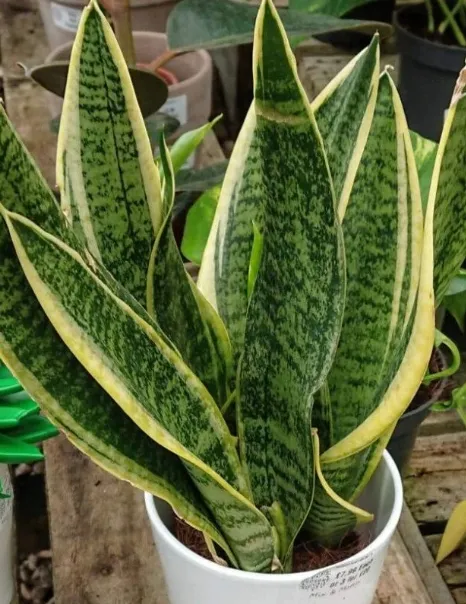
Dracaena / Song of India / Dragon Tree (Toxic Striped Look-Alike!)
Dracaena reflexa / Dracaena marginata (Family Asparagaceae)
- Stiff, sword-like striped leaves growing atop a WOODY CANE TRUNK (not a stemless rosette)
- Never produces dangling baby 'spiderettes' on long runners
- Contains steroidal saponins toxic to cats and dogs
Non-Toxic Plant Owner’s Practical Guide (Spider Plant)
Why Did My Cat Still Vomit After Eating Spider Plant?
Even though Spider Plant contains zero chemical toxins, cats and dogs lack the cellulase enzyme needed to digest raw plant fibers. Swallowing whole leaves or fibrous stems often triggers a harmless, one-time mechanical regurgitation (just like eating lawn grass).
Hidden Nursery Hazards: Pesticides, Fertilizers & Potting Soil
Newly purchased store pots often contain slow-release fertilizer beads (Osmocote), perlite, or systemic neonicotinoid insecticides. Never let pets chew potting soil or drink water from drainage saucers.
Post-Ingestion Timeline
Veterinary Contraindication Warning — What NOT To Do
🚫 NEVER give hydrogen peroxide, salt, or home emetics to induce vomiting in a cat—3% hydrogen peroxide causes severe, potentially fatal stomach and esophageal ulceration in felines. Only a veterinarian can safely administer feline emetics.
Home Care & First Aid Protocol
No action needed. Safe for cats (though they may enjoy playing with the leaves).
When to still call a vet: If your pet swallowed a large woody stem/root ball (choking or foreign body risk), ingested potting soil fertilizer, or if you suspect the plant matches one of the toxic look-alike species shown above.
In-Depth Botanical & Veterinary Safety Analysis
Scientific evaluation and toxicological breakdown of Spider Plant (Chlorophytum comosum)
Specific Pet Safety FAQs for Spider Plant
Is Spider Plant safe for cats?
Yes, Spider Plants are completely non-toxic to cats. Cats may be attracted to the dangling leaves, which have a mild catnip-like effect.
Is Spider Plant safe for dogs?
Yes, Spider Plants are 100% safe for dogs. Chewing on the leaves will not cause any toxicity or chemical poisoning.
Why does my cat vomit after eating Spider Plant?
While non-toxic, swallowing raw plant fibers can irritate a cat's stomach mechanically, leading to mild vomiting of grass-like matter.
Can I keep a Spider Plant in reach of pets?
Yes, though placing them in hanging baskets is recommended to prevent curious pets from chewing and damaging the plant's foliage.
Does the Spider Plant clean indoor air safely?
Yes, it is one of the most effective air-purifying houseplants and is completely safe to grow around pets.
20 Dangerous Garden Plants: Cat Toxicity & Safety Guide
Felines are highly sensitive to houseplants and flowers. Learn which 20 common species cause severe or fatal reactions in cats, including lilies, and discover safe, cat-friendly garden alternatives.
🛡️ Discover Related Plant Safety Guides
Explore visually similar or related plants and their pet safety profiles: