Cómo Saber si el Salmón está Fresco: Detectar Colorantes Sintéticos y Fraudes de Criadero
Distinga entre salmón premium capturado en el medio silvestre y salmón de piscifactoría teñido sintéticamente, e inspeccione en casa si hay histaminas tóxicas y frescura.
Para obtener más información sobre las grasas saludables y la seguridad de las proteínas, lea nuestras guías sobre camarones y gambas, aceite de oliva y huevo.
Drop Salmón photo here to test purity
or click to browse • Supports JPG, PNG, WEBP • Paste with Ctrl+V
Inspection Guide
Click to enlarge
Auditoría de pureza y colorante del salmón
El salmón (salmón) es el marisco más consumido en los Estados Unidos y es apreciado por su alto contenido de ácidos grasos omega-3. Sin embargo, una parte importante del salmón minorista está mal etiquetado y más del 70% se cría en granjas. Debido a que el salmón de piscifactoría se cría en corrales abarrotados y se alimenta con una dieta de pellets secos, su color es naturalmente gris. Para que parezcan salmón salvaje, los productores añaden colorantes sintéticos derivados de petroquímicos (cantaxantina o astaxantina) a su alimento. El salmón de piscifactoría también contiene concentraciones hasta 10 veces mayores de PCB que causan cáncer que el salmón salvaje, y es propenso a un rápido deterioro bacteriano, lo que lleva a la acumulación tóxica de histamina.
1. Auditoría visual capturada en la naturaleza versus criada en granjas:
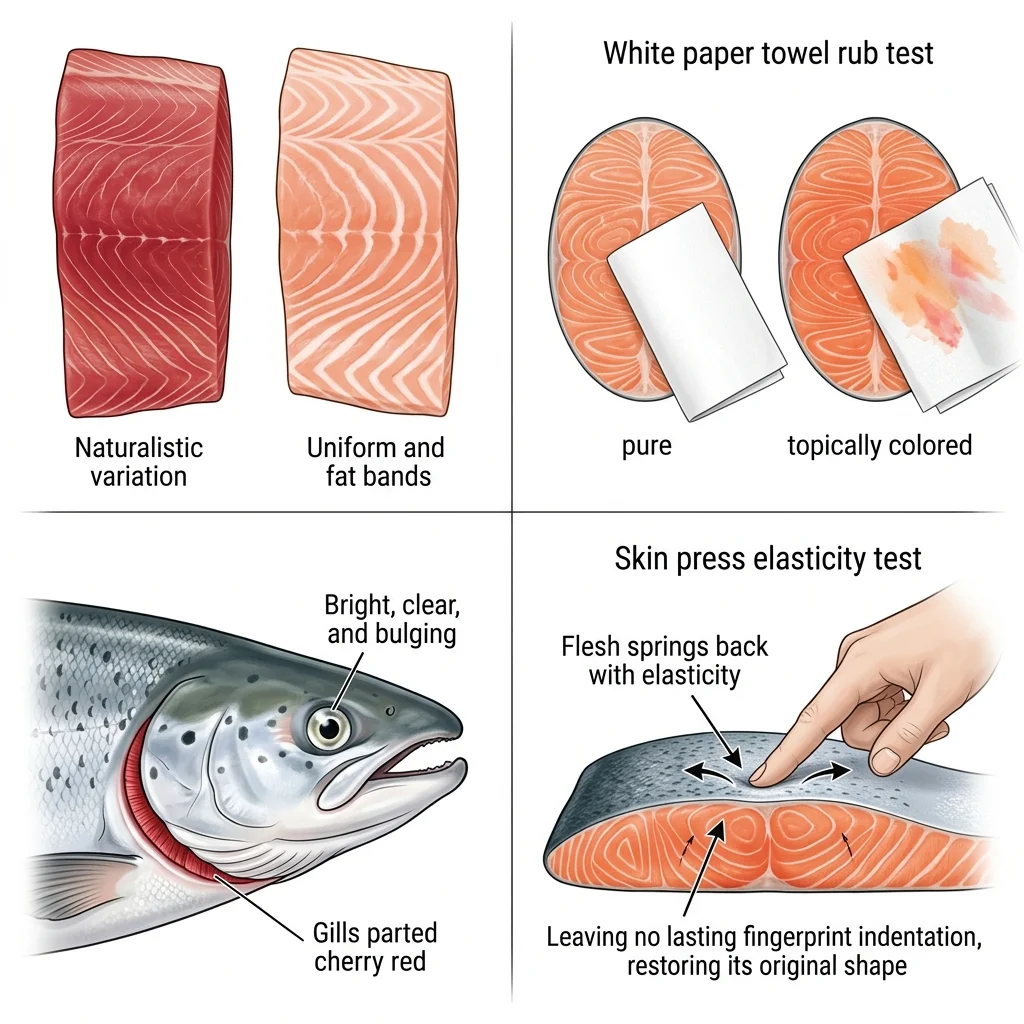
Examina el color y la distribución de grasa del filete. El salmón silvestre (como el rojo, el coho o el rey) tiene un color rojo anaranjado o rojo rubí intenso, vibrante y desigual. Presenta líneas de grasa blancas, muy finas y delicadas. El salmón criado en granjas tiene un color naranja rosado pálido y uniforme. Tiene bandas de grasa blancas muy gruesas, anchas y prominentes en toda la carne, lo que indica una vida agrícola sedentaria.
2. Prueba de frotación con papel blanco (colorantes tópicos):
De vez en cuando, vendedores sin escrúpulos tratan el pescado rancio con colorantes alimentarios tópicos o monóxido de carbono para restaurar artificialmente un color rojo brillante. Golpee firmemente un filete de salmón fresco con una toalla de papel blanca limpia y seca. La pigmentación natural del salmón está unida a las fibras musculares y no se transfiere. Si la toalla de papel detecta una clara mancha aceitosa de color naranja o rosa, el salmón ha sido teñido tópicamente o tratado químicamente para ocultar la descomposición.
3. Auditoría de frescura de branquias y ojos (pescado entero):
Si compra salmón entero, inspeccione los ojos y las branquias. El salmón recién capturado tiene ojos brillantes, claros, saltones y pupilas negras. Las branquias deben ser de color rojo cereza brillante, limpias y libres de mocos. Los peces rancios, tratados químicamente o viejos mostrarán ojos grises, hundidos y nublados y branquias de color rosa pálido, marrón o viscosas.
4. Prueba de elasticidad y presión cutánea:
Presione firmemente con el dedo en la parte más gruesa del filete de salmón o del pescado entero. La carne del salmón fresco es muy elástica y se recupera inmediatamente sin dejar marcas permanentes. Si la hendidura permanece visible o la carne se siente suave, blanda y pastosa, la estructura celular se ha derrumbado debido a la edad, la descomposición bacteriana avanzada o ciclos de congelación inadecuados.
Click to enlarge
Auditoría de histamina y frescura del salmón
La frescura es fundamental para la seguridad de los productos del mar debido al rápido crecimiento de bacterias sensibles a la temperatura.
1. Acumulación de histamina (escombroide):
Cuando el salmón se almacena a temperaturas inadecuadas, las bacterias se multiplican y convierten la histidina en histamina termoestable. Esto provoca intoxicación por pescado escombroide, que no se puede destruir cocinando, horneando o congelando. Rechace cualquier pescado que le provoque una sensación de hormigueo, picante o ardor en la lengua.
2. Olor agrio o amoníaco:
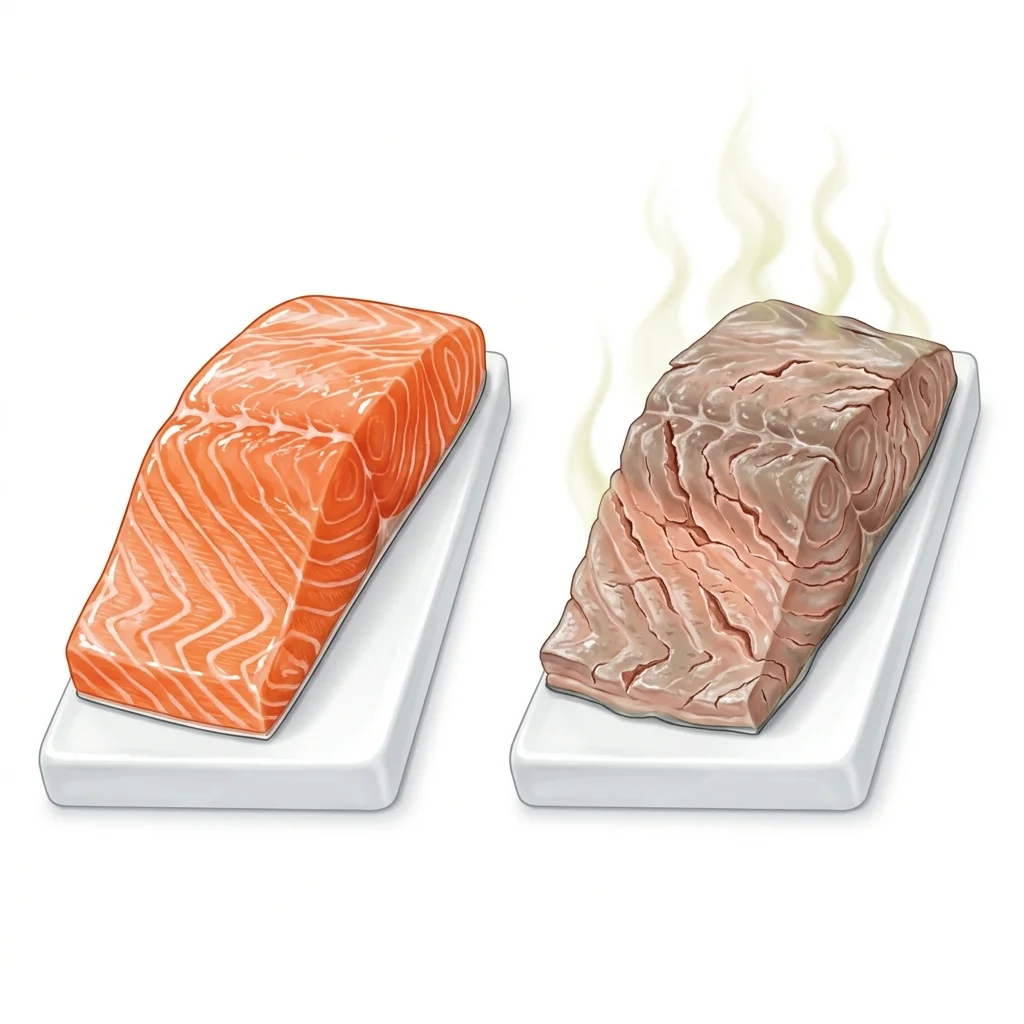
El salmón fresco tiene un olor suave, limpio y a brisa del océano. Evite el pescado que huele fuertemente a pescado, agrio o que tenga un olor parecido al amoníaco.
3. Músculos abiertos y crujidos:
Inspeccione la estructura del filete. Los cortes que muestran "abiertos", donde las capas musculares se desmenuzan, se desgarran y se separan limpiamente, revelan una descomposición enzimática avanzada y una manipulación deficiente.
Quick Safety Tips
- Busque un color rojo rubí intenso y finas líneas de grasa blanca para identificar el salmón puro capturado en el medio silvestre.
- Realice la prueba de prensado: el salmón fresco debe recuperarse instantáneamente sin dejar una huella digital permanente
- Evite los filetes con un color rosa pálido uniforme y bandas gruesas y anchas de grasa blanca, que indican salmón de piscifactoría con colorantes sintéticos.
- Utilice una toalla de papel blanca para frotar el filete: cualquier transferencia de tinte rosa o naranja revela un fraude con colorantes tópicos artificiales.
Primary Chemical Concerns
Health Risks & Impacts
Multilingual Local Names
Regulatory Corner: FSSAI (Food Safety and Standards Authority of India) / US FDA (21 CFR 123 - Seafood HACCP) / EU Regulation 853/2004
Regulation: Food Safety and Standards (Food Products Standards) Regulations 2011, Clause 2.4.18: Fresh Fish & Fishery Products & FDA Seafood Guidance
Legal Limit:Histamine: Max 100 mg/kg (100 ppm); Total Volatile Basic Nitrogen (TVB-N): Max 35 mg/100g; Synthetic Carbon Monoxide (CO gas treatment to pink fresh): 0.0% (Unapproved color fixative prohibited); Methylmercury: Max 0.5 ppm; Lead: Max 0.3 ppm
Report Adulteration to FSSAI (Food Safety and Standards Authority of India) / US FDA (21 CFR 123 - Seafood HACCP) / EU Regulation 853/2004