
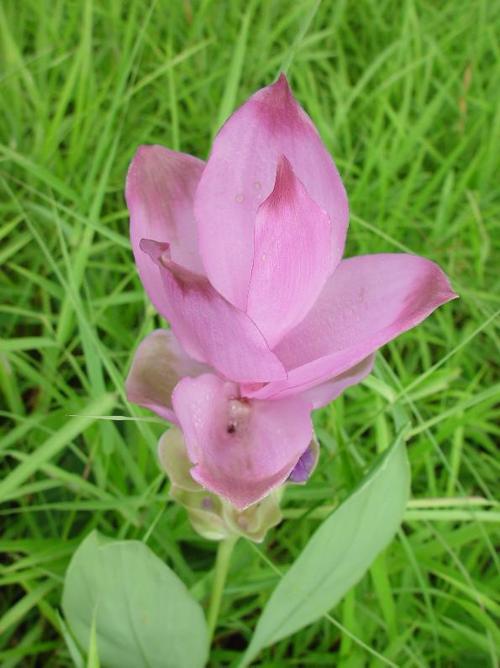
Siam Tulip (NOT a True Tulip)
Curcuma alismatifolia
Basic Details
Floral Formula & Features
Ebracteate (but showy bracts present), zygomorphic (bilateral symmetry), bisexual, 3 fused sepals forming tube, 3 fused petals (one modified as lip), 1 fertile stamen (plus sterile staminodes), 3 fused carpels with inferior ovary. Typical of Zingiberaceae family
- Name 'Siam Tulip' from resemblance to tulips and origin in Siam (Thailand). NOT related to true tulips (Tulipa). Member of ginger family, related to turmeric. About 100 Curcuma species. C. alismatifolia most popular ornamental. Called 'Hidden Ginger' - flowers hidden inside bracts. Native to Thailand, Laos, Cambodia
- Showy parts are bracts (modified leaves), not flowers. Bracts 4-8 inches (10-20 cm) tall, arranged in cone-like spike. Colors: pink (most common), purple, white, lavender. True flowers small, yellow-purple, hidden between bracts. Bracts last 2-3 weeks on plant, 2-3 weeks as cut flower. Blooms summer (June-September)
- Herbaceous perennial growing from rhizomes (underground stems like ginger). Lance-shaped leaves 8-16 inches long, emerge from ground. Flower spike rises separately from leaves on own stem. Goes dormant in fall - leaves die back. Rhizomes rest in winter, regrow in spring. Deciduous
- Grows 1.5-2 feet (45-60 cm) tall in bloom. Spread 1-2 feet. Lifespan of rhizomes: many years. Propagated by division of rhizomes (spring). Blooms in first year from rhizomes. Divide every 2-3 years. Each rhizome produces multiple flower spikes per season
- Native to northern Thailand, Laos, Cambodia, Myanmar. Found in monsoon forests, grasslands at 300-3,000 feet elevation. Now cultivated worldwide in tropics and as houseplant. Thrives in warm, humid climates with distinct wet/dry seasons
- Requires full sun to partial shade (4-6 hours sun). Needs warm temperatures (70-85°F) during growth. Well-drained soil essential - rhizomes rot if too wet. Regular watering during growth, reduce in fall. Stop watering when leaves yellow (dormancy). Hardy zones 8-11. Grow in containers elsewhere, store rhizomes dry in winter
- Excellent cut flower - very long-lasting (2-3 weeks). Popular in tropical flower arrangements. Easy container plant for patios. Low maintenance once established. Deer and rabbit resistant. Attracts butterflies. Perfect for tropical gardens, borders. Provides summer color
- Plant rhizomes 2-3 inches deep in spring after frost. Fertilize monthly during growth. Allow natural dormancy - leaves yellow and die in fall. Dig rhizomes in cold climates, store dry at 50-60°F. Replant in spring. In warm zones, leave in ground. Very easy - almost foolproof. Symbolizes exotic beauty
Names in Different Languages
What is Floral Formula?
A floral formula is a symbolic representation of a flower's structure using letters, numbers, and special symbols. It provides a concise way to describe the arrangement and number of floral parts.
This formula describes the flower's symmetry, sepals, petals, stamens, and carpels in a standardized format.
Formula Sequence
- Bract: Br or Ebr
- Bracteole: Brl or Ebrl
- Symmetry: % (Radial) or ⊕ (Bilateral)
- Sex: ♀ (Female), ♂ (Male), or ⚥ (Bisexual)
- Calyx/Sepal: K<number> (Free or Fused)
- Corolla/Petal: C<number> (Free or Fused)
- Androecium: A<number> (Free or Fused)
- Gynaecium: G<number> (Superior or Inferior Ovary)
Symbol Meanings
- Numbers: Indicate quantity of parts
- Parentheses (): Parts are fused together
- Plus (+): Parts in different whorls
- Underline: Superior ovary position
- Overline: Inferior ovary position
- ∞: Numerous parts (too many to count)
Understanding floral formulas helps botanists quickly identify and classify flowers based on their structural characteristics.
Similar Flowers
Discover flowers that share botanical characteristics
Same Family
2
Similar Characteristics
4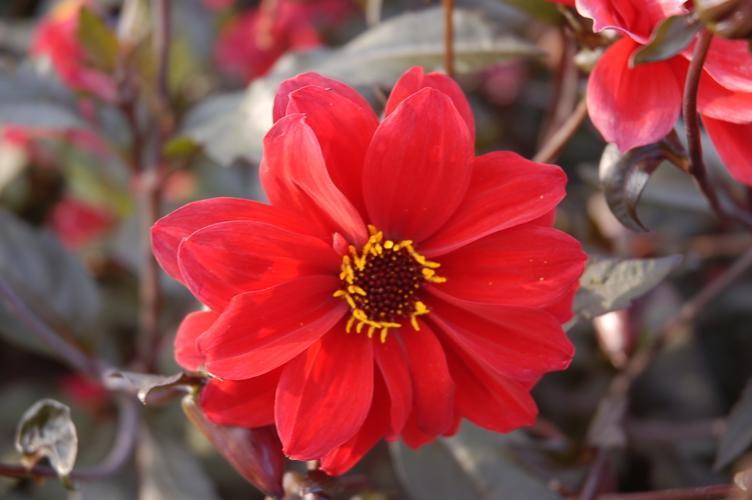
Dahlia
Dahlia
Spectacular tuberous perennial renowned for extraordinarily diverse flower forms...
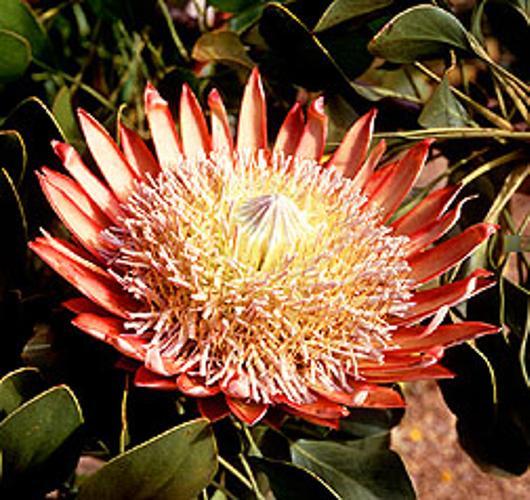
King Protea
Protea cynaroides
Magnificent flowering shrub featuring the largest flower head in the Protea genu...
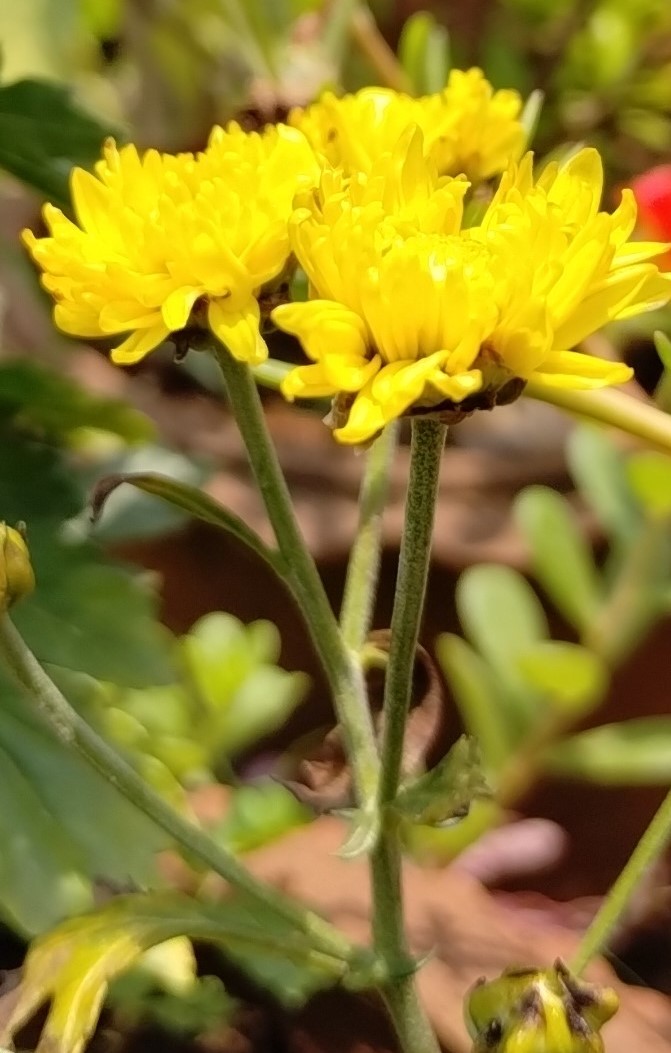
Chrysanthemum
Chrysanthemum
Beloved fall-blooming perennial celebrated for its profuse, colorful flowers tha...
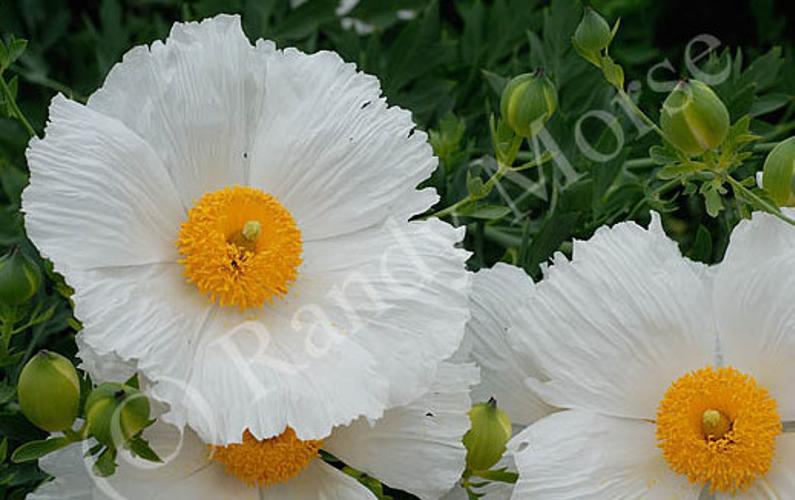
Tree Poppy
Dendromecon
Rare California native evergreen shrub producing abundant satiny, golden-yellow ...