
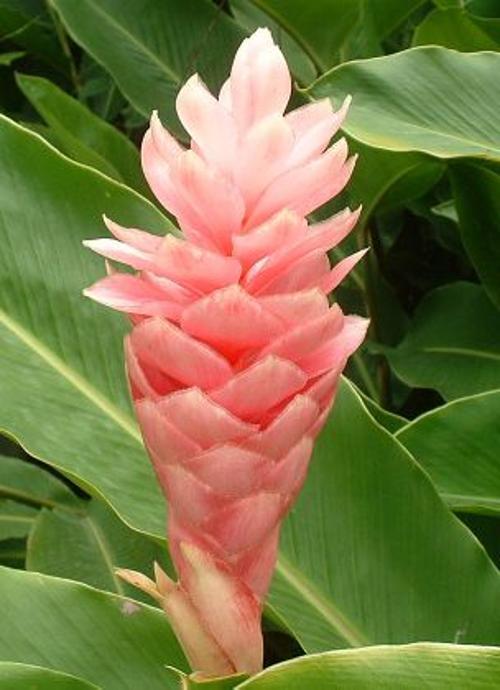
Red Ginger (Ostrich Plume)
Alpinia purpurata
Basic Details
Floral Formula & Features
Ebracteate (but showy bracts present), zygomorphic (bilateral symmetry), bisexual, 3 fused sepals forming tube, 3 fused petals (one modified as lip), 1 fertile stamen (plus sterile staminodes), 3 fused carpels with inferior ovary. Typical of Zingiberaceae family
- Name 'Ostrich Plume' from feathery appearance of flower spikes. About 230 Alpinia species. A. purpurata most popular ornamental. Related to culinary ginger but not edible. Called 'Teuila' in Samoa - national flower. Varieties: 'Jungle King' (red), 'Jungle Queen' (pink), 'Tahitian Ginger' (pink)
- Showy parts are bracts (modified leaves), not flowers. Cone-shaped spikes 6-12 inches (15-30 cm) long, brilliant red or pink. True flowers small, white, hidden between bracts. Bracts last 2-4 weeks on plant, 2-3 weeks as cut flower. Blooms year-round in tropics, summer elsewhere
- Perennial herbaceous plant growing from rhizomes (underground stems). Upright cane-like stems. Large lance-shaped leaves 12-24 inches long, arranged alternately. Resembles banana plant in growth habit. Spreads slowly from rhizomes. Evergreen in frost-free areas
- Grows 3-8 feet (1-2.5 m) tall, occasionally to 10 feet. Spread 3-5 feet. Lifespan many years from rhizomes. Propagated by division of rhizomes (spring) or stem cuttings. Blooms on mature stems (2-3 years old). Divide every 3-4 years
- Native to Malaysia, Indonesia, New Guinea, Solomon Islands, Vanuatu, New Caledonia, and Southwest Pacific islands. Now widely planted in tropics worldwide. Naturalized in Hawaii, Florida, Caribbean. Thrives in warm, humid tropical and subtropical climates
- Requires bright indirect light to partial shade (2-4 hours sun). Needs warm temperatures (65-85°F), high humidity (60-80%). Prefers rich, moist, well-drained soil. Regular watering - keep soil moist but not soggy. Hardy zones 10-12. Grow in containers elsewhere, bring indoors in winter
- Excellent cut flower - extremely long-lasting (2-3 weeks). Popular in tropical flower arrangements, Hawaiian leis. Used in landscaping for bold tropical look. Attracts hummingbirds. Deer resistant. Low maintenance once established. Provides year-round color in tropics
- Easy to grow in right climate - very forgiving. Remove old stems after flowering to encourage new growth. Fertilize monthly during growing season. Mulch to retain moisture. Can be grown in large containers. Symbolizes passion and exotic beauty in flower language
Names in Different Languages
What is Floral Formula?
A floral formula is a symbolic representation of a flower's structure using letters, numbers, and special symbols. It provides a concise way to describe the arrangement and number of floral parts.
This formula describes the flower's symmetry, sepals, petals, stamens, and carpels in a standardized format.
Formula Sequence
- Bract: Br or Ebr
- Bracteole: Brl or Ebrl
- Symmetry: % (Radial) or ⊕ (Bilateral)
- Sex: ♀ (Female), ♂ (Male), or ⚥ (Bisexual)
- Calyx/Sepal: K<number> (Free or Fused)
- Corolla/Petal: C<number> (Free or Fused)
- Androecium: A<number> (Free or Fused)
- Gynaecium: G<number> (Superior or Inferior Ovary)
Symbol Meanings
- Numbers: Indicate quantity of parts
- Parentheses (): Parts are fused together
- Plus (+): Parts in different whorls
- Underline: Superior ovary position
- Overline: Inferior ovary position
- ∞: Numerous parts (too many to count)
Understanding floral formulas helps botanists quickly identify and classify flowers based on their structural characteristics.
Similar Flowers
Discover flowers that share botanical characteristics
Same Family
2
Similar Characteristics
4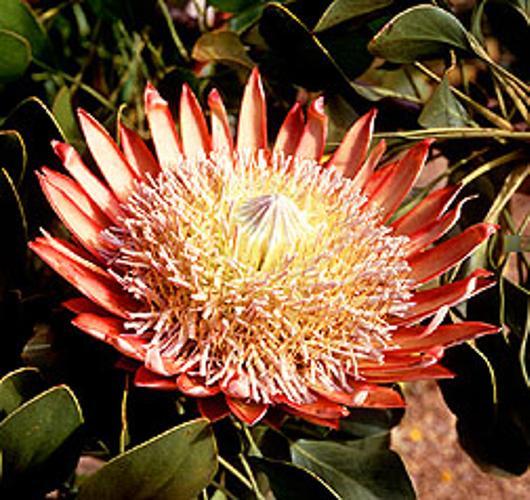
King Protea
Protea cynaroides
Magnificent flowering shrub featuring the largest flower head in the Protea genu...
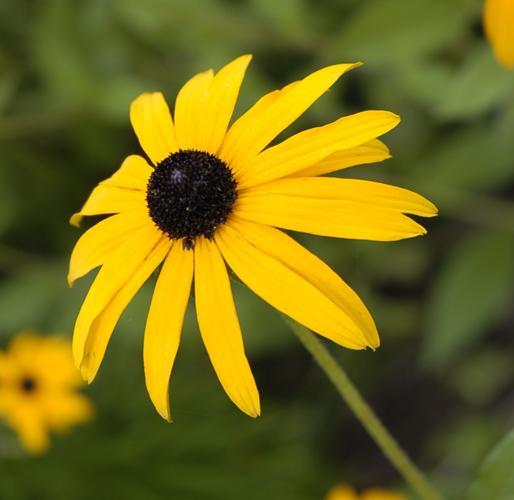
Black eyed Susan
Rudbeckia hirta
Cheerful native wildflower featuring bright golden-yellow ray petals surrounding...
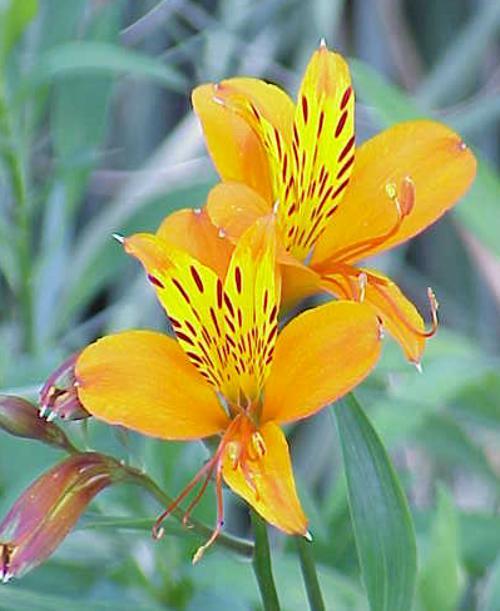
Peruvian Lily
Alstroemeria
Showy lily-like flowers with six petals covered in distinctive speckles, stripes...
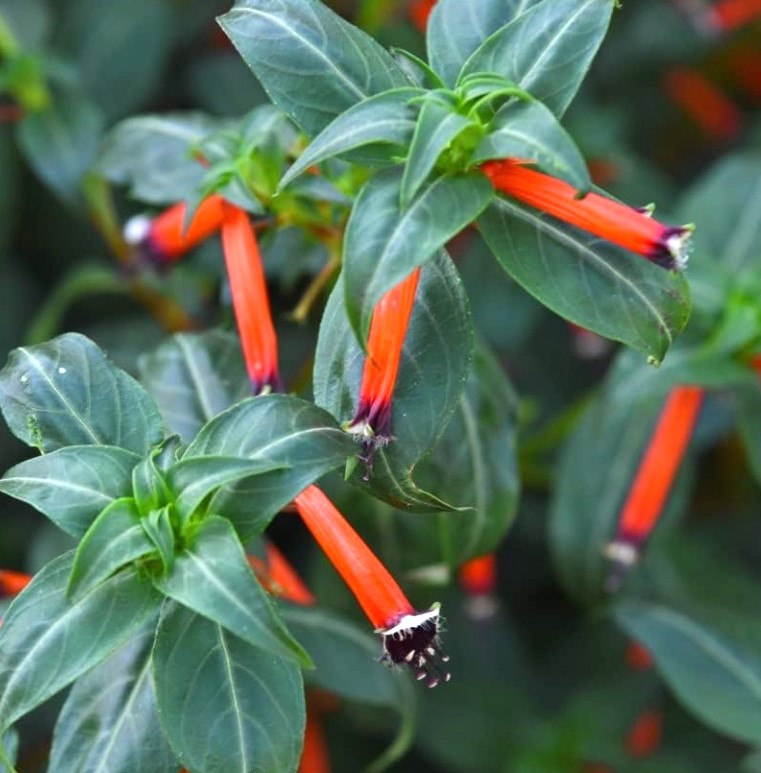
Cuphea Cigar
Cuphea ignea
Charming compact shrub featuring unique tubular flowers that resemble tiny lit c...