
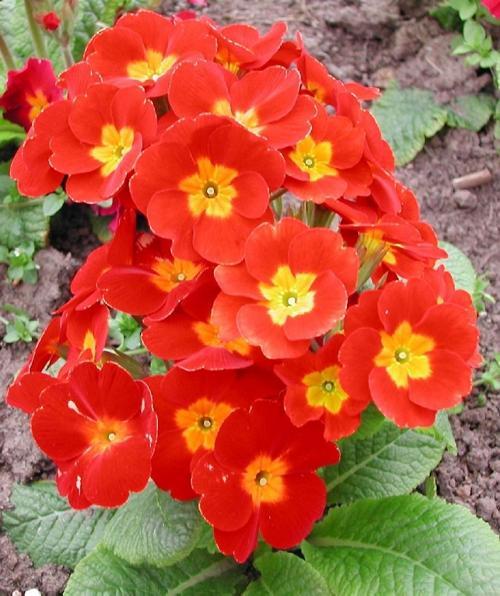
Primrose (Cowslip)
Primula veris
Basic Details
Floral Formula & Features
Ebracteate, radially symmetrical (actinomorphic), bisexual, 5 fused sepals forming tube, 5 fused petals forming salverform corolla (tube with flat spreading lobes), 5 stamens attached to corolla tube, 5 fused carpels with superior ovary. Heterostylous (pin and thrum flowers)
- Name 'Primrose' from Latin 'prima rosa' (first rose) - among earliest spring bloomers. 'Cowslip' from Old English 'cu-sloppe' (cow dung) - grows in cow pastures. About 500 Primula species. P. veris (cowslip), P. elatior (oxlip), P. vulgaris (common primrose) are main types
- Flowers 0.5-1 inch (1-2.5 cm) across, bright yellow with orange markings in throat. 5 petals forming tube with flat face. Arranged in one-sided clusters (umbels) of 10-30 flowers on 4-12 inch stems. Nodding habit. Sweet honey fragrance. Blooms March-May (early spring)
- Herbaceous perennial. Basal rosette of wrinkled, tongue-shaped leaves 2-6 inches long, rough texture. Leaves evergreen in mild climates. Flowers arise on leafless stems (scapes) from center of rosette. Dies back in summer heat, regrows in fall
- Grows 6-12 inches (15-30 cm) tall in bloom. Spread 8-12 inches. Lifespan 3-5 years, often self-seeds for longer presence. Propagated from seed (sow fresh in summer) or division (after flowering). Divide every 3-4 years to maintain vigor
- Native to Europe and western Asia, from Britain to Siberia. Found in meadows, woodland edges, hedgerows, grassy slopes. Prefers calcareous (lime-rich) soils. Now naturalized in parts of North America. Thrives in cool temperate climates
- Requires partial shade to full shade (2-4 hours sun maximum). Prefers cool, moist, well-drained soil rich in organic matter. Regular watering in dry spells. Hardy zones 3-8. Struggles in heat and humidity. Mulch to keep roots cool
- Used in herbal medicine for respiratory issues, coughs, bronchitis. Flowers and roots contain saponins. Makes soothing tea. Young leaves and flowers edible in salads. Attracts early bees and butterflies. Deer resistant. Popular in wildflower meadows
- Symbolizes youth, young love, early spring. Called 'Key Flower' - clusters resemble bunch of keys. Protected in some European countries due to over-picking. Easy to grow in right conditions. Self-seeds readily. Deadhead to prevent excessive seeding or allow to naturalize
Names in Different Languages
What is Floral Formula?
A floral formula is a symbolic representation of a flower's structure using letters, numbers, and special symbols. It provides a concise way to describe the arrangement and number of floral parts.
This formula describes the flower's symmetry, sepals, petals, stamens, and carpels in a standardized format.
Formula Sequence
- Bract: Br or Ebr
- Bracteole: Brl or Ebrl
- Symmetry: % (Radial) or ⊕ (Bilateral)
- Sex: ♀ (Female), ♂ (Male), or ⚥ (Bisexual)
- Calyx/Sepal: K<number> (Free or Fused)
- Corolla/Petal: C<number> (Free or Fused)
- Androecium: A<number> (Free or Fused)
- Gynaecium: G<number> (Superior or Inferior Ovary)
Symbol Meanings
- Numbers: Indicate quantity of parts
- Parentheses (): Parts are fused together
- Plus (+): Parts in different whorls
- Underline: Superior ovary position
- Overline: Inferior ovary position
- ∞: Numerous parts (too many to count)
Understanding floral formulas helps botanists quickly identify and classify flowers based on their structural characteristics.
Similar Flowers
Discover flowers that share botanical characteristics
Same Family
1
Similar Characteristics
4
Crossandra Firecracker
Crossandra infundibuliformis
Attractive evergreen shrub featuring distinctive fan-shaped flowers in vibrant s...
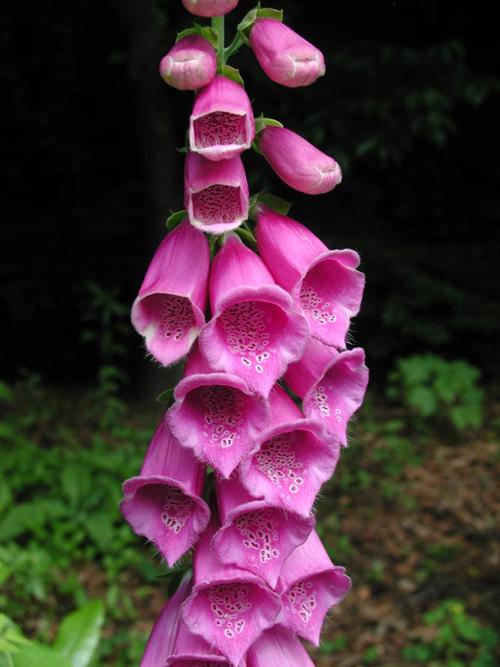
Foxglove
Digitalis purpurea
Majestic biennial featuring tall, elegant spikes of tubular, bell-shaped flowers...
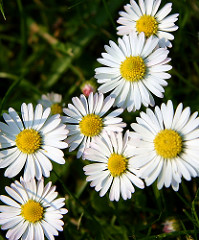
Daisy
Bellis perennis
Charming perennial featuring classic white ray florets (petals) surrounding a br...
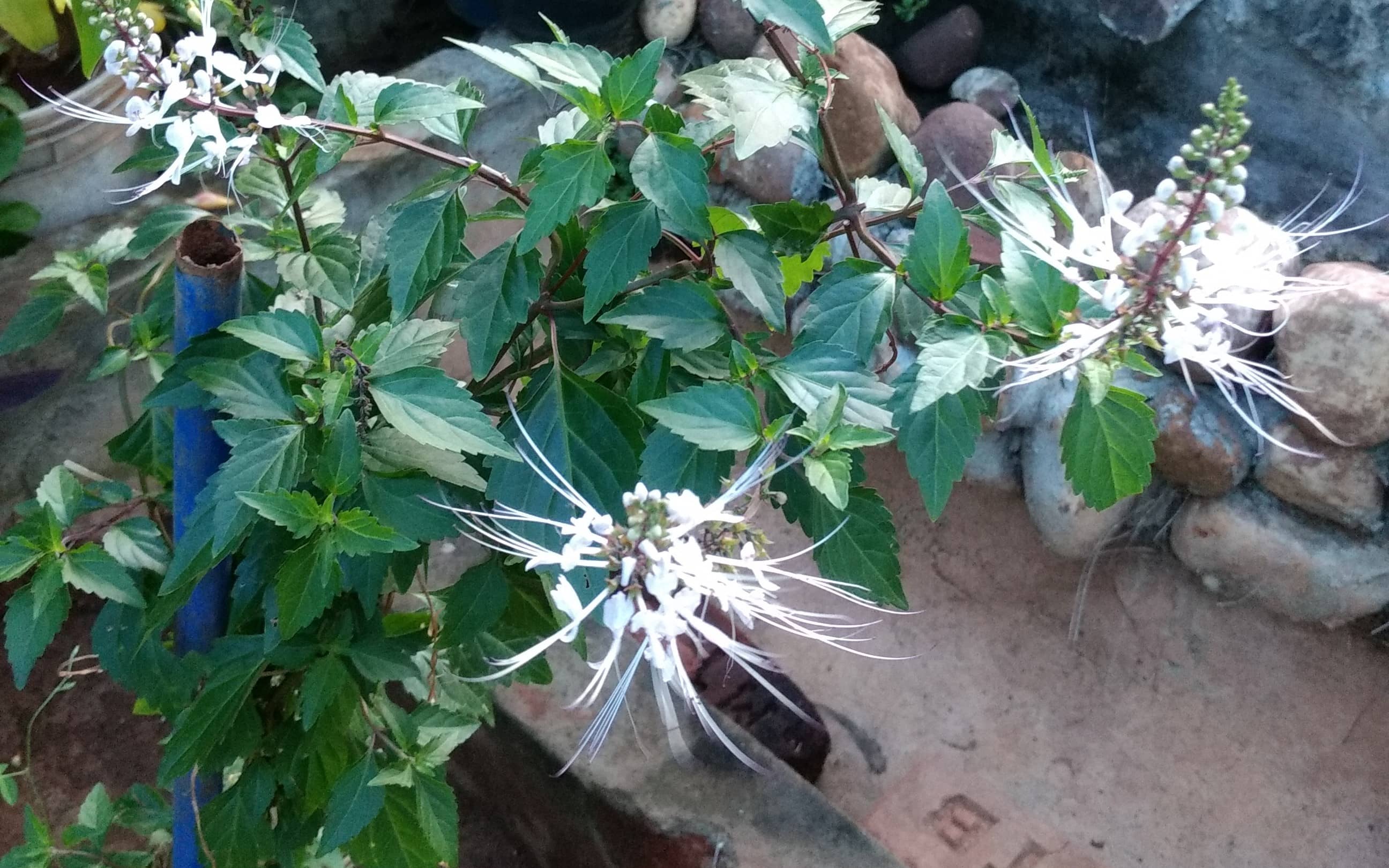
Cat's whiskers
Orthosiphon aristatus
Distinctive medicinal herb featuring delicate white or pale purple flowers with ...