
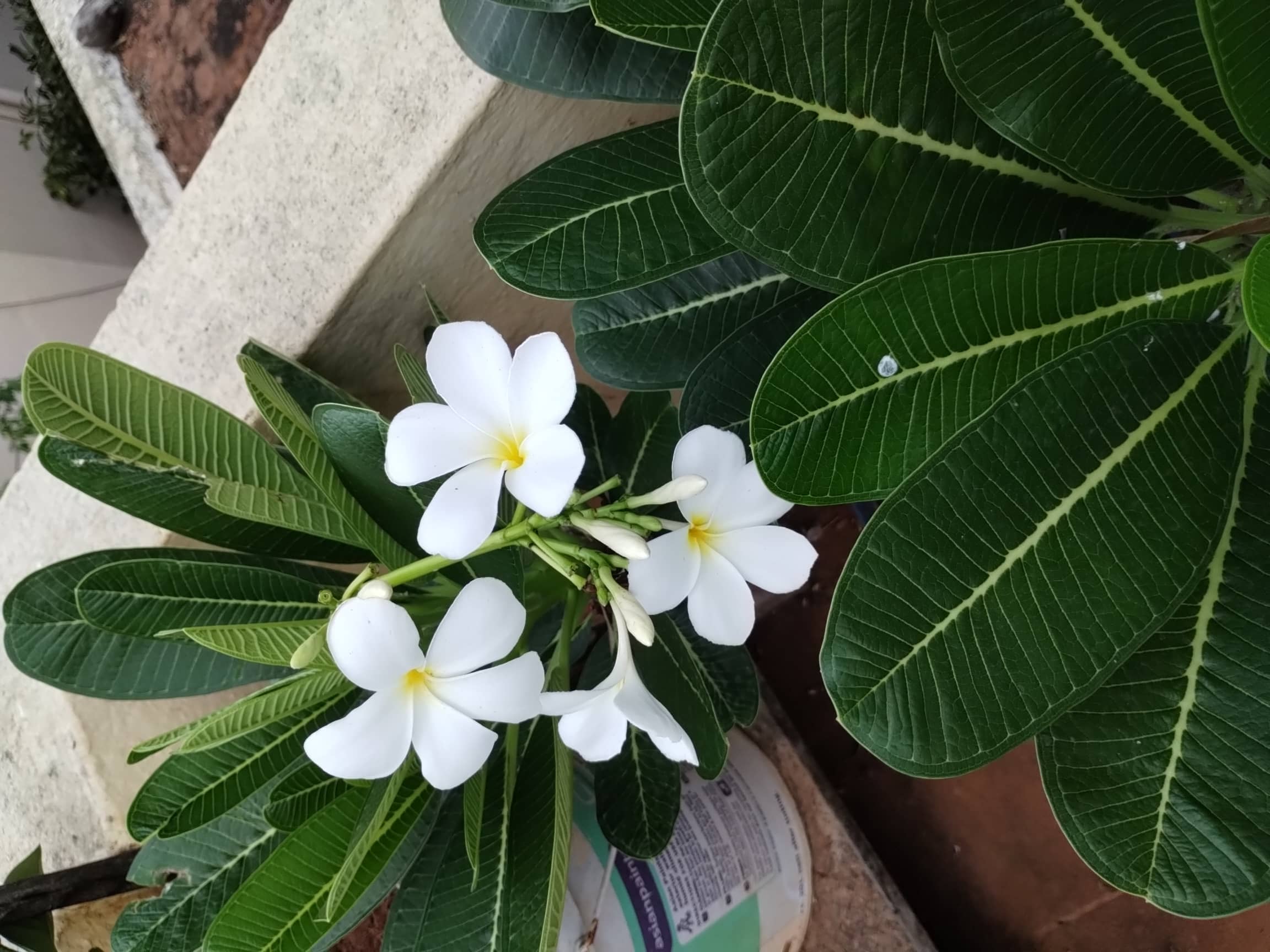
Plumeria
Plumeria Rubra
Basic Details
Floral Formula & Features
Bracteate (small bracts present), radially symmetrical (actinomorphic), bisexual, 5 fused sepals forming short tube, 5 fused petals forming tube with spreading lobes (salverform), 5 stamens attached to corolla tube, 2 fused carpels with superior ovary. Typical of Apocynaceae family
- Named after French botanist Charles Plumier. 'Frangipani' from Italian perfumer Marquis Frangipani - flowers smell like his perfume. About 11 Plumeria species. Common types: P. rubra (red/pink), P. alba (white), P. obtusa (Singapore white). Called Temple Tree - planted near temples and shrines
- Flowers 2-4 inches (5-10 cm) across, 5 waxy petals forming pinwheel shape. Colors: white, pink, red, yellow, orange, multicolors (rainbow plumeria). Intensely fragrant, especially at night. Blooms spring-fall (March-November). Each cluster has 10-50 flowers. Blooms last 1-2 weeks on tree
- Deciduous tree or large shrub. Thick, succulent branches with milky sap (toxic - causes skin irritation). Large leaves 8-16 inches long in clusters at branch ends. Loses leaves in winter (dormant). Branches remain thick and sculptural. Easily propagated from cuttings
- Grows 6-25 feet (2-8 m) tall, can reach 40 feet in ideal conditions. Spread 10-15 feet. Lifespan 50+ years, some specimens over 100 years. Propagated from cuttings (root in 2-3 weeks) or seeds. Cuttings bloom in 1-3 years
- Native to Mexico, Central America, Caribbean, parts of South America (Venezuela, Colombia). Now planted throughout tropics and subtropics worldwide. Naturalized in Hawaii, Florida, Southeast Asia. Thrives in warm coastal areas
- Requires full sun (6-8 hours) for best blooming. Tolerates partial shade but fewer flowers. Needs well-drained soil - hates wet feet. Drought tolerant once established. Minimal watering in winter dormancy. Hardy zones 10-12, grown in containers elsewhere. Bring indoors before frost
- Flowers used in Hawaiian leis, Polynesian garlands, temple offerings. Popular in tropical landscaping. Excellent container plant - can be kept small. Attracts sphinx moths for pollination. Deer resistant. WARNING: Milky sap irritates skin and eyes - wear gloves when pruning
- Sacred in Hindu, Buddhist, Mayan cultures. Symbolizes new life, spring, devotion. Called cemetery flower in some cultures - planted in graveyards. Easy care - very forgiving. Can survive months without water. Prune to shape in late winter. Fertilize monthly during growth. Blooms on new wood
Names in Different Languages
What is Floral Formula?
A floral formula is a symbolic representation of a flower's structure using letters, numbers, and special symbols. It provides a concise way to describe the arrangement and number of floral parts.
This formula describes the flower's symmetry, sepals, petals, stamens, and carpels in a standardized format.
Formula Sequence
- Bract: Br or Ebr
- Bracteole: Brl or Ebrl
- Symmetry: % (Radial) or ⊕ (Bilateral)
- Sex: ♀ (Female), ♂ (Male), or ⚥ (Bisexual)
- Calyx/Sepal: K<number> (Free or Fused)
- Corolla/Petal: C<number> (Free or Fused)
- Androecium: A<number> (Free or Fused)
- Gynaecium: G<number> (Superior or Inferior Ovary)
Symbol Meanings
- Numbers: Indicate quantity of parts
- Parentheses (): Parts are fused together
- Plus (+): Parts in different whorls
- Underline: Superior ovary position
- Overline: Inferior ovary position
- ∞: Numerous parts (too many to count)
Understanding floral formulas helps botanists quickly identify and classify flowers based on their structural characteristics.
Similar Flowers
Discover flowers that share botanical characteristics
Same Family
4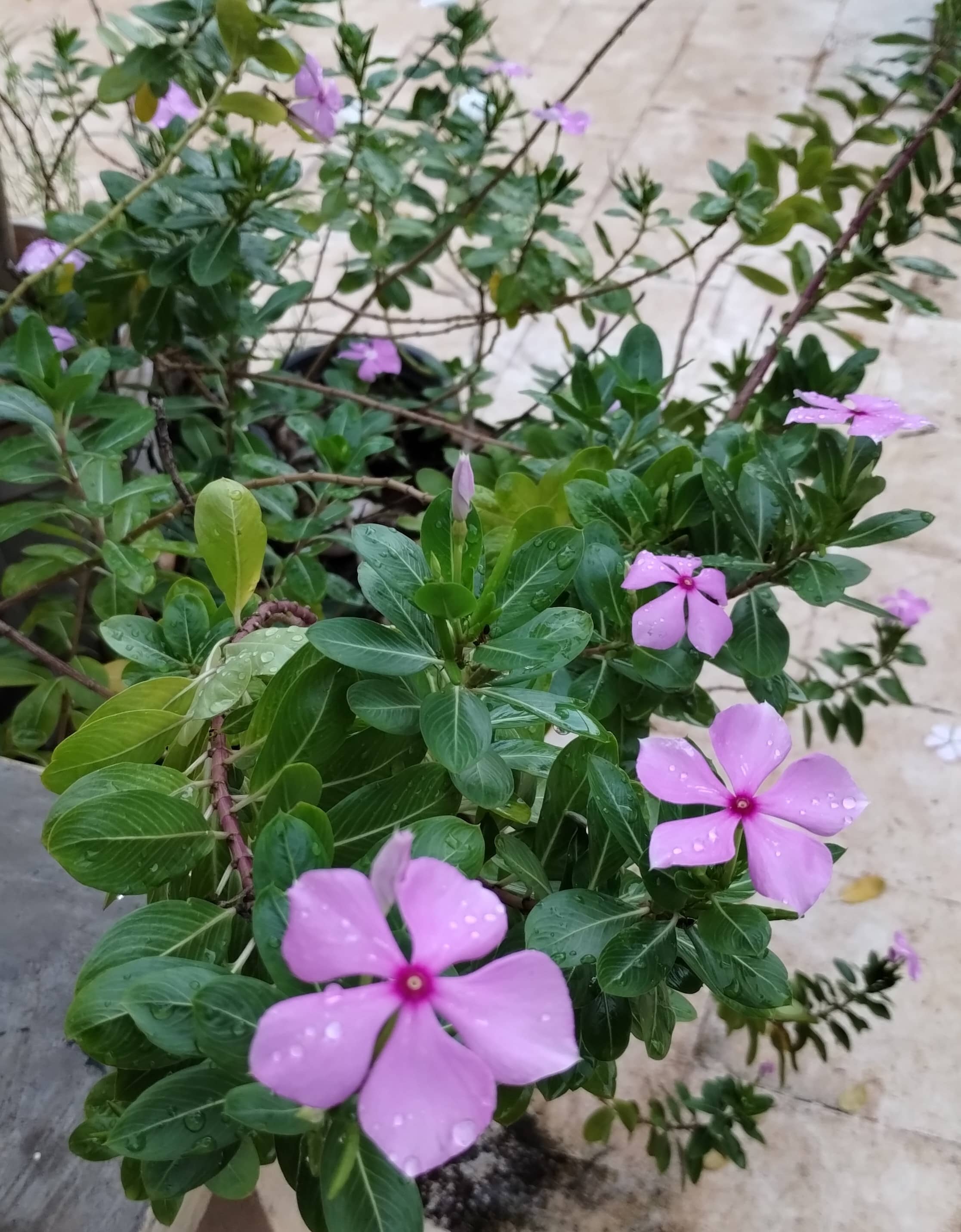
Vinca Rosea
Catharanthus roseus
Highly significant medicinal plant native to Madagascar, renowned as the source ...
Oleander
Nerium oleander
Evergreen shrub with clusters of showy flowers in pink, white, red, yellow, or p...
Mandevilla
Mandevilla
Spectacular tropical climbing vine renowned for its large, showy, trumpet-shaped...
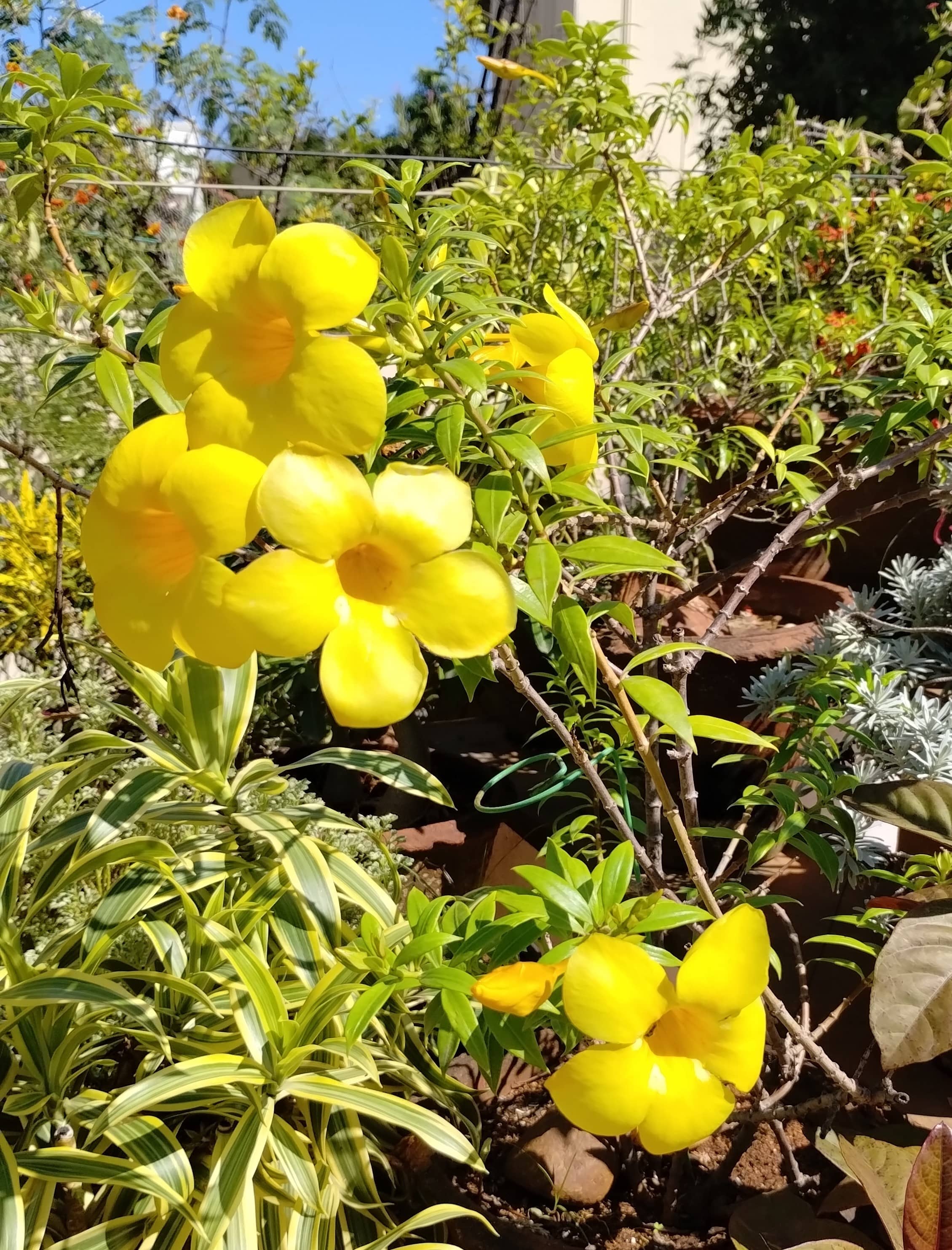
Allamanda
Allamanda cathartica
Spectacular tropical shrub or vine featuring large, trumpet-shaped flowers that ...
Similar Characteristics
4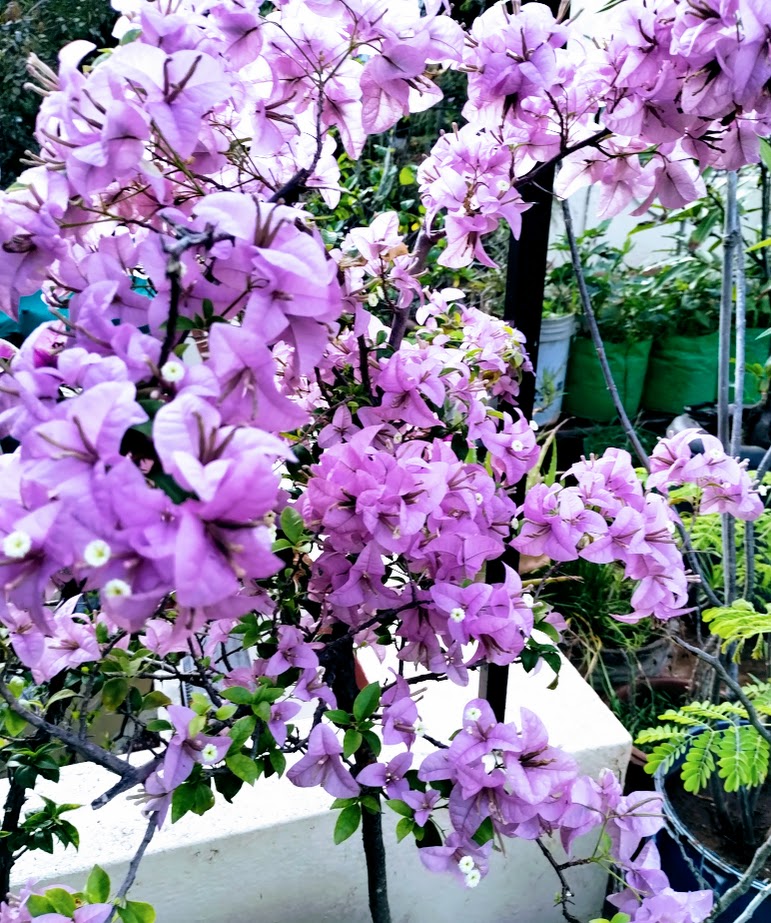
Bougainvillea
Bougainvillea spectabilis
Spectacular tropical vine renowned for its brilliant papery bracts in magenta, p...
Vinca Rosea
Catharanthus roseus
Highly significant medicinal plant native to Madagascar, renowned as the source ...
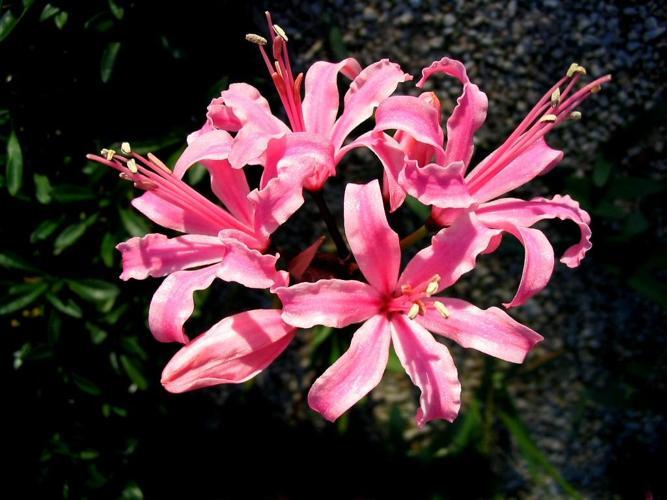
Cape Flower
Lycoris radiata
Dramatic fall-blooming bulb featuring striking spider-like flowers with vivid re...
Mandevilla
Mandevilla
Spectacular tropical climbing vine renowned for its large, showy, trumpet-shaped...