
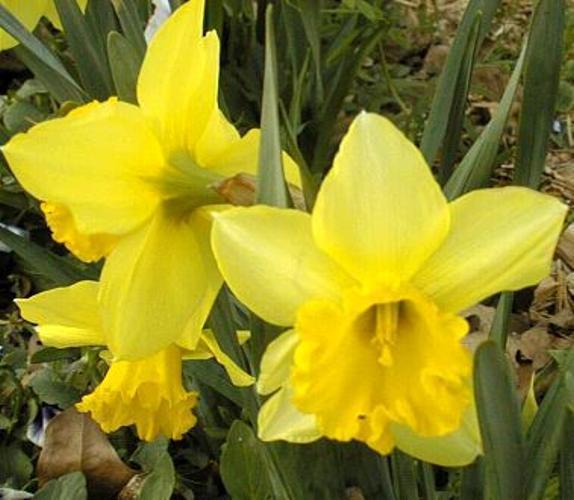
Daffodil
Narcissus pseudonarcissus
Basic Details
Floral Formula & Features
Ebracteate (no bracts), radially symmetrical (actinomorphic), bisexual, 6 tepals in 2 whorls of 3 (perianth, no distinction between sepals and petals) with corona (modified staminal structure), 6 stamens in 2 whorls of 3, 3 fused carpels with inferior ovary
- Name 'daffodil' possibly from Dutch 'de affodil' (the asphodel) or Middle English 'affodyle.' 'Narcissus' from Greek myth of youth who fell in love with his reflection and transformed into flower. 'Jonquil' refers to fragrant N. jonquilla species. National flower of Wales (Cennin Pedr = Peter's Leek). Over 50 species, 13,000+ cultivars
- Flowers 1-4 inches (2.5-10 cm) across with 6 petal-like tepals (perianth) surrounding central trumpet or cup (corona). Trumpet daffodils have corona as long as or longer than tepals; large-cupped have corona more than 1/3 tepal length; small-cupped less than 1/3. Colors include yellow, white, orange, pink, and bicolors. 1-20 flowers per stem depending on type
- Bulbous perennial that blooms late winter through mid-spring (February-May depending on variety and climate). Divided into 13 divisions by flower form. Foliage emerges before or with flowers, must remain 6-8 weeks after blooming to replenish bulb. Goes dormant in summer
- Grows 6-24 inches (15-60 cm) tall depending on variety (miniatures 4-6 inches, standards 12-18 inches, tall 18-24 inches). Lifespan of many years (10-20+), naturalizes and multiplies. Propagated by bulb offsets (divide every 3-5 years) or seed (takes 5-7 years to bloom)
- Native to Europe, North Africa, and western Asia, particularly Mediterranean region, Iberian Peninsula, and British Isles. N. pseudonarcissus (wild daffodil) native to Western Europe. Now naturalized in temperate regions worldwide. Found in meadows, woodlands, and rocky slopes
- Requires full sun to partial shade (minimum 6 hours sun for best blooming). Prefers well-drained soil, tolerates various soil types. Plant bulbs in fall (September-November) 6 inches deep, pointed end up. Needs cold period (40-45°F/4-7°C) for 12-16 weeks. Hardy zones 3-9
- Excellent for naturalizing in lawns, woodlands, and borders. Popular cut flower (lasts 4-7 days; sap toxic to other flowers). Deer and rodent resistant due to toxic alkaloids (especially lycorine). All parts poisonous if ingested—causes vomiting, diarrhea. Symbol of cancer charities (Marie Curie, American Cancer Society). Can be forced indoors for winter blooms
Names in Different Languages
What is Floral Formula?
A floral formula is a symbolic representation of a flower's structure using letters, numbers, and special symbols. It provides a concise way to describe the arrangement and number of floral parts.
This formula describes the flower's symmetry, sepals, petals, stamens, and carpels in a standardized format.
Formula Sequence
- Bract: Br or Ebr
- Bracteole: Brl or Ebrl
- Symmetry: % (Radial) or ⊕ (Bilateral)
- Sex: ♀ (Female), ♂ (Male), or ⚥ (Bisexual)
- Calyx/Sepal: K<number> (Free or Fused)
- Corolla/Petal: C<number> (Free or Fused)
- Androecium: A<number> (Free or Fused)
- Gynaecium: G<number> (Superior or Inferior Ovary)
Symbol Meanings
- Numbers: Indicate quantity of parts
- Parentheses (): Parts are fused together
- Plus (+): Parts in different whorls
- Underline: Superior ovary position
- Overline: Inferior ovary position
- ∞: Numerous parts (too many to count)
Understanding floral formulas helps botanists quickly identify and classify flowers based on their structural characteristics.
Similar Flowers
Discover flowers that share botanical characteristics
Same Family
3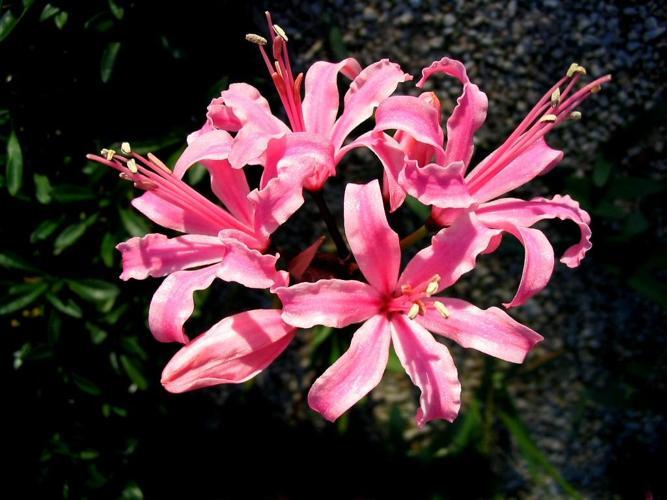
Cape Flower
Lycoris radiata
Dramatic fall-blooming bulb featuring striking spider-like flowers with vivid re...
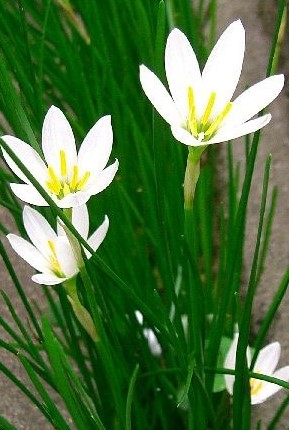
Zephyr Lily
Zephyranthes
They belong to Amaryllis family. All plants from this family grow from bulbs, ha...
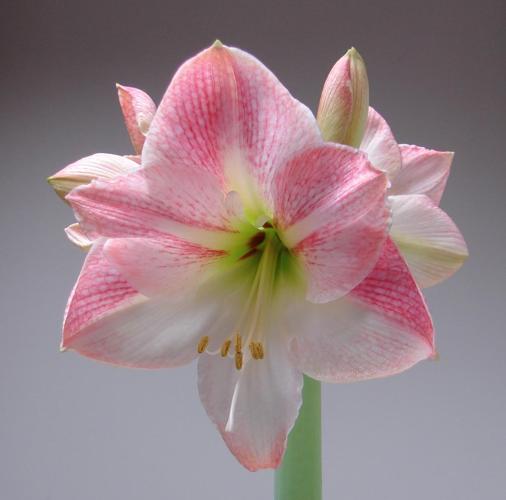
Amaryllis
Hippeastrum
Spectacular bulbous plant producing 2-6 large, trumpet-shaped flowers per stalk ...
Similar Characteristics
4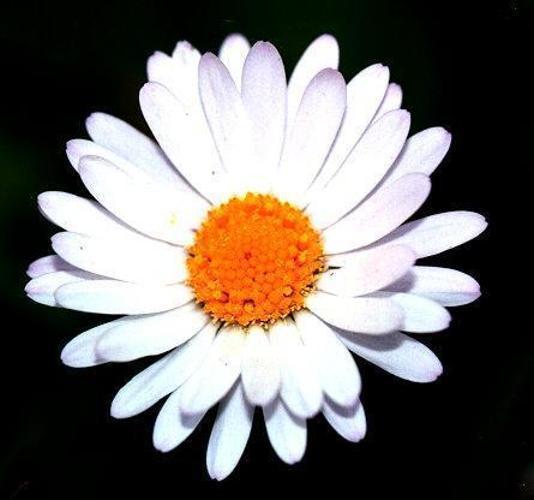
Oxeye Daisy
Leucanthemum vulgare
Classic wildflower with bright white petals radiating around golden-yellow cente...
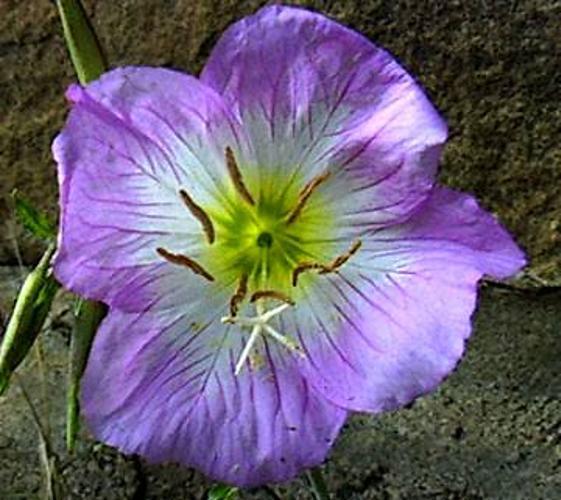
Primrose (Cowslip)
Primula veris
Cheerful spring wildflower with clusters of nodding yellow flowers on tall stems...
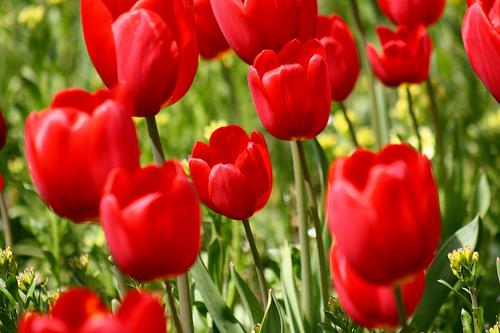
Tulip
Tulipa
Iconic spring-blooming bulb celebrated for its elegant cup-shaped flowers in nea...
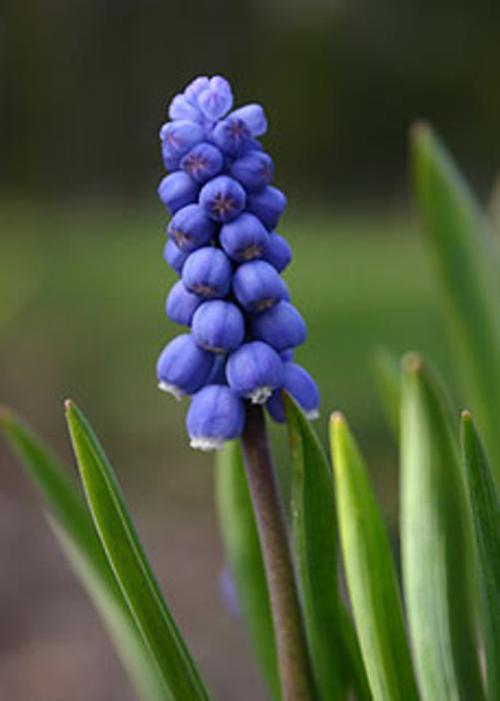
Grape hyacinth
Muscari
Charming spring bulb featuring dense spikes of tiny, urn-shaped flowers in rich ...