
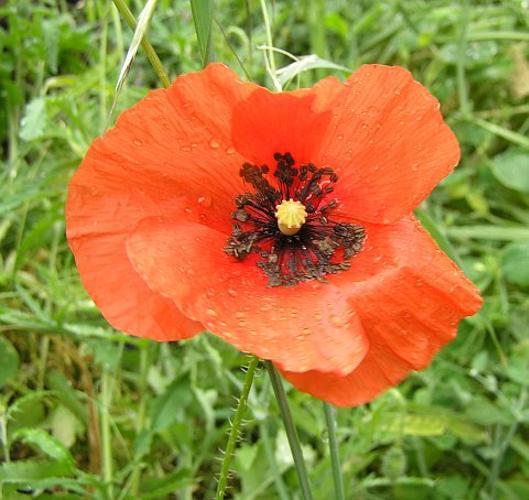
Corn Poppy
Papaver rhoeas
Basic Details
Floral Formula & Features
Ebracteate (no bracts), radially symmetrical (actinomorphic), bisexual, 2 free sepals that fall as flower opens (caducous), 4 free papery petals, numerous free stamens (many dozens), 2-20 fused carpels forming superior ovary with radiating stigmatic rays
- Name 'Corn Poppy' from growing as weed in grain fields (corn = grain in British English). 'Papaver' from Latin 'papa' (pap/milk) for milky sap. 'Rhoeas' from Greek for red. 'Flanders Poppy' from WWI poem 'In Flanders Fields' by John McCrae. Symbol of remembrance since 1921
- Flowers 2-4 inches (5-10 cm) across with 4 delicate, crinkled, papery petals (occasionally 5-6). Brilliant scarlet-red with black or dark purple blotch at base. Prominent black stamens surround green seed capsule in center. Buds nod downward, flowers face upward. Individual blooms last 1-2 days
- Annual wildflower that blooms late spring through summer (May-August). Flowers open in morning, petals drop by afternoon or next day. After blooming, produces distinctive pepper-shaker seed pods releasing thousands of tiny seeds. Self-seeds prolifically, naturalizing in disturbed soils
- Grows 1-2.5 feet (30-75 cm) tall with slender, branching stems. Lifespan of one growing season (annual). Propagated from seed sown directly in fall or early spring (needs cold stratification, doesn't transplant well). Seeds remain viable in soil for decades
- Native to Europe, Mediterranean region, temperate Asia, and North Africa. Naturalized worldwide in temperate regions. Historically abundant in agricultural fields before herbicides. Found in disturbed soils, roadsides, waste ground, and wildflower meadows
- Requires full sun with at least 6-8 hours of direct sunlight. Thrives in poor to moderately fertile, well-drained soil. Drought tolerant once established. Dislikes rich soil or overwatering. Grows best in cool spring weather. Sow seeds where they are to grow (resents transplanting)
- International symbol of remembrance for war casualties, especially WWI. Seeds edible and used in baking (poppy seeds). Does NOT contain opium alkaloids (unlike P. somniferum). Attracts bees and beneficial insects. Deer resistant. Excellent for wildflower meadows and naturalized areas. Banned in some agricultural areas as weed
Names in Different Languages
What is Floral Formula?
A floral formula is a symbolic representation of a flower's structure using letters, numbers, and special symbols. It provides a concise way to describe the arrangement and number of floral parts.
This formula describes the flower's symmetry, sepals, petals, stamens, and carpels in a standardized format.
Formula Sequence
- Bract: Br or Ebr
- Bracteole: Brl or Ebrl
- Symmetry: % (Radial) or ⊕ (Bilateral)
- Sex: ♀ (Female), ♂ (Male), or ⚥ (Bisexual)
- Calyx/Sepal: K<number> (Free or Fused)
- Corolla/Petal: C<number> (Free or Fused)
- Androecium: A<number> (Free or Fused)
- Gynaecium: G<number> (Superior or Inferior Ovary)
Symbol Meanings
- Numbers: Indicate quantity of parts
- Parentheses (): Parts are fused together
- Plus (+): Parts in different whorls
- Underline: Superior ovary position
- Overline: Inferior ovary position
- ∞: Numerous parts (too many to count)
Understanding floral formulas helps botanists quickly identify and classify flowers based on their structural characteristics.
Similar Flowers
Discover flowers that share botanical characteristics
Same Family
2
Similar Characteristics
4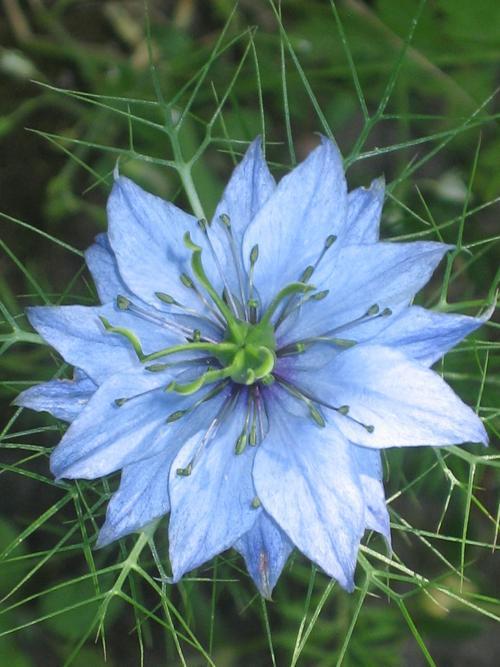
Love in a mist
Nigella damascena
Charming cottage garden annual featuring delicate jewel-like flowers in shades o...
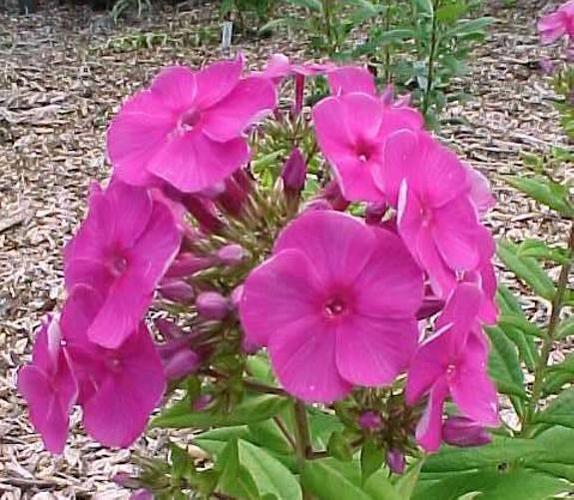
Phlox
Phlox paniculata
Fragrant flowers in dense clusters ranging from creeping ground covers to tall b...
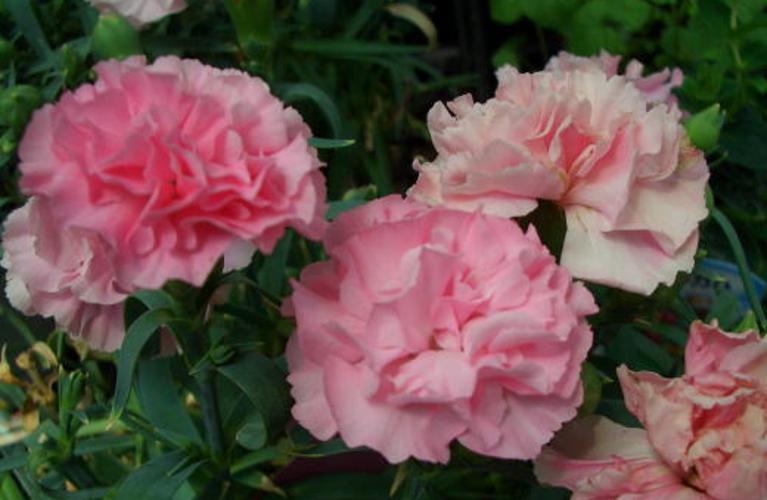
Carnation flower
Dianthus caryophyllus
Classic florist flower featuring densely ruffled, fringed petals with distinctiv...
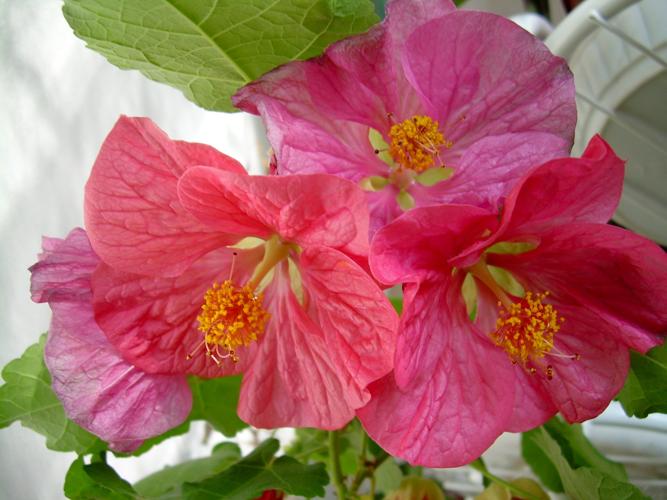
Mallow
Malva
Versatile medicinal herb with delicate cup-shaped flowers in pink, purple, or wh...