
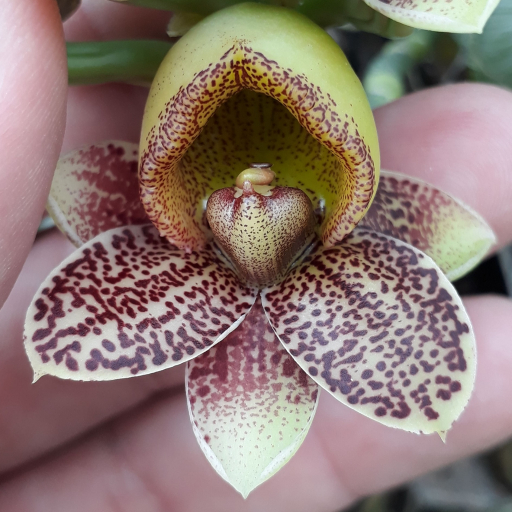
Catasetum Orchid
Catasetum
Basic Details
Floral Formula & Features
Zygomorphic (bilateral symmetry), Bisexual (though flowers are functionally unisexual - male or female), 6 tepals in 2 whorls of 3 (3 sepals + 3 petals with modified lip), 1 stamen fused with style into column, 3 fused carpels with inferior ovary
- Etymology: Genus name 'Catasetum' from Greek 'kata' (downward) and 'seta' (bristle), referring to two horn-like antennae on column. About 150-200 Catasetum species. Discovered by botanists who initially classified male and female flowers as separate species due to extreme differences. Related to Cycnoches and Mormodes orchids
- Unique Characteristics: Extreme sexual dimorphism - male flowers large (2-4 inches/5-10 cm), colorful, complex with prominent lip and antennae. Female flowers smaller (1-2 inches/2.5-5 cm), green, simpler structure. Hermaphroditic flowers intermediate. Male flowers have explosive pollination - when bee touches trigger antenna, pollinarium shoots out and sticks to bee's back. Bee then avoids male flowers and visits females, ensuring cross-pollination. Environmental factors (light, water) influence flower sex
- Plant Type & Blooming: Epiphytic deciduous orchid with sympodial growth (horizontal rhizome produces new growths). Blooms during or after dry season (varies by species, typically fall-winter). Male flowers last 1-2 weeks, females 3-6 weeks. Sheds leaves during dormancy, relies on pseudobulbs for water/nutrients. New growth emerges with rainy season
- Size, Lifespan & Propagation: Height: 12-24 inches (30-60 cm) with leaves. Pseudobulbs: 4-8 inches (10-20 cm) tall, spindle or cigar-shaped. Spread: 12-18 inches (30-45 cm). Lifespan: 10-20+ years. Propagation: division of pseudobulbs (every 3-4 years), backbulbs. Fast-growing during wet season. First bloom 3-5 years from seedling
- Native Region & Distribution: Native to Central and South America from Mexico to Brazil, including Caribbean. Found in tropical rainforests, cloud forests, and seasonally dry forests at elevations sea level to 6,000 feet (1,800 m). Grows epiphytically on tree branches and trunks. Wide distribution across Amazon basin, Andes foothills, and Central American highlands
- Climate & Growing Conditions: Requires bright light (2,500-3,500 foot-candles), some direct sun. Warm to intermediate temperatures: growing season 75-85°F (24-29°C) days, 65-70°F (18-21°C) nights. Dormancy: cooler, drier 60-70°F (15-21°C). Humidity: 60-80% during growth, 40-50% dormancy. Heavy watering/fertilizing during growth (spring-fall), minimal water during dormancy (winter). Grow in baskets or mounted. Needs distinct wet/dry seasons to thrive and bloom
Names in Different Languages
What is Floral Formula?
A floral formula is a symbolic representation of a flower's structure using letters, numbers, and special symbols. It provides a concise way to describe the arrangement and number of floral parts.
This formula describes the flower's symmetry, sepals, petals, stamens, and carpels in a standardized format.
Formula Sequence
- Bract: Br or Ebr
- Bracteole: Brl or Ebrl
- Symmetry: % (Radial) or ⊕ (Bilateral)
- Sex: ♀ (Female), ♂ (Male), or ⚥ (Bisexual)
- Calyx/Sepal: K<number> (Free or Fused)
- Corolla/Petal: C<number> (Free or Fused)
- Androecium: A<number> (Free or Fused)
- Gynaecium: G<number> (Superior or Inferior Ovary)
Symbol Meanings
- Numbers: Indicate quantity of parts
- Parentheses (): Parts are fused together
- Plus (+): Parts in different whorls
- Underline: Superior ovary position
- Overline: Inferior ovary position
- ∞: Numerous parts (too many to count)
Understanding floral formulas helps botanists quickly identify and classify flowers based on their structural characteristics.
Similar Flowers
Discover flowers that share botanical characteristics
Same Family
4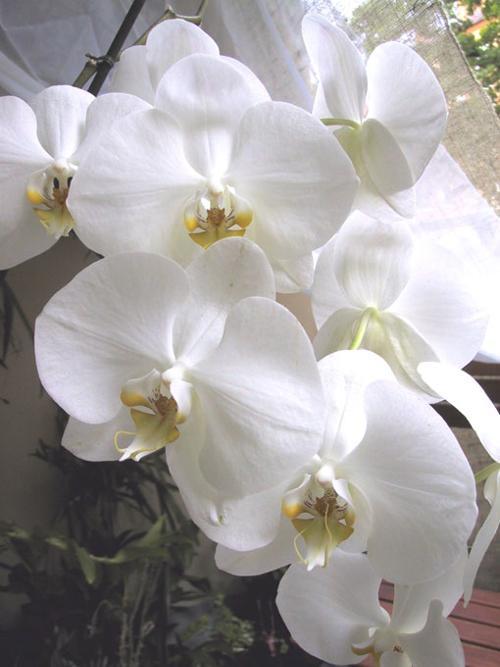
Moon Orchid
Phalaenopsis amabilis
Elegant epiphytic orchid with graceful arching sprays of pristine white moth-lik...
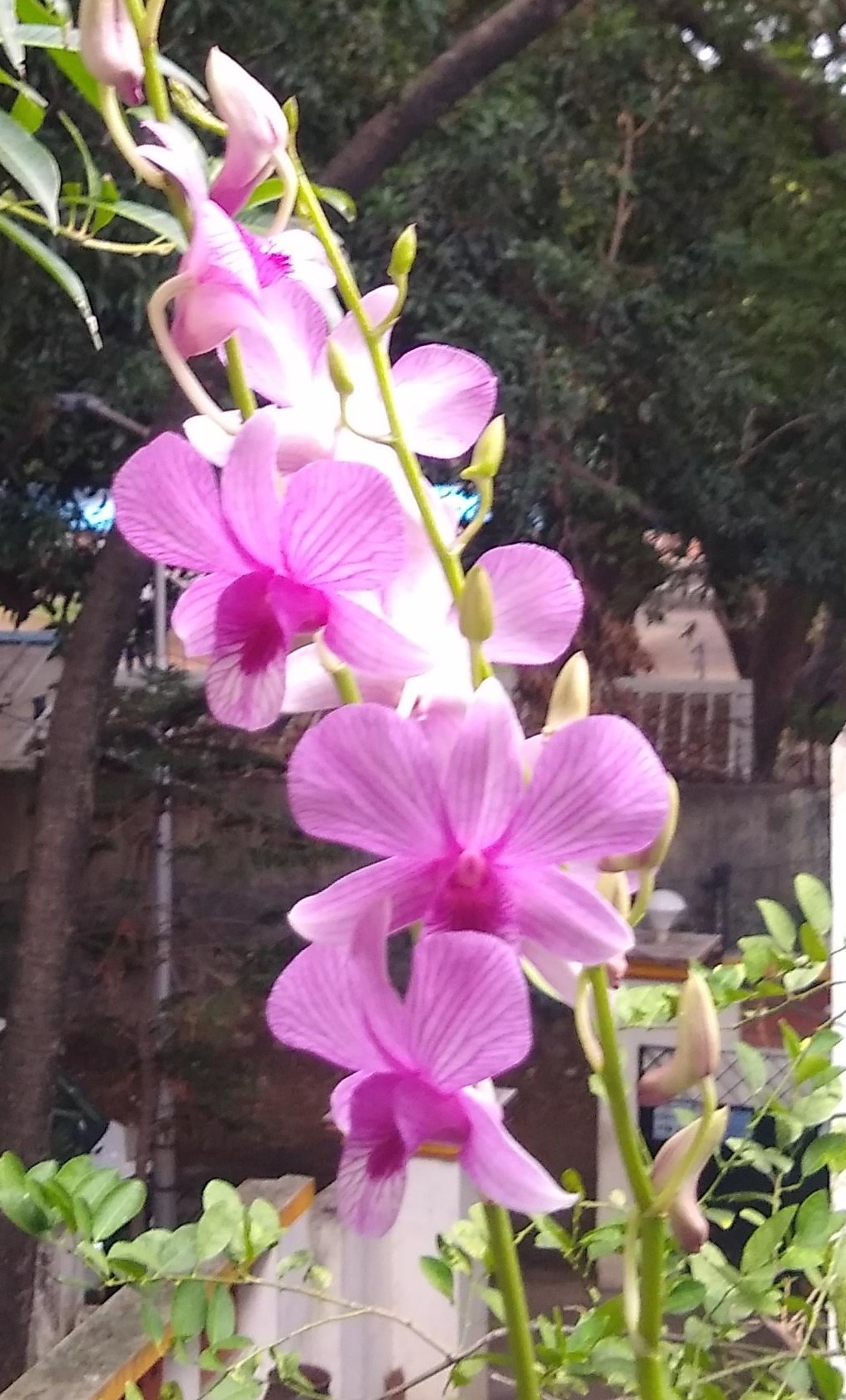
Dendrobium Orchid
Dendrobium
Diverse and popular orchid genus featuring elegant sprays of flowers along cane-...
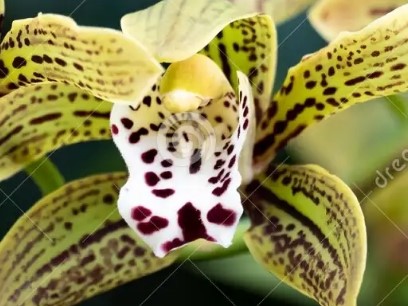
Boat Orchid
Cymbidium
Elegant orchid featuring graceful arching sprays of waxy flowers with distinctiv...
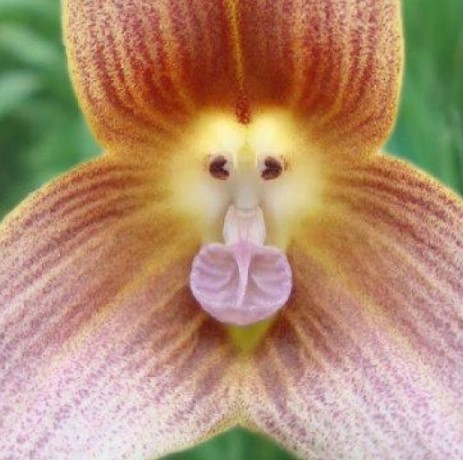
Monkey Orchid
Dracula simia
Extraordinary orchid featuring flowers with an uncanny resemblance to a monkey's...
Similar Characteristics
4Monkey Orchid
Dracula simia
Extraordinary orchid featuring flowers with an uncanny resemblance to a monkey's...
Dendrobium Orchid
Dendrobium
Diverse and popular orchid genus featuring elegant sprays of flowers along cane-...
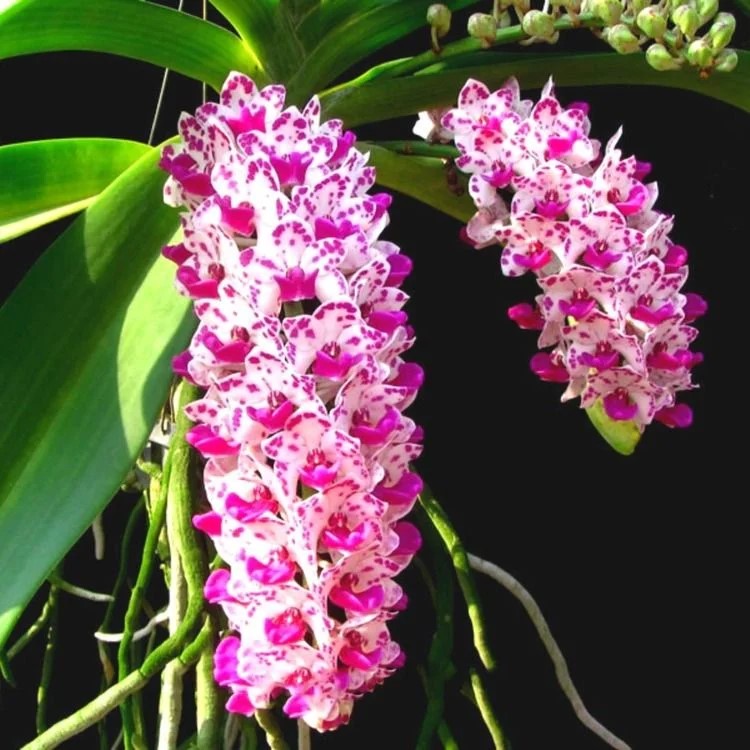
Fox Tail Orchid
Rhynchostylis
Striking epiphytic orchid with dense, cylindrical flower spikes resembling a fox...
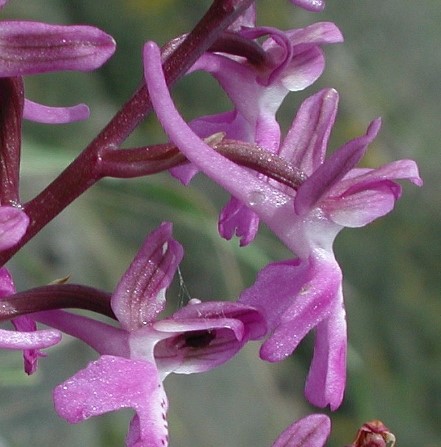
Orchis Orchid
Orchis
Classic terrestrial orchid featuring dense spikes of hooded flowers in shades of...