
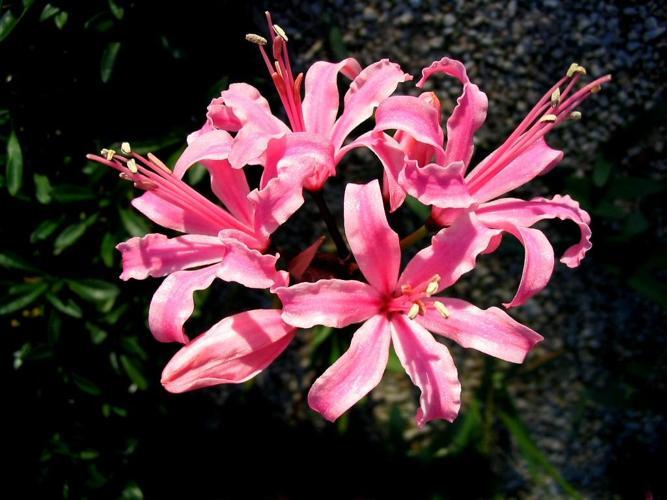
Cape Flower
Lycoris radiata
Basic Details
Floral Formula & Features
Ebracteate (no bracts), radially symmetrical (actinomorphic), bisexual, 6 tepals in 2 whorls of 3 (perianth, no distinction between sepals and petals), 6 free stamens, 3 fused carpels with inferior ovary
- Name 'Lycoris' honors Roman actress and mistress of Mark Antony. 'Radiata' means 'rayed' or 'radiating,' describing flower form. 'Higanbana' (彼岸花) means 'flower of the other shore' in Japanese, referencing Buddhist afterlife. 'Spider Lily' describes long, curved, spider-leg-like petals and stamens
- Flowers 2-2.5 inches (5-6 cm) across with 6 narrow, wavy, reflexed petals curving backward and 6 long stamens extending 2-3 inches beyond petals. Vivid red is most common; also pink, white, and yellow varieties. 4-7 flowers per umbel atop leafless stalk
- Bulbous perennial with unique growth cycle: flowers appear on naked stalks in late summer/early fall (August-October), then die back. Strap-like leaves emerge in fall after flowering, remain evergreen through winter, die back in late spring. Blooms often triggered by heavy rainfall
- Flower stalks grow 12-24 inches (30-60 cm) tall. Leaves 12-18 inches long. Lifespan of many years from bulbs. Propagated by dividing bulb offsets in late summer after flowering (rarely sets viable seed, most cultivated plants are sterile triploids)
- Native to China, Japan, Korea, and Nepal. Found wild on shady slopes, stream banks, and moist woodland edges. Widely cultivated in East Asia, naturalized in southern United States (zones 7-10)
- Prefers partial shade to full sun with at least 4-6 hours of sunlight. Thrives in moist, well-drained soil during growing season. Tolerates summer drought when dormant. Plant bulbs 4-6 inches deep in late summer. Hardy zones 7-10
- All parts highly toxic, especially bulbs containing lycorine and other alkaloids—causes vomiting, diarrhea, convulsions if ingested. Planted around rice fields to deter rodents. Attracts butterflies. Deer resistant. Important in Japanese culture and Buddhist traditions. Used medicinally in small doses (professional use only)
Names in Different Languages
What is Floral Formula?
A floral formula is a symbolic representation of a flower's structure using letters, numbers, and special symbols. It provides a concise way to describe the arrangement and number of floral parts.
This formula describes the flower's symmetry, sepals, petals, stamens, and carpels in a standardized format.
Formula Sequence
- Bract: Br or Ebr
- Bracteole: Brl or Ebrl
- Symmetry: % (Radial) or ⊕ (Bilateral)
- Sex: ♀ (Female), ♂ (Male), or ⚥ (Bisexual)
- Calyx/Sepal: K<number> (Free or Fused)
- Corolla/Petal: C<number> (Free or Fused)
- Androecium: A<number> (Free or Fused)
- Gynaecium: G<number> (Superior or Inferior Ovary)
Symbol Meanings
- Numbers: Indicate quantity of parts
- Parentheses (): Parts are fused together
- Plus (+): Parts in different whorls
- Underline: Superior ovary position
- Overline: Inferior ovary position
- ∞: Numerous parts (too many to count)
Understanding floral formulas helps botanists quickly identify and classify flowers based on their structural characteristics.
Similar Flowers
Discover flowers that share botanical characteristics
Same Family
3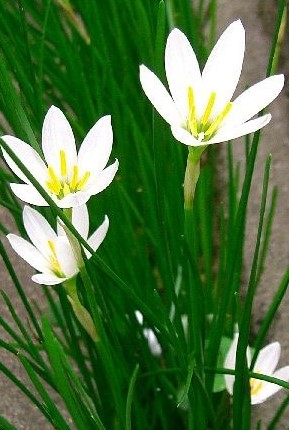
Zephyr Lily
Zephyranthes
They belong to Amaryllis family. All plants from this family grow from bulbs, ha...
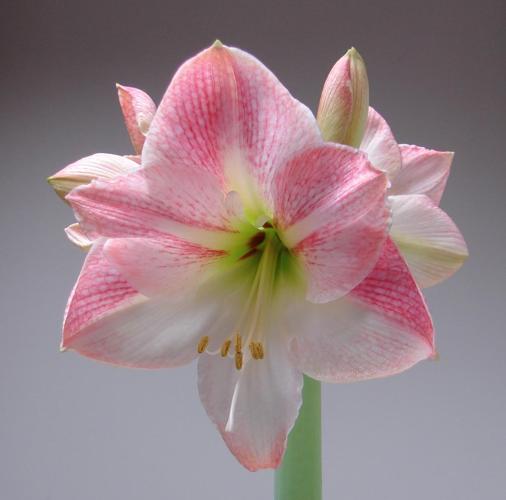
Amaryllis
Hippeastrum
Spectacular bulbous plant producing 2-6 large, trumpet-shaped flowers per stalk ...
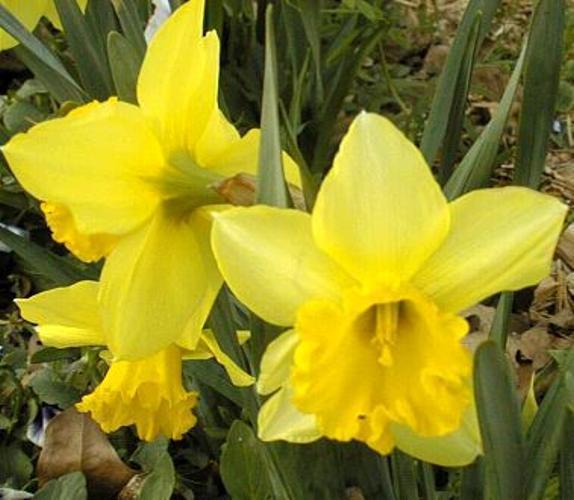
Daffodil
Narcissus pseudonarcissus
Beloved spring bulb featuring cheerful blooms with six petal-like tepals surroun...
Similar Characteristics
4Daffodil
Narcissus pseudonarcissus
Beloved spring bulb featuring cheerful blooms with six petal-like tepals surroun...
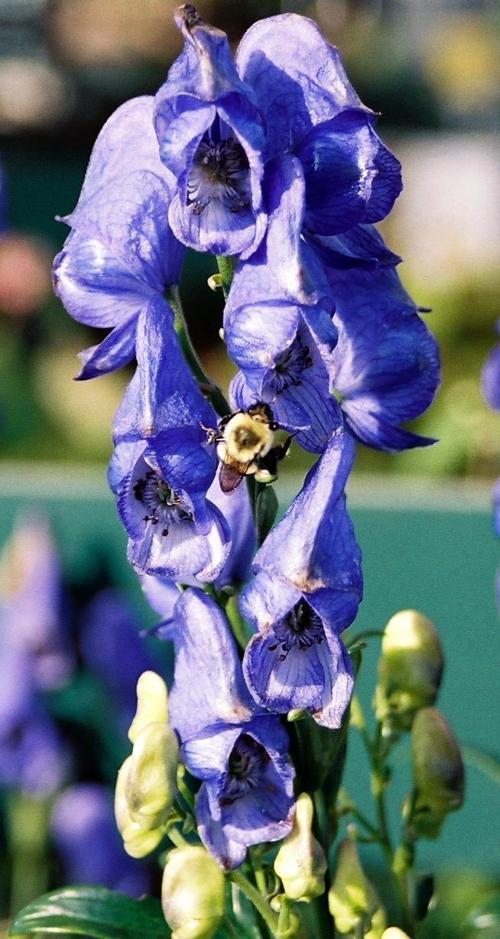
Monkshood
Aconitum napellus
Strikingly beautiful but DEADLY POISONOUS perennial with distinctive helmet or h...
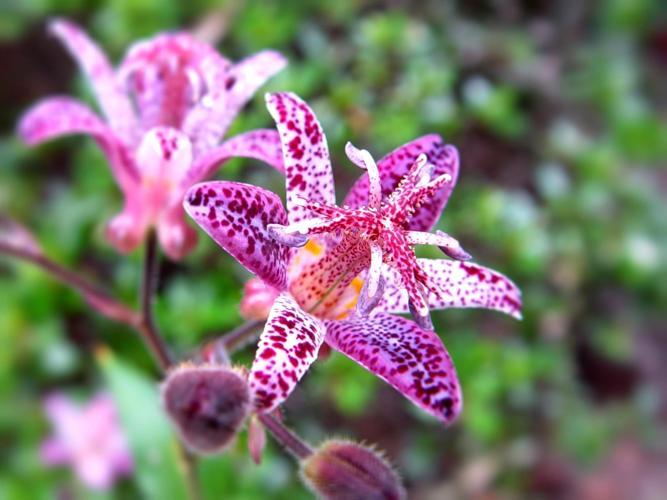
Toad Lily
Tricyrtis
Exotic shade-loving perennial featuring intricate, orchid-like flowers covered i...
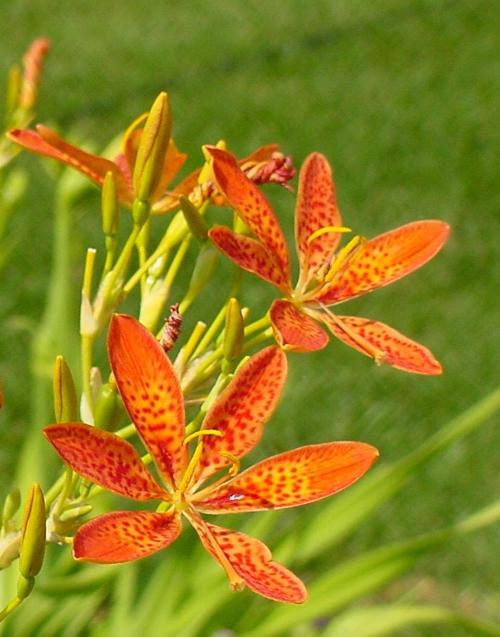
Leopard Lily
Iris domestica (syn. Belamcanda chinensis)
Striking perennial featuring exotic, star-shaped flowers in brilliant orange-red...