
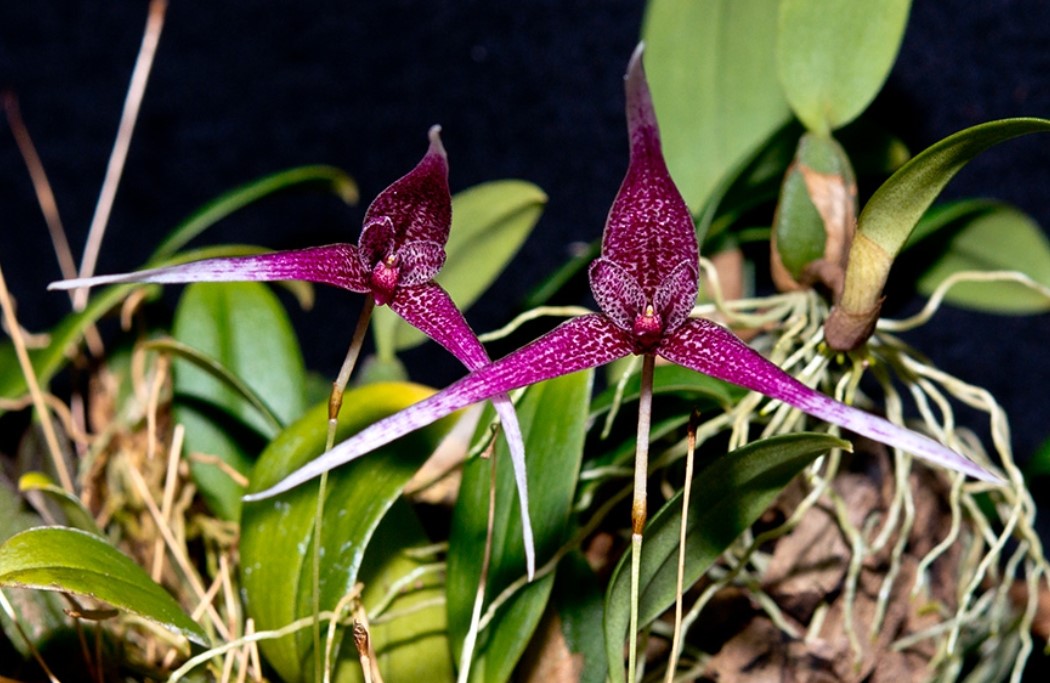
Bulbophyllum Orchid
Bulbophyllum
Basic Details
Floral Formula & Features
Bilaterally symmetrical, bisexual, 6 tepals in 2 whorls of 3 (3 sepals + 3 petals with one modified into lip), 1 stamen fused with style forming column, 3 fused carpels with inferior ovary typical of Orchidaceae
- Name 'Bulbophyllum' derives from Greek 'bolbos' (bulb) and 'phyllon' (leaf), referring to the pseudobulbs that appear to grow directly from leaves. Largest orchid genus with over 2,000 species, representing incredible diversity in form and habitat
- Flowers exhibit extraordinary variety: some have fringed or hairy petals, others feature umbrella-like arrangements, many have hinged lips that rock in the breeze. Colors range from red, yellow, purple, white to brown, often with intricate spotting or striping
- Epiphytic perennial that grows from creeping rhizomes with pseudobulbs spaced along the rhizome. Blooms vary by species from spring through fall. Some species bloom sequentially over months, others produce single flushes of flowers
- Size varies dramatically: miniature species grow under 2 inches (5 cm) total height, while large species can reach 12 inches (30 cm). Individual flowers range from 2mm to 15 inches across. Lifespan of 10-20 years. Propagated by division of rhizomes
- Native to tropical and subtropical regions worldwide, with highest diversity in Southeast Asia, New Guinea, Madagascar, and tropical Africa. Found growing on trees in rainforests from sea level to cloud forests at 3,000 meters elevation
- Requirements vary by species: most prefer bright indirect light, high humidity (60-80%), and warm to intermediate temperatures (60-85°F/15-29°C). Need excellent air circulation and well-draining orchid mix or mounted on bark
- Many species use deceptive pollination, mimicking carrion or fungus to attract flies. Some have mobile lips triggered by landing insects. Popular among orchid collectors for their bizarre beauty and compact size ideal for terrariums
Names in Different Languages
What is Floral Formula?
A floral formula is a symbolic representation of a flower's structure using letters, numbers, and special symbols. It provides a concise way to describe the arrangement and number of floral parts.
This formula describes the flower's symmetry, sepals, petals, stamens, and carpels in a standardized format.
Formula Sequence
- Bract: Br or Ebr
- Bracteole: Brl or Ebrl
- Symmetry: % (Radial) or ⊕ (Bilateral)
- Sex: ♀ (Female), ♂ (Male), or ⚥ (Bisexual)
- Calyx/Sepal: K<number> (Free or Fused)
- Corolla/Petal: C<number> (Free or Fused)
- Androecium: A<number> (Free or Fused)
- Gynaecium: G<number> (Superior or Inferior Ovary)
Symbol Meanings
- Numbers: Indicate quantity of parts
- Parentheses (): Parts are fused together
- Plus (+): Parts in different whorls
- Underline: Superior ovary position
- Overline: Inferior ovary position
- ∞: Numerous parts (too many to count)
Understanding floral formulas helps botanists quickly identify and classify flowers based on their structural characteristics.
Similar Flowers
Discover flowers that share botanical characteristics
Same Family
4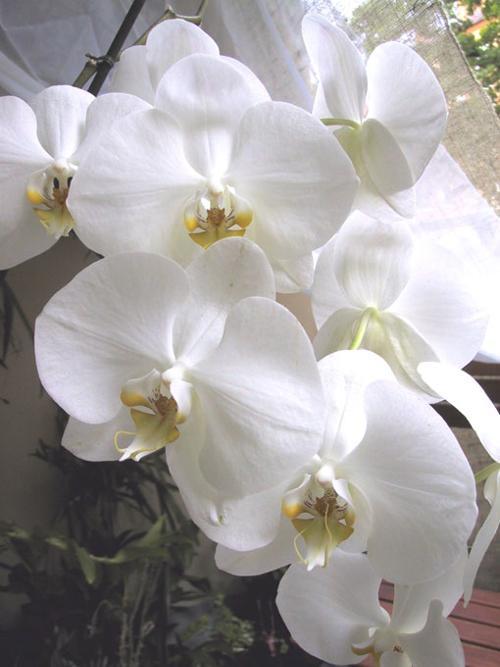
Moon Orchid
Phalaenopsis amabilis
Elegant epiphytic orchid with graceful arching sprays of pristine white moth-lik...
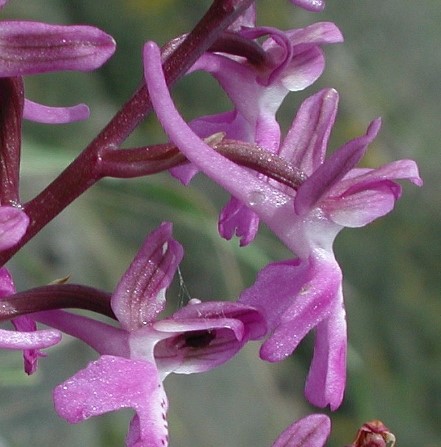
Orchis Orchid
Orchis
Classic terrestrial orchid featuring dense spikes of hooded flowers in shades of...
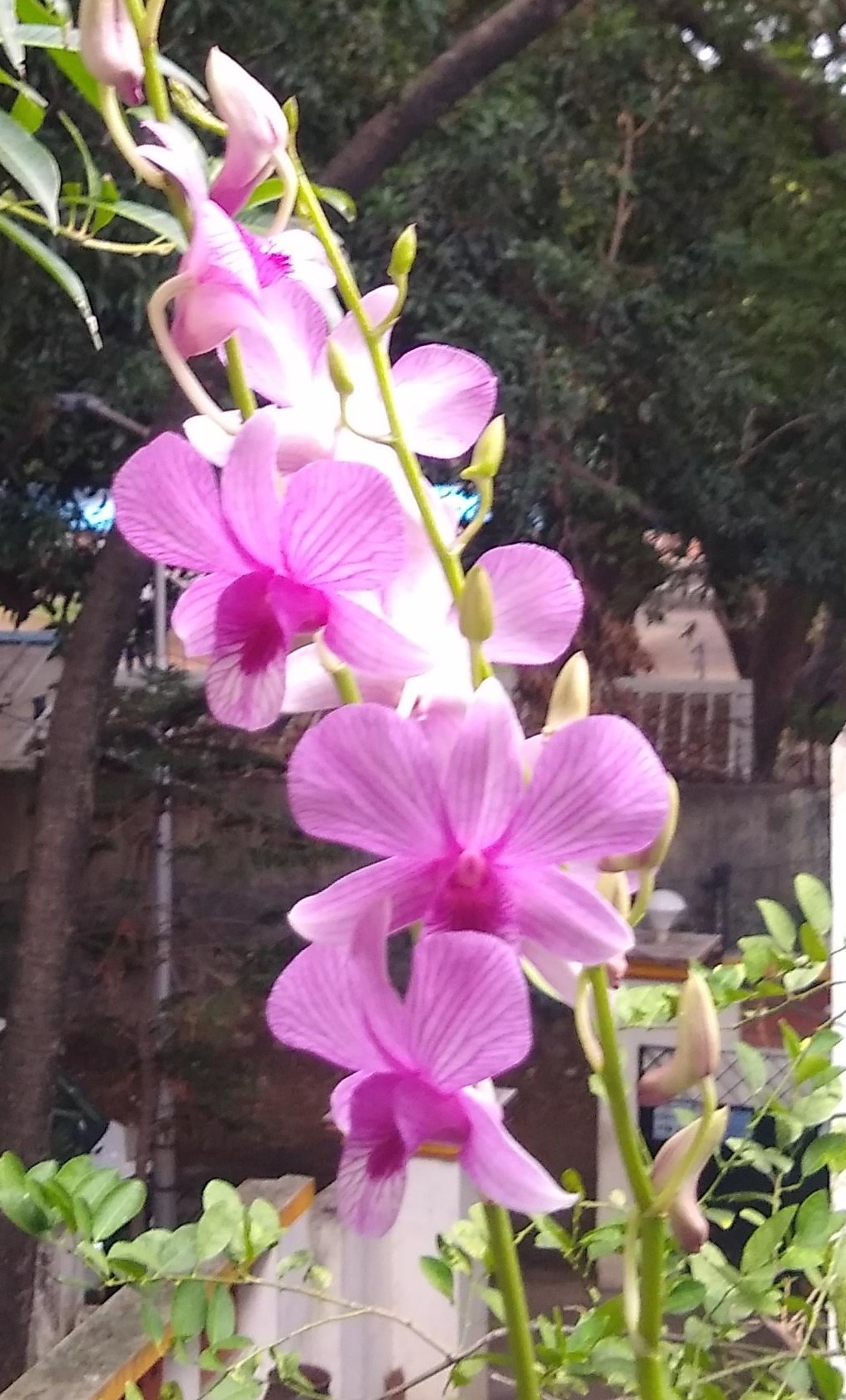
Dendrobium Orchid
Dendrobium
Diverse and popular orchid genus featuring elegant sprays of flowers along cane-...
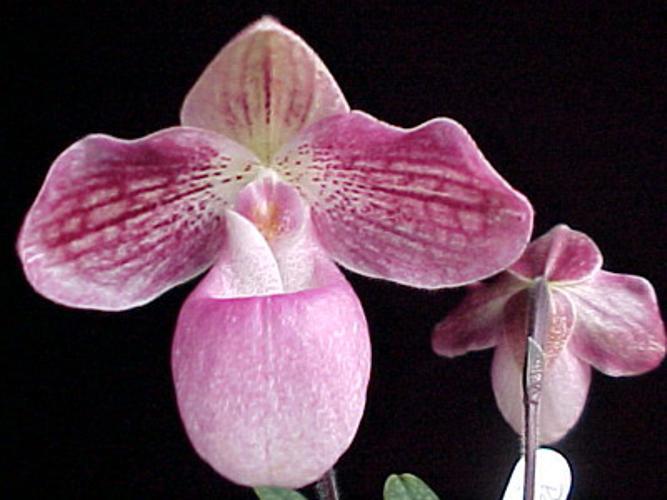
Silver Slipper Orchid
Paphiopedilum micranthum
Rare and critically endangered orchid with distinctive slipper-shaped pink pouch...
Similar Characteristics
4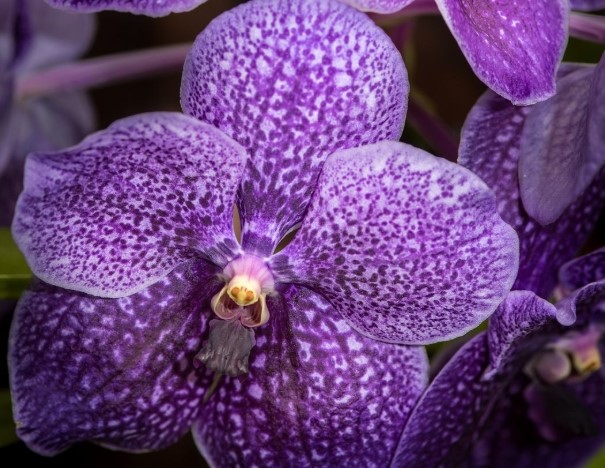
Vanda Orchid
Vanda
Spectacular tropical orchid renowned for large, flat-faced flowers in vibrant sh...
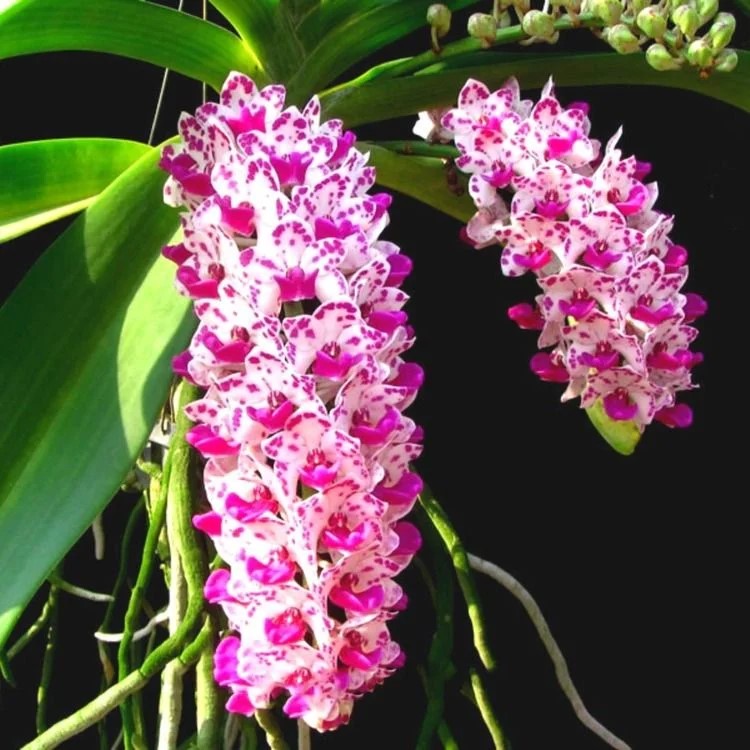
Fox Tail Orchid
Rhynchostylis
Striking epiphytic orchid with dense, cylindrical flower spikes resembling a fox...
Silver Slipper Orchid
Paphiopedilum micranthum
Rare and critically endangered orchid with distinctive slipper-shaped pink pouch...
Dendrobium Orchid
Dendrobium
Diverse and popular orchid genus featuring elegant sprays of flowers along cane-...