 Actual Plant Specimen
Is Haworthia (Zebra Plant) Safe for Cats & Dogs? Safe vs. Aloe Vera Guide
Haworthiopsis attenuata • Also called: Zebra Cactus, Pearl Plant
All botanical parts of Haworthia (Haworthiopsis attenuata) are verified non-toxic and safe around both cats and dogs.
- Compact, slow-growing rosette succulent (typically 3–6 inches wide) that fits in the palm of your hand.
- Dark green triangular leaves banded with raised, bumpy white pearly stripes or tubercles (Zebra Plant).
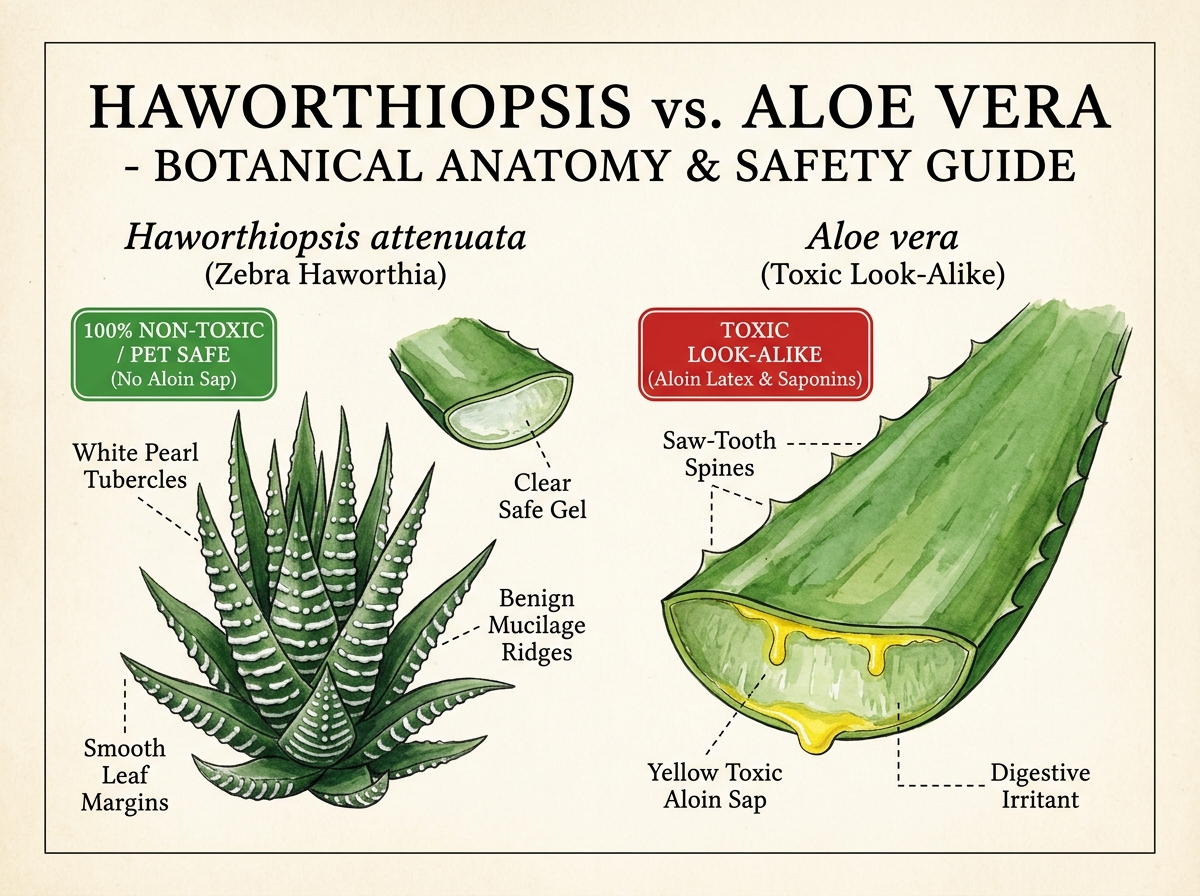
- Leaf margins lack the sharp saw-tooth spines and bitter yellow sap of Aloe vera.
Haworthia Plant-Part Identification & Toxicity Map
Every part of Haworthia (Haworthiopsis attenuata) marked out as Toxic, Mild Irritant, or Non-Toxic for cats and dogs.
Fleshy White-Striped Rosette Leaves
Completely free of saponins and anthraquinone latex; safe if a cat or dog nibbles the leaf tips.
Wiry Flower Stalk & Small White Tubular Blooms
Long, thin inflorescence stems and small white-green flowers are non-toxic to pets.
Short Central Crown & Offsets ("Pups")
Baby plant offsets knocked out of the pot are non-toxic (only watch for choking if swallowed whole by a dog).
Succulent Roots & Potting Grit
Roots are non-toxic, though swallowing coarse cactus soil/perlite/pumice pebbles can irritate the stomach.
Which Haworthia Species Do You Have? (Separate Visual Guide)
Different plants called or confused with Haworthia have vastly different toxicity levels. Compare the separate species images and anatomical markers below:
EnlargeZebra Haworthia / Window Haworthia
Haworthiopsis attenuata / Haworthiopsis fasciata / Haworthia cooperi
- Raised horizontal white pearl-like bumps/stripes across dark green leaves (or translucent leaf-tip "windows" in H. cooperi)
- Small, tight tabletop rosette (3–5 inches across)
- Broken leaf shows only clear, odorless water-storage gel with zero yellow rind sap
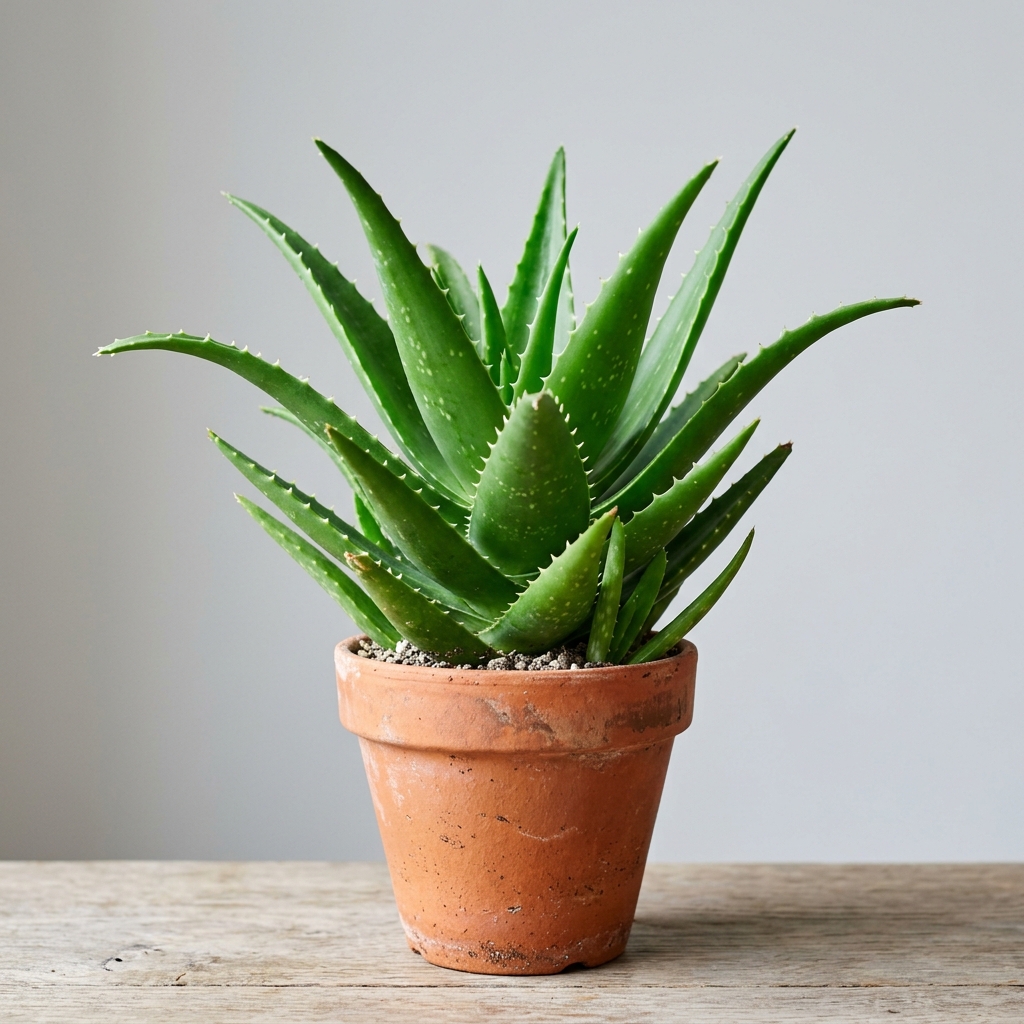 Enlarge
Aloe Vera (Toxic Succulent Look-Alike!)
Aloe barbadensis miller (Aloe vera)
- Much larger, plump, smooth gray-green leaves (8–24 inches long) with pale spots only on young plants
- Sharp, pink-tipped saw-tooth spines along the leaf edges (no raised horizontal white bands)
- Oozes bitter yellow latex (aloin) from just beneath the green outer skin when cut
Non-Toxic Plant Owner’s Practical Guide (Haworthia)
Why Did My Cat Still Vomit After Eating Haworthia?
Even though Haworthia contains zero chemical toxins, cats and dogs lack the cellulase enzyme needed to digest raw plant fibers. Swallowing whole leaves or fibrous stems often triggers a harmless, one-time mechanical regurgitation (just like eating lawn grass).
Hidden Nursery Hazards: Pesticides, Fertilizers & Potting Soil
Newly purchased store pots often contain slow-release fertilizer beads (Osmocote), perlite, or systemic neonicotinoid insecticides. Never let pets chew potting soil or drink water from drainage saucers.
Post-Ingestion Timeline
Veterinary Contraindication Warning — What NOT To Do
🚫 NEVER give hydrogen peroxide, salt, or home emetics to induce vomiting in a cat—3% hydrogen peroxide causes severe, potentially fatal stomach and esophageal ulceration in felines. Only a veterinarian can safely administer feline emetics.
Home Care & First Aid Protocol
Non-toxic to cats.
When to still call a vet: If your pet swallowed a large woody stem/root ball (choking or foreign body risk), ingested potting soil fertilizer, or if you suspect the plant matches one of the toxic look-alike species shown above.
In-Depth Botanical & Veterinary Safety Analysis
Scientific evaluation and toxicological breakdown of Haworthia (Haworthiopsis attenuata)
Specific Pet Safety FAQs for Haworthia
Is Haworthia safe for cats?
Yes, Haworthia succulents are completely non-toxic to cats. They are safe to chew and touch.
Is Haworthia safe for dogs?
Yes, Haworthia is 100% safe for dogs. It contains no toxic saps or chemicals.
How do I tell Haworthia apart from Aloe Vera?
Haworthia is much smaller, has prominent white horizontal ridges (zebra stripes), and lacks the toxic yellow latex found in Aloe Vera.
What happens if my cat knocks over a Haworthia?
The plant may be damaged, but your cat is completely safe from chemical toxicity. Repot the succulent and monitor for minor stress.
What are other pet-safe succulents?
Echeveria, Sempervivum (Hens and Chicks), and Christmas Cactus are all completely safe succulent options.
20 Dangerous Garden Plants: Cat Toxicity & Safety Guide
Felines are highly sensitive to houseplants and flowers. Learn which 20 common species cause severe or fatal reactions in cats, including lilies, and discover safe, cat-friendly garden alternatives.
🛡️ Discover Related Plant Safety Guides
Explore visually similar or related plants and their pet safety profiles: