
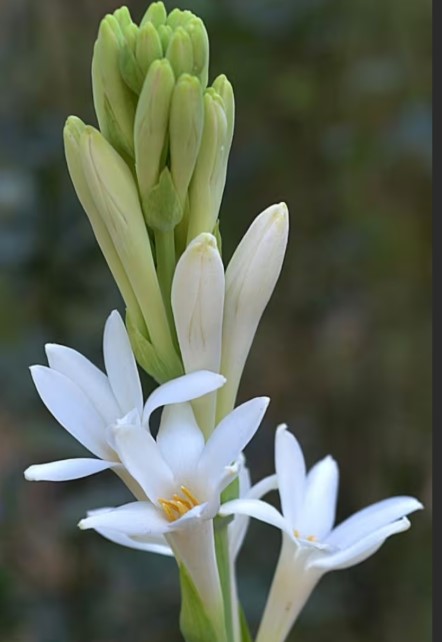
Tuberose Rajinigandha
Polianthes tuberosa
Basic Details
Floral Formula & Features
Radially symmetrical, bisexual, 6 fused tepals in 2 whorls of 3 forming tubular perianth, 6 free stamens, 3 fused carpels with superior ovary typical of Asparagaceae subfamily Agavoideae
- Name 'Polianthes' derives from Greek 'polios' (white/gray) and 'anthos' (flower). 'Tuberosa' refers to tuberous roots. 'Rajnigandha' (रजनीगन्धा) means 'fragrance of the night' in Sanskrit, as flowers release strongest scent after sunset
- Waxy, tubular flowers with six petals arranged in a funnel shape, appearing in pairs along tall spikes. Single varieties have one row of petals; double varieties (Mexican tuberose) have multiple rows creating fuller blooms. Each spike bears 12-45 flowers opening sequentially from bottom to top
- Herbaceous perennial growing from underground tubers (rhizomes). Blooms in summer (July-September) with flowers that are most fragrant at night to attract moth pollinators. After flowering, plant dies back and tubers multiply underground
- Flower spikes grow 2-4 feet (60-120 cm) tall with grass-like basal leaves. Individual flowers measure 1.5-2.5 inches long. Tubers are 1-2 inches in diameter. Lifespan of tubers is 2-3 years. Propagated by division of tubers or offsets
- Native to Mexico, particularly central highlands. Now widely cultivated in India (major commercial producer), Egypt, Morocco, southern France, and tropical regions worldwide. Grows naturally in warm, sunny areas with well-drained soil
- Requires full sun (6-8 hours daily) and warm temperatures (70-85°F/21-29°C). Needs well-draining, fertile soil and regular watering during growth. Plant tubers in spring after frost danger passes. Not cold-hardy; tubers must be lifted in cold climates
- One of the most important flowers in perfume industry, yielding tuberose absolute used in high-end fragrances. Essential oil used in aromatherapy. Flowers sacred in Hindu and Buddhist ceremonies. Cut flowers last 7-10 days and perfume entire rooms
Names in Different Languages
What is Floral Formula?
A floral formula is a symbolic representation of a flower's structure using letters, numbers, and special symbols. It provides a concise way to describe the arrangement and number of floral parts.
This formula describes the flower's symmetry, sepals, petals, stamens, and carpels in a standardized format.
Formula Sequence
- Bract: Br or Ebr
- Bracteole: Brl or Ebrl
- Symmetry: % (Radial) or ⊕ (Bilateral)
- Sex: ♀ (Female), ♂ (Male), or ⚥ (Bisexual)
- Calyx/Sepal: K<number> (Free or Fused)
- Corolla/Petal: C<number> (Free or Fused)
- Androecium: A<number> (Free or Fused)
- Gynaecium: G<number> (Superior or Inferior Ovary)
Symbol Meanings
- Numbers: Indicate quantity of parts
- Parentheses (): Parts are fused together
- Plus (+): Parts in different whorls
- Underline: Superior ovary position
- Overline: Inferior ovary position
- ∞: Numerous parts (too many to count)
Understanding floral formulas helps botanists quickly identify and classify flowers based on their structural characteristics.
Similar Flowers
Discover flowers that share botanical characteristics
Same Family
1
Similar Characteristics
4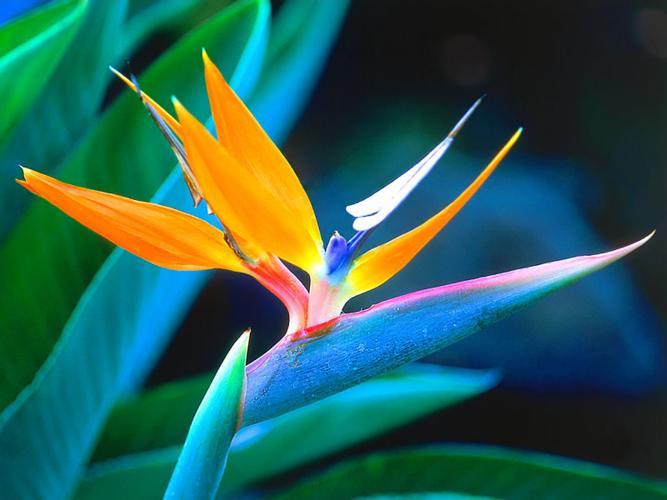
Bird of Paradise
Strelitzia reginae
Spectacular tropical perennial featuring exotic flowers that resemble a brightly...
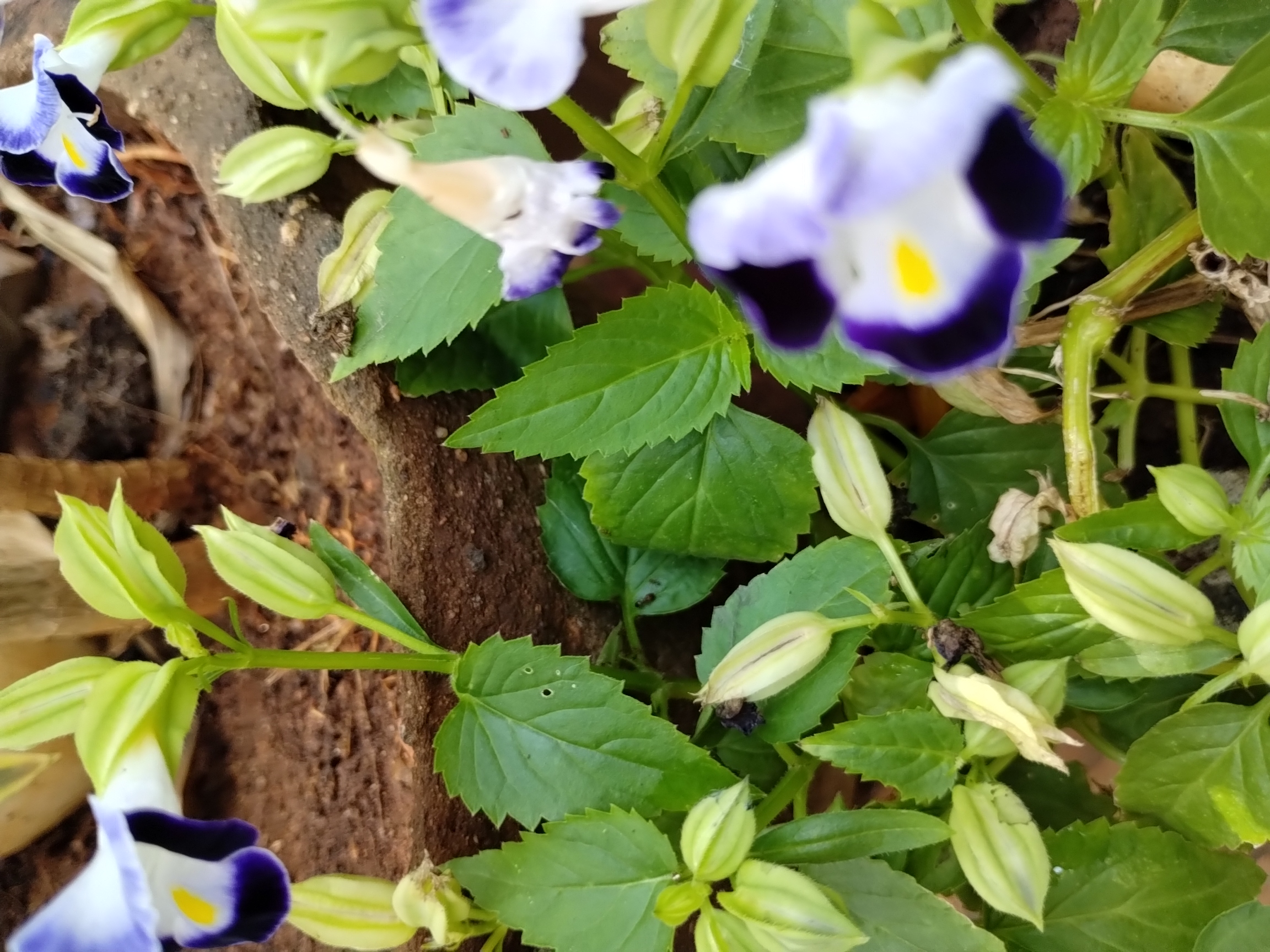
Bluewings
Torenia fournieri
Charming shade-loving annual featuring small trumpet-shaped flowers with distinc...
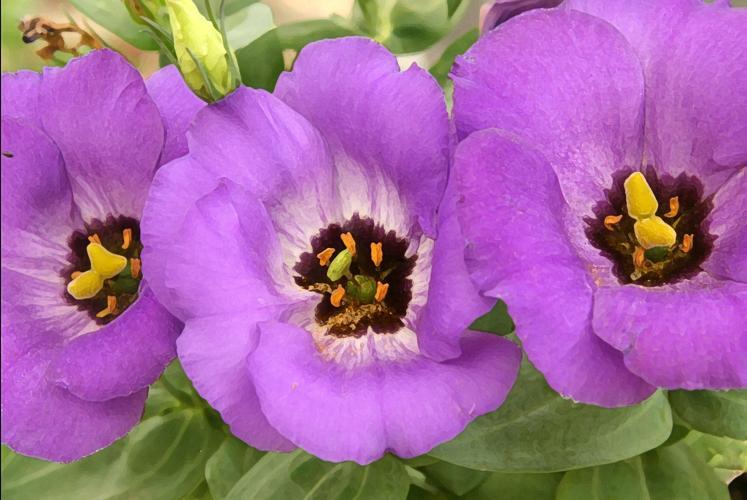
Bolero Deepblue
Eustoma , Eustoma russellianum, Prairie Gentian, Lisianthus, Bluebell
Elegant cut flower featuring exquisite rose-like blooms in deep purple-blue shad...
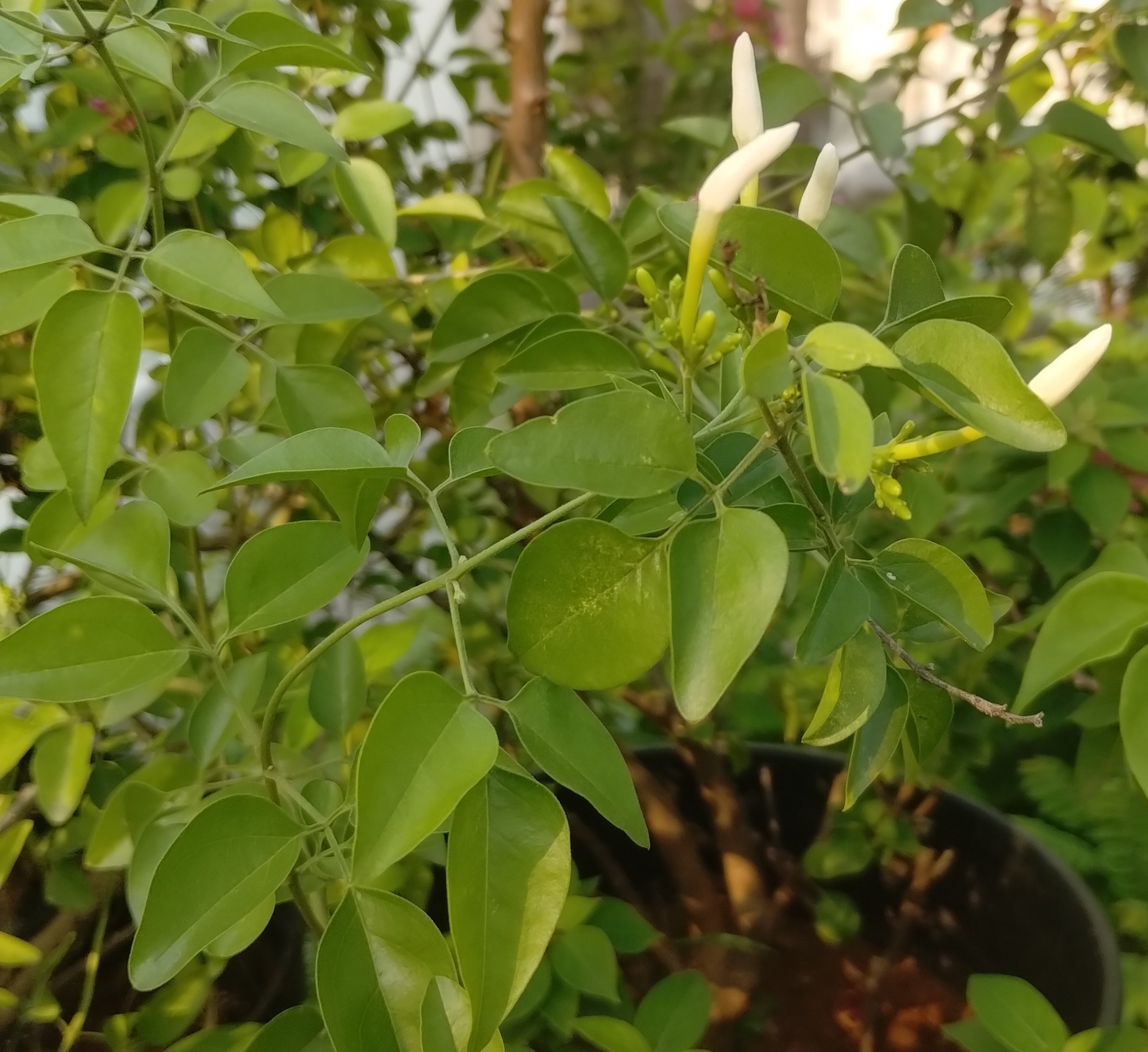
River Jasmine (Fluminense)
Jasminum fluminense
Vigorous evergreen climbing vine producing clusters of small, white, star-shaped...