
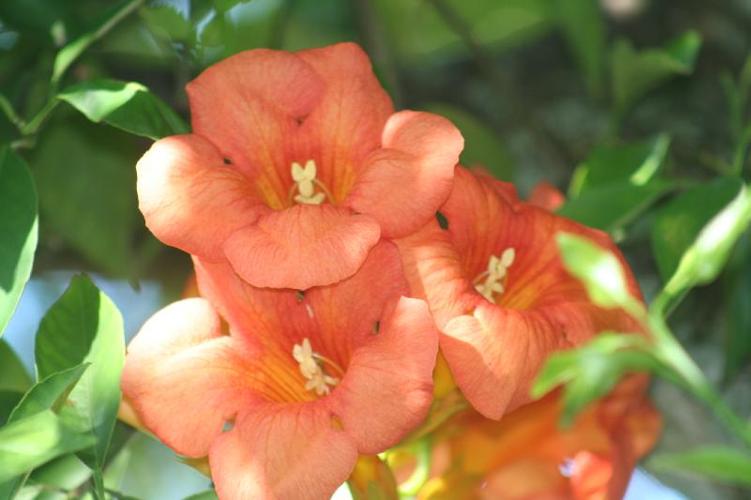
Trumpet Vine
Campsis radicans
Basic Details
Floral Formula & Features
Ebracteate (no bracts), Zygomorphic (bilaterally symmetrical), bisexual, 5 fused sepals, 5 fused petals forming trumpet shape, 4 stamens (didynamous - 2 long, 2 short), 2 fused carpels with superior ovary
- Name 'Trumpet' refers to the distinctive trumpet or funnel-shaped flowers. 'Campsis' comes from Greek 'kampsis' meaning bending or curving, referring to curved stamens. 'Radicans' means rooting in Latin, describing the aerial rootlets that allow it to climb
- Showy trumpet-shaped flowers 3-3.5 inches (8-9 cm) long in clusters of 2-8 blooms. Colors range from orange to red, sometimes yellow in cultivars. Flowers have five pointed lobes and bloom continuously June through September, attracting hummingbirds and butterflies
- Deciduous woody vine that climbs by aerial rootlets clinging to surfaces. Compound leaves with 7-11 serrated leaflets turn yellow in fall. Bean-like seed pods 3-5 inches (8-13 cm) long split open to release winged seeds
- Grows 30-40 feet (9-12 meters) tall and equally wide if not controlled. Lifespan of 50+ years. Propagated by seeds, cuttings, or suckers. Extremely fast-growing, can cover large areas in one season
- Native to eastern and central North America from New Jersey and Indiana south to Florida and west to Texas. Naturalized in many northern states. Thrives in various habitats from woodlands to roadsides
- Extremely adaptable - grows in full sun to part shade (best flowering in full sun). Tolerates wide range of soils including sandy, loamy, and clay. Drought-tolerant once established. Hardy USDA zones 4-10, surviving to -30°F (-34°C)
- Major hummingbird attractor, especially Ruby-throated Hummingbirds. Also attracts butterflies and bees. Birds nest in dense foliage. Contact with leaves can cause skin redness and itching (cow-itch vine), and plant is slightly toxic if ingested
- Requires robust support due to weight and vigor. Needs aggressive pruning in late winter/early spring to control spread and maintain shape. Spreads by underground runners forming dense colonies. Can damage wood, stone, and brick with rootlets. Considered invasive in some regions
Names in Different Languages
What is Floral Formula?
A floral formula is a symbolic representation of a flower's structure using letters, numbers, and special symbols. It provides a concise way to describe the arrangement and number of floral parts.
This formula describes the flower's symmetry, sepals, petals, stamens, and carpels in a standardized format.
Formula Sequence
- Bract: Br or Ebr
- Bracteole: Brl or Ebrl
- Symmetry: % (Radial) or ⊕ (Bilateral)
- Sex: ♀ (Female), ♂ (Male), or ⚥ (Bisexual)
- Calyx/Sepal: K<number> (Free or Fused)
- Corolla/Petal: C<number> (Free or Fused)
- Androecium: A<number> (Free or Fused)
- Gynaecium: G<number> (Superior or Inferior Ovary)
Symbol Meanings
- Numbers: Indicate quantity of parts
- Parentheses (): Parts are fused together
- Plus (+): Parts in different whorls
- Underline: Superior ovary position
- Overline: Inferior ovary position
- ∞: Numerous parts (too many to count)
Understanding floral formulas helps botanists quickly identify and classify flowers based on their structural characteristics.
Similar Flowers
Discover flowers that share botanical characteristics
Same Family
1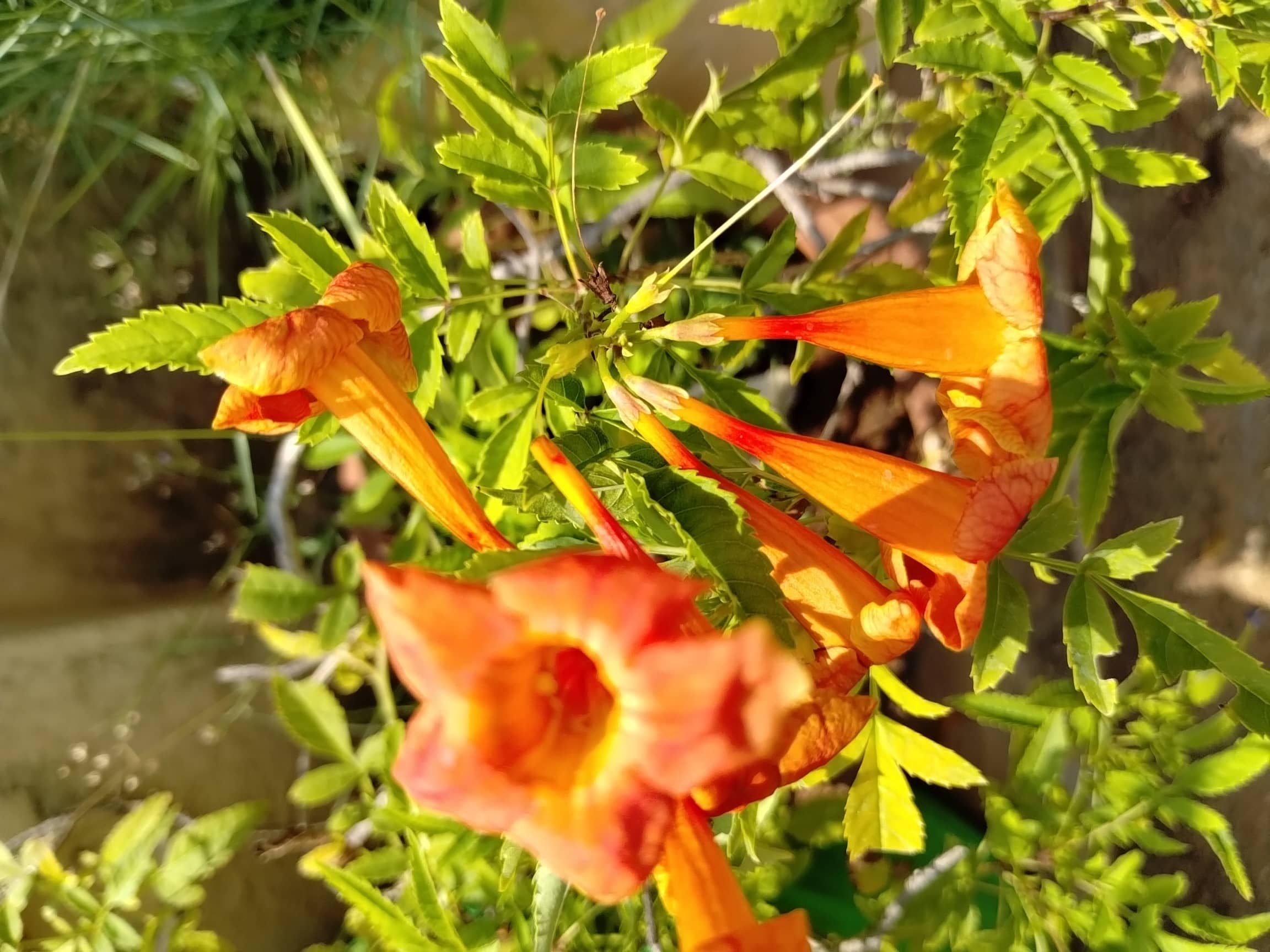
Similar Characteristics
4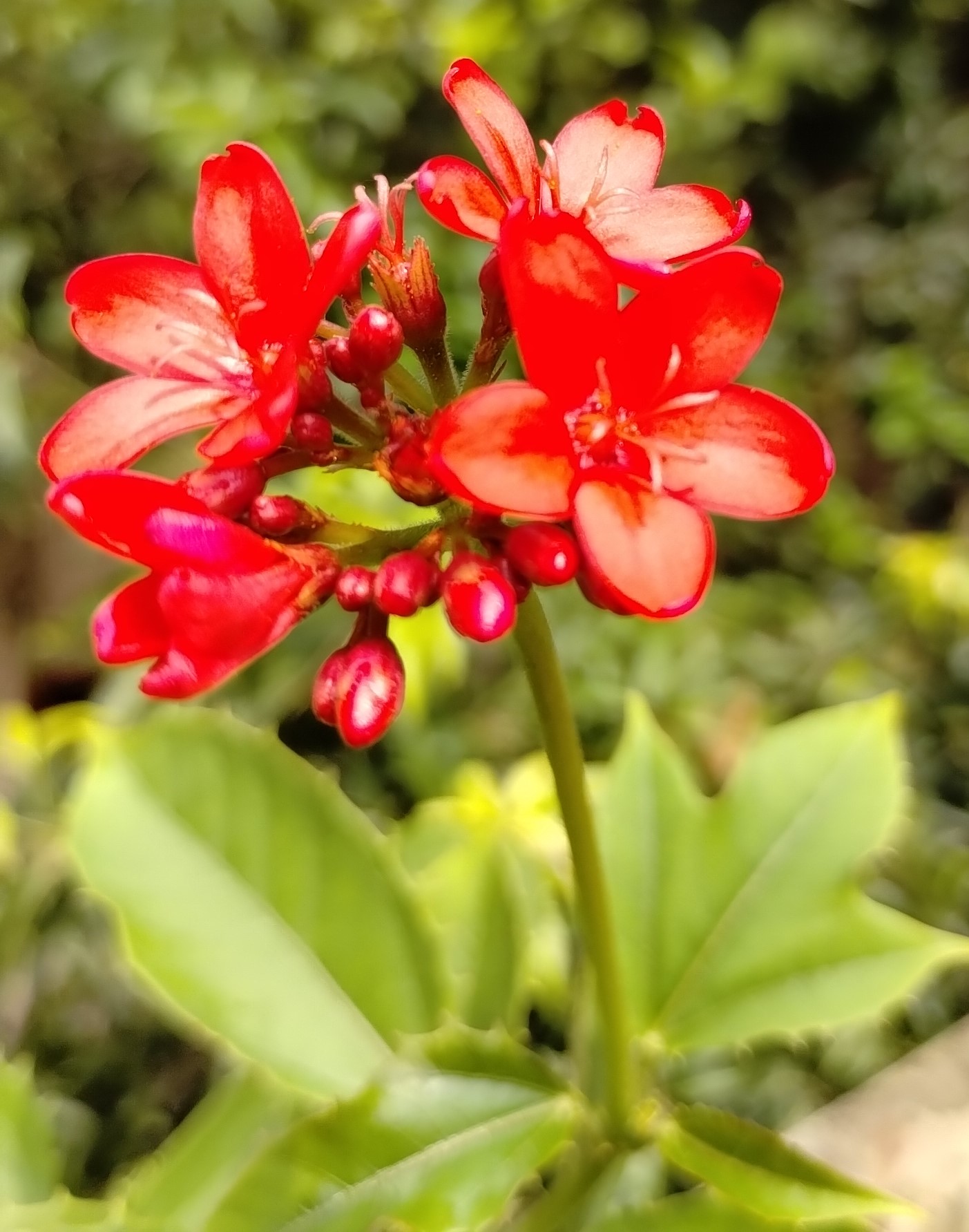
Jatropha
Jatropha Curcas
Versatile tropical shrub featuring clusters of small, star-shaped flowers in vib...
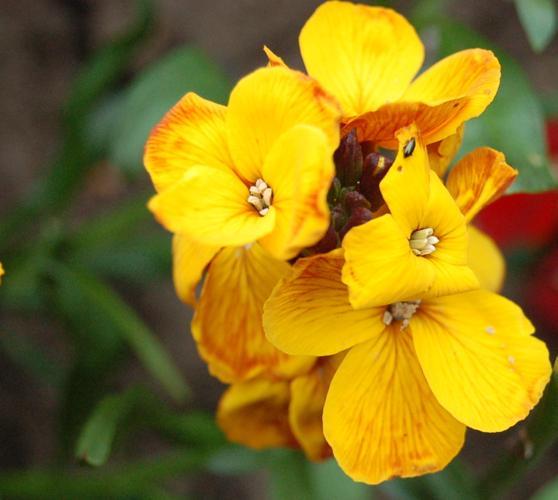
Wallflower
Erysimum cheiri
Charming old-fashioned biennial or short-lived perennial treasured for its inten...
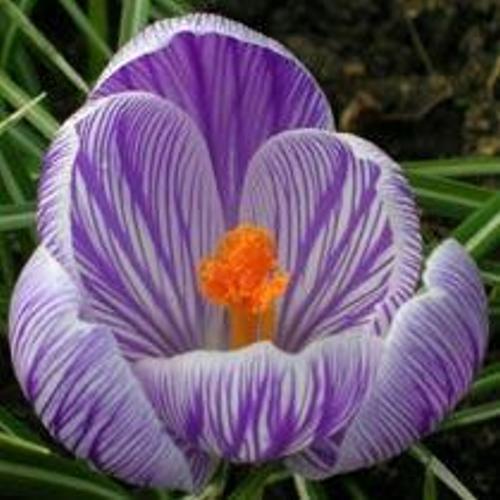
Spring Crocus
Crocus vernus
Cheerful early spring bulb that blooms while snow still on ground. Cup-shaped fl...
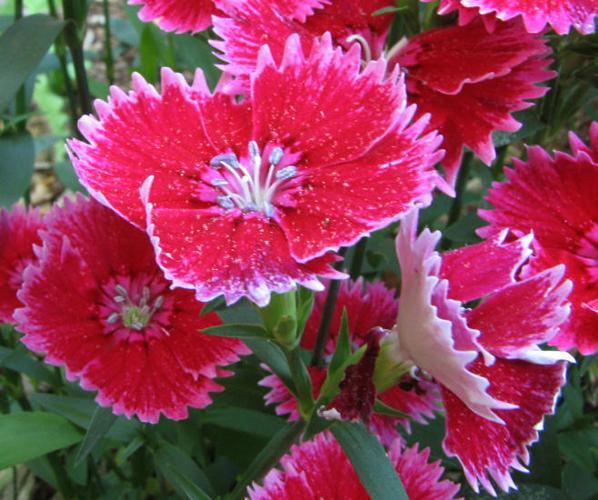
Sweet William (Dianthus barbatus)
Dianthus
Charming cottage garden biennial featuring dense, rounded clusters of small, fri...