
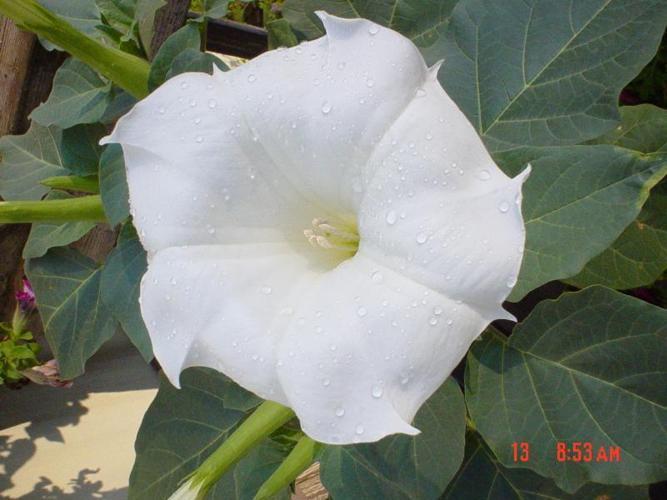
Thorn Apple
Datura stramonium
Basic Details
Floral Formula & Features
Ebracteate (no bracts), Actinomorphic (radially symmetrical), bisexual, 5 fused sepals forming tubular calyx, 5 fused petals forming trumpet-shaped corolla, 5 free stamens attached to corolla tube, 2 fused carpels with superior ovary
- Name 'Thorn Apple' refers to the distinctive spiny seed capsules covered in sharp thorns that resemble a small, prickly apple. 'Datura' comes from Sanskrit 'dhattūra,' an ancient name for the plant. 'Stramonium' possibly derives from Greek 'strychnos mania' meaning mad nightshade
- Large trumpet or funnel-shaped flowers 3-8 inches (7-20 cm) long, opening at dusk and closing by mid-morning. Blooms are typically white or pale purple with five pointed lobes, releasing a heavy, sweet fragrance at night to attract moth pollinators
- Annual herbaceous plant with coarse, irregularly toothed leaves and branching stems. Blooms from summer through fall (June-October). Seed capsules are egg-shaped, 1-2 inches (2.5-5 cm) in diameter, covered with sharp spines
- Grows 2-5 feet (60-150 cm) tall with equal spread. Lifespan of one growing season (annual). Propagated by seeds which can remain viable in soil for decades. Each capsule contains 50-100 black seeds
- Native to Central and North America, particularly Mexico and southwestern United States. Now naturalized worldwide as a weed in temperate and tropical regions including Europe, Asia, Africa, India, and Australia
- Thrives in full sun with 6-8 hours of direct sunlight. Grows in disturbed soils, roadsides, waste areas, and agricultural fields. Drought-tolerant once established. Prefers well-drained soil but adapts to various conditions
- Extremely toxic - all parts contain tropane alkaloids (scopolamine, hyoscyamine, atropine) that can cause hallucinations, delirium, and death if ingested. Used historically in medicine for asthma and pain relief, but too dangerous for modern use. Seeds and leaves most poisonous
- Attracts hawk moths and sphinx moths as night pollinators. Considered a noxious weed in many regions due to toxicity to livestock and humans. Seeds spread easily, making it invasive in agricultural areas
Names in Different Languages
What is Floral Formula?
A floral formula is a symbolic representation of a flower's structure using letters, numbers, and special symbols. It provides a concise way to describe the arrangement and number of floral parts.
This formula describes the flower's symmetry, sepals, petals, stamens, and carpels in a standardized format.
Formula Sequence
- Bract: Br or Ebr
- Bracteole: Brl or Ebrl
- Symmetry: % (Radial) or ⊕ (Bilateral)
- Sex: ♀ (Female), ♂ (Male), or ⚥ (Bisexual)
- Calyx/Sepal: K<number> (Free or Fused)
- Corolla/Petal: C<number> (Free or Fused)
- Androecium: A<number> (Free or Fused)
- Gynaecium: G<number> (Superior or Inferior Ovary)
Symbol Meanings
- Numbers: Indicate quantity of parts
- Parentheses (): Parts are fused together
- Plus (+): Parts in different whorls
- Underline: Superior ovary position
- Overline: Inferior ovary position
- ∞: Numerous parts (too many to count)
Understanding floral formulas helps botanists quickly identify and classify flowers based on their structural characteristics.
Similar Flowers
Discover flowers that share botanical characteristics
Same Family
1
Similar Characteristics
4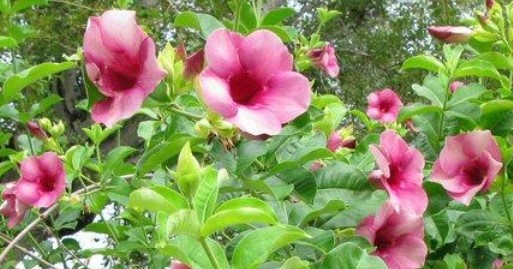
Mandevilla
Mandevilla
Spectacular tropical climbing vine renowned for its large, showy, trumpet-shaped...
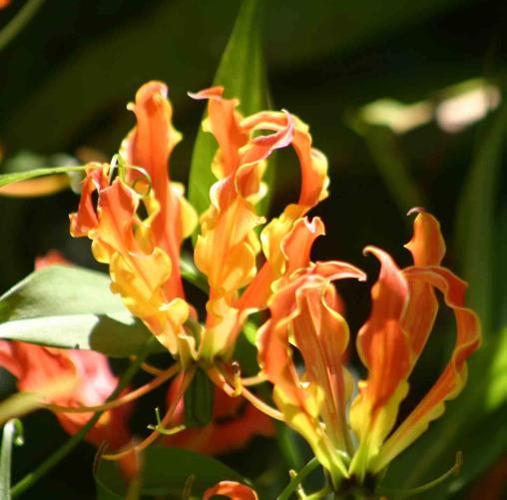
Fire Lily
Gloriosa superba
Spectacular climbing lily featuring exotic, flame-like flowers with dramatically...
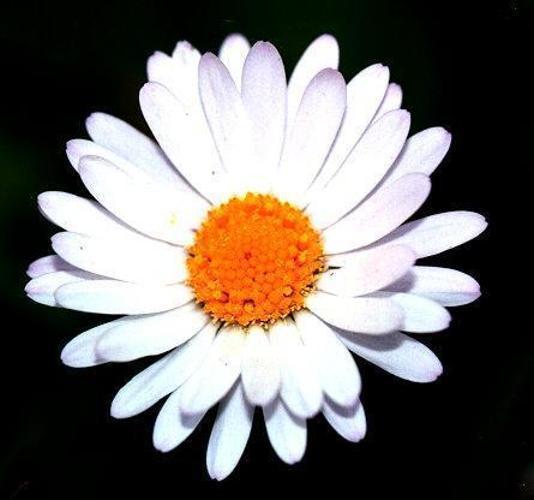
Oxeye Daisy
Leucanthemum vulgare
Classic wildflower with bright white petals radiating around golden-yellow cente...
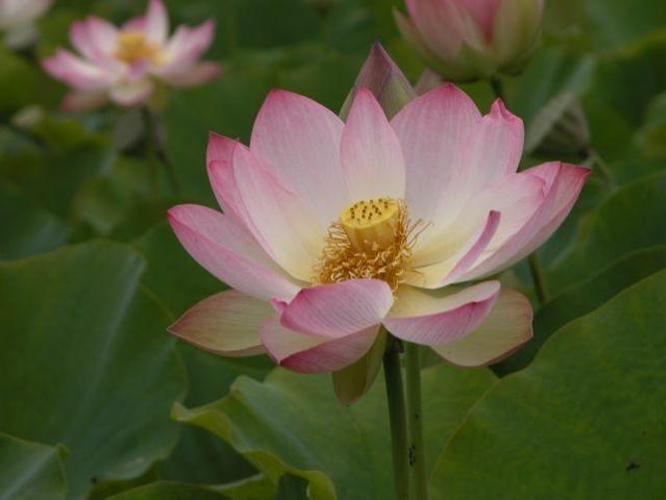
Lotus
Nelumbo nucifera
Sacred aquatic plant producing spectacular fragrant flowers that rise above the ...