
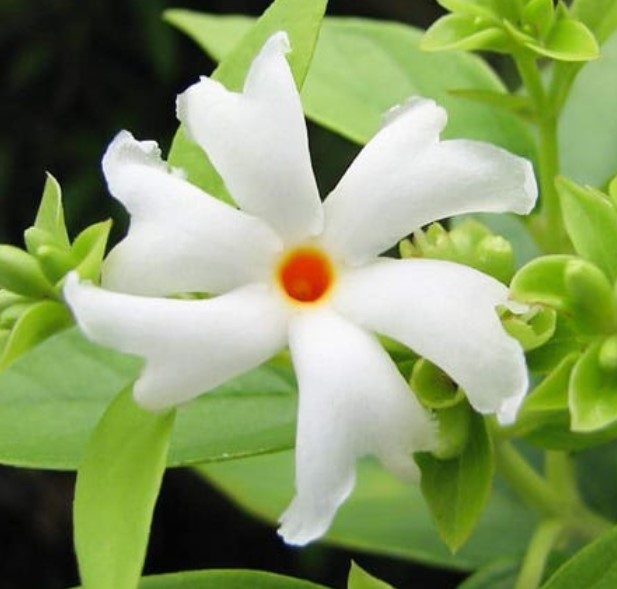
Night Jasmine (Parijat)
Nyctanthes arbor-tristis
Basic Details
Floral Formula & Features
Ebracteate, radially symmetrical, bisexual, 5-8 fused sepals forming tube, 5-8 fused petals forming corolla tube with spreading lobes, 2 stamens attached to corolla tube, 2 fused carpels with superior ovary. Typical of Oleaceae family
- Name 'Nyctanthes' from Greek 'nyctos' (night) and 'anthos' (flower). 'Arbor-tristis' means sad tree in Latin. Called Parijat in India, meaning divine flower from heaven. Also known as Harsingar, Shefali. Only one species in Nyctanthes genus
- Flowers 0.5-0.75 inches (1-2 cm) across, white with 5-8 petals. Bright orange tubular center and coral-orange stalk. Blooms open after sunset, fall before sunrise. Sweet, jasmine-like fragrance. Blooms August-January (late summer through winter)
- Deciduous shrub or small tree. Rough, hairy leaves 2-4 inches long, arranged opposite. Loses leaves in spring, regrows in monsoon. Flowers bloom on bare or leafy branches. Orange stalks used as natural dye
- Grows 6-18 feet (2-5.5 m) tall, occasionally to 30 feet. Spread 6-10 feet. Lifespan 10-20 years. Propagated from seeds or cuttings. Slow-growing but hardy once established
- Native to South Asia (India, Pakistan, Nepal, Bangladesh) and Southeast Asia (Thailand, Myanmar). Found in tropical and subtropical forests. Grows wild in foothills and plains. Widely cultivated in temple gardens
- Requires full sun to partial shade (4-6 hours sun). Prefers well-drained, moist soil. Moderate watering. Drought tolerant once mature. Hardy zones 9-11. Thrives in warm, humid climates
- Used in Ayurvedic medicine for fever, arthritis, sciatica. Leaves treat skin conditions. Flowers used in worship, offered to deities. Orange stalks produce natural yellow-orange dye for fabrics. Flowers collected each morning for religious ceremonies
- Sacred in Hindu culture, associated with Lord Krishna. Symbolizes divine love and separation. Mentioned in ancient texts and mythology. Attracts moths for pollination. Flowers make fragrant garlands. Popular in Indian gardens and temples
Names in Different Languages
What is Floral Formula?
A floral formula is a symbolic representation of a flower's structure using letters, numbers, and special symbols. It provides a concise way to describe the arrangement and number of floral parts.
This formula describes the flower's symmetry, sepals, petals, stamens, and carpels in a standardized format.
Formula Sequence
- Bract: Br or Ebr
- Bracteole: Brl or Ebrl
- Symmetry: % (Radial) or ⊕ (Bilateral)
- Sex: ♀ (Female), ♂ (Male), or ⚥ (Bisexual)
- Calyx/Sepal: K<number> (Free or Fused)
- Corolla/Petal: C<number> (Free or Fused)
- Androecium: A<number> (Free or Fused)
- Gynaecium: G<number> (Superior or Inferior Ovary)
Symbol Meanings
- Numbers: Indicate quantity of parts
- Parentheses (): Parts are fused together
- Plus (+): Parts in different whorls
- Underline: Superior ovary position
- Overline: Inferior ovary position
- ∞: Numerous parts (too many to count)
Understanding floral formulas helps botanists quickly identify and classify flowers based on their structural characteristics.
Similar Flowers
Discover flowers that share botanical characteristics
Same Family
4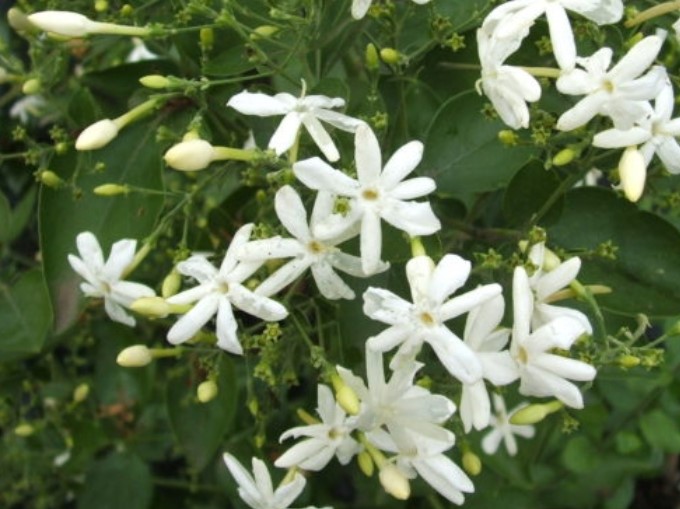
Jasminum Auriculatum
Jasminum
Fragrant evergreen climbing shrub native to Indian subcontinent, beloved for int...
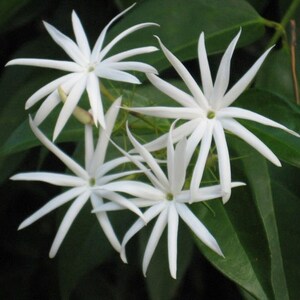
AngelWing Jasmine (Star Jasmine)
Jasminum laurifolium, Jasminum nitidum
Unique jasmine with spectacular star or pinwheel-shaped flowers having 10-12 nar...
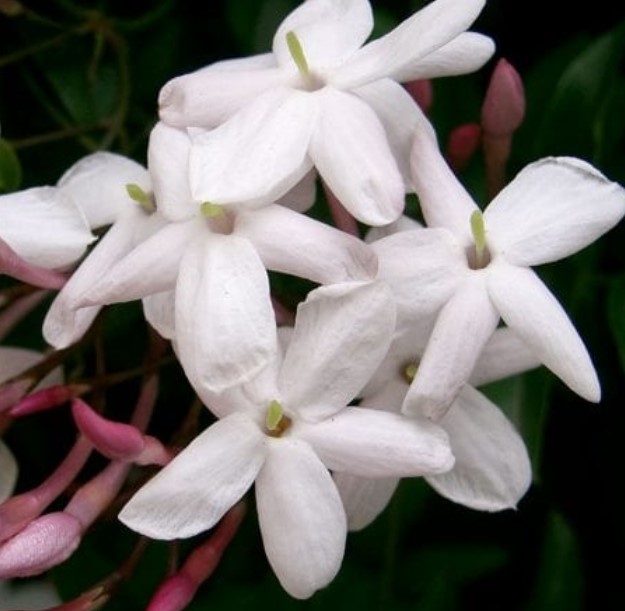
Spanish Jasmine (Royal Jasmine)
Jasminum grandiflorum
Highly fragrant jasmine with pure white star-shaped flowers used in world's fine...
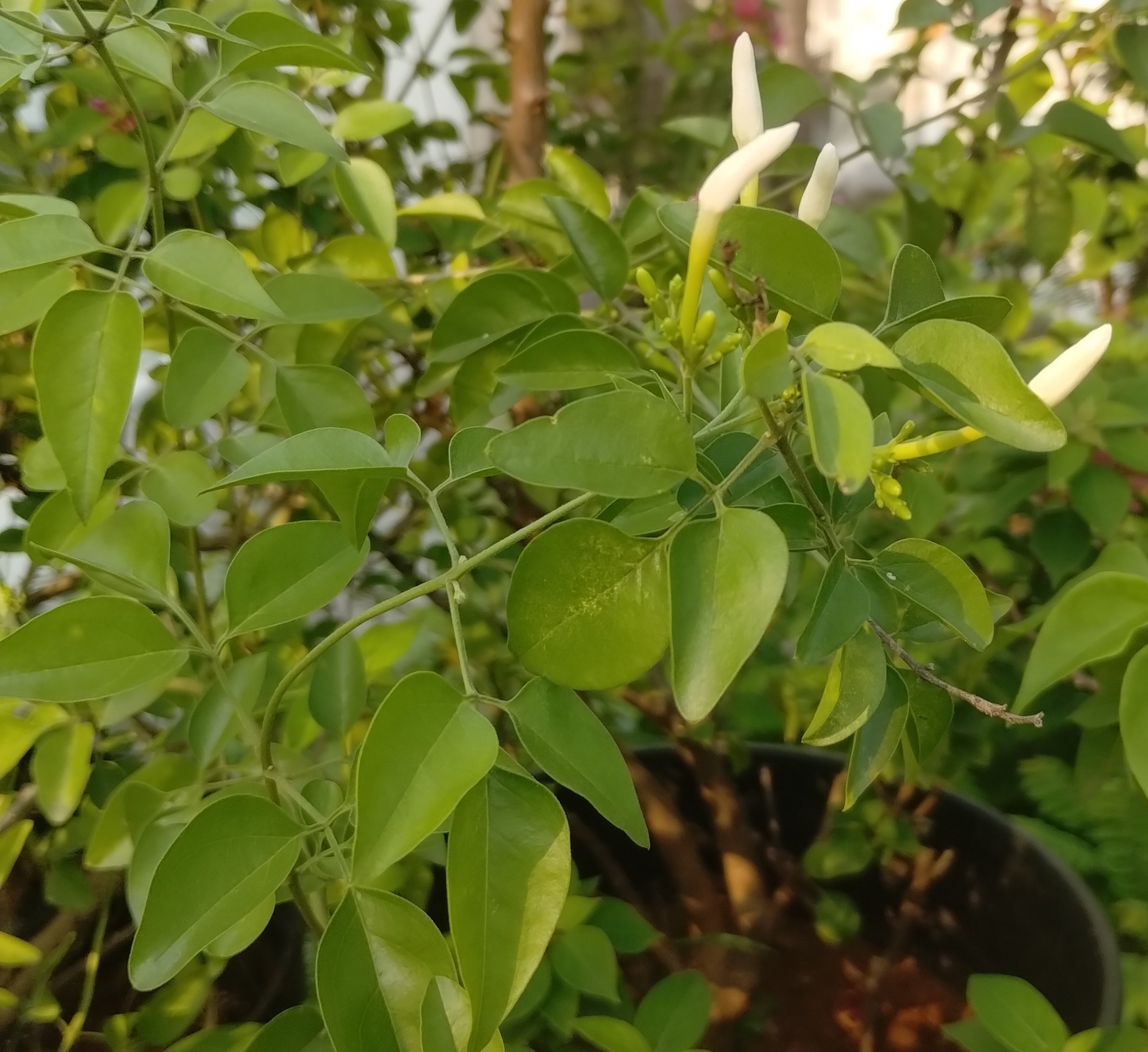
River Jasmine (Fluminense)
Jasminum fluminense
Vigorous evergreen climbing vine producing clusters of small, white, star-shaped...
Similar Characteristics
4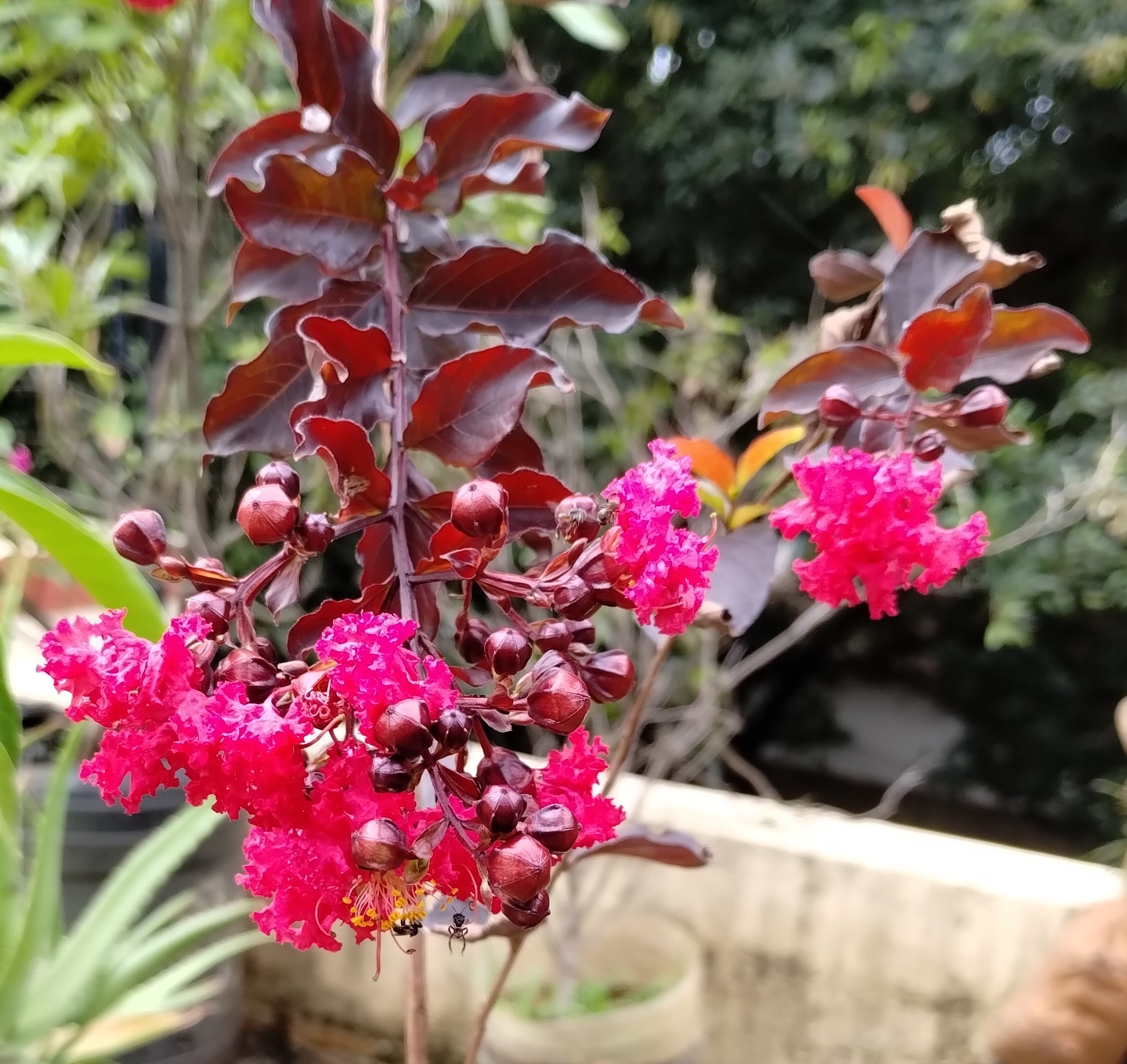
Crepe Myrtle
Lagerstroemia indica
Beloved deciduous shrub or small tree renowned for its profuse summer blooms wit...
River Jasmine (Fluminense)
Jasminum fluminense
Vigorous evergreen climbing vine producing clusters of small, white, star-shaped...
Spanish Jasmine (Royal Jasmine)
Jasminum grandiflorum
Highly fragrant jasmine with pure white star-shaped flowers used in world's fine...
AngelWing Jasmine (Star Jasmine)
Jasminum laurifolium, Jasminum nitidum
Unique jasmine with spectacular star or pinwheel-shaped flowers having 10-12 nar...