
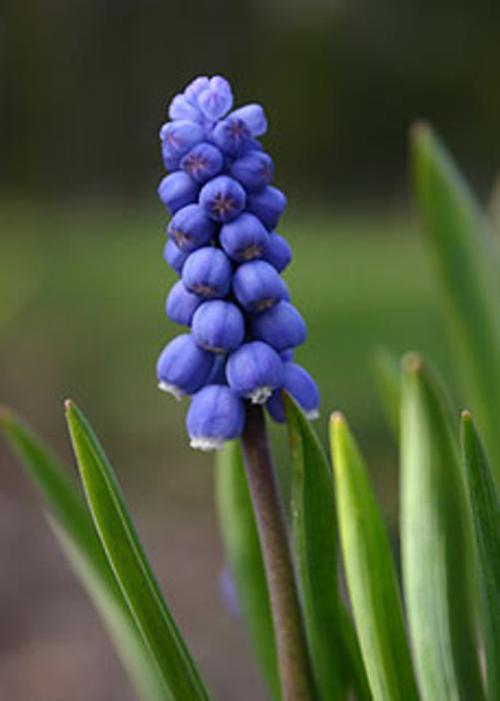
Grape hyacinth
Muscari
Basic Details
Floral Formula & Features
Ebracteate (no bracts), radially symmetrical (actinomorphic), bisexual, 6 tepals in 2 whorls of 3 fused into urn shape (perianth, no distinction between sepals and petals), 6 stamens in 2 whorls of 3, 3 fused carpels with superior ovary
- Name 'Muscari' from Greek 'moschos' (musk) for musky fragrance of some species. 'Grape Hyacinth' describes grape-like flower clusters. Not true hyacinth (Hyacinthus) but related. About 40 Muscari species. Cultivated since 16th century. Popular for forcing indoors
- Flowers 0.25 inches (6 mm) long, tiny urn-shaped bells with constricted mouths, densely packed in 2-3 inch spikes. Colors include deep cobalt blue, sky blue, violet-blue, purple, white, and bicolors. Some species have sweet, grape-like or musky fragrance. Blooms early to mid-spring (March-May). Each bulb produces 1-2 spikes
- Bulbous perennial that blooms in early spring, goes dormant by early summer. Foliage appears in fall, persists through winter. Naturalizes readily, forming dense colonies. Self-seeds moderately. Long-lived (10-20+ years). Excellent for forcing indoors. Blooms with daffodils and early tulips
- Grows 6-10 inches (15-25 cm) tall, dwarf varieties 4-6 inches. Spikes 2-3 inches long. Bulb lifespan 10-20+ years. Propagated from bulb offsets (multiply readily), division, or seed (3-4 years to bloom). Plant bulbs 3-4 inches deep in fall
- Native to Mediterranean region, southern Europe, Turkey, and western Asia. M. armeniacum from Armenia and Turkey. Found in meadows, rocky slopes, and woodland edges. Now naturalized in North America, Australia. Widely cultivated worldwide
- Requires full sun to partial shade. Thrives in well-drained soil. Water during growth and bloom; reduce after flowering. Plant bulbs in fall for spring bloom. Naturalizes easily—leave undisturbed to multiply. Deer, rabbit, and rodent resistant. Very low maintenance. Hardy zones 4-8
- Perfect for naturalizing, rock gardens, borders, and containers. Excellent ground cover under deciduous trees. Good for forcing indoors. Attracts early bees and butterflies. Deer and rodent resistant. Combines beautifully with daffodils, tulips, and other spring bulbs. Symbolizes power and pride. Easy for beginners
Names in Different Languages
What is Floral Formula?
A floral formula is a symbolic representation of a flower's structure using letters, numbers, and special symbols. It provides a concise way to describe the arrangement and number of floral parts.
This formula describes the flower's symmetry, sepals, petals, stamens, and carpels in a standardized format.
Formula Sequence
- Bract: Br or Ebr
- Bracteole: Brl or Ebrl
- Symmetry: % (Radial) or ⊕ (Bilateral)
- Sex: ♀ (Female), ♂ (Male), or ⚥ (Bisexual)
- Calyx/Sepal: K<number> (Free or Fused)
- Corolla/Petal: C<number> (Free or Fused)
- Androecium: A<number> (Free or Fused)
- Gynaecium: G<number> (Superior or Inferior Ovary)
Symbol Meanings
- Numbers: Indicate quantity of parts
- Parentheses (): Parts are fused together
- Plus (+): Parts in different whorls
- Underline: Superior ovary position
- Overline: Inferior ovary position
- ∞: Numerous parts (too many to count)
Understanding floral formulas helps botanists quickly identify and classify flowers based on their structural characteristics.
Similar Flowers
Discover flowers that share botanical characteristics
Similar Characteristics
4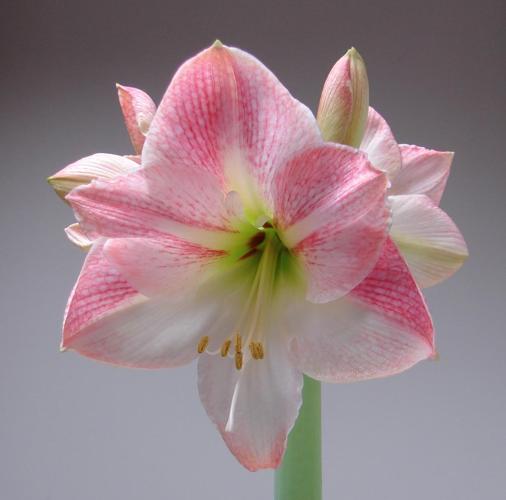
Amaryllis
Hippeastrum
Spectacular bulbous plant producing 2-6 large, trumpet-shaped flowers per stalk ...
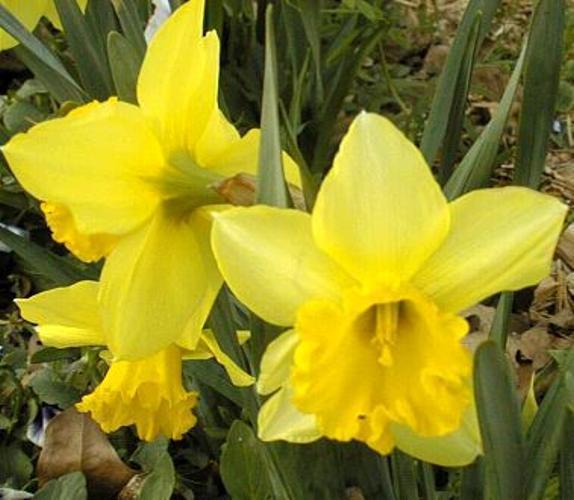
Daffodil
Narcissus pseudonarcissus
Beloved spring bulb featuring cheerful blooms with six petal-like tepals surroun...
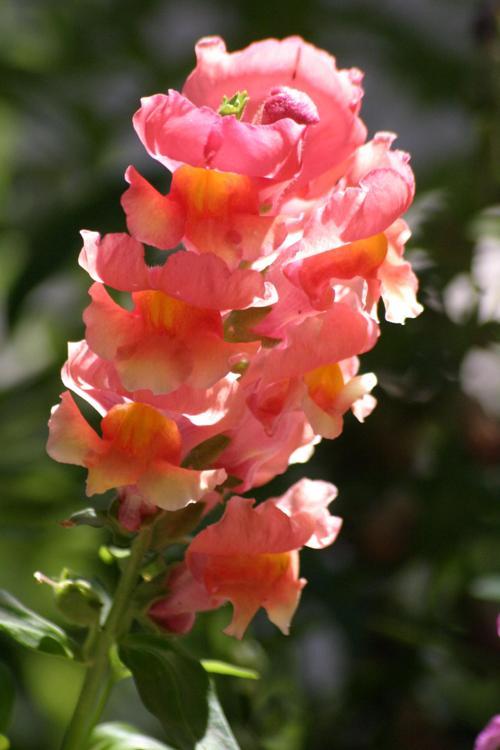
Antirrhinum
Antirrhinum
Charming cottage garden favorite with distinctive two-lipped flowers that open a...
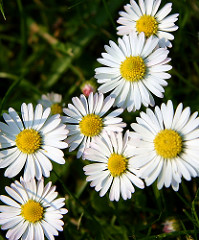
Daisy
Bellis perennis
Charming perennial featuring classic white ray florets (petals) surrounding a br...