
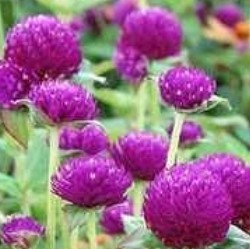
Globe Amaranth
Gomphrena globosa
Basic Details
Floral Formula & Features
Bracteate (showy papery bracts), ebracteolate (no bracteoles), radially symmetrical (actinomorphic), bisexual, 5 free sepals (papery, colored), no petals, 5 stamens fused at base forming tube, 2-3 fused carpels with superior ovary
- Name 'Gomphrena' possibly from Greek 'gromphaena,' an ancient name for amaranth. 'Globosa' means globe-shaped. 'Bachelor's Button' shared with cornflower. 'Amaranth' from Greek 'amarantos' (unfading) for long-lasting blooms. Cultivated since Aztec times. About 120 Gomphrena species
- Flower heads 0.75-1.5 inches (2-4 cm) across, perfectly round, clover-like. True flowers tiny; showy parts are colorful papery bracts. Colors include magenta, purple, pink, rose, white, orange, red, and bicolors. Blooms summer through frost (June-October). Retains color when dried. Dwarf and tall varieties available
- Annual that blooms continuously from summer until frost. Flowers excellent for drying—hang upside down in dark, dry place. Self-seeds moderately. Thrives in heat and humidity. Drought tolerant once established. One of best annuals for hot, humid climates
- Grows 12-24 inches (30-60 cm) tall, dwarf varieties 6-9 inches. Bushy, compact growth. Lifespan of one growing season (annual). Propagated from seed (sow indoors 6-8 weeks before last frost or direct sow after frost, germinates in 7-14 days)
- Native to Central America, particularly Guatemala, Panama, and southern Mexico. Found in tropical and subtropical regions. Now cultivated worldwide as annual. Naturalized in warm regions. Grows wild in disturbed areas, roadsides
- Requires full sun (6-8 hours). Adapts to most well-drained soils, even poor soil. Extremely heat and drought tolerant once established. Water moderately. Deadhead to prolong blooming (though not necessary). Very low maintenance. Thrives in heat and humidity. Zones 2-11 as annual
- Premier everlasting flower—dries perfectly, retaining color for years. Excellent fresh cut flower (lasts 7-10 days). Popular for dried arrangements, wreaths, crafts. Attracts butterflies and bees. Deer and rabbit resistant. Perfect for hot, humid climates. Low water needs. Self-sows moderately. Symbolizes immortality and unfading love
Names in Different Languages
What is Floral Formula?
A floral formula is a symbolic representation of a flower's structure using letters, numbers, and special symbols. It provides a concise way to describe the arrangement and number of floral parts.
This formula describes the flower's symmetry, sepals, petals, stamens, and carpels in a standardized format.
Formula Sequence
- Bract: Br or Ebr
- Bracteole: Brl or Ebrl
- Symmetry: % (Radial) or ⊕ (Bilateral)
- Sex: ♀ (Female), ♂ (Male), or ⚥ (Bisexual)
- Calyx/Sepal: K<number> (Free or Fused)
- Corolla/Petal: C<number> (Free or Fused)
- Androecium: A<number> (Free or Fused)
- Gynaecium: G<number> (Superior or Inferior Ovary)
Symbol Meanings
- Numbers: Indicate quantity of parts
- Parentheses (): Parts are fused together
- Plus (+): Parts in different whorls
- Underline: Superior ovary position
- Overline: Inferior ovary position
- ∞: Numerous parts (too many to count)
Understanding floral formulas helps botanists quickly identify and classify flowers based on their structural characteristics.
Similar Flowers
Discover flowers that share botanical characteristics
Same Family
1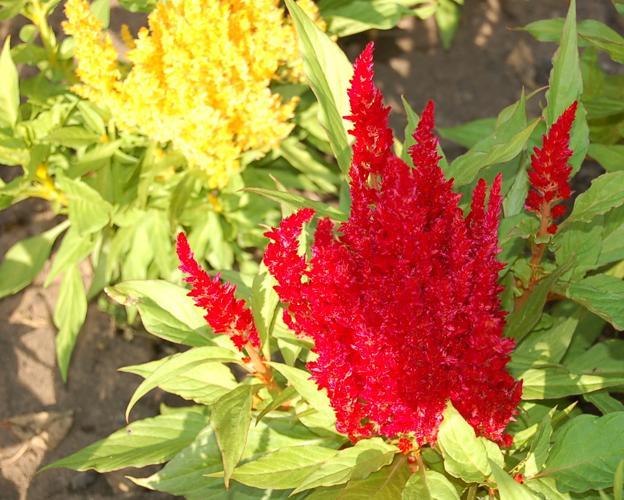
Similar Characteristics
4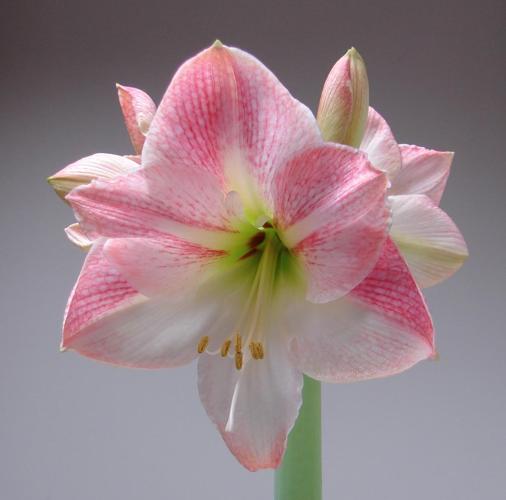
Amaryllis
Hippeastrum
Spectacular bulbous plant producing 2-6 large, trumpet-shaped flowers per stalk ...
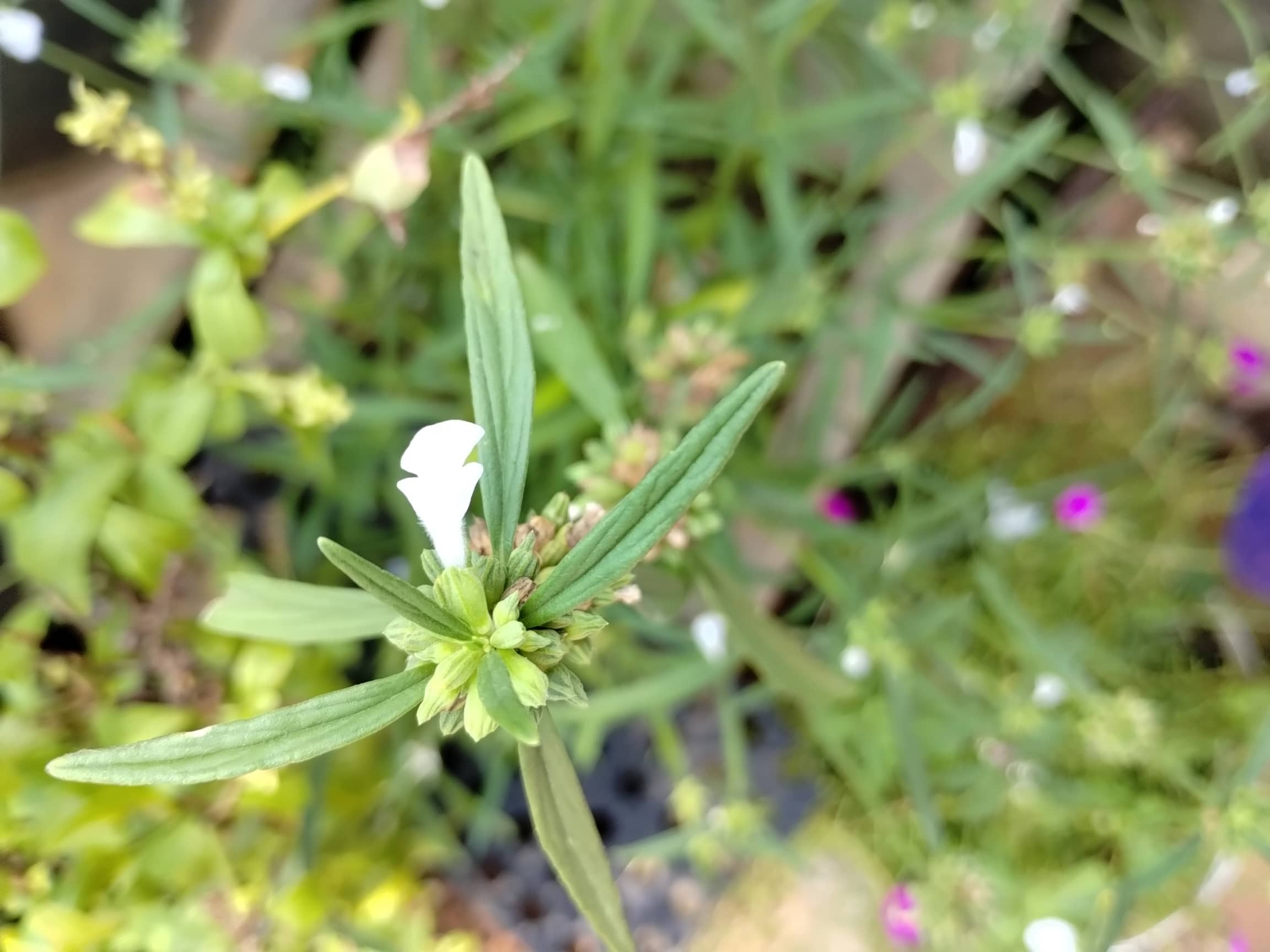
Leucas Aspera
Leucas aspera
Common medicinal herb featuring dense whorls of small, white, two-lipped flowers...
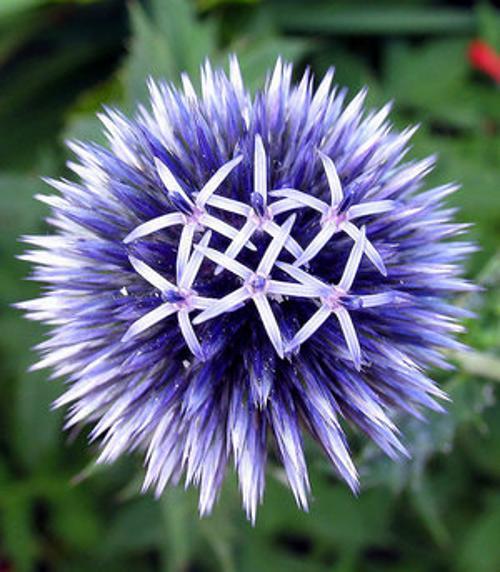
Globe Thistle
Echinops
Striking architectural perennial featuring perfectly spherical, spiky flower hea...
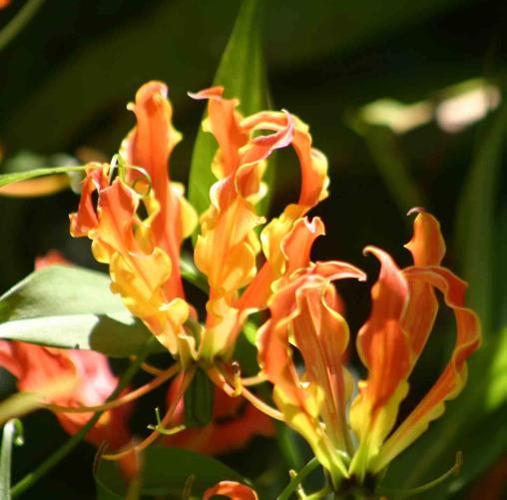
Fire Lily
Gloriosa superba
Spectacular climbing lily featuring exotic, flame-like flowers with dramatically...