
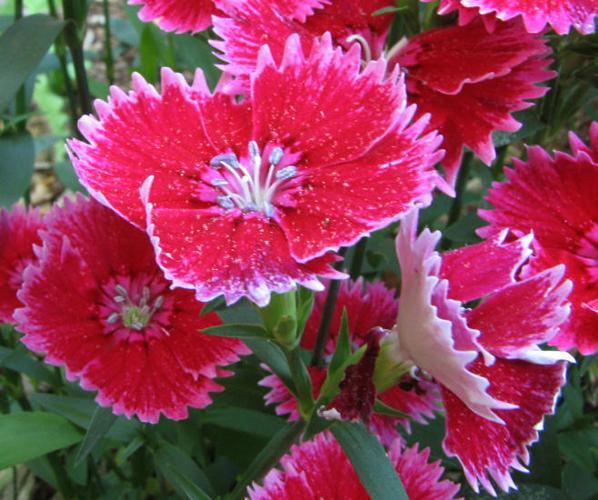
Sweet William (Dianthus barbatus)
Dianthus
Basic Details
Floral Formula & Features
Ebracteate (no bracts), radially symmetrical (actinomorphic), bisexual, 5 fused sepals forming tube, 5 free petals with fringed edges and long claws, 10 stamens in 2 whorls of 5, 2-5 fused carpels with superior ovary and free central placentation
- Name 'Dianthus' from Greek 'dios' (divine) and 'anthos' (flower) meaning 'divine flower' or 'flower of Zeus.' 'Barbatus' means 'bearded,' referring to fringed petals and hairy bracts at flower center. 'Sweet William' origin uncertain—possibly named for William Shakespeare, William the Conqueror, or Saint William. Related to carnations
- Flowers 0.5-0.75 inches (1-2 cm) across, arranged in dense, flat-topped clusters (cymes) of 5-30 blooms per stem. Five fringed petals with toothed edges. Colors include red, pink, white, purple, magenta, and bicolors with contrasting eyes or zones. Strong, spicy clove fragrance. Single and double forms available
- Biennial or short-lived perennial. First year produces foliage rosette; second year sends up flowering stems in late spring to early summer (May-July). Self-seeds prolifically for continuous presence. Some varieties grown as annuals. Blooms last 4-6 weeks
- Grows 12-24 inches (30-60 cm) tall, dwarf varieties 6-10 inches. Spread of 9-12 inches. Lifespan of 2-3 years. Propagated from seed (sow in late spring for next year's bloom, germinates in 10-14 days), stem cuttings, or division
- Native to southern Europe, particularly mountains of southern France, Spain, and Italy. Naturalized throughout Europe and North America. Found in meadows, rocky slopes, and woodland edges. Cultivated since Elizabethan times
- Prefers full sun to partial shade (at least 4-6 hours sun). Thrives in well-drained, slightly alkaline soil (pH 6.5-7.5). Tolerates poor soil. Deadhead spent blooms to prolong flowering. Water moderately; drought tolerant once established. Hardy zones 3-9
- Excellent cut flower lasting 7-10 days. Attracts butterflies, bees, and hummingbirds. Deer and rabbit resistant. Edible flowers used as garnish (remove bitter white base). Popular in cottage gardens, borders, and rock gardens. Self-seeds but not invasive. Symbolizes gallantry and finesse in Victorian language of flowers
Names in Different Languages
What is Floral Formula?
A floral formula is a symbolic representation of a flower's structure using letters, numbers, and special symbols. It provides a concise way to describe the arrangement and number of floral parts.
This formula describes the flower's symmetry, sepals, petals, stamens, and carpels in a standardized format.
Formula Sequence
- Bract: Br or Ebr
- Bracteole: Brl or Ebrl
- Symmetry: % (Radial) or ⊕ (Bilateral)
- Sex: ♀ (Female), ♂ (Male), or ⚥ (Bisexual)
- Calyx/Sepal: K<number> (Free or Fused)
- Corolla/Petal: C<number> (Free or Fused)
- Androecium: A<number> (Free or Fused)
- Gynaecium: G<number> (Superior or Inferior Ovary)
Symbol Meanings
- Numbers: Indicate quantity of parts
- Parentheses (): Parts are fused together
- Plus (+): Parts in different whorls
- Underline: Superior ovary position
- Overline: Inferior ovary position
- ∞: Numerous parts (too many to count)
Understanding floral formulas helps botanists quickly identify and classify flowers based on their structural characteristics.
Similar Flowers
Discover flowers that share botanical characteristics
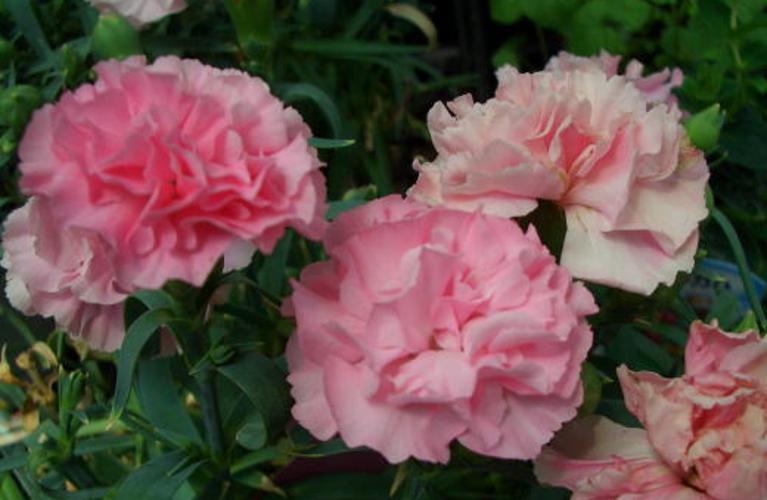
Similar Characteristics
4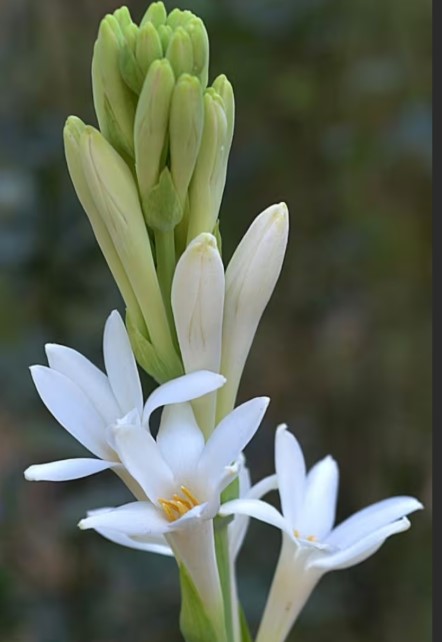
Tuberose Rajinigandha
Polianthes tuberosa
Exquisitely fragrant bulbous perennial producing tall spikes of waxy, cream-whit...
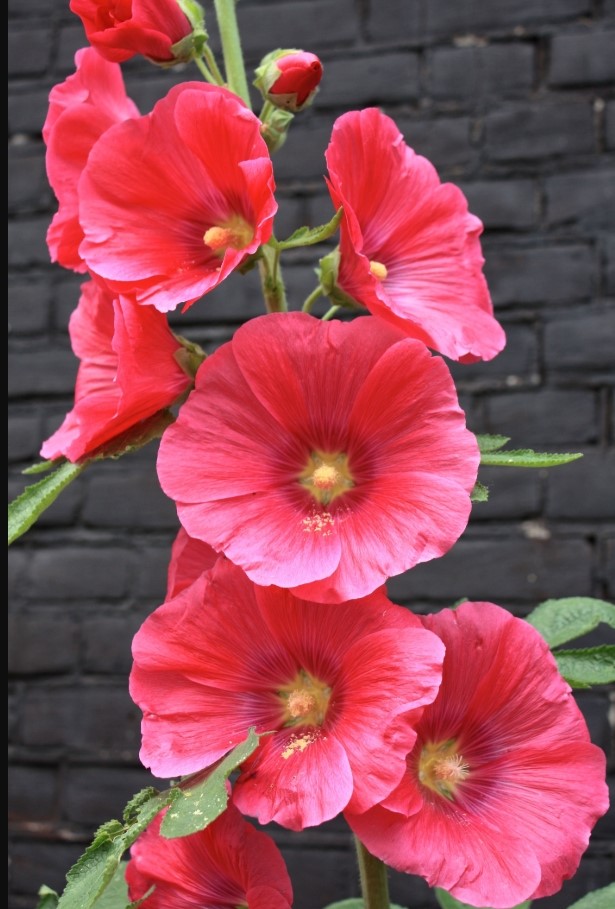
Hollyhock
Alcea rosea
Majestic cottage garden classic featuring towering flower spikes 5-8 feet tall a...
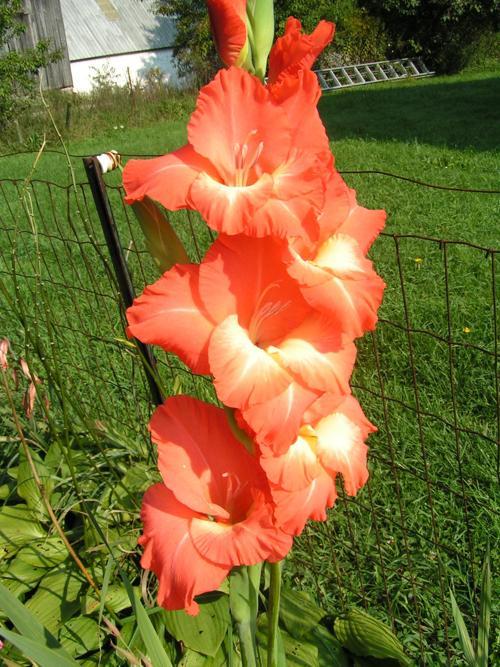
Gladiolus
Gladiolus
Spectacular cormous perennial featuring tall, dramatic spikes of large, funnel-s...
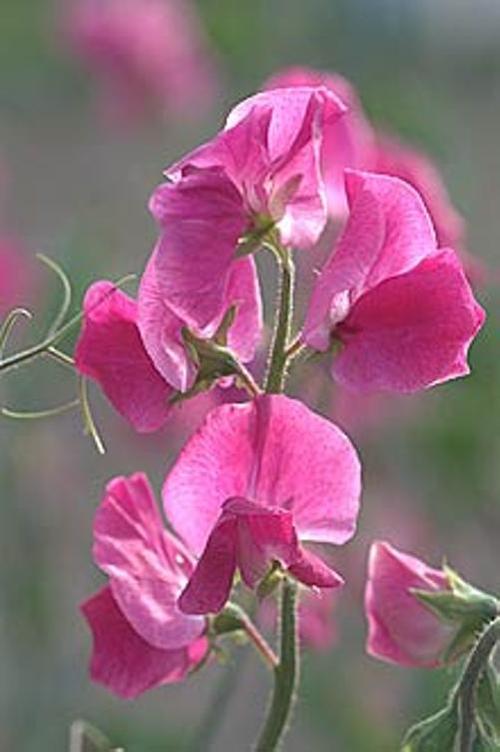
Sweet Pea
Lathyrus odoratus
Beloved fragrant annual vine with butterfly-shaped flowers in rainbow of pastel ...