
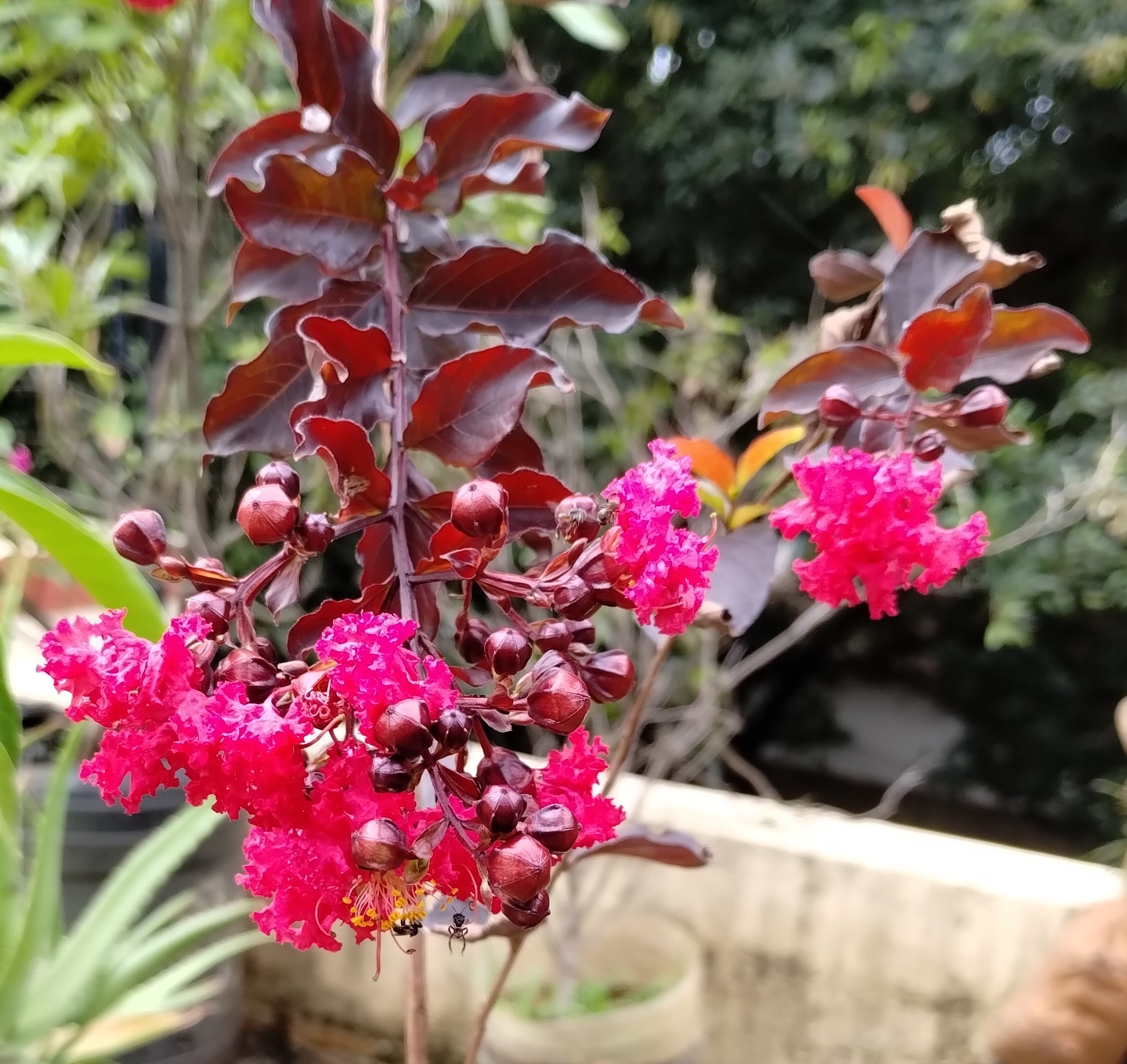
Crepe Myrtle
Lagerstroemia indica
Basic Details
Floral Formula & Features
Ebracteate (no bracts), Actinomorphic (radially symmetrical), bisexual, 4-6 fused sepals forming tube, 4-6 free clawed petals, numerous stamens inserted on calyx tube, 4-6 fused carpels with superior ovary
- Name 'Crepe/Crape Myrtle' from crinkled, ruffled petals resembling crepe paper. 'Lagerstroemia' honors Magnus von Lagerström, Swedish merchant who introduced plant to Europe. 'Indica' means from India. About 50 Lagerstroemia species. Same family (Lythraceae) as pomegranate
- Showy panicles 6-12 inches (15-30 cm) long with numerous 1-1.5 inch (2.5-4 cm) flowers. Each flower has 6 crinkled petals with clawed bases. Colors include white, pink, lavender, purple, red, magenta. Blooms on new growth from June-September. Long blooming period of 60-120 days
- Deciduous shrub or small tree with multiple trunks. Exfoliating bark peels in thin sheets revealing smooth, mottled surface in cinnamon, gray, cream, pink. Leaves oval, 1-4 inches (2.5-10 cm) long, emerge bronze, mature to dark green, turn yellow-orange-red in fall
- Size varies by cultivar: dwarf 2-3 feet (60-90 cm), medium 6-12 feet (2-4 m), standard 15-25 feet (5-8 m) tall. Lifespan 50+ years. Propagated by seeds, cuttings, or grafting. Fast-growing, adds 1-2 feet per year when young
- Native to Indian subcontinent, Southeast Asia, China, Japan, Korea, northern Australia. Introduced to Europe 1700s, North America 1790s. Now widely cultivated in warm temperate and subtropical regions worldwide. Naturalized in southern United States
- Requires full sun (6+ hours) for best flowering. Thrives in hot, humid climates. Prefers moist, well-drained, slightly acidic soil but adapts to various soils. Drought-tolerant once established. Hardy zones 6-10 depending on cultivar. Heat zones 1-12
- Excellent for summer color when few trees bloom. Attracts bees, butterflies, hummingbirds. Deer resistant. Used as street trees, specimens, hedges, containers. Modern cultivars resistant to powdery mildew. Prune in late winter for shape and flowering
- Deadhead spent blooms to encourage rebloom. Fertilize in spring. Water deeply during establishment and drought. Remove suckers from base. Avoid heavy pruning (crepe murder) - light shaping only. Watch for aphids, Japanese beetles, powdery mildew in humid areas
Names in Different Languages
What is Floral Formula?
A floral formula is a symbolic representation of a flower's structure using letters, numbers, and special symbols. It provides a concise way to describe the arrangement and number of floral parts.
This formula describes the flower's symmetry, sepals, petals, stamens, and carpels in a standardized format.
Formula Sequence
- Bract: Br or Ebr
- Bracteole: Brl or Ebrl
- Symmetry: % (Radial) or ⊕ (Bilateral)
- Sex: ♀ (Female), ♂ (Male), or ⚥ (Bisexual)
- Calyx/Sepal: K<number> (Free or Fused)
- Corolla/Petal: C<number> (Free or Fused)
- Androecium: A<number> (Free or Fused)
- Gynaecium: G<number> (Superior or Inferior Ovary)
Symbol Meanings
- Numbers: Indicate quantity of parts
- Parentheses (): Parts are fused together
- Plus (+): Parts in different whorls
- Underline: Superior ovary position
- Overline: Inferior ovary position
- ∞: Numerous parts (too many to count)
Understanding floral formulas helps botanists quickly identify and classify flowers based on their structural characteristics.
Similar Flowers
Discover flowers that share botanical characteristics
Same Family
1
Similar Characteristics
4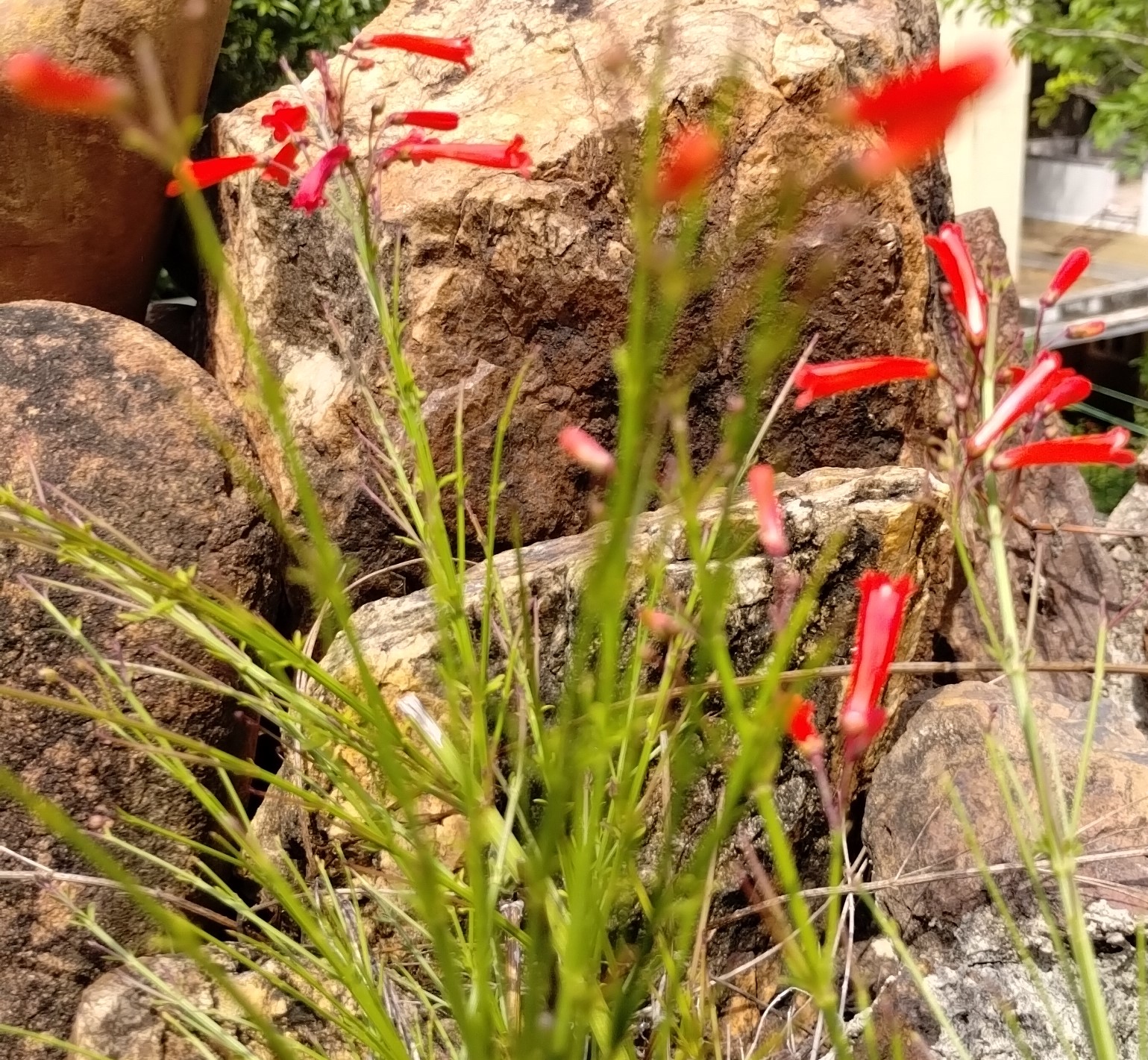
Russelia
Russelia equisetiformis
Spectacular tropical subshrub renowned for its graceful, cascading habit and pro...
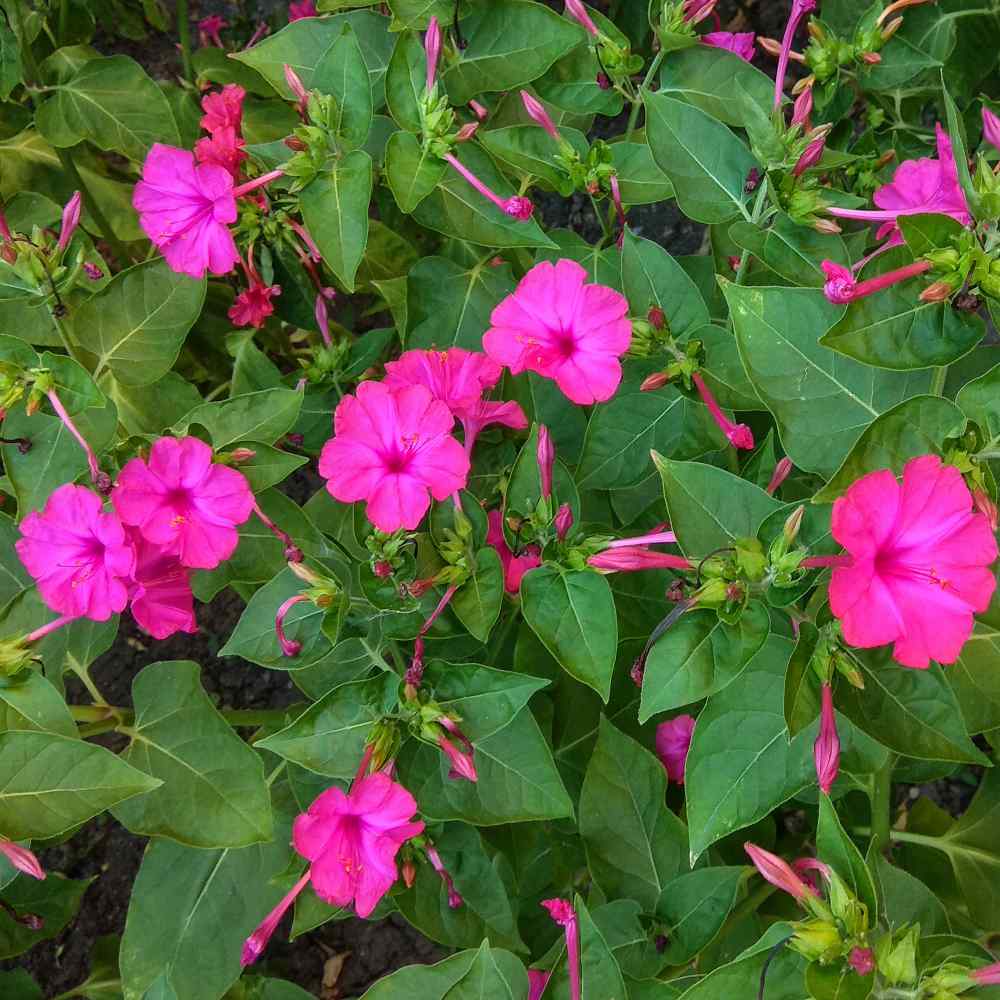
Four o'clock
Mirabilis jalapa
Charming bushy perennial named for flowers that open in late afternoon (typicall...
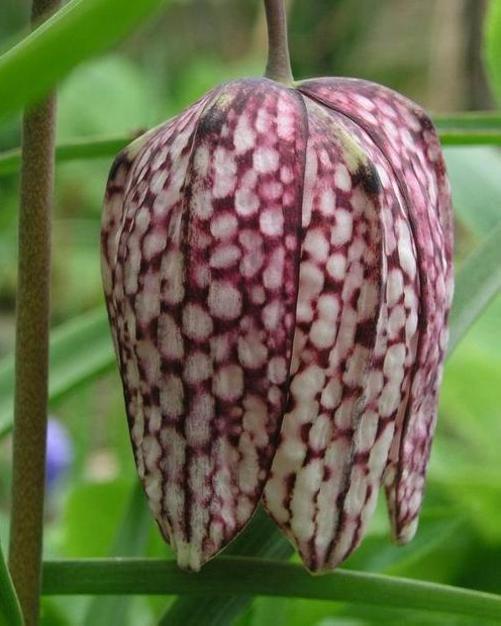
Fritillaria
Fritillaria
Elegant spring bulb featuring distinctive nodding, bell-shaped flowers, many wit...
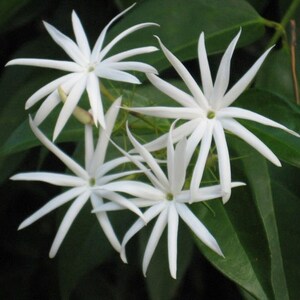
AngelWing Jasmine (Star Jasmine)
Jasminum laurifolium, Jasminum nitidum
Unique jasmine with spectacular star or pinwheel-shaped flowers having 10-12 nar...