
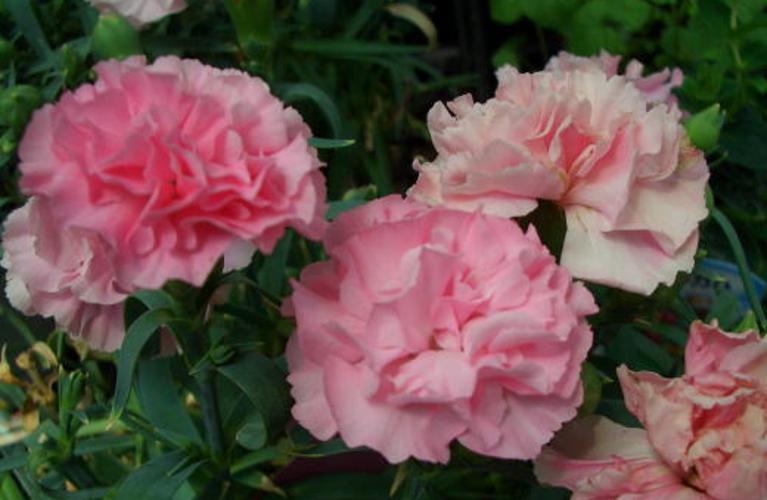
Carnation flower
Dianthus caryophyllus
Basic Details
Floral Formula & Features
Ebracteate (no bracts), radially symmetrical (actinomorphic), bisexual, 5 fused sepals forming tube, 5 free petals with long claws and fringed limbs, 10 stamens in 2 whorls of 5, 2-5 fused carpels with superior ovary and free central placentation
- Name 'carnation' possibly from Latin 'carnis' (flesh) for pink color, or 'coronation' for use in ceremonial crowns. 'Dianthus' from Greek 'dios' (divine) and 'anthos' (flower) meaning 'flower of the gods.' 'Caryophyllus' refers to clove-like scent. Called 'Gillyflower' in medieval times
- Flowers 1.5-2.5 inches (4-6 cm) across with numerous ruffled, fringed petals creating full, rounded blooms. Single forms have 5 petals; doubles have 20-40 layered petals. Colors include red, pink, white, yellow, purple, orange, green, and bicolors. Strong clove fragrance in many varieties
- Herbaceous perennial (often grown as annual in cut flower production). Blooms spring through fall (May-October) in gardens, year-round in greenhouses. Standard types have one large flower per stem; spray types have multiple smaller blooms per stem
- Grows 1-2.5 feet (30-75 cm) tall depending on type (dwarf 6-12 inches, standard 18-24 inches, tall 24-30 inches). Lifespan of 2-3 years as perennial, often grown as annual. Propagated from cuttings (commercial), seeds, or layering
- Native to Mediterranean region, particularly Greece, Italy, and Spain. Cultivated for over 2,000 years, one of world's oldest cultivated flowers. Now grown commercially worldwide, especially Colombia, Ecuador, Kenya, Netherlands, and California
- Requires full sun with 6-8 hours of direct sunlight. Prefers cool to moderate temperatures (50-70°F/10-21°C), struggles in extreme heat. Needs well-drained, slightly alkaline soil (pH 6.5-7.5). Moderate water; avoid overhead watering to prevent fungal diseases
- Among top 5 most popular cut flowers globally with exceptional vase life of 14-21 days. Official flower of Mother's Day in many countries. Used in boutonnieres, corsages, and wedding flowers. Edible petals used in salads and as garnish (remove bitter white base). Deer resistant
Names in Different Languages
What is Floral Formula?
A floral formula is a symbolic representation of a flower's structure using letters, numbers, and special symbols. It provides a concise way to describe the arrangement and number of floral parts.
This formula describes the flower's symmetry, sepals, petals, stamens, and carpels in a standardized format.
Formula Sequence
- Bract: Br or Ebr
- Bracteole: Brl or Ebrl
- Symmetry: % (Radial) or ⊕ (Bilateral)
- Sex: ♀ (Female), ♂ (Male), or ⚥ (Bisexual)
- Calyx/Sepal: K<number> (Free or Fused)
- Corolla/Petal: C<number> (Free or Fused)
- Androecium: A<number> (Free or Fused)
- Gynaecium: G<number> (Superior or Inferior Ovary)
Symbol Meanings
- Numbers: Indicate quantity of parts
- Parentheses (): Parts are fused together
- Plus (+): Parts in different whorls
- Underline: Superior ovary position
- Overline: Inferior ovary position
- ∞: Numerous parts (too many to count)
Understanding floral formulas helps botanists quickly identify and classify flowers based on their structural characteristics.
Similar Flowers
Discover flowers that share botanical characteristics
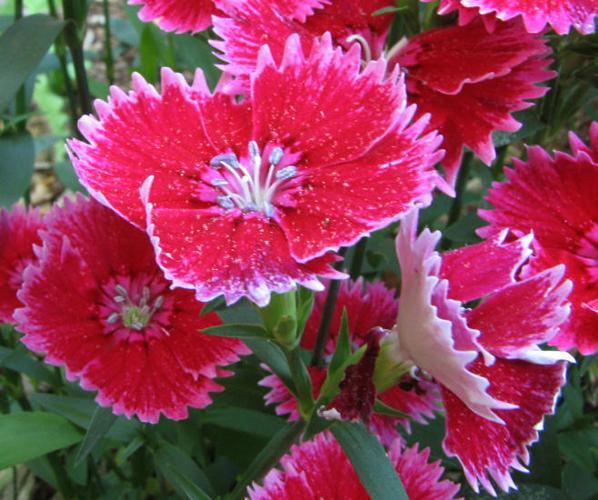
Similar Characteristics
4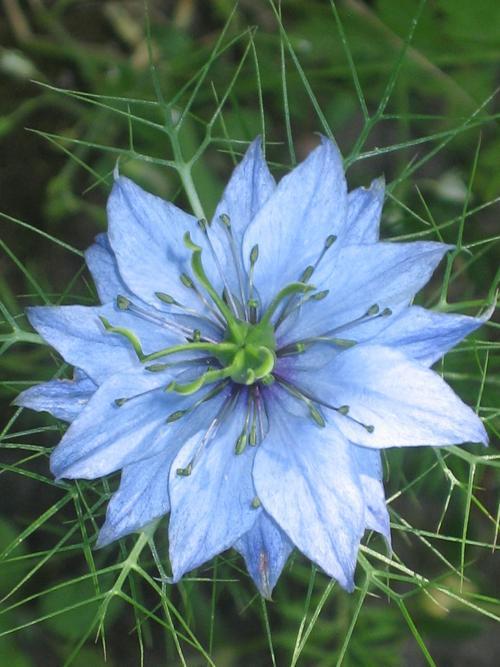
Love in a mist
Nigella damascena
Charming cottage garden annual featuring delicate jewel-like flowers in shades o...
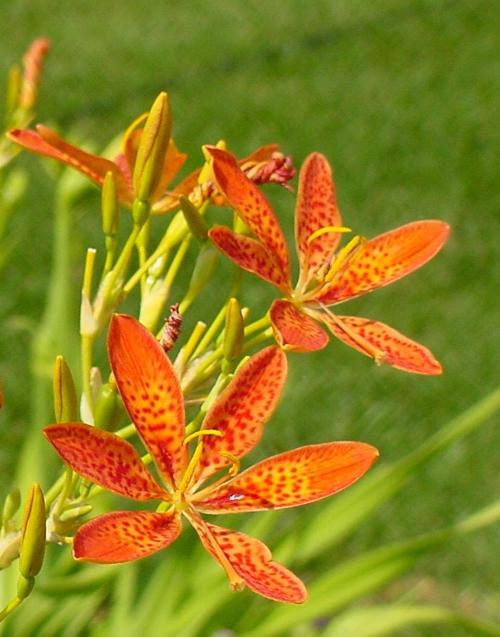
Leopard Lily
Iris domestica (syn. Belamcanda chinensis)
Striking perennial featuring exotic, star-shaped flowers in brilliant orange-red...
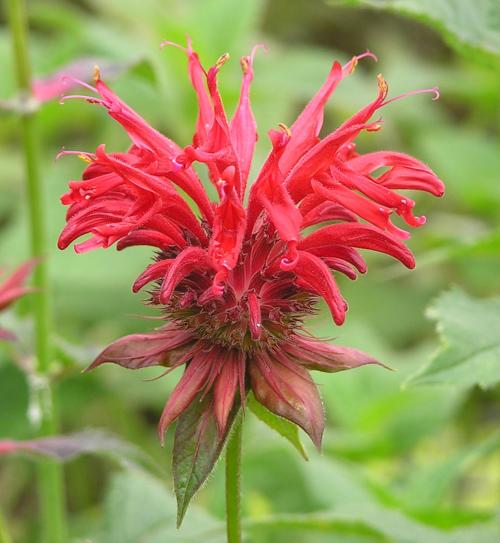
Beebalm
Monarda didyma, Mentha longifolia
Showy perennial herb featuring dense, pom-pom-like clusters of tubular flowers i...
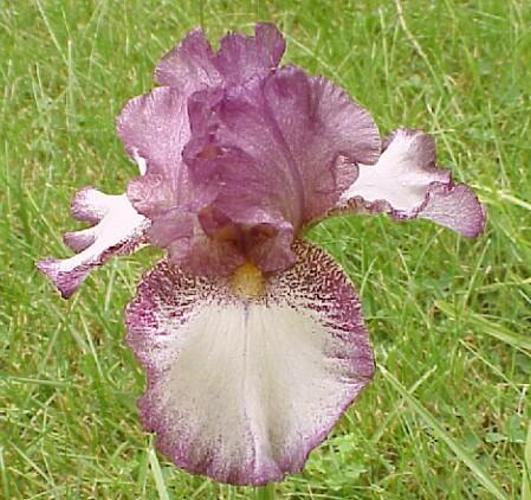
Bearded Iris
Iris germanica
Elegant perennial featuring distinctive flowers with three upright petals (stand...