
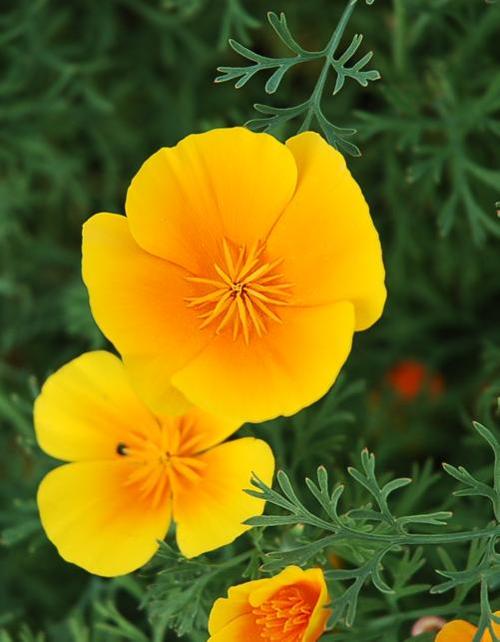
California poppy
Eschscholzia californica
Basic Details
Floral Formula & Features
Ebracteate (no bracts), radially symmetrical (actinomorphic), bisexual, 2 free sepals that fall as flower opens (caducous), 4 free petals (sometimes more in cultivars), numerous free stamens, 2 fused carpels with superior ovary
- Named 'Eschscholzia' after German botanist Johann Friedrich von Eschscholtz who discovered it in California in 1810s. Designated California's official state flower in 1903. 'Cup of Gold' refers to the golden, cup-shaped blooms
- Flowers 2-3 inches (5-7 cm) across with 4 silky, satiny petals (occasionally 5-12 in cultivated varieties). Classic form is brilliant orange with yellow center, but cultivars range from pale cream to deep red. Two sepals form pointed cap that pops off as flower opens
- Annual or short-lived perennial that blooms from early spring through summer (February-September in native range). Flowers open with morning sun, close at night and on overcast days. Self-seeds prolifically, naturalizing in meadows and disturbed sites
- Grows 6-24 inches (15-60 cm) tall with 6-12 inch (15-30 cm) spread. Lifespan of one growing season (annual) but perpetuates through self-seeding. Propagated from seed sown directly in fall or early spring (germinates in 10-15 days)
- Native to western North America from southern Washington and Oregon through California to Baja California, east to Nevada, Arizona, and New Mexico. Found in grasslands, coastal bluffs, valleys, and foothills below 6,500 feet elevation
- Thrives in full sun requiring at least 6 hours of direct sunlight. Extremely drought tolerant, preferring dry conditions once established. Grows in poor to moderately fertile, well-drained soil. Dislikes rich soil or overwatering. Heat tolerant
- Excellent for wildflower meadows, xeriscapes, and water-wise gardens. Attracts bees and beneficial insects. Deer and rabbit resistant. Used traditionally as mild sedative and pain reliever (contains alkaloids). Edible leaves used in salads. Reseeds readily, can spread vigorously
Names in Different Languages
What is Floral Formula?
A floral formula is a symbolic representation of a flower's structure using letters, numbers, and special symbols. It provides a concise way to describe the arrangement and number of floral parts.
This formula describes the flower's symmetry, sepals, petals, stamens, and carpels in a standardized format.
Formula Sequence
- Bract: Br or Ebr
- Bracteole: Brl or Ebrl
- Symmetry: % (Radial) or ⊕ (Bilateral)
- Sex: ♀ (Female), ♂ (Male), or ⚥ (Bisexual)
- Calyx/Sepal: K<number> (Free or Fused)
- Corolla/Petal: C<number> (Free or Fused)
- Androecium: A<number> (Free or Fused)
- Gynaecium: G<number> (Superior or Inferior Ovary)
Symbol Meanings
- Numbers: Indicate quantity of parts
- Parentheses (): Parts are fused together
- Plus (+): Parts in different whorls
- Underline: Superior ovary position
- Overline: Inferior ovary position
- ∞: Numerous parts (too many to count)
Understanding floral formulas helps botanists quickly identify and classify flowers based on their structural characteristics.
Similar Flowers
Discover flowers that share botanical characteristics
Same Family
2
Similar Characteristics
4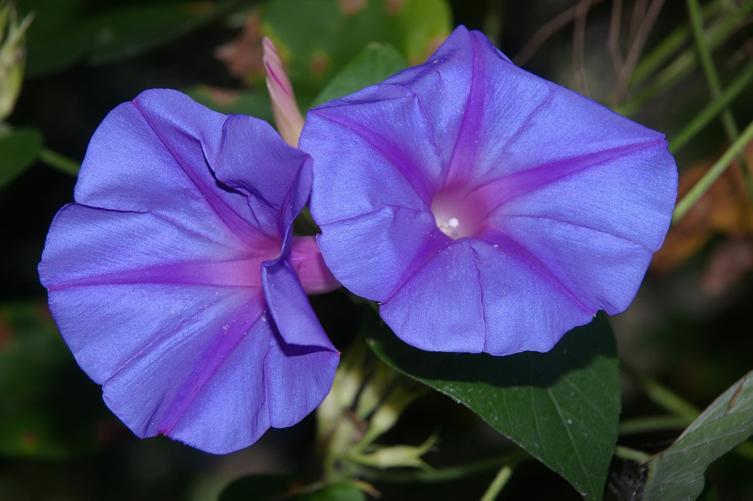
Morning Glory
Ipomoea tricolor
Fast-growing annual vine with trumpet-shaped flowers in vibrant blue, purple, pi...
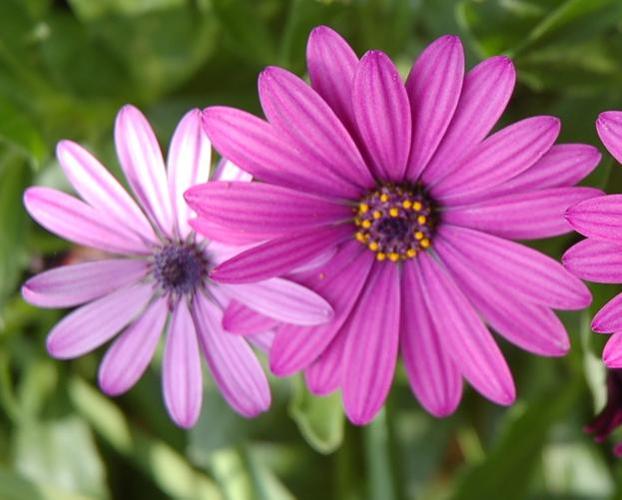
African Daisy
Dimorphotheca ecklonis
Vibrant daisy-like flowers with composite blooms featuring ray petals surroundin...
Pinwheel
Tabernaemontana divaricata
Elegant evergreen shrub with distinctive white flowers featuring five waxy petal...
Tree Poppy
Dendromecon
Rare California native evergreen shrub producing abundant satiny, golden-yellow ...