
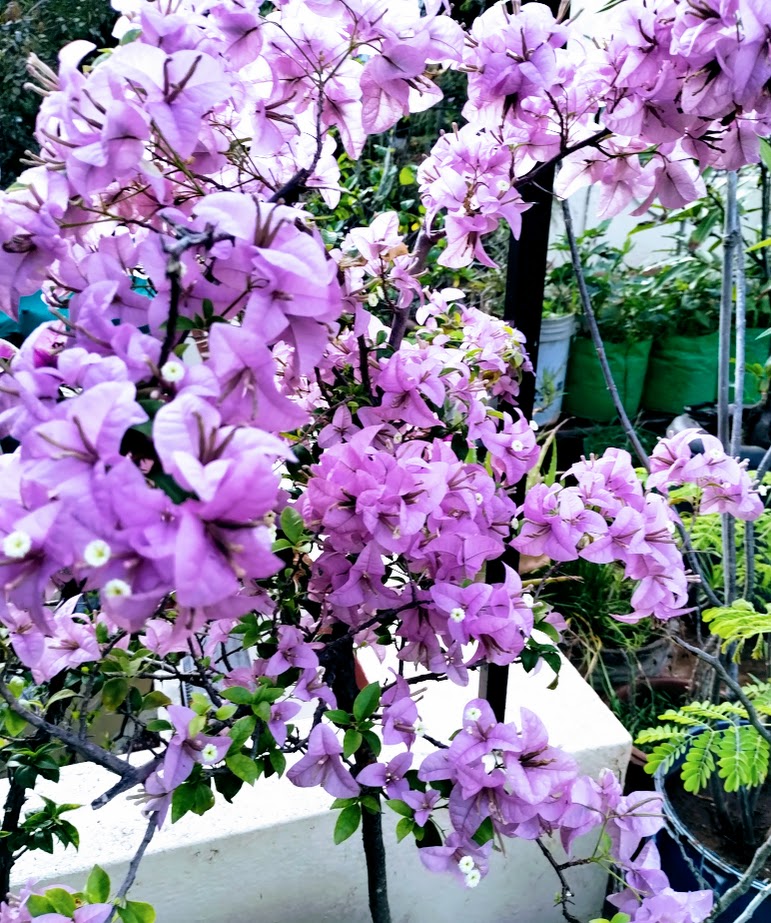
Bougainvillea
Bougainvillea spectabilis
Basic Details
Floral Formula & Features
Bilaterally symmetrical, bisexual, 5 fused sepals (colorful), no petals, 10 stamens in 2 whorls of 5, 1 carpel with superior ovary. Formula describes tiny true flower, not showy bracts
- Named after French navigator Louis Antoine de Bougainville who encountered the plant in Brazil in 1768. The colorful 'petals' are actually modified leaves (bracts) - the true flowers are tiny, tubular, cream or white blooms at the center
- Three papery bracts surround each cluster of 1-3 small tubular flowers. Bracts measure 1-2 inches and retain color for 4-6 weeks. True flowers are inconspicuous, 0.5 inches long, cream to white
- Evergreen or semi-deciduous woody vine that blooms year-round in frost-free climates, with peak flowering in spring and fall. Can be trained as shrub, climber, or ground cover
- Climbs 15-40 feet (4.5-12 m) with support, or grows 3-6 feet as shrub. Lifespan of 20+ years. Propagated from semi-hardwood cuttings. Features sharp thorns on stems
- Native to coastal Brazil, Peru, and Argentina in South America. Now widely cultivated in tropical and subtropical regions worldwide, particularly Mediterranean climates
- Requires full sun (6-8 hours daily) for best bract color. Extremely drought tolerant once established. Thrives in heat and tolerates poor, well-drained soil. Frost sensitive (damaged below 30°F/-1°C)
- Excellent for hot, dry landscapes and coastal gardens (salt tolerant). Attracts butterflies. Deer resistant. Popular as bonsai, espalier, or container plant. Thorns and sap can cause skin irritation
Names in Different Languages
What is Floral Formula?
A floral formula is a symbolic representation of a flower's structure using letters, numbers, and special symbols. It provides a concise way to describe the arrangement and number of floral parts.
This formula describes the flower's symmetry, sepals, petals, stamens, and carpels in a standardized format.
Formula Sequence
- Bract: Br or Ebr
- Bracteole: Brl or Ebrl
- Symmetry: % (Radial) or ⊕ (Bilateral)
- Sex: ♀ (Female), ♂ (Male), or ⚥ (Bisexual)
- Calyx/Sepal: K<number> (Free or Fused)
- Corolla/Petal: C<number> (Free or Fused)
- Androecium: A<number> (Free or Fused)
- Gynaecium: G<number> (Superior or Inferior Ovary)
Symbol Meanings
- Numbers: Indicate quantity of parts
- Parentheses (): Parts are fused together
- Plus (+): Parts in different whorls
- Underline: Superior ovary position
- Overline: Inferior ovary position
- ∞: Numerous parts (too many to count)
Understanding floral formulas helps botanists quickly identify and classify flowers based on their structural characteristics.
Similar Flowers
Discover flowers that share botanical characteristics
Similar Characteristics
4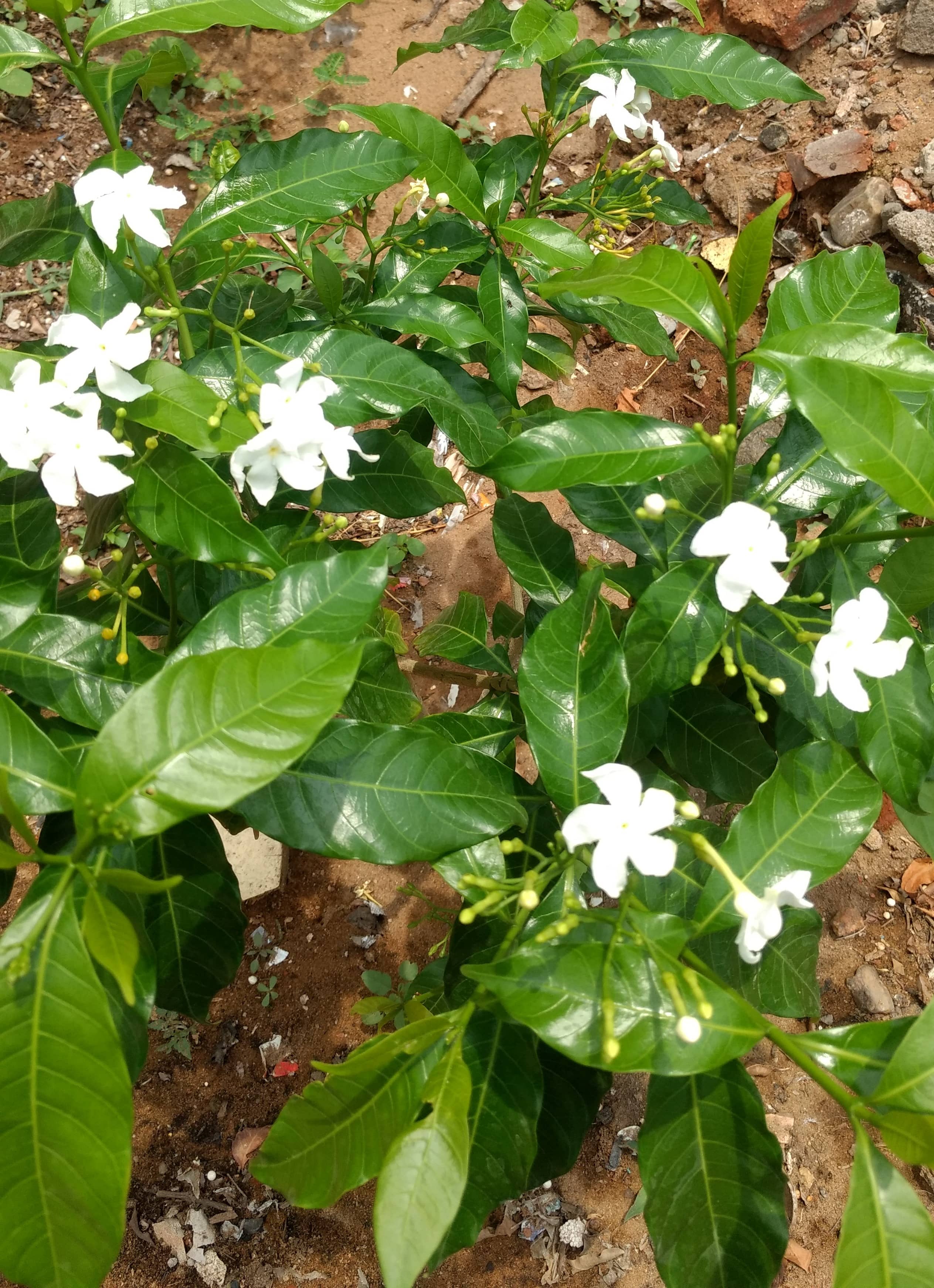
Pinwheel
Tabernaemontana divaricata
Elegant evergreen shrub with distinctive white flowers featuring five waxy petal...
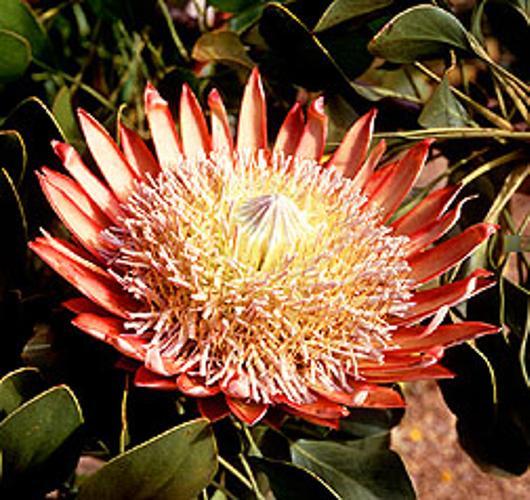
King Protea
Protea cynaroides
Magnificent flowering shrub featuring the largest flower head in the Protea genu...
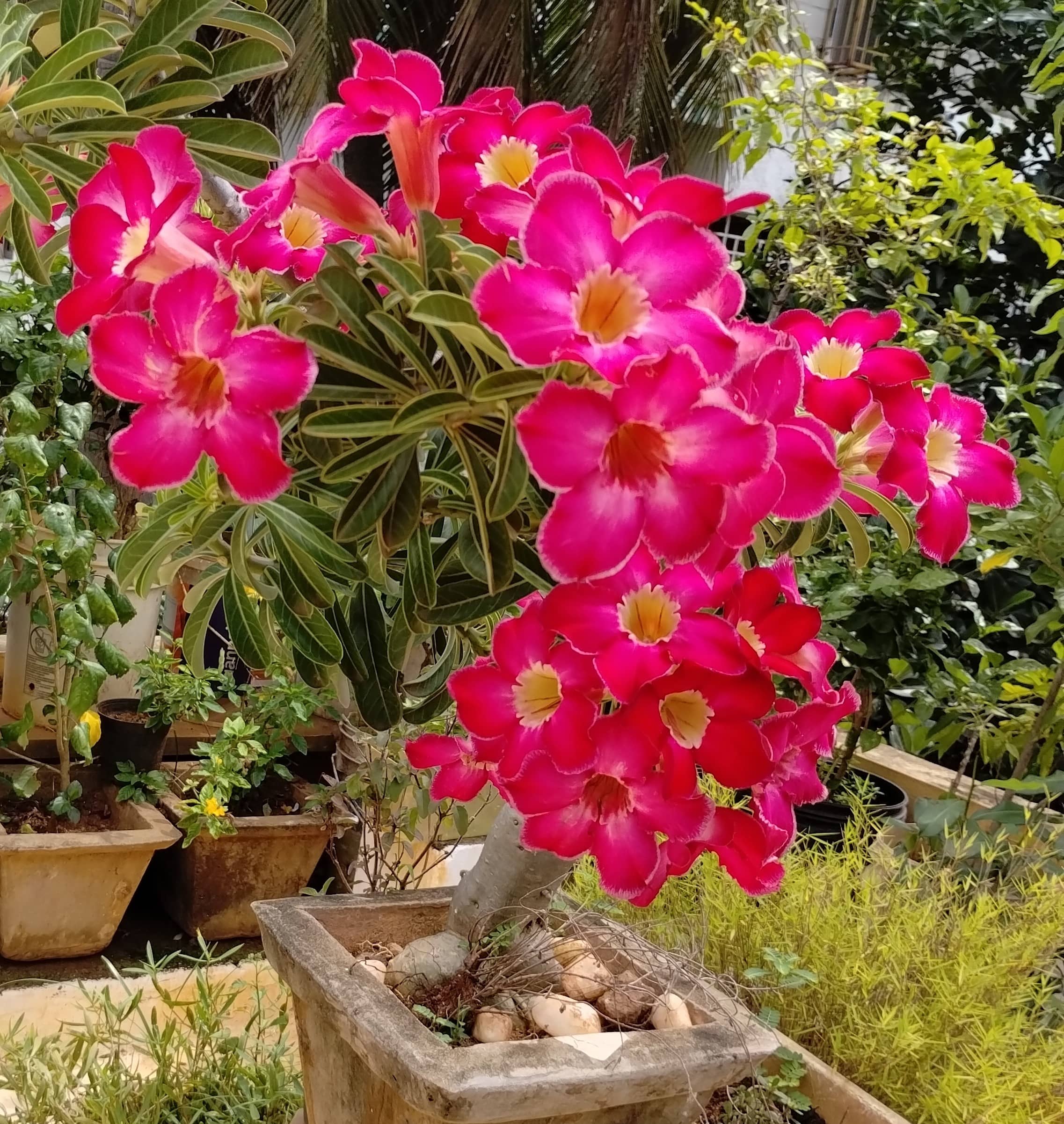
Desert rose
Adenium obesum
Striking succulent shrub featuring a dramatically swollen trunk (caudex) that st...
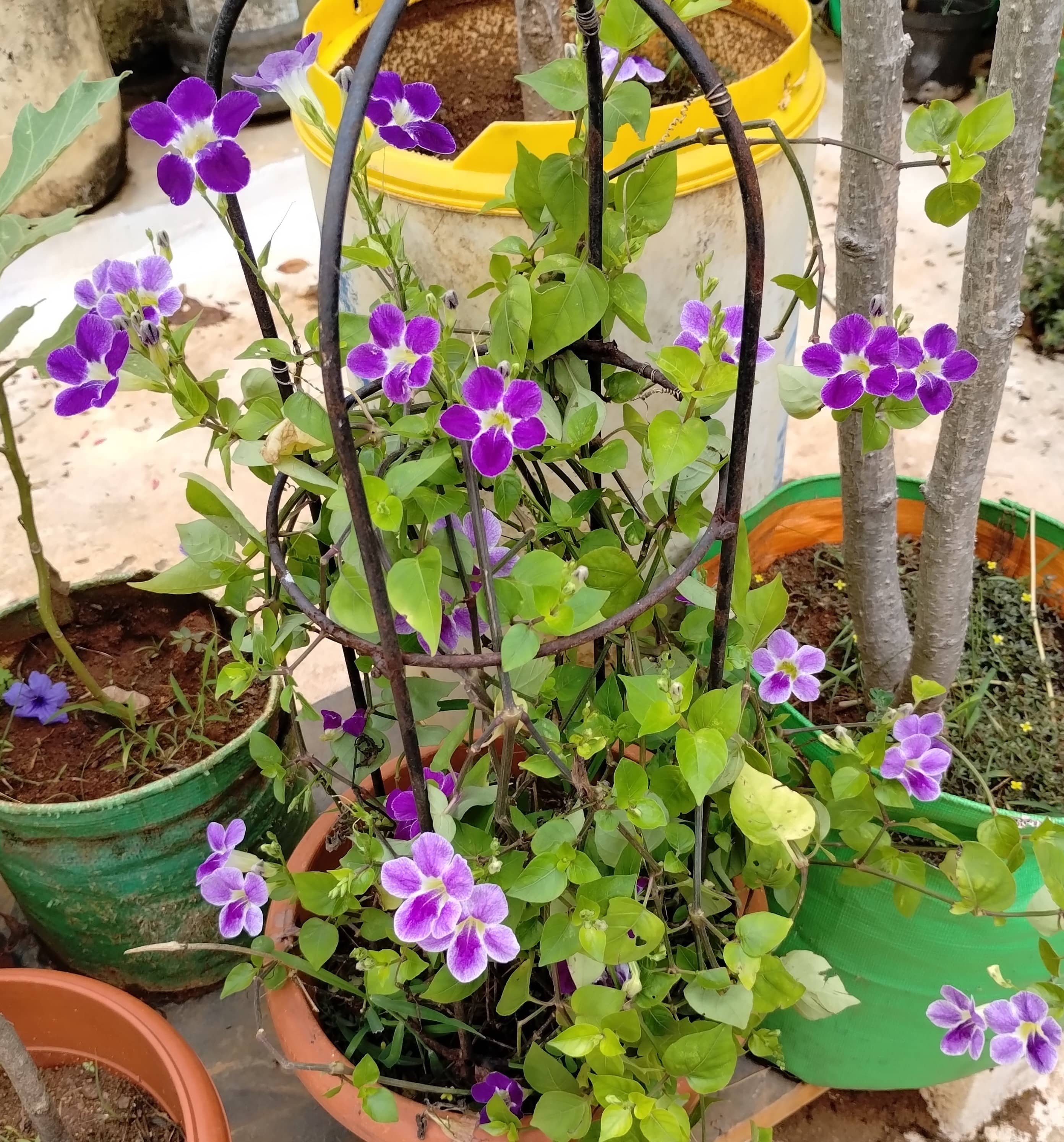
Thunbergia Bush Clock Vine
Thunbergia erecta
Versatile tropical plant producing stunning trumpet-shaped flowers in shades of ...