
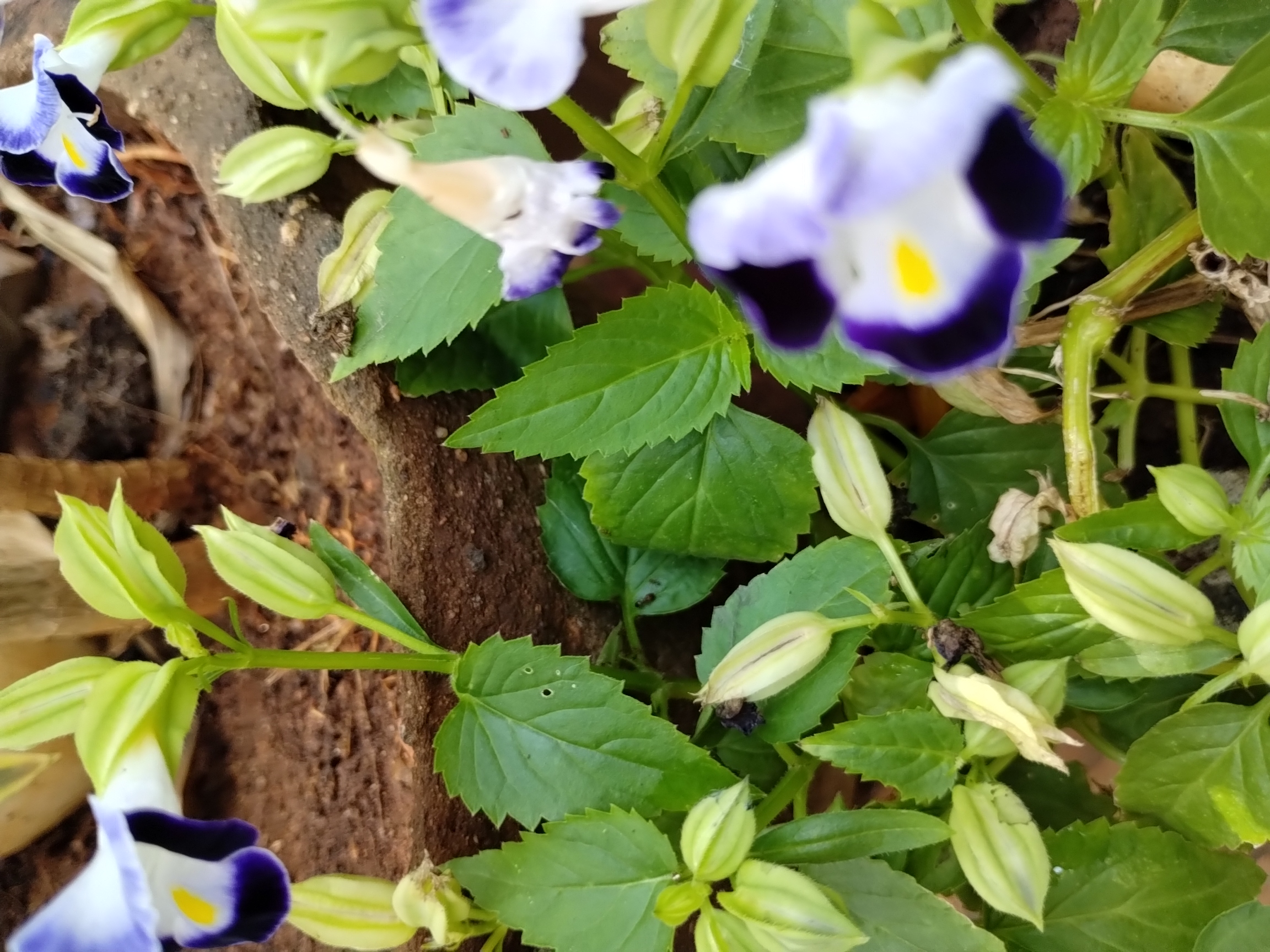
Bluewings
Torenia fournieri
Basic Details
Floral Formula & Features
Bilaterally symmetrical (zygomorphic), bisexual, 5 fused sepals, 5 fused petals forming two-lipped corolla, 4 stamens in 2 pairs (didynamous), 2 fused carpels with superior ovary
- Name 'Wishbone Flower' refers to the two stamens inside each bloom that join at their tips, forming a shape resembling a chicken wishbone. 'Torenia' honors Swedish botanist Olof Toren. 'Bluewings' describes the wing-like appearance of the lateral petals
- Small trumpet-shaped flowers (1-1.5 inches/2.5-4 cm) with distinctive two-lipped (bilabiate) structure. Upper lip has 2 lobes, lower lip has 3 lobes with prominent yellow throat markings. Blooms held above foliage on short stems
- Tender annual that blooms continuously from late spring through first frost (May-October). Performs best in cool to moderate temperatures (60-75°F). Self-cleaning flowers drop when spent, requiring no deadheading
- Grows 8-12 inches (20-30 cm) tall with 6-10 inch (15-25 cm) spread for upright varieties. Trailing varieties spread 12-18 inches. Lifespan of one growing season. Propagated from seed or cuttings
- Native to tropical and subtropical Asia, particularly Vietnam, Thailand, and southern China. Found in moist, shaded forest floors and stream banks. Now cultivated worldwide as ornamental annual
- Thrives in partial to full shade with 2-4 hours of morning sun or bright filtered light. One of few annuals that blooms well in shade. Prefers consistently moist, well-drained soil rich in organic matter. Heat and humidity tolerant
- Excellent for shady containers, hanging baskets, and window boxes where sun-loving annuals fail. Attracts hummingbirds and butterflies. Deer resistant. Performs well in humid climates. Popular in tropical and subtropical landscaping
Names in Different Languages
What is Floral Formula?
A floral formula is a symbolic representation of a flower's structure using letters, numbers, and special symbols. It provides a concise way to describe the arrangement and number of floral parts.
This formula describes the flower's symmetry, sepals, petals, stamens, and carpels in a standardized format.
Formula Sequence
- Bract: Br or Ebr
- Bracteole: Brl or Ebrl
- Symmetry: % (Radial) or ⊕ (Bilateral)
- Sex: ♀ (Female), ♂ (Male), or ⚥ (Bisexual)
- Calyx/Sepal: K<number> (Free or Fused)
- Corolla/Petal: C<number> (Free or Fused)
- Androecium: A<number> (Free or Fused)
- Gynaecium: G<number> (Superior or Inferior Ovary)
Symbol Meanings
- Numbers: Indicate quantity of parts
- Parentheses (): Parts are fused together
- Plus (+): Parts in different whorls
- Underline: Superior ovary position
- Overline: Inferior ovary position
- ∞: Numerous parts (too many to count)
Understanding floral formulas helps botanists quickly identify and classify flowers based on their structural characteristics.
Similar Flowers
Discover flowers that share botanical characteristics
Similar Characteristics
4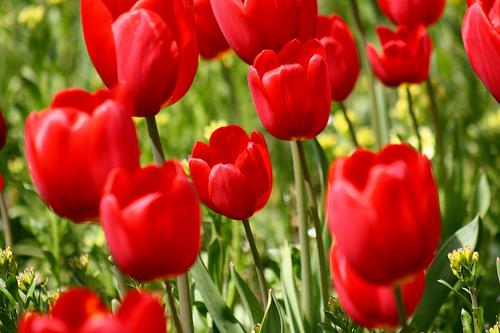
Tulip
Tulipa
Iconic spring-blooming bulb celebrated for its elegant cup-shaped flowers in nea...
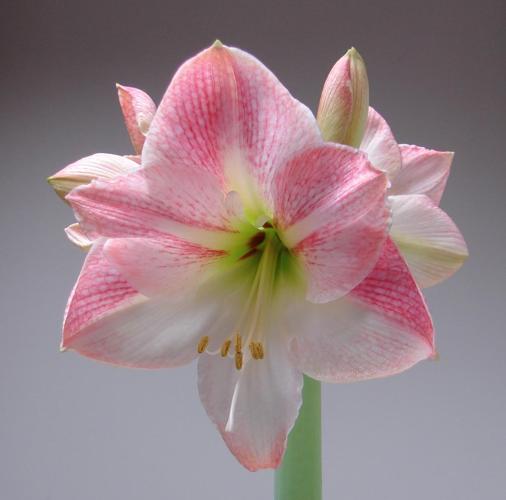
Amaryllis
Hippeastrum
Spectacular bulbous plant producing 2-6 large, trumpet-shaped flowers per stalk ...
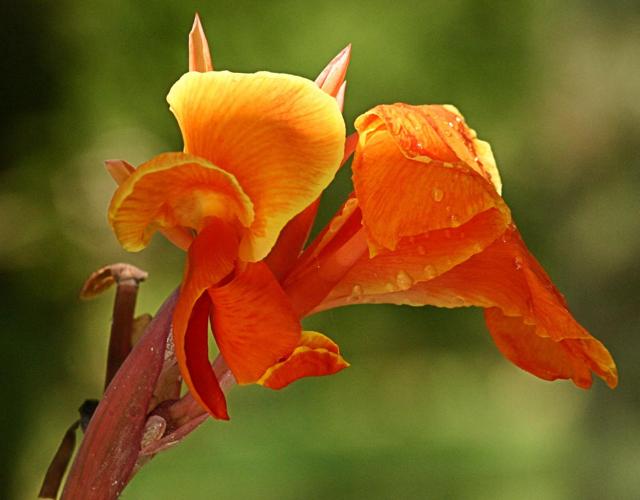
Canna lily
Canna indica
Bold tropical perennial featuring large, paddle-shaped leaves reminiscent of ban...
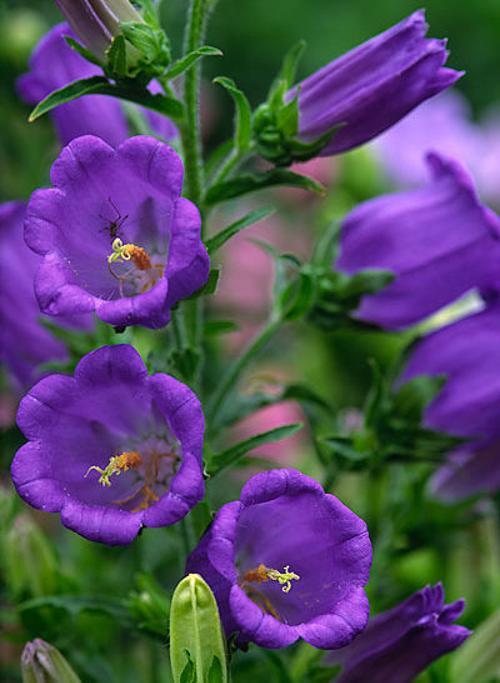
Canterbury bells
Campanula medium
Charming biennial featuring large, showy bell-shaped flowers in shades of blue, ...