
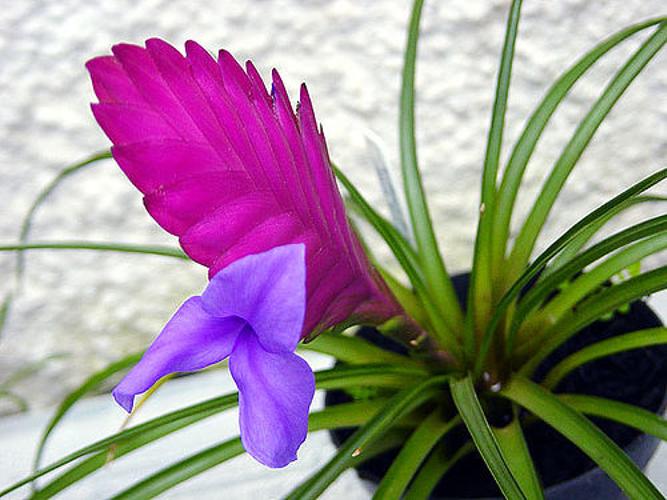
Ball Moss
Tillandsia recurvata
Basic Details
Floral Formula & Features
Radially symmetrical, bisexual, 3 free sepals, 3 free petals (often violet-blue), 6 stamens in 2 whorls of 3, 3 fused carpels with superior ovary typical of Bromeliaceae
- Name 'Ball Moss' refers to its spherical, ball-like growth habit when multiple rosettes cluster together. 'Tillandsia' honors Swedish botanist Elias Tillandz. The species name 'recurvata' describes the recurved (backward-curving) leaves
- Small tubular flowers in violet-blue or purple emerge on thin green stalks from rosette centers. Each rosette blooms once, then produces offsets (pups) before dying. Individual flowers are tiny (0.5 inch) but fragrant, blooming spring through summer
- Epiphytic perennial that grows on other plants for support but is not parasitic - it absorbs water and nutrients from air and rain through specialized leaf scales (trichomes). Forms dense, spherical clumps 4-6 inches across over time
- Individual rosettes grow 2-6 inches tall and wide. Clumps can reach 6-12 inches diameter. Lifespan of 2-5 years per rosette, but clumps persist indefinitely through offsets. Reproduces by seeds and vegetative pups
- Native to warmer regions of southern United States (Texas, Louisiana, Florida), Mexico, Central America, and northern South America. Grows naturally on oak trees, mesquite, and even man-made structures like power lines
- Thrives in bright indirect light to partial shade with high humidity (50-70%). Requires minimal care - no soil needed, absorbs moisture from air. Tolerates drought but benefits from occasional misting. Hardy to 20°F (-7°C)
- Not parasitic - does not harm host plants, though heavy infestations can add weight to branches. Used in terrariums, mounted displays, and as living decorations. Helps indicate good air quality as sensitive to pollution
Names in Different Languages
What is Floral Formula?
A floral formula is a symbolic representation of a flower's structure using letters, numbers, and special symbols. It provides a concise way to describe the arrangement and number of floral parts.
This formula describes the flower's symmetry, sepals, petals, stamens, and carpels in a standardized format.
Formula Sequence
- Bract: Br or Ebr
- Bracteole: Brl or Ebrl
- Symmetry: % (Radial) or ⊕ (Bilateral)
- Sex: ♀ (Female), ♂ (Male), or ⚥ (Bisexual)
- Calyx/Sepal: K<number> (Free or Fused)
- Corolla/Petal: C<number> (Free or Fused)
- Androecium: A<number> (Free or Fused)
- Gynaecium: G<number> (Superior or Inferior Ovary)
Symbol Meanings
- Numbers: Indicate quantity of parts
- Parentheses (): Parts are fused together
- Plus (+): Parts in different whorls
- Underline: Superior ovary position
- Overline: Inferior ovary position
- ∞: Numerous parts (too many to count)
Understanding floral formulas helps botanists quickly identify and classify flowers based on their structural characteristics.
Similar Flowers
Discover flowers that share botanical characteristics
Same Family
1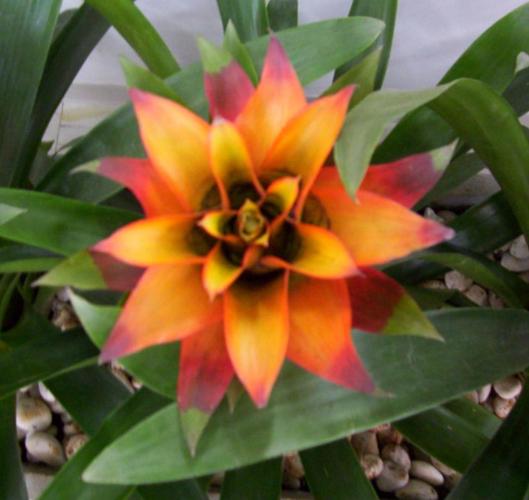
Similar Characteristics
4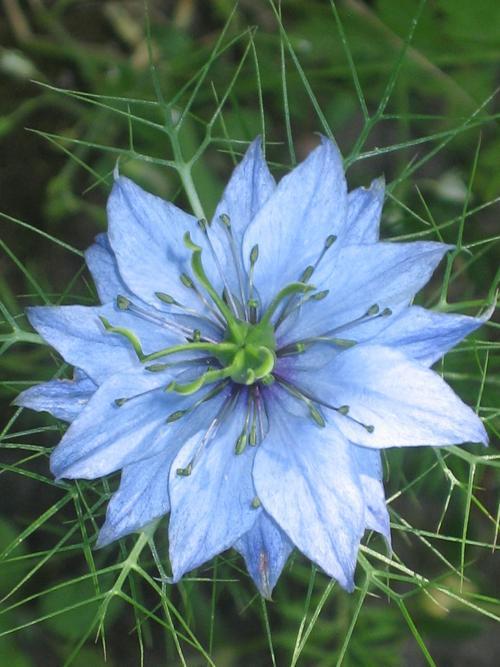
Love in a mist
Nigella damascena
Charming cottage garden annual featuring delicate jewel-like flowers in shades o...
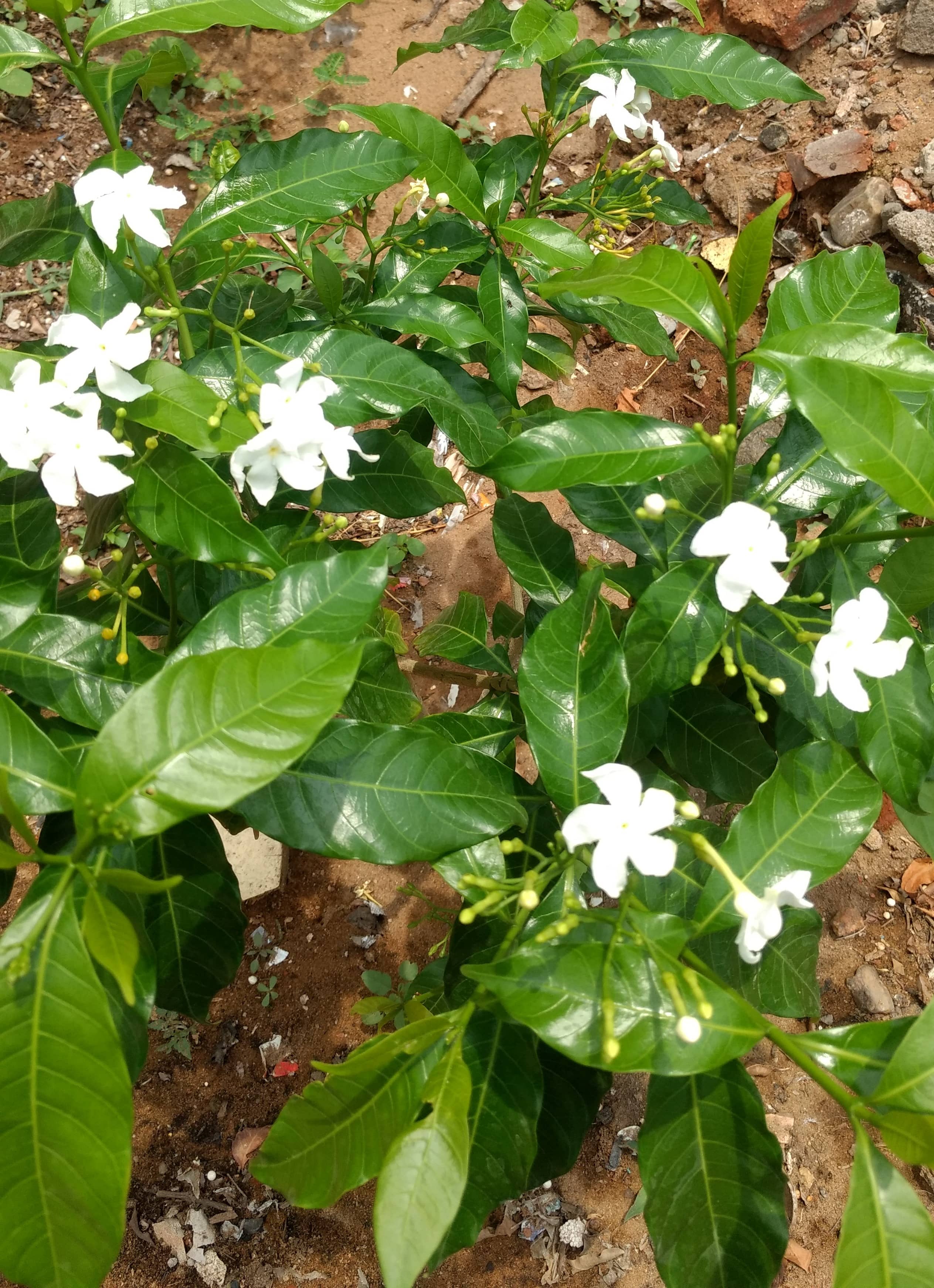
Pinwheel
Tabernaemontana divaricata
Elegant evergreen shrub with distinctive white flowers featuring five waxy petal...
Bluewings
Torenia fournieri
Charming shade-loving annual featuring small trumpet-shaped flowers with distinc...
King Protea
Protea cynaroides
Magnificent flowering shrub featuring the largest flower head in the Protea genu...